
Katana Decoration: From Ancient Artistry to Modern Mastery - Complete Guide
Share
The morning light catches the intricate gold inlay of a centuries-old tsuba, its dragon motif seeming to writhe in the shifting shadows. Each delicate line tells a story—not just of masterful craftsmanship, but of a warrior's soul, a family's honor, and an empire's aesthetic philosophy. This is the world of katana decoration, where functional weapons transform into breathtaking works of art that have captivated collectors and enthusiasts for over a thousand years, continuing to inspire artisans and collectors well into 2025.
Table of Contents
- The Sacred Art of Sword Decoration
- Essential Elements of Katana Ornamentation
- Traditional Techniques and Master Craftsmanship
- Featured Masterpieces - Decorated Katana Collection
- Choosing Your Perfect Decorated Katana
- Understanding Quality and Authenticity
- Why Choose Katana Canada for Your Collection
The Sacred Art of Sword Decoration
Katana decoration transcends mere ornamentation—it represents the spiritual and artistic pinnacle of Japanese metalworking. Beginning in the Heian period (794-1185), sword ornamentation evolved from simple functional elements into elaborate artistic expressions that reflected the owner's status, beliefs, and aesthetic sensibilities. This tradition continues to influence contemporary sword craftsmanship in 2025, where modern artisans blend ancient techniques with innovative approaches.
Unlike Western sword traditions that often prioritized intimidation through size and weight, Japanese sword decoration emphasized harmony, balance, and symbolic meaning. The samurai understood that their katana was not merely a weapon but a reflection of their soul. This philosophy continues to drive contemporary artisans who create pieces where every decorative element—from the smallest menuki to the grandest saya design—serves both practical and spiritual purposes.
The golden age of katana decoration reached its zenith during the Edo period (1603-1868), when peace allowed craftsmen to focus on artistic refinement rather than battlefield functionality. Master artists specialized in specific elements: some devoted their lives to perfecting tsuba designs, while others mastered the intricate art of lacquerwork on scabbards. This specialization created a rich ecosystem of artisans whose collaborative efforts produced the most exquisite decorated swords in history—a legacy that modern craftsmen honor and build upon today.
Religious and philosophical influences deeply shaped decorative choices. Buddhist symbols like lotus flowers and dharma wheels represented enlightenment and the cycle of life, while Shinto motifs such as dragons and phoenixes embodied natural forces and divine protection. Family crests (mon) incorporated ancestral pride, and seasonal imagery like cherry blossoms or autumn leaves connected the warrior to the eternal rhythms of nature. These symbolic traditions remain deeply meaningful to contemporary collectors and artisans.
The materials used in sword ornamentation were as meaningful as the designs themselves. Gold represented the sun and imperial power, silver symbolized the moon and purity, while copper suggested earth and stability. Precious woods like ebony and rosewood weren't chosen solely for beauty—their spiritual properties were believed to enhance the sword's power and protect its wielder. Modern craftsmen continue to honor these material choices while incorporating contemporary alloys and techniques.
Essential Elements of Katana Ornamentation
The art of katana decoration encompasses multiple components, each requiring specialized skills and offering unique opportunities for artistic expression. Understanding these elements reveals the incredible complexity hidden within what might appear to be simple elegance—principles that remain as relevant in 2025 as they were centuries ago.
The tsuba, or handguard, serves as the katana's artistic centerpiece. Master craftsmen created these circular or occasionally square plates using techniques ranging from piercing (sukashi) to relief carving (taka-bori). The most prized tsuba feature asymmetrical designs that create visual movement—a flowering branch extending from one side, balanced by negative space that suggests wind or water flow. Materials varied from humble iron to precious metals, with some pieces incorporating multiple alloys to achieve subtle color variations that captivate collectors today.
Handle ornamentation begins with the tsuka-ito, the silk or leather cord that wraps the handle in distinctive diamond patterns. Traditional wrapping styles like hineri-maki create not only secure grip but also visual rhythm that draws the eye along the sword's length. Beneath the wrapping, the same-kawa (ray skin) provides texture and moisture absorption, while its natural pearl-like nodules add subtle decorative elements that modern artisans continue to appreciate and replicate.
The menuki—small ornamental objects placed under the handle wrapping—represent some of the finest miniature metalwork ever created. These tiny sculptures, often depicting animals, plants, or mythological figures, served practical purposes by improving grip while adding deeply personal symbolism. A pair of rabbits might represent fertility and new beginnings, while dragons could symbolize power and protection—meanings that resonate with contemporary collectors seeking personal connection to their pieces.
Saya embellishment transforms the scabbard into a canvas for artistic expression. Traditional urushi lacquerwork creates surfaces ranging from mirror-smooth blacks to textured patterns that seem to shift with changing light. Master lacquer artists achieved incredible effects through techniques like maki-e (sprinkled gold) and raden (mother-of-pearl inlay), creating scenes that rival the finest paintings in their subtlety and emotional impact—techniques that contemporary artisans study and adapt for modern applications.
The kashira (pommel cap) and fuchi (collar) frame the handle's decorative scheme. Often crafted as matching sets, these elements might feature complementary designs—perhaps a storm cloud on one piece with lightning on the other, or a mountain landscape split between the two components. The finest examples demonstrate perfect proportion and balance, never overwhelming the overall design while adding essential visual anchors that guide the viewer's eye.
Traditional Techniques and Master Craftsmanship
The techniques used in katana decoration represent centuries of accumulated knowledge, passed down through generations of master artisans who guarded their secrets jealously. These methods, refined over countless hours of meticulous work, created effects that even modern technology in 2025 struggles to replicate with the same soul and character.
Inlay work (zogan) reached extraordinary sophistication in Japanese sword ornamentation. Gold and silver were not simply pressed into grooves but carefully shaped and worked to create raised designs that seemed to float above the base metal. The most skilled artisans achieved seamless integration between different metals, creating surfaces where gold dragons appeared to swim through silver clouds without visible seams or joints—a level of craftsmanship that continues to inspire modern metalworkers.
Carving techniques varied dramatically depending on the desired effect and base material. Katana-bori involved carving directly into the blade itself—a practice requiring not only artistic skill but intimate knowledge of metallurgy to avoid weakening the weapon. More commonly, decorative carving appeared on the tang (nakago), where religious inscriptions and artistic motifs could be deeply incised without affecting the blade's performance, a practice that contemporary smiths still employ with great reverence.
The art of patination allowed craftsmen to create controlled corrosion that enhanced rather than degraded their work. Through careful application of acids and heat, iron could be made to display rich brown and black tones that provided perfect contrast for gold and silver inlays. Master artisans could predict exactly how their chosen alloys would respond to specific treatments, creating complex color schemes that seemed to emerge naturally from the metal itself—knowledge that modern craftsmen work diligently to preserve and understand.
Textile arts played crucial roles in handle embellishment, with some specialists devoting their careers to perfecting traditional wrapping patterns. The angle of each wrap, the tension applied, and the choice of material all contributed to both functional and aesthetic outcomes. Silk cords were often hand-dyed using natural materials to achieve specific colors that harmonized with other decorative elements, while leather alternatives might be embossed with patterns before application—techniques that contemporary artisans study and adapt for modern collectors.
Fire-based techniques allowed artisans to create dramatic color shifts in metal components. Through controlled heating and cooling cycles, steel could be made to display rainbow patinas that shifted from purple to blue to gold as light angles changed. These effects, known as heat-treat colors, required precise temperature control and timing that came only through years of experience—skills that dedicated craftsmen continue to develop and refine in 2025.
Featured Masterpieces - Decorated Katana Collection (Updated for 2025)
Our curated selection represents the finest in contemporary sword ornamentation, combining traditional techniques with modern materials and precision manufacturing. Each piece demonstrates exceptional attention to decorative detail while maintaining the functional integrity that defines authentic katana craftsmanship, meeting the discerning standards of 2025 collectors.
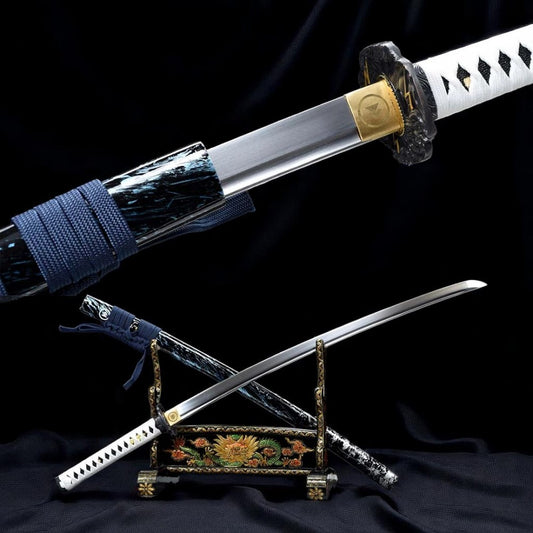
The Jin Sakai Katana – Ghost of Tsushima Edition exemplifies modern interpretation of classical katana decoration principles. This stunning piece features intricate tsuba work with wind-blown leaf motifs that perfectly capture the game's atmospheric aesthetic. The deep blue and silver handle wrapping creates striking visual contrast, while the detailed saya lacquerwork depicts subtle mountain landscapes that shift in different lighting conditions. The 1060 carbon steel blade combines modern metallurgy with traditional hamon patterns, creating a functional artwork that honors both historical precedent and contemporary design sensibilities.
⭐⭐⭐⭐⭐ "The decorative details on this Ghost of Tsushima katana are absolutely incredible. Every element from the tsuba to the handle wrapping shows masterful attention to artistic detail. It's become the centerpiece of my collection." - Marcus T., Calgary, AB
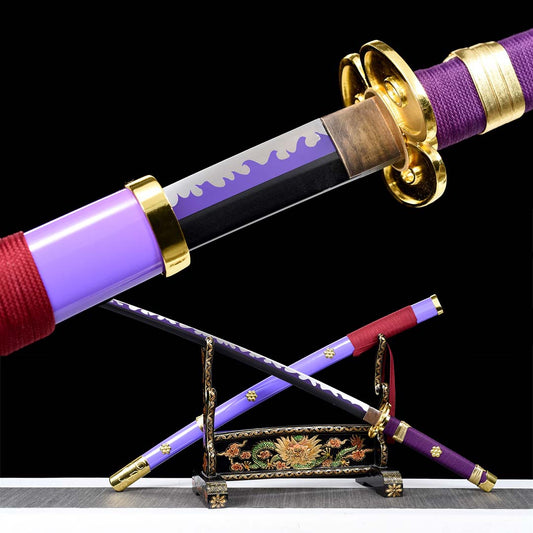
For those drawn to delicate beauty in sword ornamentation, the Shinobu Kocho Katana – Demon Slayer Edition presents an extraordinary example of nature-inspired embellishment. The butterfly-themed tsuba features pierced wings that create intricate shadow patterns, while the purple and silver color scheme reflects the character's gentle yet deadly nature. The handle incorporates subtle flower motifs beneath its wrapping, and the saya displays hand-painted butterfly designs that seem to flutter across its surface. This piece demonstrates how contemporary pop culture can inspire decoration that rivals traditional examples in its artistic sophistication.
⭐⭐⭐⭐⭐ "I've never seen such beautiful butterfly decorations on a katana. The way the tsuba catches light and the delicate painting work on the scabbard make this piece truly special. The craftsmanship exceeds my expectations for a modern piece." - Sarah M., Toronto, ON
 Save $90