
Roronoa Zoro Swords: The Complete Guide to the Three Sword Style Legacy
Share
The clash of steel echoes through the Grand Line as three blades dance in perfect harmony. One clenched between determined teeth, two gripped with unwavering resolve – this is the legendary Three Sword Style that has captivated millions. Roronoa Zoro swords aren't just weapons; they're extensions of his very soul, each blade carrying a story that resonates with every swing, every battle cry, and every moment of triumph against impossible odds.
From the sacred halls of traditional swordsmanship to the hearts of modern collectors across Canada, these legendary blades have transcended their fictional origins to become symbols of dedication, honor, and the relentless pursuit of one's dreams. Whether you're a devoted One Piece fan or a serious katana collector, understanding the heritage and craftsmanship behind these iconic roronoa zoro swords opens a window into both Japanese sword culture and the art of bringing fantasy to life through masterful metallurgy. One Piece Swords: The
Table of Contents
- The Birth of a Legend: Zoro's Journey and His Blades
- The Sacred Trinity: Analyzing Zoro's Legendary Swords
- Masterful Construction: Design and Authentic Craftsmanship
- Our Collection: Premium Zoro Sword Replicas
- The Collector's Guide: Choosing Your Perfect Blade
- Steel Types and Quality: Understanding the Foundation
- Why Choose Katana Canada for Your Collection
- Frequently Asked Questions
The Birth of a Legend: Zoro's Journey and His Blades
The world of One Piece introduced us to a swordsman whose ambition burns brighter than the sun itself. Roronoa Zoro's quest to become the world's greatest swordsman began in a small dojo where he first learned that a sword is more than metal and edge – it's a bond between warrior and weapon that transcends the physical realm. This philosophy, deeply rooted in traditional Japanese swordsmanship, forms the foundation of every authentic katana.
The cultural significance of Zoro's Three Sword Style extends far beyond entertainment, drawing inspiration from centuries-old samurai traditions where a warrior's soul was believed to reside within their blade. In feudal Japan, the katana represented not just a tool of war, but a symbol of honor, discipline, and spiritual connection. Master swordsmiths would spend months forging a single blade, infusing each fold of steel with prayers and meditation, creating weapons that were considered sacred objects.
Zoro's journey mirrors the traditional path of the samurai, where dedication to one's craft becomes a spiritual pursuit. His willingness to bear the weight of three swords – an unprecedented fighting style that requires exceptional physical and mental discipline – reflects the samurai principle of pushing beyond human limitations through sheer determination. This resonates deeply with collectors who understand that owning a quality katana replica means carrying forward a piece of this ancient warrior spirit.
The evolution of Zoro's blade collection throughout the series represents the growth of a warrior. From his early days with basic blades to wielding legendary swords like Enma and Shusui, each transition marks not just an upgrade in weaponry, but a milestone in his spiritual and physical development. This progression mirrors the traditional Japanese concept of the sword as a living entity that chooses its wielder, making each blade in a collector's arsenal a testament to their own journey of appreciation and understanding of sword culture.
The Sacred Trinity: Analyzing Zoro's Legendary Swords
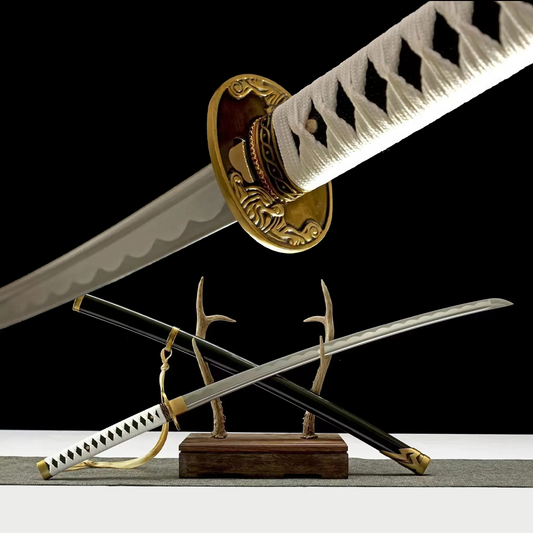
Wado Ichimonji stands as the cornerstone of roronoa zoro swords collection, a blade that carries the weight of promise and memory. With its pristine white scabbard and perfectly balanced design, this sword represents purity of purpose and unwavering loyalty. The name translates to "Straight Road of Harmony," symbolizing the direct path a true swordsman must follow. Its significance extends beyond its physical properties – it's a connection to Zoro's past and his promise to a fallen friend, making it irreplaceable in both function and sentiment.
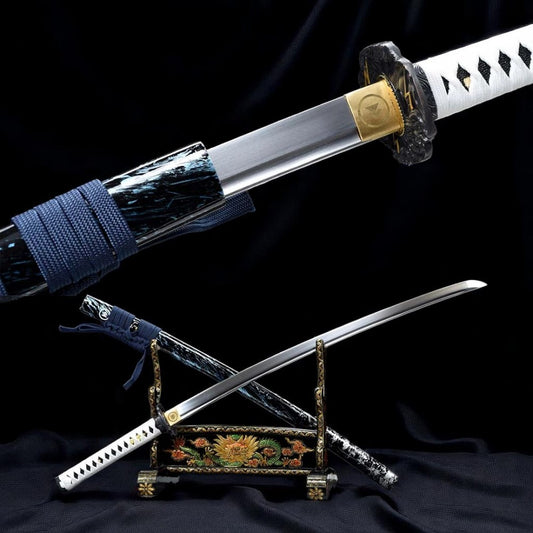
Sandai Kitetsu brings an element of danger and mystique to Zoro's arsenal. Known as one of the cursed blades, this sword supposedly brings misfortune to its wielders. However, Zoro's fearless acceptance of this challenge demonstrates his confidence and spiritual strength. The blade's distinctive purple scabbard and ornate guard reflect its ominous reputation, while its exceptional cutting ability makes it a formidable weapon despite its supernatural baggage. For collectors, the 1060">Sandai Kitetsu Katana Sword at represents this perfect balance of beauty and power.
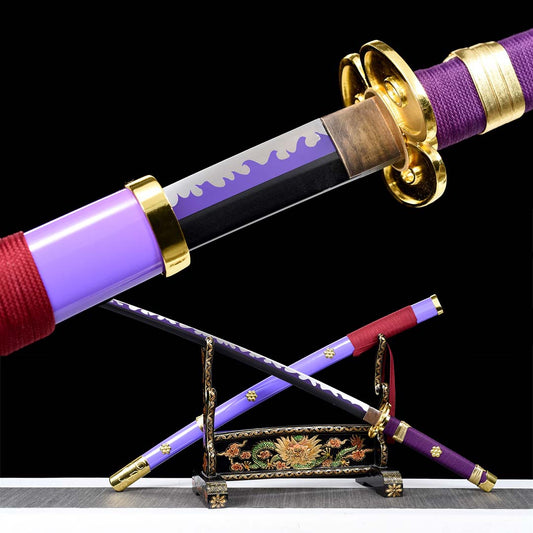
Enma, the legendary sword that once belonged to Kozuki Oden, represents the pinnacle of sword craftsmanship in the One Piece universe. This blade possesses the unique ability to draw out its wielder's Haki, making it both incredibly powerful and extremely dangerous to use. Its purple-wrapped handle and distinctive guard design reflect its status as a weapon worthy of legends. The sword's name means "King of Hell," indicating its tremendous power and the respect it commands among warriors.
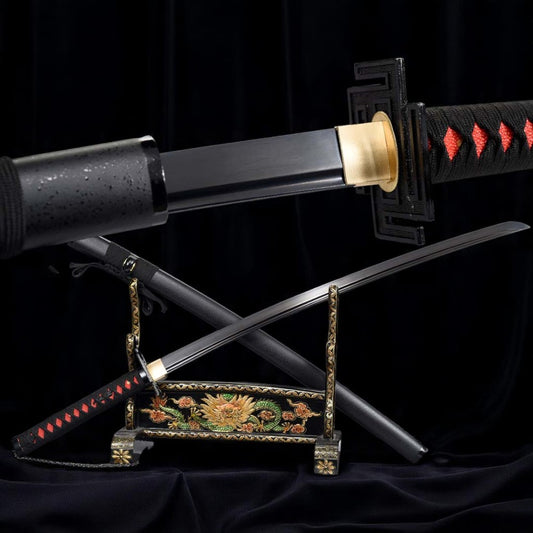
Shusui, though no longer in Zoro's possession, deserves recognition as one of the most beautifully designed blades in the series. This black blade, forged through countless battles, represents the ultimate achievement of any sword – to become permanently infused with its wielder's spiritual energy. Its ornate red scabbard and golden accents create a striking visual that embodies the perfect fusion of elegance and lethality.
Each sword in the legendary pirate hunter's collection serves a specific purpose in his Three Sword Style technique, from the precise thrusting attacks enabled by Wado Ichimonji's perfect balance to the devastating cutting power of Enma's enhanced capabilities. Understanding these individual characteristics helps collectors appreciate why each replica must be crafted with meticulous attention to both aesthetic and functional details.
Masterful Construction: Design and Authentic Craftsmanship
The creation of authentic Zoro sword replicas requires a deep understanding of traditional Japanese sword-making techniques combined with modern metallurgical knowledge. Each blade begins with carefully selected high-carbon steel, typically 1060 carbon steel, which provides the perfect balance of durability and flexibility needed for both display and practical use. The forging process involves multiple heating and folding cycles that align the steel's grain structure, creating a blade that can withstand the stresses of both ceremonial handling and light cutting exercises.
Tempering represents one of the most critical aspects of sword construction, where the blade undergoes precise heat treatment to achieve the optimal balance between hardness and flexibility. The spine remains relatively soft to absorb impact shock, while the edge achieves maximum hardness for superior cutting ability. This differential hardening technique, known as hamon in traditional Japanese sword-making, creates the distinctive temper line visible along the blade's edge – a hallmark of quality construction.
Handle construction, or tsuka-maki, requires exceptional skill to achieve both comfort and authenticity. Genuine ray skin (same) provides the foundation layer, offering superior grip even when wet. Traditional silk or cotton wrapping (ito) follows specific patterns that not only enhance grip but also distribute pressure evenly across the wielder's hands during extended use. The precise tension and angle of each wrap determines both the handle's durability and its aesthetic appeal.
Guard design varies significantly among Zoro's blade arsenal, each requiring specialized metalworking techniques to achieve the correct proportions and finishing. From the simple oval tsuba of Wado Ichimonji to the more elaborate designs of his other blades, each guard must be individually crafted to match the specific sword's character. The fitting between guard, blade, and handle requires precision engineering to ensure proper balance and structural integrity.
Scabbard construction involves multiple layers of wood, carefully shaped and finished to protect the blade while maintaining the sword's overall aesthetic. Traditional Japanese techniques use magnolia wood for its natural antibacterial properties and resistance to warping. Multiple coats of urushi lacquer create both protection and the distinctive colors associated with each sword, from Wado Ichimonji's pure white to Sandai Kitetsu's ominous purple.
Our Collection: Premium Zoro Sword Replicas
Our carefully curated selection of roronoa zoro swords replicas represents the pinnacle of anime-inspired craftsmanship, each piece designed to capture the essence of these legendary blades while maintaining the highest standards of construction quality.
Mini Katana Collection – Perfect for Display
The Zoro Ame No Habakiri Mini Katana – Anime Edition at offers collectors an excellent entry point into the world of Zoro replicas. This stunning piece features:
• Authentic scaled proportions maintaining the original's visual impact • High-quality steel construction with detailed finishing • Traditional-style scabbard with accurate color matching • Included display stand for immediate presentation • Compact size perfect for desk or shelf display
⭐⭐⭐⭐⭐ "The attention to detail is incredible for the price. It looks amazing on my desk at work!" - Sarah M., Vancouver, BC
The Zoro Enma-Purple Mini Katana – Anime Edition at captures the mystique of this legendary blade:
• Distinctive purple handle wrapping with metallic accents • Precision-crafted guard reflecting the original's ornate design • Premium steel construction with mirror polish finish • Authentic proportions scaled to perfection • Complete with elegant display stand
⭐⭐⭐⭐⭐ "My son is obsessed with One Piece and this made the perfect birthday gift. The quality exceeded expectations!" - Mark T., Calgary, AB
For those drawn to the cursed blade's allure, the Zoro Shusui Mini Katana – Anime Edition at delivers exceptional craftsmanship:
• Stunning black blade finish mimicking the legendary sword's appearance • Ornate red scabbard with golden accent details • Balanced construction suitable for both display and handling • Museum-quality finish resistant to tarnishing • Professional presentation stand included
The Zoro Sandai Kitetsu Mini Katana – Anime Edition at embodies the dangerous beauty of the cursed blade:
• Authentic purple scabbard matching the anime's color scheme • Detailed guard work reflecting traditional Japanese motifs • High-carbon steel construction for durability • Perfect weight distribution for authentic feel • Comes complete with display stand
⭐⭐⭐⭐⭐ "The purple finish is absolutely gorgeous. It's become the centerpiece of my anime collection!" - Jessica L., Toronto, ON
Full-Size Masterpieces
For serious collectors seeking the ultimate in authenticity and presence, the Sandai Kitetsu Katana Sword at represents the pinnacle of replica craftsmanship:
• Full-tang 1060 carbon steel construction for superior durability • Hand-forged blade with visible hamon (temper line) • Traditional ray skin handle with silk cord wrapping • Authentic weight and balance for realistic handling • Museum-grade scabbard with period-appropriate fittings
⭐⭐⭐⭐⭐ "This is the real deal – the weight, balance, and finish are absolutely perfect. Worth every penny!" - David R., Ottawa, ON
Our collection also includes specialized pieces like the Zoro Trafalgar·Law Mini Katana – Anime Edition at , which showcases the collaborative spirit of the One Piece universe:
• Unique design reflecting Law's distinctive aesthetic • Premium materials with attention to character-specific details • Collector-grade finish suitable for long-term display • Balanced proportions maintaining authenticity • Professional display stand included
Each piece in our collection undergoes rigorous quality control to ensure that every detail meets our exacting standards. From the precise curvature of the blade to the exact shade of the scabbard, no aspect is overlooked in our commitment to delivering replicas that honor both the source material and traditional Japanese craftsmanship.
Our shipping process ensures your investment arrives safely, with each sword carefully packed in protective materials and shipped via trusted carriers throughout Canada. Payment in Canadian dollars eliminates currency conversion concerns, while our bilingual customer service team provides support in both French and English.
The Collector's Guide: Choosing Your Perfect Blade
Selecting the ideal Zoro sword replica requires careful consideration of several factors, each contributing to both immediate satisfaction and long-term collecting enjoyment. Understanding your intended use helps narrow the field significantly – display pieces prioritize visual impact and authentic proportions, while functional replicas emphasize structural integrity and proper balance for handling.
Space considerations often determine whether mini katana or full-size replicas better suit your collecting goals. Mini katana excel in apartments or offices where space is premium, offering the visual impact of their full-size counterparts in a compact format. Full-size replicas provide the authentic weight and presence that serious collectors crave, but require dedicated display areas and proper mounting hardware for safe presentation.
Budget planning should account for not just the initial purchase but also proper display accessories and maintenance supplies. Quality display stands, protective oils, and cleaning cloths represent essential investments that protect your collection's value over time. Starting with one or two carefully chosen pieces allows you to develop proper care routines before expanding your collection.
Authentication markers separate quality replicas from inferior products. Look for accurate proportions, proper weight distribution, and attention to character-specific details like guard designs and scabbard colors. Quality manufacturers provide detailed specifications including steel types, overall length, and weight measurements that allow for informed comparisons between different offerings.
Display planning enhances both the aesthetic impact and preservation of your collection. Proper lighting eliminates glare while highlighting the blade's finish and craftsmanship details. Controlled humidity prevents rust formation, while secure mounting prevents accidental damage from falls or handling. Consider how each piece will complement others in your collection to create cohesive displays that tell the story of Zoro's journey.
Maintenance requirements vary significantly between different steel types and finishes. Stainless steel replicas require minimal care but may lack the authentic appearance of carbon steel alternatives. Carbon steel blades demand regular oiling and careful storage but reward collectors with superior authenticity and the ability to develop natural patina over time.
Steel Types and Quality: Understanding the Foundation
1060 carbon steel represents the gold standard for functional katana replicas, offering the ideal balance of durability, workability, and authentic appearance that makes it the preferred choice for serious collectors. This medium-carbon steel contains approximately 0.6% carbon, providing sufficient hardness for edge retention while maintaining enough flexibility to prevent brittle failure under stress. The resulting blades can achieve authentic hamon patterns through proper heat treatment while remaining suitable for light cutting exercises and extended handling.
1095 carbon steel appeals to collectors seeking maximum authenticity and cutting performance, though it requires more careful maintenance due to its higher carbon content. This high-carbon steel produces exceptional edge retention and allows for dramatic hamon development, but its increased brittleness demands expert handling and storage. The trade-off between performance and maintenance makes 1095 steel ideal for experienced collectors who appreciate the subtle differences in steel behavior and appearance.
Damascus steel construction creates visually stunning blades through the folding and welding of multiple steel types, resulting in distinctive wavy patterns that catch light beautifully. While primarily aesthetic rather than functional, quality Damascus steel can offer excellent performance characteristics when properly constructed. The labor-intensive creation process makes Damascus blades significantly more expensive but provides unmatched visual appeal for collectors prioritizing artistic value.
Stainless steel options serve collectors who prioritize low maintenance over absolute authenticity, offering corrosion resistance that eliminates regular oiling requirements. Modern stainless alloys can achieve impressive hardness levels and maintain sharp edges, though they typically cannot develop traditional hamon patterns. For display-focused collectors or those in high-humidity environments, stainless steel represents a practical compromise that maintains visual appeal without demanding constant attention.
Heat treatment quality often matters more than base steel selection, as improper tempering can render even premium steel ineffective. Professional heat treatment creates the differential hardness that gives katana their legendary performance characteristics – a hard edge for cutting combined with a flexible spine for shock absorption. Quality manufacturers provide detailed information about their heat treatment processes, including specific temperature ranges and cooling methods used.
Quality indicators extend beyond steel type to include factors like grain structure, surface finish, and overall construction integrity. Hand-forged blades typically exhibit superior grain alignment compared to machine-manufactured alternatives, though modern automated processes can achieve excellent results when properly controlled. Surface finish quality affects both appearance and maintenance requirements, with mirror polishes requiring more care but providing superior aesthetic appeal.
Why Choose Katana Canada for Your Collection
As a proudly Canadian company, Katana Canada understands the unique needs and preferences of collectors across the Great White North, from the maritime provinces to the Pacific coast. Our commitment to serving Canadian customers extends beyond simple product sales to encompass comprehensive support throughout your collecting journey, ensuring that every interaction reflects our dedication to excellence and customer satisfaction.
Payment in Canadian dollars eliminates the currency conversion concerns that plague international purchases, allowing you to budget accurately without worrying about fluctuating exchange rates or unexpected fees. This straightforward pricing approach extends to all aspects of our operation, creating transparency that builds trust and confidence in every transaction.
Our bilingual customer service team provides comprehensive support in both French and English, ensuring that language never becomes a barrier to obtaining the information and assistance you need. Whether you're asking technical questions about steel types or seeking advice on display options, our knowledgeable staff combines expertise in Japanese sword culture with understanding of Canadian collector preferences.
Eliminating customs fees and border delays represents one of the most significant advantages of choosing a Canadian supplier for your katana collection. International shipments often face unpredictable delays and surprise charges that can add substantial costs to your purchases. Our domestic operation ensures that your investment reaches you promptly and at the exact price advertised, without unpleasant surprises at delivery.
Quality assurance protocols ensure that every sword meets our exacting standards before shipment, with detailed inspections covering everything from blade finish to handle construction. Our team understands that collecting represents both passion and investment, making quality control a critical component of our service promise. Each piece undergoes individual evaluation to ensure it meets both manufacturer specifications and our own elevated standards.
Customer education forms a cornerstone of our approach, recognizing that informed collectors make better decisions and enjoy their acquisitions more fully. Our extensive knowledge base covers topics from basic sword care to advanced collecting strategies, while our blog provides ongoing insights into new releases, industry trends, and collecting techniques.
Frequently Asked Questions
Q: How can I verify the authenticity and quality of roronoa zoro swords replicas?
Authentic Zoro sword replicas should demonstrate several key quality indicators that distinguish them from inferior imitations. First, examine the proportions carefully – legitimate replicas maintain accurate scaling relative to the original designs, with proper blade length-to-handle ratios and correct curvature profiles. Quality manufacturers provide detailed specifications including overall length, blade length, handle length, and weight measurements that allow for verification against established standards. The construction should feature proper materials including carbon steel blades, genuine ray skin handles, and traditional silk or cotton cord wrapping. Look for manufacturer certifications and detailed product descriptions that specify steel types, heat treatment processes, and construction methods. Reputable suppliers like Katana Canada provide comprehensive information about their quality control processes and offer clear return policies for products that don't meet specifications. Additionally, authentic replicas typically include proper accessories such as display stands and protective scabbards that reflect the same attention to detail as the sword itself.
Q: What materials and steel types are used in high-quality Zoro sword replicas?
Premium Zoro sword replicas utilize high-carbon steel, typically 1060 carbon steel, which provides the optimal balance of durability, flexibility, and authentic appearance necessary for quality collecting pieces. This medium-carbon steel content allows for proper heat treatment that creates the differential hardness characteristic of traditional Japanese swords – a hard edge for cutting performance combined with a flexible spine for shock absorption. The handle construction features genuine ray skin (same) as the foundation layer, providing superior grip and authentic texture, wrapped with traditional silk or cotton cord (ito) in patterns specific to each sword design. Guards (tsuba) are crafted from high-quality metals, often featuring brass or iron construction with appropriate finishes and patinas. Scabbards utilize traditional wood construction, typically magnolia wood for its natural antibacterial properties and stability, finished with multiple coats of urushi lacquer in colors authentic to each specific sword. Higher-end pieces may feature Damascus steel construction for enhanced visual appeal, though this significantly increases cost. Quality manufacturers provide detailed material specifications and construction methods, allowing collectors to make informed decisions based on their priorities for authenticity, functionality, and budget considerations.
Q: What are the dimensions and weight specifications for different Zoro sword types?
Zoro sword replicas vary significantly in dimensions depending on the specific blade and whether you're considering mini katana or full-size versions. Mini katana typically measure between 16-20 inches in overall length, with blade lengths of approximately 10-12 inches and weights ranging from 0.5-1 pound, making them ideal for desk display and compact collections. Full-size katana replicas generally measure 39-41 inches in overall length, with blade lengths of 27-29 inches and weights between 2-3 pounds, providing authentic handling characteristics and impressive display presence. Specific measurements vary by sword type – Wado Ichimonji replicas typically feature slightly longer blades reflecting its classification as a great grade sword, while Sandai Kitetsu may have different proportions reflecting its unique characteristics. Handle lengths usually measure 10-12 inches for full-size pieces, designed to accommodate traditional two-handed grips while maintaining proper balance points. Quality manufacturers provide precise specifications for each piece, including blade width, spine thickness, and balance point measurements that affect both appearance and handling characteristics. These specifications help collectors choose pieces appropriate for their intended use, whether focused on display aesthetics or handling authenticity.
Q: How should I properly care for and maintain my Zoro sword collection?
Proper maintenance of Zoro sword replicas requires consistent attention to cleaning, lubrication, and storage practices that preserve both appearance and structural integrity over time. Carbon steel blades require regular oiling with specialized sword oils or light machine oils to prevent rust formation, particularly in humid environments common throughout much of Canada. Clean blades regularly with soft, lint-free cloths, removing any fingerprints or moisture immediately after handling to prevent corrosion. Handle care involves occasional cleaning of the ray skin and cord wrapping with slightly damp cloths, followed by thorough drying to prevent deterioration. Avoid excessive moisture exposure and never submerge any portion of the sword in water. Storage should occur in controlled environments with stable temperature and humidity levels, ideally in horizontal positions that prevent warping or stress concentration. For long-term storage, apply thin protective oil coats and consider using desiccant packets in storage containers. Scabbard maintenance includes periodic inspection for cracks or looseness, with gentle cleaning using appropriate wood care products when necessary. Regular inspection schedules help identify developing issues before they become serious problems. Professional maintenance services are available for valuable pieces requiring expert attention. Proper handling techniques minimize wear and damage – always support the blade when removing from scabbards and avoid touching cutting edges directly.
Q: What display options work best for showcasing Zoro swords in Canadian homes?
Effective display of Zoro sword collections requires consideration of both aesthetic impact and practical preservation concerns specific to Canadian climate conditions. Horizontal display stands provide excellent stability while showcasing the full profile of each sword, with options ranging from simple wooden designs for mini katana to elaborate multi-tier stands for full-size collections. Wall mounting systems offer space-efficient display for larger collections, though proper installation and weight distribution become critical for safety and wall integrity. Climate control represents a particular challenge in Canadian environments, where seasonal temperature and humidity fluctuations can damage both blades and wooden components. Position displays away from heating vents, windows, and exterior walls where temperature variations are most extreme. Lighting should provide even illumination without generating heat that could affect blade finishes – LED strip lighting offers excellent results without thermal concerns. Display cases provide maximum protection from dust and humidity while allowing full visibility, though they require careful ventilation design to prevent moisture accumulation. Consider the viewing angles when arranging displays – slight tilting can enhance visibility of blade geometry and handle details. Security considerations become important for valuable collections, with options ranging from simple cable locks to sophisticated alarm systems. Documentation and photography help track collection development while providing insurance documentation. Rotation displays allow large collections to be showcased progressively while protecting pieces from constant light exposure.
Q: Are there legal considerations for owning katana replicas in Canada?
Canadian laws regarding katana ownership are generally permissive for collectors, though specific regulations vary by province and municipality, making local research essential for compliance. Federal regulations focus primarily on prohibited weapons categories, which typically exclude traditional katana designs and their replicas when intended for collecting, martial arts training, or cultural purposes. Most provinces allow katana ownership by adults for legitimate purposes, though some jurisdictions may have specific storage or display requirements similar to those governing other bladed weapons. Transportation regulations often require that katana be properly secured and concealed during transport, with some provinces specifying trunk storage for vehicle transport. Public carrying is generally prohibited except for specific circumstances such as transport to martial arts training or cultural events. Municipal bylaws may impose additional restrictions, particularly in urban areas where weapons regulations tend to be more stringent. Commercial sales require compliance with business licensing requirements and age verification for purchasers, though these primarily affect retailers rather than individual collectors. Import regulations affect purchases from international suppliers but don't typically apply to domestic Canadian purchases. Educational and cultural exceptions often provide broader latitude for legitimate collecting and martial arts activities. Insurance considerations may affect homeowner's policies for valuable collections, making documentation and professional appraisals important for adequate coverage. Legal consultation is advisable for collectors with specific concerns or those accumulating significant collections, particularly regarding storage requirements and local restrictions.
Related Reads
For enthusiasts looking to deepen their understanding of roronoa zoro swords and the legendary blades of One Piece, our comprehensive guide Zoro's Swords and the Legendary Blades of One Piece – Complete Collector's Guide provides detailed analysis of each sword's unique properties and significance within the One Piece universe.
Collectors interested in exploring the broader world of anime-inspired swords will find valuable insights in our Top 10 Anime Swords – Iconic Katana Replicas in Canada, which showcases the most sought-after pieces in Canadian collections.
Those considering compact display options should explore Mini Katana: Tiny Swords with Big Impact, which details the advantages and craftsmanship behind these perfectly scaled replicas.
For readers interested in the broader context of sword collecting in Canada, Canada Swords: The Rising Legacy of Japanese Katana in the Great White North provides fascinating insights into how Japanese sword culture has taken root across our nation.
Conclusion
The legacy of roronoa zoro swords extends far beyond their fictional origins, representing a bridge between ancient Japanese sword traditions and modern collecting passion. Each blade in his arsenal tells a story of dedication, honor, and the relentless pursuit of excellence – values that resonate deeply with collectors who understand that owning a quality katana replica means carrying forward centuries of craftsmanship tradition.
Whether you're drawn to the pure elegance of Wado Ichimonji, the mysterious allure of Sandai Kitetsu, or the legendary power of Enma, our collection offers authentic replicas that honor both the source material and traditional Japanese sword-making techniques. From the accessibility of our mini katana series to the museum-quality craftsmanship of our full-size pieces, every sword represents our commitment to excellence and your passion for these legendary blades.
Your journey into the world of Zoro sword collecting begins with a single choice – which legendary blade will claim its place in your collection first? Visit our One Piece Katana Collection today and discover why thousands of Canadian collectors trust Katana Canada to bring their anime dreams to life through authentic, quality craftsmanship that honors both tradition and imagination.
 Save $90