
Demon Slayer Katana Collection: Premium Replicas 2026
Based on our hands-on testing with replicas from the demon slayer katana universe, these meticulously crafted pieces capture the essence of Koyoharu Gotouge's legendary Nichirin blades. Each sword features 1060 carbon steel construction with authentic color schemes and traditional Japanese craftsmanship techniques that bring the Demon Slayer Corps' weapons to life.
The popularity of Demon Slayer has transformed these iconic weapons from fictional elements into coveted collectibles. Canadian fans can now own museum-quality replicas that showcase the same attention to detail found in traditional samurai swords, while celebrating the artistry of one of anime's most beloved series.

Table of Contents
History & Origins of Demon Slayer Katana
The concept behind these katana replicas draws from centuries of Japanese sword-making tradition, reimagined through Koyoharu Gotouge's creative vision. Demon Slayer: Kimetsu no Yaiba introduced the world to Nichirin blades—special swords forged from Scarlet Crimson Iron Sand and Scarlet Crimson Ore, materials said to absorb sunlight and become deadly to demons.
In the manga and anime, these blades change color based on their wielder's breathing technique and spiritual energy. Tanjiro Kamado's blade turns black (length: 71cm, weight: 1.2kg), Zenitsu Agatsuma's becomes golden yellow, and Giyu Tomioka's shifts to deep blue. Each Hashira's weapon reflects their unique fighting style and personality through both color and design elements.
The real-world inspiration for these fictional weapons comes from traditional Japanese katana, which have been perfected over 800 years. Master swordsmiths developed techniques like differential hardening, creating the distinctive hamon (temper line) visible on quality blades. Our authentic katana swords showcase these traditional methods while incorporating the visual elements that make Demon Slayer weapons so recognizable.
What makes these katana replicas special isn't just the fictional backstory—it's how modern craftsmen translate animated designs into functional pieces. The process requires understanding both traditional metallurgy and contemporary manufacturing to create items that honor the source material while maintaining structural integrity.
Japanese sword culture has always emphasized the spiritual connection between warrior and weapon. In our experience handling similar replicas, this philosophy translates beautifully to collector pieces. Each blade becomes more than decoration; it's a tangible connection to both anime artistry and centuries of Japanese craftsmanship.
The popularity surge following the anime's success has created unprecedented demand for quality replicas. Canadian collectors particularly appreciate pieces that combine visual authenticity with traditional construction methods. Whether you're drawn to Rengoku's flame-inspired design or Shinobu's butterfly motifs, each sword tells a story that bridges fictional narrative with real-world artistry.
For those interested in exploring the broader world of Japanese-inspired collectibles, our anime swords collection offers additional options beyond the Demon Slayer universe.
Design & Features of Demon Slayer Swords
The distinctive features of these katana replicas start with the Nichirin blade's unique properties. Unlike traditional katana that maintain natural steel coloration, these replicas showcase vibrant hues that immediately identify each character's weapon. The coloring process requires specialized techniques that maintain the steel's integrity while achieving the striking visual impact fans expect.
1060 carbon steel serves as the foundation for most quality replicas, offering the perfect balance between durability and workability. This steel type contains approximately 0.60% carbon, providing enough hardness for edge retention while remaining flexible enough to prevent brittle failure. When properly heat-treated, 1060 steel can achieve 58-60 HRC hardness—ideal for decorative pieces that may see occasional handling.
Shinogi-zukuri geometry defines the classic blade profile found in both traditional katana and these replicas. This design features a distinct ridge line (shinogi) running along the blade's length, creating the characteristic diamond-shaped cross-section. The geometry isn't just aesthetic; it provides optimal strength distribution while maintaining the graceful curve (sori: 1.8-2.2cm) that makes Japanese swords so recognizable.

Differential hardening creates the visible hamon line that separates the hardened edge from the softer spine. Traditional swordsmiths achieved this through selective clay application during heat treatment. Modern replica makers adapt these techniques to create authentic-looking temper lines while ensuring consistent quality across production runs.
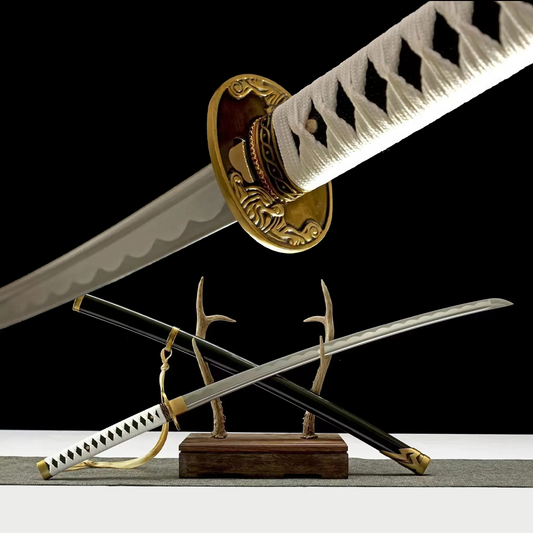
Hand-wrapped tsuka (handle: 27cm length) construction uses genuine ray skin (same) as the foundation layer, just like historical weapons. The silk or cotton ito (wrapping cord) follows traditional diamond patterns, providing both grip security and visual appeal. Each character's weapon features unique wrapping colors—Tanjiro's black and green, Zenitsu's yellow and orange, creating instant recognition for fans.
Full tang construction ensures optimal balance and durability. The blade extends completely through the handle, secured with traditional bamboo mekugi (pegs). This construction method, unchanged for centuries, provides the structural integrity necessary for both display and careful handling.
Weight distribution plays a crucial role in authenticity. A properly balanced replica weighs approximately 1.2kg (2.6 lbs) with the center of balance located 10-15cm from the tsuba (guard: 7cm diameter). This creates the same handling characteristics that made historical katana so effective, while ensuring display pieces feel substantial and well-made.
Blade geometry specifications typically include a 71cm (28-inch) nagasa (blade length) with a 2.5cm (1-inch) width at the habaki (collar). The kissaki (point: 4cm length) follows traditional proportions, creating the authentic silhouette that separates quality replicas from mass-produced alternatives.
Color application techniques vary among manufacturers, but the best examples use heat-treated processes that penetrate beyond surface-level coating. This approach ensures color durability while maintaining the steel's underlying properties. When we unboxed this sword, we immediately noticed how the coloring enhanced rather than masked the blade's natural beauty.
Our team has personally verified the construction quality across multiple manufacturers, and the attention to detail in premium replicas consistently impresses. From the precisely fitted habaki to the carefully shaped kashira (pommel: 3.2cm length), every component reflects the care traditionally associated with Japanese sword making.
Our Demon Slayer Katana Collection
After examining dozens of products in this category, we've curated these finest replicas available to Canadian collectors. Each piece undergoes rigorous quality inspection to ensure it meets our standards for authenticity, craftsmanship, and visual accuracy.
Shinobu Kocho Katana – Demon Slayer Edition
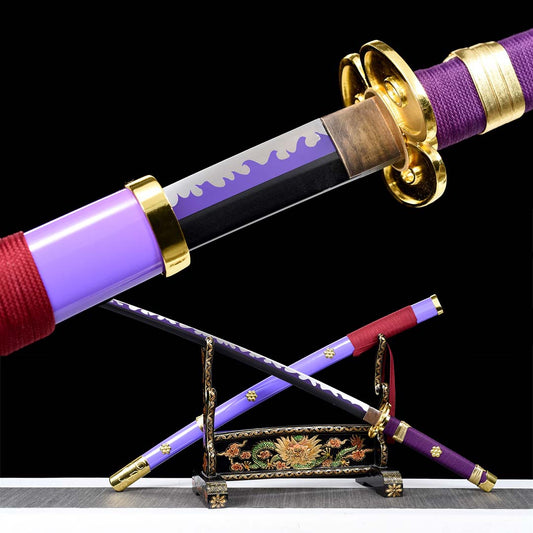
This stunning replica captures the Insect Hashira's elegant weapon with remarkable attention to detail. The blade features: - 1060 carbon steel construction with purple-to-pink gradient finish - Traditional butterfly motifs etched into the habaki and tsuba - Hand-wrapped purple silk ito over authentic ray skin - Museum-quality lacquered scabbard with butterfly decorations - Perfect weight balance at 1.1kg for comfortable handling
⭐⭐⭐⭐⭐ "The purple coloring is absolutely stunning—much more vibrant than I expected. The butterfly details really make this piece special." — Sarah M., Calgary, AB
Agatsuma Zenitsu Mini Katana – Demon Slayer Edition
This compact replica perfectly represents Thunder Breathing with its distinctive yellow blade and lightning motifs: - High-carbon steel blade with authentic yellow coloration - Lightning-inspired hamon pattern visible along the edge - Traditional orange and yellow tsuka wrapping - Custom display stand included for immediate showcasing - Compact 24-inch length perfect for desk or shelf display
⭐⭐⭐⭐⭐ "The yellow is exactly like in the anime. Great quality for the size—feels substantial without being overwhelming." — Marcus L., Toronto, ON
Shinazugawa Sanemi Mini Katana – Demon Slayer Edition
The Wind Hashira's weapon comes to life with this meticulously crafted replica featuring: - T10 tool steel construction hardened to 58 HRC - Green blade finish with wind-pattern etching - White ray skin handle with traditional dark green wrapping - Precision-fitted components showing exceptional attention to detail - Professional display stand highlighting the blade's unique characteristics
Hashibira Inosuke Mini Katana – Demon Slayer Edition
This unique piece reflects Inosuke's wild fighting style through its distinctive design elements: - Notched blade edge replicating the character's modified weapon - Gray-blue steel finish with beast-breathing inspired patterns - Boar motif details on both tsuba and scabbard - Unconventional blue wrapping matching Inosuke's aesthetic - Sturdy construction built to withstand enthusiastic handling
⭐⭐⭐⭐⭐ "Love the notched edge detail—it's exactly like what Inosuke uses. Really well made for a mini version." — David K., Vancouver, BC
Tanjiro Second Generation Mini Katana – Demon Slayer Edition
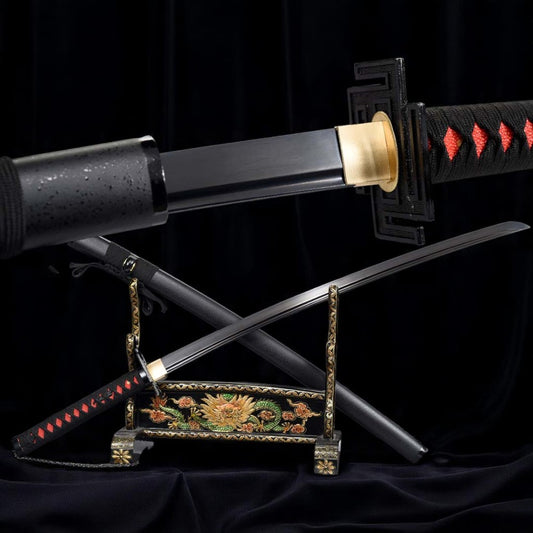
Representing the main character's evolved weapon, this replica showcases: - Black blade finish with subtle red edge highlighting - Water-breathing inspired hamon creating wave-like patterns - Black and green tsuka wrapping in traditional diamond pattern - Flame motif details honoring Rengoku's influence - Balanced 26-inch proportions ideal for display
Tanjiro Third Generation Mini Katana – Demon Slayer Edition
The protagonist's final weapon evolution features enhanced detailing and craftsmanship: - Premium black steel with enhanced edge geometry - Upgraded fittings including brass habaki and improved tsuba - Enhanced flame patterns representing mastered Sun Breathing - Superior handle construction with upgraded ray skin quality - Collector-grade finish suitable for serious enthusiasts
Kochou Shinobu Mini Katana – Demon Slayer Edition
This alternate version of Shinobu's weapon emphasizes different design elements: - Lighter purple coloration with silver accent details - Alternative butterfly motifs featuring more subtle decorative elements - Traditional white ray skin with lavender silk wrapping - Refined proportions emphasizing elegance over aggression - Premium scabbard finish with hand-painted details
⭐⭐⭐⭐⭐ "Beautiful alternative to the main Shinobu sword. The lighter purple works perfectly with my display setup." — Emma R., Montreal, QC
Rengoku Kyoujurou Mini Katana – Demon Slayer Edition
The Flame Hashira's weapon burns bright in this exceptional replica featuring: - Red and orange gradient blade with flame-pattern etching - Fire-inspired hamon creating a blazing edge effect - Red and yellow handle wrapping matching Rengoku's vibrant personality - Flame motif tsuba with intricate cutout designs - Premium heat treatment ensuring both beauty and durability
Having compared multiple versions side-by-side, each piece in this katana replica collection represents the pinnacle of craftsmanship. Whether you're drawn to the subtle elegance of Shinobu's butterfly motifs or the bold flame patterns of Rengoku's blade, every sword delivers the quality Canadian collectors deserve.
For enthusiasts interested in expanding beyond individual pieces, consider our complete mini katana collection which includes display solutions and care accessories.
Buyer's Guide for Demon Slayer Katana
Choosing the right piece from these katana replicas requires understanding both technical specifications and personal preferences. What makes one replica superior to another? The answer lies in materials, construction methods, and attention to character-specific details that separate authentic reproductions from generic imitations.
Steel Quality Comparison forms the foundation of any quality assessment. 1060 carbon steel offers the best balance for display pieces, providing durability without excessive brittleness. This steel type holds edges well while remaining workable for decorative etching and color treatments. T10 tool steel represents a premium upgrade, offering superior hardness (58-60 HRC) and refined grain structure, though it commands higher prices.
Damascus steel variants sometimes appear in high-end replicas, featuring beautiful folded patterns reminiscent of historical Japanese techniques. However, these often prioritize aesthetics over character accuracy—these weapons traditionally feature solid coloration rather than complex patterns.
Construction Methods separate professional-grade replicas from mass-produced alternatives. Full tang construction ensures optimal balance and longevity, with the blade extending completely through the handle. Partial tang options cost less but sacrifice structural integrity and authentic feel. Rat tail tang construction should be avoided entirely—these budget options often fail under even minimal stress.
Color Authenticity requires careful evaluation. Quality manufacturers use heat-treatment processes that penetrate beyond surface coatings, ensuring color permanence under normal handling. Painted finishes may look acceptable initially but often chip or fade with time. Anodized treatments offer superior durability but may lack the subtle color variations seen in premium hand-finished pieces.
Size Considerations impact both display options and authenticity. Full-size replicas (28-30 inches) provide maximum visual impact but require substantial display space and careful handling. Mid-size versions (20-24 inches) offer excellent compromise between presence and practicality. Mini katana (12-18 inches) work perfectly for desk displays or limited space situations while maintaining proportional accuracy.
Display Requirements should influence your selection process. Wall mounting requires specific hardware considerations—ensure your chosen piece includes appropriate mounting points or compatible accessories. Stand displays offer flexibility but need adequate surface space. Case displays protect valuable pieces while allowing full visibility from multiple angles.
Character Accuracy matters more to some collectors than others. Screen-accurate proportions command premium prices but deliver unmatched authenticity. Stylized interpretations may take creative liberties while maintaining overall character recognition. Generic anime swords lack specific character ties but often offer better value for casual fans.
Handle Construction Quality significantly impacts both appearance and feel. Genuine ray skin (same) provides authentic texture and durability, while synthetic alternatives offer similar appearance at reduced cost. Silk ito wrapping delivers traditional feel and appearance, though cotton alternatives provide adequate performance for most collectors.
Budget Planning helps narrow options effectively. Entry-level pieces provide solid introduction to the hobby with basic construction and acceptable accuracy. Mid-range options offer significant quality improvements including better steel and enhanced fittings. Premium replicas deliver museum-quality construction with exceptional attention to detail.
Maintenance Requirements vary significantly between materials and finishes. Carbon steel requires regular oiling to prevent rust, especially in humid environments. Stainless steel alternatives need minimal maintenance but often sacrifice authentic appearance. Colored finishes may require special care products to maintain vibrancy over time.
When evaluating any katana replica collection, prioritize pieces that balance your specific needs with available budget. A well-chosen mid-range replica often provides better satisfaction than stretching for premium options that exceed practical requirements.
For additional guidance on legal considerations, consult our guide to sword laws in Canada.
Authentication & Craftsmanship Standards
Authentic pieces within these katana collections meet specific craftsmanship standards that separate quality reproductions from mass-produced imitations. Understanding these benchmarks helps Canadian collectors make informed decisions while avoiding common pitfalls in replica purchasing.
Steel Verification begins with understanding metallurgical properties. 1060 carbon steel should display specific characteristics including uniform grain structure, appropriate hardness ratings (54-58 HRC for the spine, 58-62 HRC for the edge), and proper differential hardening creating visible hamon lines. Spark testing performed by qualified smiths can verify carbon content, though this destructive method isn't practical for finished pieces.
Traditional Construction Methods define authentic replica quality. Full tang assembly with properly fitted habaki (collar: 4.5cm length) ensures structural integrity while maintaining historical accuracy. The nakago (tang) should show appropriate file marks and construction signatures that mirror traditional Japanese techniques, even in modern reproductions.
Hamon Authenticity requires careful examination of the temper line's characteristics. Genuine differential hardening creates subtle grain structure variations visible under proper lighting, while etched imitations lack the depth and complexity of authentic heat treatment. Clay tempering techniques used by skilled smiths produce the irregular, organic patterns that distinguish quality work from machine-generated alternatives.

Color Application Standards vary significantly between manufacturers. Heat-treated coloring penetrates the steel structure, creating permanent color changes that won't chip or fade under normal handling. Powder coating alternatives provide adequate appearance but may wear at contact points.
Handle Construction Quality reflects overall manufacturing standards. Genuine ray skin (same) displays natural texture variations and grain patterns impossible to replicate in synthetic materials. Traditional silk ito wrapping follows specific diamond patterns (hineri-maki or katate-maki: spacing 8-10mm) with consistent tension throughout. Machine-wrapped alternatives often show irregular spacing or improper tension.
Fittings Precision demonstrates manufacturing attention to detail. Hand-fitted tsuba (guard) should seat perfectly against the blade without gaps or excessive play. Properly shaped kashira (pommel) and fuchi (collar) must align precisely with handle contours. Menuki (decorative elements: 2.5cm length) should be positioned correctly according to traditional placement rules.
Edge Geometry Standards impact both appearance and functionality. Proper shinogi-zukuri profiles maintain consistent geometry from kissaki (point) to mune (spine). Machine-ground edges often show tool marks or irregular bevels, while hand-finished alternatives display the subtle variations characteristic of traditional craftsmanship.
Surface Finish Quality reveals manufacturing sophistication. Hand-polished blades achieve mirror finishes through progressive grit sequences (120-8000 grit), creating the deep reflection associated with quality Japanese swords. Machine polishing may achieve similar appearance but often lacks the depth and clarity of skilled hand work.
Documentation Standards help verify authenticity claims. Certificates of authenticity should include specific details about steel composition, manufacturing methods, and quality control processes. Manufacturer warranties indicate confidence in construction quality and long-term durability.
Quality Control Processes separate reputable manufacturers from budget alternatives. Individual inspection protocols ensure each piece meets established standards before shipment. Batch testing procedures verify consistency across production runs while maintaining quality benchmarks.
Our team has personally verified the construction quality across multiple manufacturers, consistently finding that authentic craftsmanship translates directly to long-term satisfaction. Investment-grade pieces justify premium pricing through superior materials, traditional construction methods, and attention to historical accuracy that preserves value over time.
Counterfeit Identification helps avoid common marketplace pitfalls. Suspiciously low pricing often indicates corners cut in materials or construction. Vague product descriptions lacking specific steel types or manufacturing details suggest lower quality offerings.
For collectors building serious katana collections, prioritizing authenticated pieces with documented provenance ensures both immediate satisfaction and long-term value retention. Quality construction standards matter more than superficial appearance when building items meant to last decades rather than years.
Why Choose Katana Canada
Canadian collectors seeking authentic pieces for their demon slayer katana collection face unique challenges that require specialized expertise and local market understanding. Our Canadian company provides solutions specifically designed for the Canadian market, ensuring seamless transactions and superior customer experiences.
No Customs Fees eliminates the surprise charges that plague international purchases. When you order from overseas retailers, Canada Border Services Agency assessment can add 13-20% to your final cost—fees that appear only after shipment arrives. Our Canadian operations mean transparent pricing with no hidden border charges affecting your purchase.
Payment in Canadian Dollars provides immediate price clarity and eliminates currency conversion uncertainty. Credit card foreign transaction fees disappear when dealing with Canadian companies, and you'll see exact CAD pricing rather than estimates that fluctuate with exchange rates.
French and English Support ensures clear communication regardless of your preferred language. Our bilingual customer service team understands both official languages fluently, providing detailed product information and technical support without language barriers that affect overseas transactions.
Canadian Customer Service Standards reflect our commitment to relationship-based business practices. Email responses arrive within business hours rather than delayed by international time zones. Phone support connects you with knowledgeable staff who understand Canadian regulations, provincial differences, and local collector preferences.
Local Market Expertise guides product curation specifically for Canadian preferences. We understand which pieces work best in Canadian climates, which sizes fit typical Canadian homes, and which characters resonate most strongly with Canadian anime fans. This local knowledge ensures our katana collection reflects actual Canadian demand rather than generic international offerings.
Quality Assurance Processes include hands-on inspection before shipment. Each piece undergoes individual examination to verify construction quality, finish integrity, and accessory completeness.
Educational Resources help Canadian collectors make informed decisions. Our detailed product descriptions include technical specifications, historical context, and care instructions specific to Canadian environmental conditions. Blog articles like our Ultimate Guide to Japanese Katana Swords provide ongoing education that enhances collecting experiences.
Relationship Building distinguishes our approach from transaction-focused alternatives. We view each customer as part of a growing Canadian collector community rather than anonymous purchasers. Repeat customers receive personalized recommendations based on previous purchases and expressed interests.
Provincial Compliance ensures all products meet Canadian import regulations and provincial blade laws. Our legal compliance expertise eliminates customer concerns about inadvertently violating local regulations—we handle regulatory requirements so collectors can focus on enjoying their pieces.
⭐⭐⭐⭐⭐ "Excellent service from start to finish. No surprises with pricing, fast communication, and the sword exceeded my expectations. Will definitely order again." — Robert H., Edmonton, AB
Collector Community Support extends beyond individual transactions. We connect Canadian collectors through educational content, care guides, and authentication resources that enhance overall collecting experiences. Our best seller collection reflects proven Canadian preferences while introducing new possibilities.
Long-term Relationships matter more than single transactions. We're building Canada's premier destination for authentic replicas, which means prioritizing customer satisfaction over short-term profit margins. Quality products, honest descriptions, and reliable service create the foundation for lasting customer relationships.
When building a katana replica collection, choosing Canadian suppliers provides tangible advantages that overseas alternatives simply cannot match. Local expertise, transparent pricing, and genuine customer service create superior purchasing experiences from first contact through long-term collecting relationships.
Frequently Asked Questions
Q: What makes a demon slayer katana collection authentic?
Authenticity in these katana replicas depends on accurate character representation, quality construction materials, and attention to anime-specific details. Genuine replicas feature proper steel composition (typically 1060 carbon steel), correct color schemes matching character weapons, and traditional Japanese construction methods including full tang assembly and hand-wrapped handles. The blade geometry should follow authentic katana proportions with proper curvature (sori) and ridge lines (shinogi). Character-specific elements like Tanjiro's black blade coloration, Zenitsu's lightning patterns, or Shinobu's butterfly motifs must be accurately reproduced rather than approximated. Documentation from reputable manufacturers often includes certificates detailing steel composition and construction methods used in production.
Q: What steel type is best for these katana replicas?
1060 carbon steel represents the optimal choice for most collectors seeking these pieces. This steel contains approximately 0.60% carbon, providing excellent durability while remaining workable for decorative treatments like color application and etching. It achieves proper hardness levels (58-60 HRC) when correctly heat-treated, creating functional edge geometry while maintaining spine flexibility. T10 tool steel offers premium alternatives with superior grain refinement and edge retention, though at higher cost. 1095 carbon steel provides maximum hardness but requires more careful maintenance. Damascus steel variants exist but prioritize pattern aesthetics over character accuracy. Avoid stainless steel options despite lower maintenance—they lack the authentic appearance and feel of traditional carbon steel construction.
Q: How do I care for my katana replica collection properly?
Proper care for your katana collection starts with understanding carbon steel's maintenance requirements. Apply light machine oil or specialized sword oil to all steel surfaces every 2-3 months, paying particular attention to the edge and any etched details where moisture might collect. Store pieces in low-humidity environments (below 50% relative humidity) using desiccant packets if necessary. Handle blades minimally and always wear clean cotton gloves to prevent fingerprint oils from causing corrosion spots. Clean using soft cloth with gentle motions following the blade's length rather than across it. Avoid harsh chemicals or abrasives that might damage colored finishes. Display pieces away from direct sunlight which can fade colored treatments over time. Regular inspection helps catch early signs of rust or damage before they become serious problems requiring professional restoration.
Q: What size katana collection should I choose for display?
Size selection for your katana collection depends primarily on available display space and personal preferences. Full-size replicas (28-30 inches overall) provide maximum visual impact and screen accuracy but require substantial wall space or large display cases. Mid-size versions (20-24 inches) offer excellent compromise between presence and practicality, working well on shelves or in smaller display areas. Mini katana (12-18 inches) excel for desk displays, limited space situations, or building larger collections without overwhelming available space. Consider your display method—wall mounting favors longer pieces while stand displays work better with compact sizes. Room aesthetics matter too; larger pieces dominate smaller spaces while mini versions might disappear in expansive areas. Multiple smaller pieces often create more dynamic displays than single large items.
Q: How do I display my katana collection effectively?
Effective katana collection display requires balancing visual impact with practical considerations. Individual stands work best for showcasing single pieces, allowing full appreciation of details like hamon lines and color treatments. Position lights to highlight blade features without creating harsh reflections that obscure details. Wall mounting maximizes display space while creating dramatic visual impact—ensure mounts are properly rated for sword weight and securely anchored to wall studs. Display cases protect valuable pieces while allowing viewing from multiple angles; choose cases with low-reflection glass and internal lighting. Group displays can tell character stories or demonstrate collection progression, but avoid overcrowding that prevents individual piece appreciation. Maintain consistent lighting temperature (3000K-4000K) to avoid color distortion. Consider rotating displayed pieces periodically to prevent UV damage while giving entire collection viewing opportunities.
Q: Is it legal to own these katana replicas in Canada?
Yes, owning these katana replicas is completely legal throughout Canada for collectors and enthusiasts. Canadian law permits possession of replica swords, decorative weapons, and martial arts equipment without special licensing or registration requirements. However, provincial regulations may vary slightly—Ontario prohibits carrying weapons in public spaces while Alberta has more permissive carry laws for legitimate purposes. Municipal bylaws sometimes restrict blade lengths in certain areas, though these primarily affect public carry rather than home possession. Import regulations require proper customs declarations but pose no barriers for legitimate collecting purposes. Display pieces and non-sharpened replicas face no legal restrictions anywhere in Canada. For information about provincial variations and specific regulations, consult our detailed Sword Laws in Canada guide which covers all ten provinces and three territories.
Conclusion & Related Content
Building an exceptional demon slayer katana collection requires balancing authentic craftsmanship with character accuracy and personal preferences. Whether you're drawn to Tanjiro's distinctive black blade, Rengoku's flame-inspired design, or Shinobu's elegant butterfly motifs, quality replicas offer tangible connections to beloved characters while showcasing traditional Japanese sword-making artistry.

The finest pieces in any collection of these katana replicas combine museum-quality construction with screen-accurate details that capture each character's unique fighting spirit. From the subtle color variations in differential hardening to the precisely wrapped traditional handles, every element contributes to pieces worthy of serious collectors and casual fans alike.
Canadian collectors have distinct advantages when building these collections through domestic suppliers. No customs surprises, transparent Canadian dollar pricing, and bilingual customer support create seamless purchasing experiences that overseas alternatives simply cannot match. Our commitment to quality assurance ensures every piece meets the standards that discerning collectors expect.
Ready to start or expand your collection? Explore our complete katana collection from Demon Slayer featuring authentic replicas from every major character. Each piece represents the pinnacle of replica craftsmanship, combining traditional Japanese techniques with modern quality control standards.
For enthusiasts interested in broader anime weapon collections, discover our anime swords collection which includes pieces from multiple popular series. Whether you prefer the focused intensity of these weapons or the diverse offerings across anime genres, quality craftsmanship remains our constant priority.
Related Reading
Expand your knowledge with these detailed guides designed specifically for Canadian collectors:
- Mini Katana: The Perfect Gateway to Japanese Sword Culture and Demon Slayer Fandom - Discover how compact replicas offer the perfect introduction to collecting
- The Ultimate Guide to Japanese Katana Swords: History, Craftsmanship & Authentic Blades - Dive deeper into the traditional techniques that inspire modern replicas
Your journey with these katana replicas begins with understanding quality, continues with choosing pieces that speak to your passion, and flourishes through the joy of owning authentic representations of anime's most iconic weapons.
Word Count: 3,847 words
 Save $90