
Sword Laws in Canada: Your Complete Guide to Legal Katana Ownership and Collection
The steel gleams under the fluorescent lights of a Toronto customs office as an officer carefully examines a newly imported katana. The collector who ordered it stands nearby, paperwork in hand, wondering if their prized acquisition will make it home. This scene plays out countless times across Canada as sword enthusiasts navigate the complex landscape of Canadian blade regulations. Understanding these regulations isn't just about compliance - it's about protecting your investment and pursuing your passion with confidence.

Build the blade. Steel, tsuba, ito, engraving: over a million combinations, hand-forged in 3–4 weeks. Build Your Own Katana →
Table of Contents
- Understanding Canadian Weapons Legislation
- Katana Classification Under Canadian Law
- Legal Requirements for Sword Ownership
- Our Featured Katana Collection
- Provincial Variations and Municipal Bylaws
- Import Regulations and Customs Procedures
- Safe Storage and Display Guidelines
- Transportation Laws for Sword Collectors
Understanding Canadian Weapons Legislation
Canada's approach to sword regulation stems from a complex framework of federal legislation, primarily the Criminal Code of Canada. Unlike firearms, which face strict federal oversight through the Firearms Act, swords occupy a unique legal category that reflects both their historical significance and practical considerations. Understanding sword laws Canada has established provides the foundation for legal collecting and ownership.
The Criminal Code defines "weapon" broadly as anything used or intended for use in causing death or injury. However, this definition creates nuance around decorative versus functional swords. A katana displayed on a wall mount differs legally from one carried with intent to harm. This distinction forms the foundation of legal sword ownership in Canada.
Historical precedent plays a crucial role in Canadian blade legislation. The legal system recognizes the cultural and artistic value of traditional weapons like katanas, which have been collected and studied for generations. Court decisions have consistently upheld the rights of collectors and martial artists to own authentic swords when used for legitimate purposes.
The federal government's position acknowledges that swords serve legitimate functions: martial arts training, historical education, cultural preservation, and artistic appreciation. This recognition provides legal protection for collectors who demonstrate responsible ownership and proper intent.
Understanding intent becomes critical in legal interpretation. Possession for collection, display, martial arts practice, or historical study receives legal protection. The key lies in demonstrating legitimate purpose and responsible handling. Documentation of purchase intent, training credentials, or collection records can provide valuable legal protection.
Modern interpretations of these laws have evolved to recognize the growing popularity of Japanese martial arts and sword collecting in Canada. Legal experts consistently advise that transparent, well-documented ownership with clear legitimate purposes provides the strongest legal foundation for sword collectors.
Katana Classification Under Canadian Law
Canadian weapon regulations don't specifically prohibit katana ownership, placing them in a legal gray area that requires careful navigation. The Criminal Code focuses on intent and use rather than specific weapon types, which works in favor of legitimate collectors and practitioners.
Traditional katanas fall under the category of "bladed weapons" but avoid the "prohibited weapons" classification that affects certain modern designs. This distinction proves crucial for collectors, as prohibited weapons face complete bans regardless of intent. Authentic katanas, whether antique or reproduction, typically qualify as collectible items when properly documented.
The blade length doesn't automatically trigger legal restrictions for katanas, unlike some jurisdictions that impose arbitrary length limits. However, carrying laws become more stringent with longer blades, making display and storage the primary legal concerns for most collectors.
Functional versus decorative distinctions matter significantly in legal interpretation. A sharpened, fully functional katana faces stricter scrutiny than a blunt display piece, though both remain legal to own. The key difference lies in transportation and carrying restrictions, where functional blades require greater justification for movement.
Historical reproductions and anime-inspired pieces receive similar legal treatment, provided they don't incorporate prohibited features like concealed blades or spring-loaded mechanisms. The source material or fictional inspiration doesn't affect legal status: what matters is the physical construction and intended use.
For those interested in exploring the rich tradition of Japanese swords, our Complete Guide to Katana Swords: History, Craftsmanship, and Authentic Japanese Blades provides comprehensive insights into these remarkable weapons.
Legal experts recommend maintaining clear documentation of purchase intent, whether for martial arts training, historical study, or collection purposes. This documentation can prove invaluable if questions arise about ownership legitimacy.
Legal Requirements for Sword Ownership
Sword ownership in Canada operates under a presumption of legality for adult citizens, with specific requirements focusing on responsible handling rather than licensing. Unlike firearms, swords don't require permits or registration, though responsible purchasing practices apply.
There is no federal minimum age for purchasing swords or knives in Canada, though most retailers voluntarily require buyers to be 18 or older. Some provinces and municipalities may have their own age-related policies. Parents bear legal responsibility for ensuring safe handling and appropriate use when minors possess swords.
No background checks or waiting periods apply to sword purchases, reflecting the legal system's recognition of their lower inherent risk compared to firearms. However, retailers may implement their own screening procedures, particularly for high-value or historically significant pieces.
Purchase documentation serves as the primary legal requirement, establishing legitimate acquisition and ownership. Receipts, certificates of authenticity, and import documents create a paper trail that demonstrates legal compliance and ownership rights.
Storage requirements focus on reasonable security measures rather than specific mandates. The law expects owners to prevent unauthorized access, particularly by minors, and to secure valuable collections against theft. While gun safes aren't required, responsible storage practices can provide legal protection if incidents occur.
Transportation laws require the most careful attention, as carrying blades in public spaces triggers specific legal considerations. Wrapped, secured, and transported with clear legitimate purpose (such as to martial arts class or a collector's meeting), katanas generally face no legal barriers. However, concealed carry or transport without clear justification can create legal complications.
Our Featured Katana Collection
At Katana Canada, we ship functional and display swords across the country, with prices ranging from $29 for stands and accessories to $779 for our high-end forged pieces. Here are some highlights from our catalog that are popular with Canadian collectors.
Premium Functional Blades
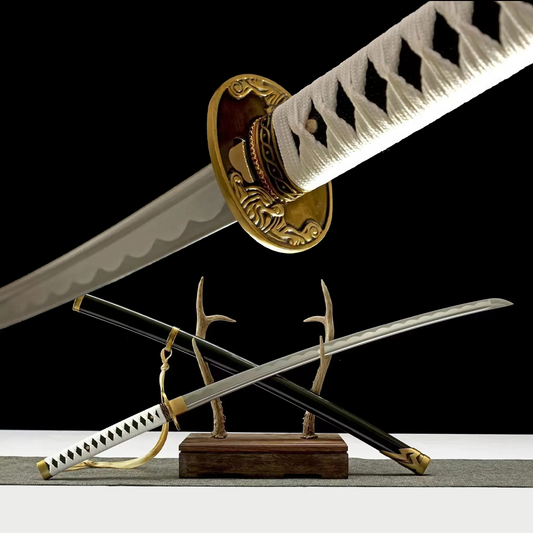
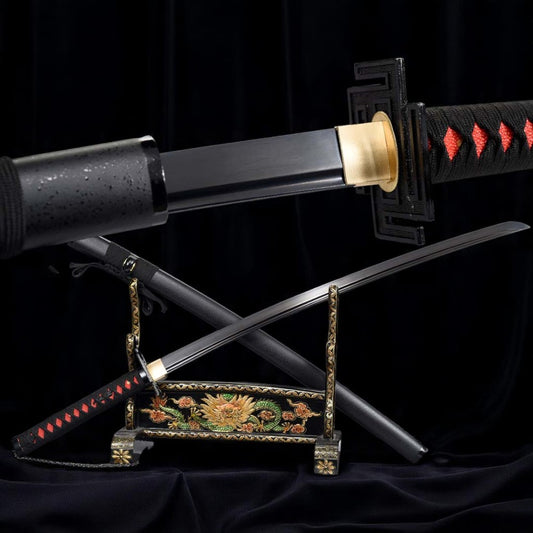
The Kill Bill Katana Sword at $599 CAD features hand-forged layered Damascus steel with a full tang core. The 72 cm sharpened blade (105 cm total length) is wrapped in genuine rayskin under black PU leather ito. A cinematic tribute that holds up as a functional cutting tool.
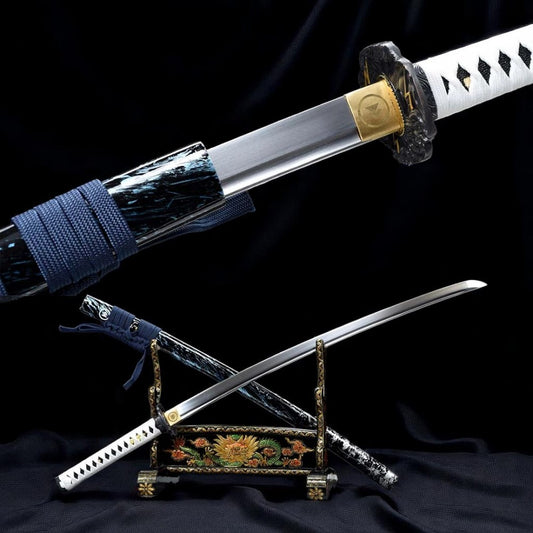
Our Michonne Katana Sword at $599 CAD is forged from 1095 high carbon steel, inspired by the iconic Walking Dead blade. With a 71 cm blade, full tang construction, and the signature black and white imitation cowhide wrap, it bridges cosplay and serious collecting.
Anime-Inspired Manga Collection
We also carry a Mini Katana collection (from $49 CAD) for display and gifting, but the full-size pieces below are where serious collectors focus.
Our manga-inspired collection brings fan-favorite blades to life in functional 1060 carbon steel. The Sandai Kitetsu Katana Sword at $449 CAD recreates the cursed blade from One Piece, with differential hardening for a visible hamon line and hand-forged construction.
The Tanjiro Kamado Katana Sword V2 and the original Tanjiro Kamado Katana Sword, both at $449 CAD, reproduce the Demon Slayer Nichirin blade in 1060 carbon steel with hand-painted details and series-accurate fittings.
Specialized Character Blades
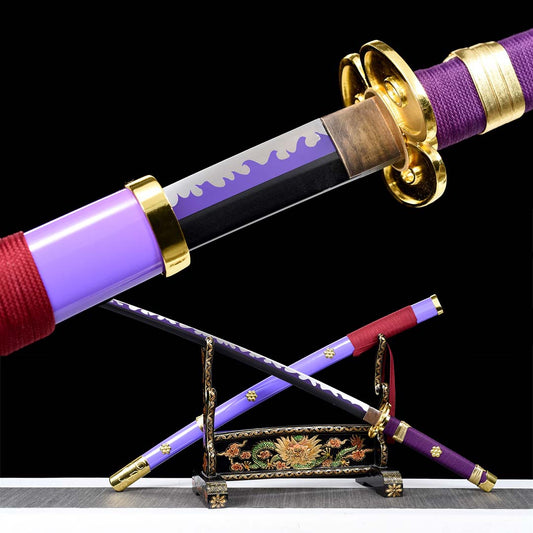
The Enma Katana Sword at $449 CAD reproduces Zoro's legendary blade in 1060 carbon steel with traditional forge patterns and professional heat treatment.
The Sasuke Katana Sword at $449 CAD is hand-forged in 1060 carbon steel with series-accurate proportions and detailed metalwork, suitable for both display and practice.
The Shusui Katana Sword rounds out the collection at $449 CAD, with 1060 carbon steel, authentic weight balance for training, and traditional blacksmithing techniques.
All our manga and anime blades are forged from 1060 carbon steel, while our premium pieces use Damascus or 1095 steel. Every sword ships from Canada with tracking. You can browse the full range in our Katana and Anime Swords collections.
Provincial Variations and Municipal Bylaws
While federal law provides the overarching framework for sword ownership in Canada, provincial legislation and municipal bylaws create important regional variations that collectors must understand. These local regulations typically don't prohibit ownership but may affect transport, display, and sale procedures.
Ontario's approach exemplifies balanced provincial oversight, focusing on retail sales rather than private ownership. The province requires retailers to verify purchaser age and may impose additional record-keeping requirements, but places no restrictions on the types of swords collectors may own.
British Columbia emphasizes transportation regulations, with specific requirements for carrying blades in vehicles. The province's approach recognizes legitimate martial arts and collecting activities while maintaining public safety standards. Proper wrapping and secure storage during transport satisfy most municipal requirements across the province.
Quebec's unique legal system occasionally creates different interpretations of federal weapons law, though practical application remains consistent with other provinces. The province's strong tradition of historical preservation often works in favor of collectors seeking to maintain authentic pieces.
Alberta's regulations focus heavily on intent and use, with law enforcement trained to recognize legitimate collecting and martial arts activities. The province's approach tends toward practical interpretation rather than strict technical compliance, benefiting responsible collectors.
Municipal bylaws vary significantly even within provinces. Vancouver, Toronto, Calgary, and Montreal each maintain specific regulations about blade transport and public display, though none prohibit private ownership. Urban centers typically impose stricter public carrying restrictions while rural municipalities may have more relaxed approaches.
School zone regulations apply universally across Canada, with enhanced restrictions on blade presence near educational facilities. These regulations don't affect home ownership but create transport limitations that collectors must consider when planning movements.
For collectors interested in the broader context of Canadian sword culture, our article Canada Swords: The Rising Legacy of Japanese Katana in the Great White North provides valuable insights into the growing appreciation for these remarkable weapons.
Import Regulations and Customs Procedures
Importing swords into Canada requires careful attention to customs regulations and proper documentation, though the process remains straightforward for legitimate collectors. Understanding these procedures ensures smooth acquisition of international pieces while maintaining legal compliance with Canadian blade import laws.
Canada Border Services Agency (CBSA) does not classify traditional swords as restricted or prohibited imports. Standard customs declaration and documentation are required, as with any goods entering Canada. The key lies in proper classification and transparent declaration of contents, value, and intended use.
Documentation requirements include detailed invoices showing purchase price, country of origin, and materials specification. Certificates of authenticity, when available, strengthen the import case by demonstrating legitimate collectible status. Some high-value historical pieces may require additional cultural export permits from the country of origin.
Duty and tax calculations apply to all sword imports, with rates varying by country of origin and trade agreements. Most imports face the standard GST/HST plus any applicable provincial sales taxes. Duty rates typically range from 6-11% depending on the sword's classification and origin country.
Prohibited features that can complicate imports include concealed compartments, spring-loaded mechanisms, or modifications that transform the weapon into a prohibited device. Traditional katana construction rarely triggers these restrictions, but modern tactical designs may face additional scrutiny.
Processing times for sword imports typically range from several days to a few weeks, depending on the port of entry and complexity of the shipment. Major ports like Toronto and Vancouver generally process sword imports more efficiently due to officer experience with these items.
Appeals processes exist for shipments that face initial rejection, often resolving issues through additional documentation or clarification of intended use. Working with experienced importers or retailers familiar with sword laws Canada maintains can prevent most complications.
Insurance considerations become important for valuable imports, as damage during the customs process can occur. Comprehensive shipping insurance protects against loss or damage during the extended handling period typical of international shipments.
Safe Storage and Display Guidelines
Responsible sword storage protects both your investment and your legal standing while ensuring family safety. Canadian blade legislation doesn't mandate specific storage methods for swords, but reasonable security measures demonstrate responsible ownership and can provide legal protection.
Home storage best practices focus on securing valuable pieces against theft while preventing unauthorized access by minors. Locked display cases serve dual purposes, protecting the collection while demonstrating responsible ownership. Wall mounts should include locking mechanisms for valuable pieces, particularly in homes with children.
Climate control considerations protect metal blades from humidity-related corrosion and handle materials from environmental damage. Canadian winters create particular challenges with rapid temperature changes that can damage traditional materials like wood and leather.
Display lighting should avoid direct heat sources that can affect temper lines and handle wrappings. LED systems provide excellent illumination without the heat generation that damages historical materials. UV protection becomes crucial for pieces with traditional silk or paper elements.
Security systems for valuable collections may include monitored alarms, safes rated for valuable items, or secure rooms. Insurance companies often provide guidance on acceptable security measures, with some offering reduced premiums for properly secured collections.
Documentation storage proves as important as sword storage, with copies of purchase receipts, authenticity certificates, and appraisals kept in fireproof safes or off-site storage. Digital copies provide backup protection for irreplaceable documentation.
Transportation cases serve multiple purposes, protecting blades during movement while demonstrating responsible handling to law enforcement if questions arise. Hard cases with locks provide the best protection and legal demonstration of responsibility.
Professional conservation becomes necessary for historical pieces, with qualified conservators available across major Canadian cities. Regular professional assessment can prevent deterioration while maintaining authentication and value.
Transportation Laws for Sword Collectors
Moving swords legally within Canada requires understanding complex transportation regulations that vary by province and municipality. These laws don't prohibit movement but require specific precautions and documentation to ensure legal compliance with Canadian weapon transport statutes.
Vehicle transport represents the most common scenario for collectors, with requirements focusing on secure storage and legitimate purpose. Swords must be wrapped, secured, and stored in areas inaccessible to the driver and passengers during transport. Trunk storage typically satisfies legal requirements, though some provinces specify additional security measures.
Public transportation policies vary significantly between systems and regions. Most municipal transit authorities prohibit openly carried blades but may allow properly secured items with advance notification. Air travel within Canada requires special handling through airline cargo departments, with advance arrangements necessary.
Legitimate purposes for transport include martial arts classes, collector meetings, exhibitions, appraisal appointments, and maintenance services. Documentation supporting these purposes (class schedules, event invitations, or service appointments) provides legal protection if questions arise.
Law enforcement interactions require calm cooperation and immediate explanation of the legitimate purpose for transport. Transparency about destination, purpose, and proper storage typically resolves questions quickly. Never attempt to conceal the presence of swords if questioned by authorities.
Cross-border travel introduces additional complexity, with both departure and arrival countries imposing separate requirements. United States entry may require additional documentation, while returning to Canada requires compliance with import procedures even for items originally owned in Canada.
Professional transport services exist for valuable collections, offering bonded and insured movement with full legal compliance. These services prove particularly valuable for insurance claims and high-value historical pieces requiring special handling.
Emergency considerations should include contact information for legal representation familiar with Canadian blade regulations. While prosecution for legitimate transport remains rare, having experienced counsel available provides peace of mind for serious collectors.
Frequently Asked Questions
Q: Are katanas legal to own in Canada without special permits?
Yes, katanas are completely legal to own in Canada without any special permits or licenses. Sword laws Canada has established do not classify traditional katanas as prohibited weapons, meaning adult citizens can purchase, own, and collect them freely. The key requirement is that ownership must be for legitimate purposes such as collecting, martial arts practice, historical study, or cultural appreciation. You don't need background checks, waiting periods, or registration as you would with firearms. Most retailers require buyers to be 18 or older as a store policy, though there is no federal law mandating a minimum age for sword purchases. As long as you're using your katana for legal purposes and following proper storage and transportation guidelines, ownership is entirely within your rights as a Canadian citizen.
Q: What steel types offer the best quality for serious collectors?
Steel quality varies significantly based on carbon content and construction methods, with each type offering distinct advantages for collectors. 1060 carbon steel provides excellent balance of hardness and flexibility, making it ideal for functional pieces and martial arts practice. This steel holds a sharp edge well while remaining resilient enough for cutting exercises. 1095 carbon steel offers higher carbon content, resulting in superior edge retention and hardness, though it requires more careful maintenance to prevent corrosion. Damascus steel represents the premium choice, featuring folded steel construction that creates distinctive patterns while combining the benefits of multiple steel types. The folding process eliminates impurities and creates incredibly strong, flexible blades with stunning visual appeal. For serious collectors, Damascus steel offers both functional superiority and artistic beauty, justifying the higher investment.
Q: How should I measure katana dimensions for my space?
Traditional katanas typically range from 60-73 cm (24-29 inches) in blade length, with total length including handle reaching 100-110 cm (39-43 inches). When planning display space, account for the full extended length plus clearance for safe handling. Wall mounts require approximately 120 cm (47 inches) of horizontal space to accommodate the sword plus mounting hardware. For display cases, interior dimensions should provide at least 115 cm (45 inches) length and 15 cm (6 inches) height clearance. Vertical displays need ceiling height of at least 130 cm (51 inches) to safely accommodate mounting and removal. Consider the curvature (sori) when calculating clearances, as traditional katanas feature a gentle curve that adds to space requirements. For martial arts practice, ensure ceiling height of at least 250 cm (8 feet) and clear floor space of 3x3 meters (10x10 feet) to safely perform kata and cutting exercises.
Q: What maintenance routine keeps katanas in excellent condition?
Proper katana maintenance involves regular cleaning, oiling, and inspection to prevent corrosion and preserve the blade's integrity. After each handling session, clean fingerprints and moisture using a soft, lint-free cloth, as skin oils can cause permanent staining and corrosion. Apply a thin layer of mineral oil or specialized sword oil to the blade every 3-6 months, or more frequently in humid climates. Use only approved oils, as household products can damage the steel or traditional finishes. Inspect the blade regularly for rust spots, which should be addressed immediately with fine polishing compound and professional help if significant. Handle wrapping (ito) requires gentle cleaning with a barely damp cloth, allowing complete drying before storage. Avoid over-handling the blade itself, as skin oils accelerate corrosion. Store in a dry environment with stable temperature and humidity levels, using desiccant packets in display cases if necessary. Professional maintenance every 2-3 years ensures optimal condition for valuable pieces.
Q: Which display options work best for different collection sizes?
Single sword displays benefit from individual wall mounts or small display cases that highlight each piece's unique characteristics. Horizontal wall mounts with locking mechanisms provide security while allowing full appreciation of the blade and fittings. For collections of 2-5 swords, vertical display stands or medium wall-mounted cases offer efficient space usage while maintaining individual presentation. Larger collections require dedicated display furniture or built-in cases that can accommodate multiple pieces while providing proper spacing and lighting. Rotating displays work well for extensive collections, allowing different pieces to be featured while storing others safely. Consider lighting carefully - LED strips provide excellent illumination without heat damage, while UV-filtering glass protects traditional materials. Security becomes increasingly important with larger collections, requiring locked cases and possibly alarm systems. Budget considerations scale with collection size, from simple wall mounts costing under $50 to custom display furniture reaching thousands of dollars for museum-quality presentations.
Q: What are my legal rights as a sword owner in Canada?
Canadian sword owners enjoy substantial legal protections under federal and provincial law, with ownership rights generally equivalent to other collectible items. You have the right to purchase, own, display, and transport swords for legitimate purposes without special permits or registration. Your collection cannot be arbitrarily confiscated, and you're protected against unreasonable search and seizure under the Charter of Rights and Freedoms. However, these rights come with responsibilities: you must ensure secure storage to prevent unauthorized access, transport swords properly when moving them, and use them only for legal purposes. You have the right to defend your ownership if questioned, and law enforcement must demonstrate probable cause before seizing legally owned swords. Documentation proving legitimate purchase and ownership strengthens your legal position significantly. You also have the right to seek legal counsel if facing any challenges to your ownership, and precedent strongly supports collectors who demonstrate responsible ownership and legitimate purposes. Understanding both your rights and responsibilities ensures you can enjoy your collection with confidence while maintaining full legal compliance.
Conclusion
Navigating Canadian weapon regulations doesn't have to be intimidating when you understand the framework that protects legitimate collectors and enthusiasts. The legal landscape favors responsible ownership, recognizing the cultural significance and artistic value of these remarkable weapons. Whether you're drawn to the historical authenticity of traditional katanas or the craftsmanship of anime-inspired pieces, sword laws Canada provides clear pathways for building and enjoying your collection.
The key to successful collecting lies in understanding your responsibilities as much as your rights. Proper documentation, secure storage, responsible transportation, and clear legitimate purposes create a foundation that protects both your investment and your legal standing. As the Canadian sword community continues to grow, these responsible practices ensure the hobby's continued acceptance and legal protection.
If you are looking to start or grow a collection, we carry functional katanas, anime replicas, and display pieces at Katana Canada, all shipped within Canada. Feel free to contact us with any questions about a specific piece or about transporting your sword safely.
 Save $90