Hattori Hanzo Katana: The Sword Behind the Legend
Share
The name Hattori Hanzo echoes across centuries — from the war-torn roads of feudal Japan to the blood-red cinema of Kill Bill. Whether you’re drawn by the mystique of ninja warriors or the striking symbolism of the Bride’s katana, this blade has become more than just steel. It’s a legend — and now, it's a collectible.
Who Was the Real Hattori Hanzo?
Historically, Hattori Hanzo was a renowned samurai and ninja of the Tokugawa clan. Feared for his tactical genius and stealth, he became a figure of myth. Though not a swordsmith, his name today is associated with precision, honor, and deadly efficiency — the very values embodied in a proper katana.
Hanzo in Kill Bill: A Symbol Reborn
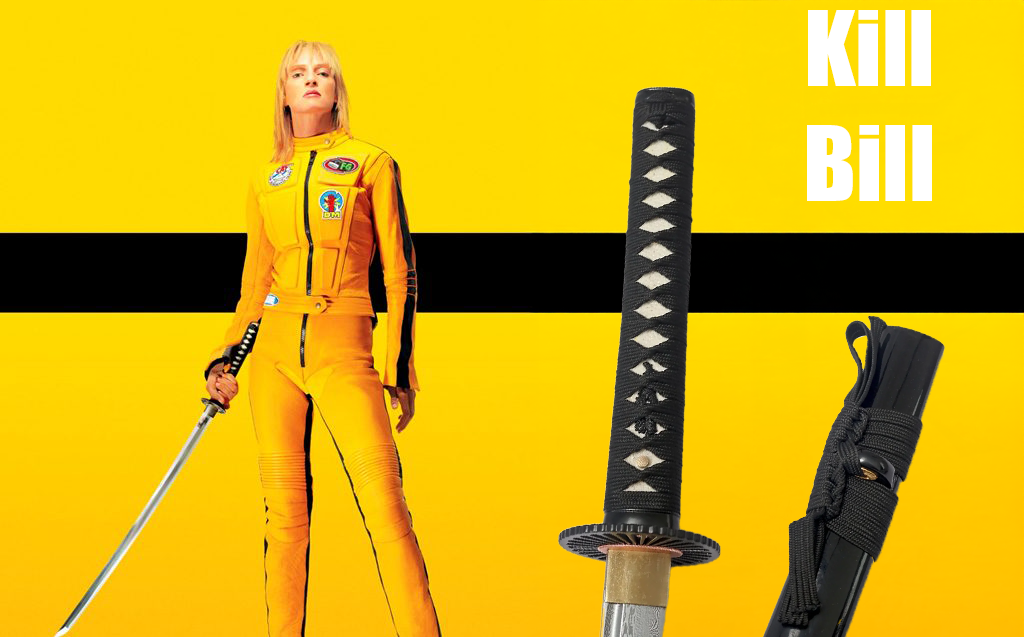
In Quentin Tarantino’s Kill Bill, Hanzo is portrayed as a retired swordsmith who crafts a katana for the Bride — one powerful enough to exact her revenge. This Kill Bill katana sword is more than a prop. It’s a spiritual artifact, representing rebirth, vengeance, and mastery.
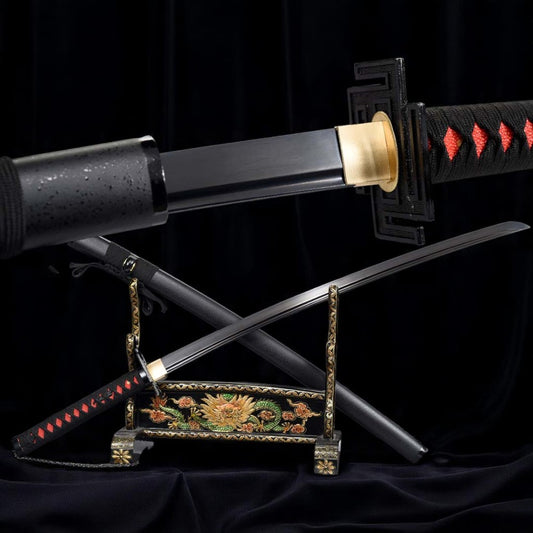
Clean lines, black lacquered scabbard, golden tsuba — everything about it is minimalist, yet commanding. It has sparked a worldwide fascination with “Hattori Hanzo swords,” especially among martial artists and collectors looking for real blades, not just decorative movie replicas.
What Is a Hattori Hanzo Katana, Really?
Technically, no sword was forged by the historical Hanzo. However, many swordsmiths today offer Hanzo-style katanas inspired by the movie’s aesthetics and samurai tradition. These swords are functional, made from high-carbon or damascus steel, and often engraved or built to reflect the movie version.
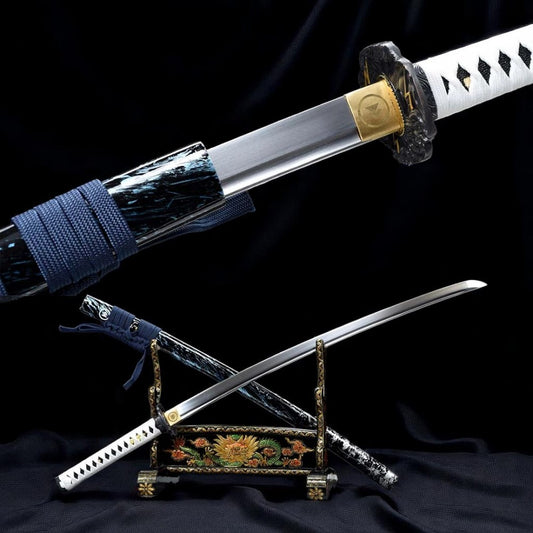
Our recommendation? The Kill Bill Katana Sword – Damascus Steel & Real Rayskin. It’s forged with care, full-tang, and features traditional wrapping, iron fittings, and a hand-polished Damascus blade. A tribute to Hanzo’s cinematic legacy — and a functional work of art.
The Hanzo Blade and the Soul of the Samurai
For the samurai, the sword is more than a weapon. It’s a reflection of their soul. The same applies to the Hanzo katana in Kill Bill. The Bride wields it not just to fight, but to reclaim her identity. In every precise cut, there’s intention. In every swing, there’s resolve.
This is why fans seek out hanzo replica katanas. Not to cosplay — but to channel that same sense of personal clarity and strength.
Popular Kill Bill Katana Searches
Looking to find the right blade? Here are the most popular terms people use:
- kill bill katana
- hattori hanzo sword
- damascus kill bill sword
- bride katana replica
- hanzo blade real
- hanzo samurai sword canada
If any of those brought you here — you're in the right place.
Where to Buy a Real Hanzo-Style Sword in Canada
At Katana Canada, we specialize in handcrafted, full-tang katanas. Whether you're looking for an iconic Kill Bill replica or a blade rooted in samurai heritage, our swords are forged with precision and purpose. We don’t sell toys — we sell steel that speaks.
Top Hanzo-Inspired Recommendations
Maintaining Your Hanzo Sword
Even legends require care. Use a proper katana cleaning kit, avoid touching the blade with bare fingers, and store your katana horizontally in a cool, dry space. Damascus steel in particular benefits from regular oiling to preserve its stunning wave pattern.
Why the Hanzo Katana Still Resonates
The enduring appeal of the Hattori Hanzo katana comes down to one word: story. Whether through Japanese history or Tarantino’s lens, this blade tells one — of loyalty, focus, and silent strength. Owning it is not about fandom. It’s about legacy.
Craftsmanship Behind the Blade: How a Hanzo Katana Is Forged
The Hattori Hanzo katana isn't just defined by its legend — it's defined by its steel. Historical Hanzo-era blades were forged from tamahagane, produced through the ancient tatara smelting process. Today, quality reproductions use high-carbon steel — typically 1060 for durability and cutting performance, or 1095 for a harder, sharper edge.
What separates a real Hanzo-inspired blade from a wall hanger?
- Full tang construction — the blade extends through the entire handle, not just the first few inches.
- Clay-tempered hamon line — the wavy pattern along the edge, created by differential hardening. This isn't decoration — it's proof of proper heat treatment.
- Hand-sharpened edge — a genuine cutting blade, not a factory grind.
- Real ray skin (same) wrap — underneath the cord wrapping (ito), authentic tsuka use actual ray skin for grip.
At Katana Canada, every Hanzo-inspired katana in our collection meets these standards. No shortcuts.
Collector's Guide: Spotting Authentic Hanzo-Style Katanas
Building a collection around Hattori Hanzo-inspired blades means knowing what to look for — and what to avoid.
Steel grade matters. 1060 carbon steel is the sweet spot for functional swords — tough enough for cutting, flexible enough to absorb impact. 1095 offers a harder edge but requires more careful maintenance. Damascus steel adds visual depth with its layered pattern, though it doesn't necessarily cut better.
Weight and balance tell the truth. An authentic Hanzo-style katana should weigh between 900g and 1,200g. The balance point should sit about 15–20 cm from the tsuba (guard) — that's what gives the blade its characteristic cutting authority.
Check the fittings. Quality tsuba, fuchi/kashira (pommel caps), and menuki (grip ornaments) should be solid metal — not painted plastic. On our Kill Bill Katana, every fitting is hand-finished brass or iron.
Legality in Canada. Katanas are legal to own across Canada — classified as tools or collectibles, not prohibited weapons, as long as they aren't concealed in public. For the full breakdown, check our Canadian Sword Laws Guide.
Steel Types Compared: 1060 vs 1095 vs Damascus
Choosing the right steel for your Hanzo katana depends on how you'll use it:
- 1060 Carbon Steel — The workhorse. Excellent balance of hardness and flexibility. Ideal for cutting practice and display. Our Black Blade Katana uses this steel.
- 1095 Carbon Steel — Harder, holds a sharper edge longer, but slightly more brittle. Best for collectors who prioritize edge retention.
- Damascus / Folded Steel — Multiple layers forge-welded together, creating the iconic wave pattern. Our Kill Bill Katana in Damascus showcases this beautifully.
- T10 Tool Steel — The premium option. Higher carbon content with tungsten for edge retention and dramatic hamon line.
No matter which steel you choose, proper maintenance is non-negotiable. Oil the blade after each handling, store horizontally, and never touch the edge with bare fingers.
Frequently Asked Questions
Was Hattori Hanzo a real person?
Yes. He was a famed samurai and ninja from 16th-century Japan, serving the Tokugawa shogunate. His life inspired countless stories, including Kill Bill’s reimagining.
Is the Kill Bill katana real?
The movie version is fictional, but many real swords are forged to match its design. Look for full-tang construction, high-carbon or damascus steel, and functional sharpness.
What makes your Hanzo swords different?
At Katana Canada, we focus on quality. Our Hanzo-style blades are not stainless-steel display pieces. They’re hand-forged, durable, and martial-arts ready.
Do you ship within Canada?
Yes. All our swords ship across Canada. Shipping is secure, and our packages are discreet and reinforced.
 Save $90