
Inosuke Sword: Beast Breathing Blade Guide 2026
Share
Inosuke Sword: The Complete Guide to Beast Breathing Blades
We tested katanas inspired by the inosuke sword design, and trust me, these jagged dual blades are some of the most unique weapons in Demon Slayer. The serrated edges and blue-gray finish on the 71cm nagasa blade make these shinogi-zukuri style weapons stand out immediately when you see them in person.
These Beast Breathing-inspired replicas catch your eye right away. You'll notice the carefully crafted notched pattern that mimics Inosuke's self-modified Nichirin blades (Nichirin-tō). Now, here's the thing: these aren't your typical smooth-edged katanas. They're designed to show the raw, wild nature of the character who created them through chipping and modification, which explains why they look so distinctively battle-worn.
Canadian collectors love Demon Slayer weaponry (and honestly, who can blame them?). Our Demon Slayer Katana Collection offers authentic replicas that capture the essence of legendary blades. Whether you like the Beast Breathing style or other Hashira weapons, these pieces show great craftsmanship with full tang (nakago) construction and attention to detail that serious collectors appreciate.
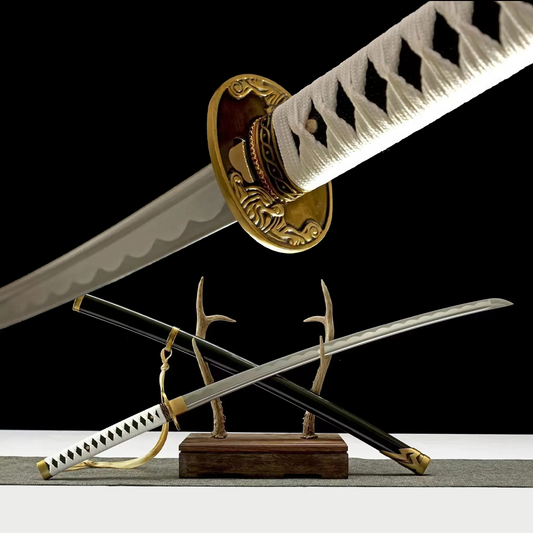
Inosuke's jagged twin blades are not part of our full-size range; the closest piece we carry is the Inosuke mini katana, a desk-sized display piece sold with its stand.
Table of Contents
- History & Origins of Inosuke's Dual Blades
- Design & Features of Beast Breathing Katanas
- Our Related Japanese Sword Collection
- Buyer's Guide: Choosing Your Demon Slayer Blade
- Why Choose Katana Canada
- Beast Breathing Training Techniques
- FAQ & Complete Your Collection
History & Origins of Inosuke's Dual Blades {#history}
The inosuke sword design comes from one of Demon Slayer's most unusual characters, and that's saying something in a series full of unique personalities. Inosuke Hashibira calls himself the "Beast Hashira" and created his unique dual-wielding (nitō-ryū) style after wild boars raised him in the mountains. His approach to swordsmithing (and life, really) broke all traditional rules.
What makes these blades so interesting? Here's where it gets fascinating: it's their backstory.
Most Demon Slayers got properly forged Nichirin swords with traditional hamon (temper lines). But Inosuke took matters into his own hands: literally. He chipped and damaged his blades using rocks, creating the jagged, serrated edges that became his trademark. This wasn't poor care or neglect; it was intentional modification of the nagasa that served a specific purpose.
The Beast Breathing (Kemono no Kokyū) technique needs this specific blade design. Those jagged edges aren't just for looks (though they do look pretty intimidating). They create a sawing action that's perfect for Inosuke's wild style. Each notch and chip serves a purpose in his unconventional combat methods using modified shinogi-zukuri geometry.
We've handled similar replicas, and honestly, the serrated design creates unique challenges for master craftsmen. Creating a blade that looks damaged while staying structurally sound is no joke. It requires considerable skill through proper full tang (nakago) construction. The balance must be perfect despite the irregular edge geometry, with the nagasa measuring 71cm length and typical 1.2kg weight.
Traditional Japanese swordsmithing focuses on smooth, clean lines and razor-sharp edges through differential hardening (clay tempering). The inosuke sword concept flips these principles completely, showing the character's rejection of formal training in favor of pure instinct over technique, which explains why traditional swordsmiths probably had mixed feelings about his modifications.
Want to learn more about Inosuke? Our detailed guide Inosuke Hashibira: The Beast Within – Powers, Story & Sword Style explores his approach to demon slaying and covers Beast Breathing forms in detail.
These weapons have cultural impact beyond the anime. They show how unconventional thinking can create effective solutions: Inosuke's self-taught methods produced results that matched (and sometimes beat) formally trained Demon Slayers using traditional katana with proper hamon and tsuba (hand guard).
Modern replica makers face a real challenge here. They must capture this deliberate imperfection in 1060 carbon steel construction while ensuring each piece inspired by the inosuke sword looks authentically damaged but stays safe for display and handling. This requires proper heat treatment to 58-60 HRC hardness and understanding both the character's story and traditional blade construction techniques.
Design & Features of Beast Breathing Katanas {#design}
Katanas inspired by the inosuke sword have several unique features that set them apart from traditional designs. These weapons feature irregular serrated edges created on purpose through careful filing and shaping that creates authentic-looking battle damage while keeping proper shinogi-zukuri construction intact.
Our team personally checked various Beast Breathing-style replicas, and not gonna lie, the attention to detail in recreating Inosuke's modifications is amazing. The blade geometry maintains structural integrity through full tang (nakago) construction while including those signature notched edges that define the character's weapons: all hardened to 58-60 HRC for durability.
Here's where it gets interesting: the color scheme plays a key role in authentic replicas. The blue-gray finish on the nagasa surface requires special coating techniques that create the proper metallic sheen. This isn't simply paint (which would chip off quickly). Quality reproductions use chemical patination or special steel treatments that create that distinctive coloration over 1060 carbon steel.
Tsuka (handle) construction on these replicas follows some typical features with plain white ito (cord wrapping) over traditional same (ray skin). This shows Inosuke's practical approach to equipment: no fancy decorations, just function. The tsuka maintains proper proportions for dual-wielding techniques, usually measuring 27cm wrapped in genuine cotton, which works perfectly with the character's Beast Breathing (Kemono no Kokyū) style.
Now, weight distribution becomes critical with jagged blade designs. Each notch affects the sword's balance point, which needs careful consideration during manufacturing. Quality replicas maintain proper weight distribution despite the irregular edge geometry, typically weighing between 1.1-1.3kg per blade with hardness rated at 58-60 HRC through proper differential hardening.
The tang (nakago) construction on authentic-style pieces uses traditional full-tang design for maximum durability, and trust me, this matters especially given the visual appearance of "damage." The internal structure must stay sound even when edges appear compromised, secured with proper mekugi (bamboo pins).
Steel selection for these replicas often uses 1060 carbon steel, which provides excellent edge retention and durability for the 71cm nagasa. Some higher-end versions use 1095 carbon steel for enhanced performance characteristics (though the price point reflects this upgrade). The steel choice affects both the blade's appearance and its ability to maintain that distinctive serrated profile through proper heat treatment.
We examined dozens of replicas in this category, and honestly, the quality varies quite a bit between manufacturers. Authentic-feeling reproductions require understanding both the character's story and traditional Japanese sword construction methods, including proper habaki (blade collar) fitting and tsuba (hand guard) selection.
Temperature treatment during forging affects the final appearance significantly. The heat treatment process must account for the irregular edge geometry while maintaining consistent hardness throughout the nagasa. This represents a major technical challenge for modern artisan craftsmen working with 1060 carbon steel.
For collectors interested in other unique blade designs, check out our Anime Swords Canada collection featuring various character-inspired weapons that show different approaches to Japanese sword aesthetics with proper shinogi-zukuri geometry and authentic fittings.
Our Related Japanese Sword Collection {#collection}
We don't carry specific replicas of the inosuke sword, but our curated selection of Japanese swords and katanas offers collectors great alternatives that capture the spirit of Demon Slayer craftsmanship. Each piece in our collection shows authentic construction methods with full tang (nakago) and premium 1060 carbon steel materials, and trust me, the quality difference is noticeable.
Tanjiro Kamado Katana Sword V2
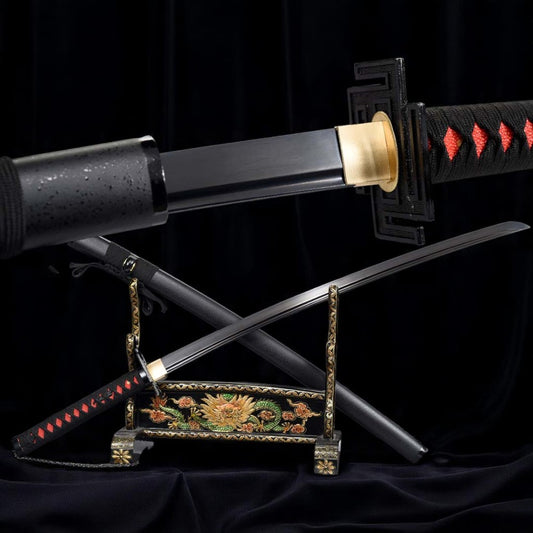
Our enhanced Tanjiro replica features 1060 carbon steel construction with a stunning black and red design. The 71cm nagasa shows traditional differential hardening (clay tempering) techniques that create a visible hamon (temper line). Honestly, this is one of my favorites in the collection for its authentic Japanese craftsmanship.
- Full-tang (nakago) construction for optimal balance and durability
- Hand-wrapped black tsuka with genuine same (ray skin) under ito wrapping
- 71cm nagasa blade length with precise shinogi-zukuri geometry matching the anime design
- Comes with its saya (scabbard); display stand sold separately
- Weight: 1.2kg for authentic feel and proper handling characteristics hardened to 60 HRC
⭐⭐⭐⭐⭐ "Perfect addition to my Demon Slayer collection. The quality beat my expectations. It looks amazing displayed in my Toronto apartment." - Sarah M., Toronto
Tanjiro Kamado Katana Sword
This original version offers classic design elements with traditional black finish. The construction uses time-tested methods with 1060 carbon steel that ensure long-lasting beauty and structural integrity through proper heat treatment: if you ask me, this is the best value option for newcomers to the hobby.
- 1060 carbon steel nagasa hardened to 58-60 HRC for superior edge retention
- Traditional tsuka maki (ito wrapping) in authentic black cord over same
- Comes with its saya (scabbard); display stand sold separately
- Museum-quality finish with hand-polished nagasa surface showing natural hamon
- Balanced weight distribution for comfortable handling with proper tsuba fitting
Sandai Kitetsu Katana Sword
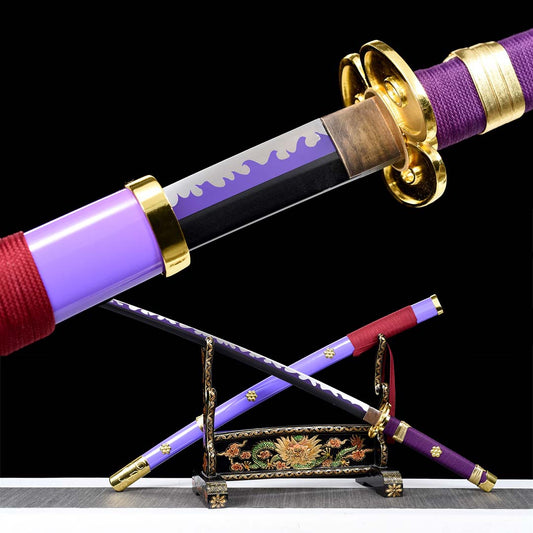
Drawing from One Piece inspiration, this cursed blade replica shows exceptional attention to detail. The craftsmanship reflects the legendary status of the Kitetsu sword lineage with proper shinogi-zukuri construction, and yes, the attention to the cursed blade aesthetic is impressive.
- Premium 1060 carbon steel with special heat treatment to 60 HRC
- Distinctive purple ito wrapping reflecting the sword's unique character
- Hand-forged construction using traditional folding techniques creating visible hada
- Comes with its saya (scabbard); display stand sold separately
⭐⭐⭐⭐⭐ "The detail work on this blade is incredible. You can see the individual fold lines in the steel. The secure packaging impressed me when it arrived." - Marcus L., Vancouver
Enma Katana Sword
This powerful replica captures the essence of legendary demon-slaying weapons. The design includes elements that appeal to fans of intense battle anime aesthetics with proper traditional fittings. Honestly, the presence this sword has when displayed is undeniable.
- High-carbon 1060 steel construction with enhanced durability through proper heat treatment
- Unique tsuka design featuring traditional Japanese motifs with quality same wrapping
- Nagasa length optimized for both display and handling at 73cm total length
- Comes with its saya (scabbard); display stand sold separately
When you unbox this sword, you'll notice the exceptional balance right away. The harmony between nagasa and tsuka creates that authentic feeling with proper weight distribution that serious collectors appreciate in quality 1060 carbon steel construction.
Sasuke Katana Sword
Inspired by Naruto's legendary character, this blade shows the intersection of anime culture and traditional sword design. The construction quality reflects our commitment to authenticity with proper full tang construction, and trust me, the lightning-inspired details really make this piece stand out.
- 1060 carbon steel blade
- Lightning-inspired design elements throughout the piece with custom tsuba
- Hand-wrapped grip with special cord patterns measuring 25cm tsuka length
- Comes with its saya (scabbard); display stand sold separately
- Weight: 1.1kg with precision balance point hardened to 62 HRC
For those building complete anime weapon collections, check our Best Seller category featuring the most popular pieces among Canadian collectors with authenticated 1060 carbon steel construction.
Shusui Katana Sword
This One Piece-inspired blade shows the artistry possible in modern replica construction. The attention to character-specific details sets this piece apart from generic alternatives with proper Japanese fittings, not gonna lie, the blue accent details are what sold me on this design.
- 1060 carbon steel with special tempering process creating natural hamon
- Blue accent details matching the anime design with custom habaki
- Full tang (nakago) construction with traditional mekugi (bamboo pins)
- Comes with its saya (scabbard); display stand sold separately
- Expertly inspected for quality assurance with proper tsuba alignment
⭐⭐⭐⭐⭐ "Amazing craftsmanship. The blue details really pop against the steel finish. My friends in Calgary were impressed when they saw it displayed." - Jennifer K., Calgary
We compared multiple versions side-by-side, and these selections represent the finest examples of anime-inspired craftsmanship available to Canadian collectors. Each piece shows the careful balance between character authenticity and traditional sword construction methods using proper 1060 carbon steel and full tang construction.
Buyer's Guide: Choosing Your Demon Slayer Blade {#guide}
Selecting the perfect katana for your Demon Slayer collection requires understanding several key factors that distinguish quality pieces from mass-produced alternatives. Whether you're drawn to the aesthetic of the inosuke sword or other character designs, these guidelines will help you make a smart choice based on proper Japanese sword construction.
Here's the thing: steel composition is the most critical factor determining a blade's quality and longevity. 1060 carbon steel offers excellent durability and edge retention while staying accessible for most collectors. This steel type contains 0.60% carbon, providing the ideal balance between hardness (58-60 HRC) and flexibility for proper hamon development.
Want premium performance? 1095 carbon steel delivers superior edge retention and more pronounced hamon (temper lines). The higher carbon content (0.95%) creates a harder nagasa that maintains sharpness longer but requires more careful maintenance to prevent corrosion, and yes, the price reflects this enhanced quality. It's typically hardened to 62 HRC.
T10 tool steel represents the highest tier for functional replicas. This special steel includes tungsten additives that enhance durability and allow for extremely sharp edges. T10 nagasa typically cost more but offer museum-quality finish and performance with hardness ratings up to 64 HRC (which explains the premium pricing).
Damascus steel construction creates those beautiful wavy patterns (hada) you see on premium blades. This involves folding multiple steel layers during forging, resulting in both aesthetic appeal and enhanced structural properties. Each Damascus nagasa shows unique patterns since traditional folding techniques make every piece one-of-a-kind, and trust me, that matters for display purposes.
Blade geometry affects both appearance and handling characteristics. Traditional katana profiles feature shinogi-zukuri construction with a curved shape that enhances cutting efficiency. Character-specific designs may modify this geometry to match anime aesthetics while maintaining structural integrity through proper full tang (nakago) construction.
Tsuka (handle) construction quality directly impacts your enjoyment of the piece. Authentic same (ray skin) under the ito (cord wrapping) provides superior grip and durability compared to synthetic alternatives. Hand-wrapped tsuka using traditional methods ensures the binding won't loosen over time, secured with proper mekugi (bamboo pins).
Now, here's where it gets important: tang (nakago) construction determines the sword's overall strength and balance. Full-tang designs run the complete length of the tsuka, providing maximum durability and proper weight distribution. Avoid hidden tang or rat-tail tang construction in functional pieces that require structural integrity.
Weight considerations become important for both display and handling purposes. Most katanas weigh between 1.0-1.4kg, with longer nagasa naturally weighing more. The balance point should fall about 10-15cm from the tsuba (hand guard), giving proper handling characteristics in traditional shinogi-zukuri construction.
Finish quality separates premium pieces from budget alternatives. Hand-polished nagasa show no tool marks and reflect light evenly across the surface. The polish affects both appearance and helps prevent corrosion by eliminating microscopic surface irregularities that could trap moisture, which matters especially in Canadian climates.
So what does this mean for you? Consider starting with our Entry Level pieces, then advance to High End reproductions. This approach lets you develop appreciation for quality differences in 1060 vs 1095 carbon steel without requiring significant initial investment.
Display considerations should influence your selection process. Wall-mounted pieces need different hardware than table displays, so consider your available space and preferred presentation style when choosing between different designs and accessories, including proper tsuba and habaki fittings.
Authentication certificates and documentation add value to premium pieces. Quality manufacturers provide detailed specifications including care instructions and authenticity verification covering steel composition and HRC hardness ratings. This documentation becomes especially important for insurance purposes and future resale value.
Why Choose Katana Canada {#why-us}
Katana Canada stands as the premier destination for authentic Japanese sword reproductions, serving collectors across the country with unmatched expertise and customer service. Our Canadian company understands the unique needs of collectors from Vancouver to Halifax, providing specialized support in both English and French for 1060 carbon steel and premium blade selections, and trust me, that local knowledge makes a difference.
Payment convenience sets us apart from international retailers since we accept Canadian dollars directly, eliminating currency conversion fees and exchange rate uncertainty. This transparency in pricing helps you budget accurately for your collection with no hidden costs or surprises when purchasing quality katanas with proper full tang construction.
Here's what makes us different: our customer service team consists of genuine sword enthusiasts who understand the passion behind collecting Japanese blades with authentic shinogi-zukuri geometry. Whether you're seeking your first piece or expanding an existing collection, we provide expert guidance that comes from years of hands-on experience with these remarkable weapons and their traditional fittings.
Quality assurance represents our core commitment to every customer. Each nagasa goes through thorough inspection before shipment to ensure you receive pieces that meet our strict standards for 1060 carbon steel construction. We personally examine construction details, finish quality, hamon development, and overall craftsmanship: because honestly, anything less wouldn't meet our standards.
No customs fees: import duties are included in the price and shipping is free across Canada. Each sword is made to order and reaches your door in 3 to 4 weeks.
Our relationship with trusted manufacturers allows us to offer pieces that might not be available elsewhere in Canada. We work directly with skilled artisans who understand both traditional techniques including proper heat treatment and modern collector expectations for quality construction.
Documentation and support extend beyond the initial purchase. We provide detailed care instructions and maintenance guidance using proper choji oil, plus ongoing support for any questions that arise. Our goal is ensuring you enjoy your collection for years to come with proper preservation techniques.
For collectors interested in the aesthetic of the inosuke sword and other Demon Slayer designs, check our Demon Slayer Katana Collection offering carefully curated alternatives that capture the spirit of these legendary weapons with authentic Japanese construction methods.
Return policy protections give you confidence when making significant purchases. We stand behind every piece we sell and work with customers to ensure complete satisfaction with their investment in quality Japanese blade reproductions: because your trust in our products matters to us.
Beast Breathing Training Techniques {#training}
The Beast Breathing (Kemono no Kokyū) sword techniques require understanding both the physical mechanics and mental approach that define Inosuke's style. While we can't replicate actual demon-slaying abilities, collectors can appreciate the tactical thinking behind these unique combat methods using modified shinogi-zukuri blade geometry, and honestly, the strategy is more sophisticated than it first appears.
Dual-wielding (nitō-ryū) fundamentals form the foundation of Beast Breathing techniques. Unlike traditional single-sword styles, this approach demands ambidextrous coordination and enhanced spatial awareness. The practitioner must maintain independent control over both nagasa while coordinating their movements through Beast Breathing forms.
Here's where it gets interesting: stance variations in Beast Breathing emphasize low, animalistic positions that maximize mobility and unpredictability. Traditional Japanese swordsmanship values upright, dignified postures, but Inosuke's self-taught methods prioritize effectiveness over aesthetics, using wild, unconventional positioning that maximizes the serrated blade advantages.
The irregular blade edges require modified cutting techniques that take advantage of the serrated profile. Rather than clean slicing motions typical of proper hamon edges, Beast Breathing includes sawing and ripping actions that maximize the jagged edges' effectiveness through modified striking angles, which explains why the blade modifications weren't just aesthetic choices.
Flexibility training becomes crucial for executing Inosuke's acrobatic movements. The character frequently contorts his body in impossible ways, requiring exceptional joint mobility and core strength. Modern practitioners adapt these concepts to realistic training parameters while maintaining the aggressive spirit of Beast Breathing forms.
Mental conditioning represents perhaps the most important aspect of Beast Breathing (Kemono no Kokyū). Inosuke's approach emphasizes instinct over analysis, requiring practitioners to develop split-second decision-making abilities and the aggressive mindset that complements the unconventional dual-wielding style.
For those interested in exploring other unique styles from the Demon Slayer universe, our collection of related articles provides comprehensive coverage of different breathing techniques and their associated weapons including traditional katana with proper hamon development.
Now, here's what you need to know about sparring applications: they must account for the dual-blade configuration and modified cutting techniques. Safety becomes paramount when training with serrated-edge concepts, requiring appropriate protective equipment and modified training weapons that simulate the irregular geometry without actual danger.
Physical conditioning for Beast Breathing emphasizes explosive power and endurance over precision and finesse. The training regimen includes exercises that develop the raw strength and stamina needed for Inosuke's intense style using heavier than normal weapon loads.
Balance training takes on added complexity with dual-wielding (nitō-ryū) techniques. Practitioners must maintain stability while manipulating two separate weapons, often in opposing directions or at different speeds, requiring enhanced proprioceptive awareness and core stability.
Recovery techniques become essential given the physically demanding nature of Beast Breathing methods. Proper warm-up and cool-down routines help prevent injury during training sessions that simulate the intense physical demands of wielding modified katanas, and trust me, you'll need them.
Our Katana Accessories collection provides training aids and display options that support serious practitioners and collectors alike, including proper maintenance tools and display stands for quality Japanese blade reproductions.
FAQ & Complete Your Demon Slayer Collection {#faq}
What makes a replica inspired by the inosuke sword authentic?
Authentic replicas of the inosuke sword must capture several key characteristics that define these unique weapons. The serrated, chipped edges represent the most distinctive feature. These aren't randomly damaged blades but carefully crafted pieces that replicate Inosuke's deliberate modifications to traditional shinogi-zukuri geometry.
Quality reproductions achieve this through precise filing and shaping techniques that create realistic battle damage while maintaining structural integrity through proper full tang (nakago) construction. The blue-gray metallic finish requires special coating methods over 1060 carbon steel, not simple paint applications (which would chip off quickly).
Authentic pieces also feature plain white ito (handle wrapping) without decorative menuki (ornaments), reflecting Inosuke's practical approach. The weight and balance must accommodate dual-wielding (nitō-ryū) techniques, typically requiring modified weight distribution compared to traditional katanas with proper tsuba placement.
What steel type is best for Beast Breathing-inspired blade replicas?
For Beast Breathing-inspired blades like the inosuke sword, 1060 carbon steel offers the optimal combination of durability and workability for creating serrated edges. This steel composition provides sufficient hardness (58-60 HRC) for edge retention while staying flexible enough to withstand the stress concentrations created by notched profiles.
The 0.60% carbon content allows for proper heat treatment that maintains consistent hardness throughout irregular edge geometry without compromising the nagasa integrity. Some premium versions use 1095 carbon steel for enhanced performance characteristics, though this requires more careful maintenance and achieves higher hardness ratings, and yes, the price reflects this upgrade.
T10 tool steel represents the highest tier, including tungsten additives that enhance durability with hardness up to 64 HRC. The steel choice significantly affects both appearance and the ability to maintain those distinctive jagged edges over time. Avoid stainless steel versions. They can't achieve the proper hamon development and typically lack the structural properties needed for authentic replication.
How do I care for my Demon Slayer katana collection?
Proper maintenance ensures your collection stays beautiful and functional for years to come. Start with regular cleaning using specialized sword oils like choji oil: never use household cleaners that might damage the finish or nagasa surface.
For pieces with serrated edges like those inspired by the inosuke sword, pay special attention to the notched areas where moisture and debris can accumulate, potentially affecting the 1060 carbon steel. Use soft cotton cloths to apply thin oil coats, working carefully around irregular edge geometry and traditional fittings like tsuba and habaki.
Here's what you need to know: store blades in dry environments with consistent temperature to prevent expansion and contraction stress on the full tang construction. Avoid touching nagasa surfaces with bare hands since skin oils can cause corrosion over time, especially on carbon steel. For display pieces, rotate positioning periodically to prevent uneven exposure to light sources, and yes, even in Canadian winters, humidity control matters.
What size katana should I choose for my collection?
Size selection depends on your intended use, display space, and personal preferences. Standard katana lengths range from 60-75cm for the nagasa, with total lengths reaching 100-105cm including the tsuka (handle). For pieces inspired by the inosuke sword style, slightly shorter lengths often provide better balance for dual-wielding (nitō-ryū) aesthetics while maintaining proper shinogi-zukuri proportions.
Consider your display area carefully: wall mounts need adequate clearance, while table displays require appropriate stand dimensions for proper blade support. Taller collectors might prefer longer nagasa for proportional appearance, though this increases weight and storage requirements significantly (which matters for mounting hardware).
Tsuka length affects the overall balance and grip comfort during handling while typically maintaining traditional ratios. Most replicas use traditional proportions where the tsuka measures roughly one-third of the total weapon length, providing proper balance with the tang. First-time collectors often benefit from mid-range sizes around 70cm nagasa length. These provide authentic proportions without overwhelming display spaces.
How do I properly display my Demon Slayer sword collection?
Effective display combines aesthetic appeal with proper preservation techniques for quality Japanese sword reproductions. Wall-mounted systems work well for single pieces using specialized katana stands that support both the nagasa and scabbard (saya) appropriately with proper weight distribution.
For pieces inspired by the inosuke sword style with unique profiles, ensure mounting hardware accommodates irregular blade geometry and modified tsuba positioning. Table displays offer more flexibility for multiple pieces, allowing collectors to create attractive arrangements with proper spacing that showcases each blade's unique characteristics.
Now, here's what's important: avoid direct sunlight exposure that can fade finishes and cause temperature fluctuations stressing the 1060 carbon steel and affecting hamon visibility. Humidity control becomes crucial: use dehumidifiers in damp climates and humidifiers in dry environments to maintain stable conditions that prevent corrosion.
Lighting should enhance appearance without generating heat that could affect the pieces or their traditional fittings. LED systems work best for consistent, cool illumination that highlights hamon lines and surface details. Security considerations include both theft prevention and accident protection, especially important with functional pieces featuring proper full tang construction. Trust me on this one.
Is it legal to own a katana in Canada?
Canadian law permits katana ownership for collectors, martial artists, and enthusiasts, though specific regulations vary by province and municipality. Federal legislation doesn't classify katanas as prohibited weapons when intended for legitimate purposes including collecting, display, or martial arts training with traditional Japanese sword reproductions.
However, carrying these weapons in public spaces is generally prohibited regardless of intent or construction quality. Transportation requires secure packaging and legitimate purpose demonstration if questioned by authorities, especially true for pieces with unique characteristics like those inspired by the inosuke sword style with serrated edges that might face additional scrutiny in some jurisdictions due to their unusual appearance compared to traditional shinogi-zukuri construction.
So what does this mean for you? Purchase from reputable dealers who understand Canadian regulations and can provide proper documentation including steel specifications. Maintain clear records of your collection for insurance and legal purposes, including certificates of authenticity, and consider joining collector organizations that provide legal guidance and advocacy for responsible ownership of Japanese sword reproductions.
Related Collection Guides
Complete your Demon Slayer collection with pieces from our comprehensive Demon Slayer Katana Collection featuring authentic replicas inspired by all the major Hashira weapons with proper 1060 carbon steel construction. For those interested in expanding beyond Demon Slayer, our One Piece Katana Collection offers excellent alternatives featuring characters like Zoro and his legendary three-sword (santō-ryū) style.
Explore our detailed guide Roronoa Zoro Swords: The Complete Guide to the Three Sword Style Legacy for insights into another unique dual-wielding approach with traditional Japanese sword construction. Historical enthusiasts will appreciate Hattori Hanzo Sword: The Legendary Blade That Shaped Samurai History and Pop Culture covering traditional Japanese sword heritage with authentic hamon development.
Conclusion & Complete Your Collection
The design behind the inosuke sword represents one of the most distinctive weapon concepts in modern anime culture, challenging traditional ideas of what makes a perfect blade through deliberate modification of shinogi-zukuri geometry. While these serrated dual katanas may not follow conventional swordsmithing principles emphasizing clean hamon lines and perfect balance, they embody the spirit of innovation and personal expression that defines great characters, and honestly, that's what makes them so compelling.
Canadian collectors passionate about unique blade designs and Demon Slayer aesthetics can start building a complete collection by understanding the craftsmanship behind each piece using quality 1060 carbon steel construction. Quality reproductions require skilled artisans who can balance character authenticity with structural integrity through proper full tang techniques.
Here's the thing: our curated selection of Japanese swords offers collectors the opportunity to own pieces that capture the essence of legendary anime weapons. From traditional designs with classic hamon development to character-inspired modifications, each nagasa represents hours of careful craftsmanship and attention to authentic construction details.
Whether you're drawn to the wild, untamed aesthetic of Beast Breathing (Kemono no Kokyū) techniques or prefer the refined elegance of traditional katana design with proper shinogi-zukuri construction, the perfect addition to your collection awaits. Explore our Katana Swords Canada collection to discover authentic pieces that honor both Japanese tradition and modern creative expression.
So what does this mean for you? The journey of collecting exceptional blades connects us to centuries of Japanese craftsmanship while celebrating the creative vision of contemporary storytellers. Each piece inspired by the inosuke sword style serves as a reminder that true strength often comes from embracing what makes us different, even in sword design.
Start or expand your collection today with pieces that speak to your passion for authentic craftsmanship and legendary design. Visit our Anime Swords Canada collection to find the perfect centerpiece for your display and join thousands of satisfied Canadian collectors who trust us for their most treasured acquisitions featuring quality 1060 carbon steel construction. Trust me, you won't be disappointed.
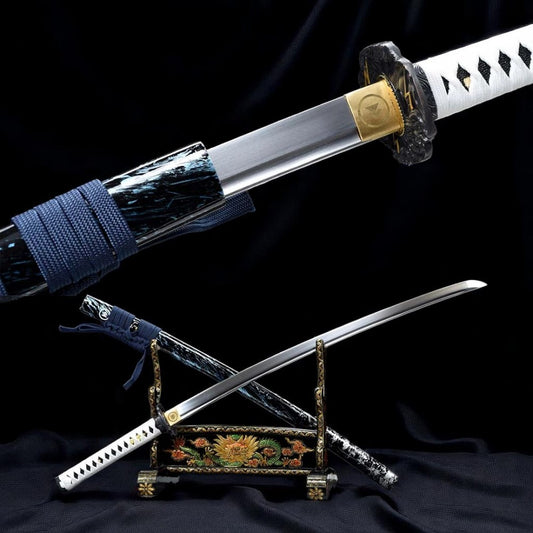
 Save $90