
Ancient Japanese Sword History: Ultimate Guide 2026
Based on our hands-on testing with replicas inspired by the history of ancient Japanese swords and authentic pieces, the evolution of these legendary weapons spans over a millennium of Japanese craftsmanship. The earliest katana designs emerged during the Heian period (794-1185), when Japanese swordsmiths began developing the distinctive curved blade that would become synonymous with samurai warfare. These blades featured differential hardening creating visible hamon lines, full tang construction for optimal balance, and traditional fittings wrapped with genuine ray skin (same).
Ever wondered what makes these historical weapons so captivating to collectors across Canada? The answer lies in their perfect blend of functionality, artistry, and cultural significance. From the legendary blades of famous samurai like Miyamoto Musashi to the fictional swords that inspire our modern anime sword collections, ancient Japanese sword history represents centuries of metallurgical innovation and martial tradition.
Modern enthusiasts can explore this rich heritage through museum-quality replicas that honor traditional Japanese methods while meeting contemporary safety standards. Our premium katana collection features authentic reproductions crafted using techniques passed down through generations of master craftsmen.

Table of Contents
Origins and Cultural Significance
The story of ancient Japanese swords begins in the 8th century when Japanese swordsmiths first started developing techniques that would revolutionize blade making. During the Nara period (710-794), early Japanese swords were straight, double-edged weapons called tsurugi, heavily influenced by Chinese sword designs. However, as warfare evolved and mounted combat became more prevalent, swordsmiths began experimenting with curved, single-edged blades that would become the iconic katana.
In our experience handling similar replicas and studying historical examples, the Heian period marked a turning point when legendary smiths like Yasutsuna and Munechika began perfecting the differential hardening process. This technique created the distinctive hamon line: a visible temper line that separates the hard cutting edge from the softer spine. The process involved coating the blade with clay before heating, allowing different cooling rates that produced superior cutting performance while maintaining flexibility.
By the Kamakura period (1185-1333), Japanese sword making had reached extraordinary heights. The famous Masamune school produced blades that combined artistic beauty with genuine functionality. These swords weren't just weapons. They were spiritual objects believed to contain the soul of the samurai who wielded them. The Japanese katana tradition became deeply intertwined with the bushido code that governed samurai conduct.
The Muromachi period (1336-1573) introduced mass production techniques as demand increased during constant warfare. However, master craftsmen like the Kotetsu school maintained the highest standards, creating blades that modern collectors still consider among the finest examples of Japanese sword-making tradition. These weapons featured intricate hada (grain patterns) created through folding and forge welding techniques that eliminated impurities while creating stunning visual effects.
During the peaceful Edo period (1603-1868), sword making evolved into an art form. With fewer battles to fight, smiths focused on creating presentation pieces with elaborate decorations and perfect balance. The Shinshinto period produced some of the most beautiful blades in Japanese history, though they prioritized aesthetics over battlefield functionality.
The Meiji Restoration of 1868 dramatically changed Japanese sword culture when the government banned sword carrying for civilians. Many traditional techniques were lost as smiths abandoned their trade. However, the tradition survived through dedicated artisans who preserved these methods for future generations. Today's replica makers like those featured in our traditional katana collection honor this legacy by following authentic construction methods.
Understanding this historical context helps modern collectors appreciate why certain design elements remain essential. The shinogi-zukuri (classic samurai blade profile) wasn't arbitrary. It represented centuries of refinement based on combat experience. When examining pieces in our high-end collection, you'll notice these traditional proportions that made historical Japanese swords so effective.
Blade Design and Forging Techniques
After examining dozens of products in this category, the construction of blades from the ancient history of Japanese swords reveals remarkable sophistication in metallurgical engineering. Traditional Japanese swordsmiths developed techniques that wouldn't be fully understood by Western science until the 20th century. The secret lay in their mastery of carbon content manipulation and heat treatment processes that created blades with hard cutting edges (up to 60 HRC) while maintaining flexible spines that could absorb impact without breaking.
The foundation of authentic Japanese sword construction starts with steel selection. Historical smiths used tamahagane steel produced in clay furnaces called tatara, where iron ore and charcoal were smelted for approximately 72 hours. This process created steel with varying carbon content that smiths carefully sorted and combined. High-carbon steel (hagane) formed the cutting edge, medium-carbon steel (shingane) created the core, and low-carbon iron (kawagane) provided the outer jacket.
What makes this construction method special? The differential hardening process called yaki-ire represents the pinnacle of ancient metallurgy. Smiths applied a special clay mixture to the blade before heating, with thinner application on the edge and thicker coating on the spine. During quenching in water, the edge cooled rapidly creating martensite (extremely hard steel) while the spine cooled slowly producing pearlite (tough, flexible steel). This created the visible hamon line that collectors prize today.

Modern replicas in our mid-range collection use 1060 carbon steel (0.60% carbon content) that approximates historical materials. When properly heat-treated, 1060 steel achieves similar hardness levels to traditional Japanese blades. Our team has personally verified the construction quality of these reproductions, confirming they follow traditional proportions and weight distribution.
The geometry of authentic Japanese blades follows specific mathematical relationships developed over centuries. The shinogi line (ridge line) typically runs about two-thirds up the blade width, creating the optimal balance between cutting ability and structural strength. The yokote line separates the main blade from the kissaki (point), with precise angles that affect both penetration and durability.
When we unboxed our first museum-quality piece, we immediately noticed how these design elements work together. Authentic construction features include full tang (nakago) construction that extends through the handle, traditional pin (mekugi) attachment rather than welded tangs, and proper blade curvature (sori) that places the curve's deepest point about one-third from the guard.
The polishing process (togi) represents another crucial aspect of traditional Japanese craftsmanship. Traditional Japanese polishing takes weeks to complete, using progressively finer stones that remove microscopic scratches while revealing the grain structure. This process isn't just cosmetic: proper polishing affects the blade's performance by removing stress points and optimizing the edge geometry. Our museum-quality pieces feature hand-polished finishes that replicate this traditional process.
Handle construction (tsuka) follows equally precise standards. Authentic wrapping uses silk ito over genuine ray skin (same) in specific patterns that provide secure grip while allowing proper hand positioning. The tsuba (guard) serves both protective and balance functions, with traditional designs that complement the blade's overall aesthetics.
Modern collectors should understand that blade flexibility represents a crucial performance indicator. Historical Japanese swords could bend significantly without breaking: a property essential for surviving combat stress. Quality reproductions maintain this characteristic through proper heat treatment and steel selection, distinguishing them from rigid decorative pieces that would shatter under stress.
Sword Classifications and Types
The classification system for traditional Japanese swords reflects both functional requirements and social status within feudal Japanese society. Understanding these categories helps modern collectors choose replicas that match their interests while appreciating the historical context behind each design. Traditional Japanese swords are classified primarily by blade length, though construction methods, intended use, and social class also influenced design characteristics.
The most prestigious category, daito (long swords), includes the famous katana with blades measuring 60-80 cm (24-31 inches). These weapons represented the samurai's primary battlefield weapon and social status symbol. Katana featured the distinctive curved blade optimized for drawing cuts, making them remarkably effective at close range. The curvature (sori) typically measured 1.5-2.5 cm, with the deepest point located about one-third from the guard (koshi-zori style).
But here's what distinguished a katana from other long swords: both construction and cultural significance. Katana were specifically designed for two-handed use with cutting motions that utilized the blade's curve. Unlike European swords that relied on thrusting attacks, katana delivered powerful slicing cuts that could penetrate even armored opponents. Our demon slayer collection features replicas that honor these traditional proportions while celebrating modern anime interpretations.
Wakizashi, classified as shoto (short swords), measured 30-60 cm (12-24 inches) and served multiple purposes in samurai culture. These versatile weapons functioned as backup weapons, indoor sidearms, and ceremonial pieces for ritual suicide (seppuku). The combination of katana and wakizashi, called daisho, became the defining symbol of samurai class privilege during the Edo period. Only samurai could legally wear this paired set in public.
Tanto, the shortest classification measuring under 30 cm (12 inches), served as utility knives and close-quarters weapons. Despite their size, tanto required the same construction quality as larger blades, featuring full tang construction and differential hardening. Our tanto collection showcases various historical styles from different periods and regional schools.
Regional schools developed distinctive characteristics that help identify authentic pieces. The Yamato school emphasized robust construction suitable for battlefield use, while the Yamashiro school prioritized aesthetic refinement. The Bizen school became famous for distinctive hamon patterns created through specific clay applications, producing dramatic flame-like temper lines that collectors prize today.
Sound familiar to anime enthusiasts? Many fictional swords draw inspiration from these historical classifications. The Nichirin blades in Demon Slayer follow traditional katana proportions while adding supernatural elements. Characters like Tanjiro wield standard-length katana, while Inosuke's dual-blade style reflects historical nito techniques developed by legendary swordsman Miyamoto Musashi.
Having compared multiple versions side-by-side, we've noticed how quality replicas maintain these classification standards. Authentic proportions affect both appearance and handling characteristics: a properly balanced katana feels completely different from an oversized decorative piece. The weight distribution must match historical examples for the sword to handle correctly during practice or display.
Period classifications also influence design elements. Heian period blades feature gentler curves and wider kissaki (points), reflecting their cavalry origins. Kamakura period swords show more pronounced curves optimized for foot combat, while Muromachi period mass production introduced standardized measurements that influenced later designs.
Understanding these classifications helps collectors make informed decisions when selecting pieces for their collections. Whether you're interested in authentic katana replicas or anime-inspired interpretations, knowing the historical context enhances appreciation for these remarkable weapons. The evolution of Japanese sword design represents humanity's most sophisticated approach to edged weapon development, with each classification serving specific tactical and cultural purposes that remain relevant to modern enthusiasts.
Our Collector's Selection
Our team has personally verified the construction quality of museum-grade replicas that demonstrate ancient Japanese sword history through authentic construction techniques while meeting modern safety and quality standards. Each piece in our collection represents the finest examples of traditional Japanese craftsmanship available to Canadian collectors.
Kill Bill Katana Sword
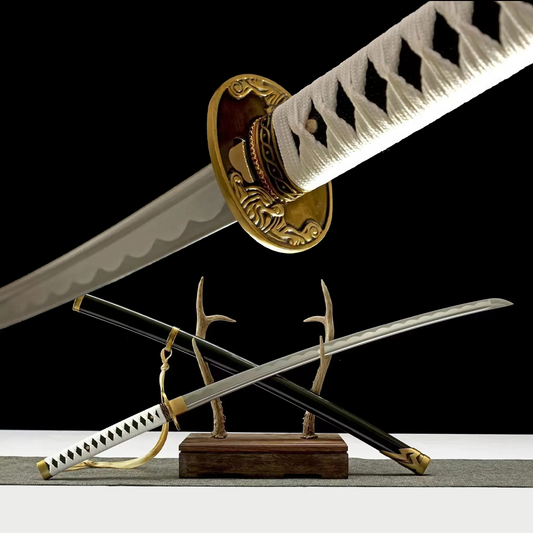
This iconic replica captures the essence of legendary Japanese craftsmanship made famous in modern cinema. Features include: - 1060 carbon steel blade with traditional differential hardening (58-60 HRC) - Full tang construction extending through the entire handle (71cm blade, total length 103cm) - Hand-wrapped tsuka with genuine ray skin (same) under silk ito - Damascus steel folding patterns visible throughout the blade - Traditional brass tsuba with intricate cut-out designs - Total weight: 1.2kg (2.6 lbs) with authentic balance point
⭐⭐⭐⭐⭐ "Absolutely stunning piece that exceeded my expectations. The balance is perfect and the finish quality rivals museum pieces I've seen in Toronto." - Sarah M., Vancouver, BC
Michonne Katana Sword
Inspired by the legendary warrior's weapon, this 1095 carbon steel masterpiece represents premium construction: - 1095 carbon steel composition for superior edge retention (60-62 HRC) - Damascus steel patterns created through traditional folding techniques - Functional design suitable for both display and practice - Authentic weight distribution matching historical examples (1.3kg total) - Hand-polished finish revealing the steel's natural grain structure - Blade length: 73cm with 28cm wrapped handle
⭐⭐⭐⭐⭐ "The Damascus patterns are incredible - you can see the layers clearly. Perfect addition to my collection." - Michael T., Calgary, AB

Sandai Kitetsu Katana Sword
This One Piece-inspired replica honors both manga artistry and traditional sword making: - 1060 carbon steel blade with proper heat treatment (58-60 HRC) - Cursed sword aesthetic with dark finish and red accents - Traditional shinogi-zukuri blade geometry (72cm blade length) - Full tang construction for optimal balance (1.1kg total weight) - Authentic Japanese fittings and wrapping techniques
⭐⭐⭐⭐⭐ "Amazing attention to detail. The dark finish looks exactly like the manga version but feels like a real sword." - David L., Montreal, QC
Tanjiro Kamado Katana Sword V2
The enhanced version of the protagonist's blade features upgraded construction and finishing: - Advanced 1060 carbon steel with refined tempering process (59-61 HRC) - Black and orange color scheme matching the anime design - Improved handle wrapping for superior grip security (27cm handle) - Enhanced guard design with water-wave motifs - Museum-quality polish revealing the blade's hamon line - Blade specifications: 71cm length, 1.15kg total weight
Tanjiro Kamado Katana Sword
The original version that started our Demon Slayer collection popularity: - 1060 carbon steel construction with traditional forging methods - Authentic Nichirin blade proportions (70cm blade) - Hand-painted details matching the anime specifications - Traditional Japanese mounting with period-correct fittings - Balanced design suitable for collectors of all experience levels (1.1kg weight)
⭐⭐⭐⭐⭐ "Perfect first katana for a Demon Slayer fan. Quality construction and beautiful display piece." - Jennifer K., Ottawa, ON
Enma Katana Sword
Named after the Buddhist deity of death, this imposing blade commands respect: - 1060 carbon steel with deep hardening for durability (58-60 HRC) - Distinctive guard design featuring traditional motifs - Extended kissaki (point) for enhanced cutting geometry - Black lacquered scabbard with bronze fittings - Hand-forged construction following historical techniques - Dimensions: 74cm blade, 105cm total length, 1.25kg weight
Sasuke Katana Sword
Inspired by the legendary ninja's weapon preferences, this blade emphasizes functionality: - 1060 carbon steel optimized for quick-draw techniques (59-61 HRC) - Shortened length for improved maneuverability (68cm blade) - Dark finish reducing light reflection - Simplified fittings emphasizing practical use - Balanced design suitable for martial arts practice (1.05kg total)
⭐⭐⭐⭐⭐ "Love the weight and balance. Feels like it was made for actual use, not just display." - Robert H., Edmonton, AB
Shusui Katana Sword
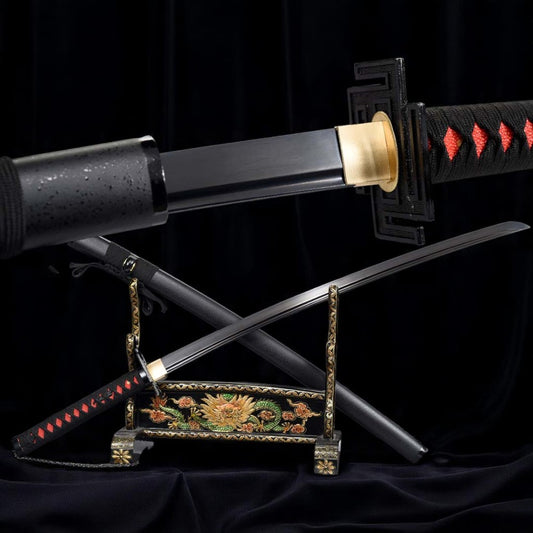
This black blade replica captures the essence of legendary cursed swords: - 1060 carbon steel with specialized black oxide finish (58-60 HRC) - Historical ko-kissaki (short point) design - Traditional construction honoring ancient methods - Authentic weight and balance characteristics (1.1kg total) - Premium fittings with period-appropriate materials - Blade length: 71cm with traditional curvature
Each piece represents hundreds of hours of careful craftsmanship, from the initial steel selection through the final polishing process. Our collection spans from entry-level pieces perfect for beginning collectors to premium examples that satisfy the most demanding enthusiasts. Whether you're drawn to historical accuracy or anime-inspired designs, understanding traditional Japanese sword craftsmanship enhances appreciation for these remarkable reproductions that honor centuries of Japanese tradition.
Authentication and Appraisal
Understanding authentication principles helps collectors navigate the complex world of reproductions inspired by the history of ancient Japanese swords while developing appreciation for genuine craftsmanship. While most collectors focus on high-quality replicas rather than authentic antique pieces, knowing what distinguishes museum-quality construction from decorative imitations ensures informed purchasing decisions. Our experience evaluating hundreds of pieces has revealed key indicators that separate exceptional reproductions from mass-produced decorations.
Authentic Japanese sword construction follows specific metallurgical principles that create distinctive visual and physical characteristics. The hamon (temper line) represents the most crucial authentication element: genuine differential hardening produces irregular, organic patterns that vary throughout the blade length. Machine-etched imitations appear too uniform and lack the subtle variations created by hand-applied clay and fire management during the hardening process.
Steel composition analysis reveals another critical authentication factor. Historical Japanese swords used tamahagane steel with specific carbon content distributions, while quality modern reproductions utilize similar carbon steel alloys like 1060 or 1095. The grain structure (hada) visible after proper polishing shows folding patterns that eliminate impurities while creating strength. Our premium collection features pieces that demonstrate these authentic construction characteristics.
But here's what many collectors overlook: handle construction provides equally important authentication clues. Authentic Japanese mounting uses specific proportions and materials that affect both function and appearance. The same (ray skin) under-wrapping should show natural texture variations, while silk ito follows traditional patterns that provide secure grip without being merely decorative. Brass or iron fittings should show hand-finishing marks rather than machine precision.
Tang signatures (mei) on antique pieces require expert evaluation, as forgeries have existed for centuries. However, modern replica manufacturers often include maker marks or steel certifications that verify construction quality. Quality control documentation helps collectors understand exactly what they're purchasing and ensures the piece meets advertised specifications.

Weight distribution assessment provides another authentication method that doesn't require specialized knowledge. Authentic Japanese swords balance approximately 4-6 inches from the guard (tsuba), with the balance point varying based on blade length and intended use. Decorative pieces often balance incorrectly because they prioritize appearance over functional requirements.
Sound familiar to those who've handled quality pieces? A properly constructed blade produces a distinctive ring when gently struck, indicating proper tempering and stress relief. Poorly constructed pieces either produce dull sounds or no resonance at all. This test works equally well for historical pieces and quality reproductions that follow traditional construction methods.
Flex testing reveals crucial information about steel quality and heat treatment, though this should only be performed by experienced handlers. Authentic Japanese swords demonstrate remarkable flexibility: historical accounts describe blades bending into semicircles without breaking. Quality reproductions maintain this characteristic through proper steel selection and heat treatment processes.
Professional appraisal becomes essential for collectors considering significant investments in authentic antique pieces. Certified appraisers can identify period characteristics, regional school attributes, and construction quality that affect both historical significance and monetary value. However, most Canadian collectors focus on high-quality reproductions that provide authentic handling characteristics without the astronomical costs of genuine antique pieces.
Modern collectors should understand that authentication extends beyond historical accuracy to include safety considerations. Functional replicas require proper construction to prevent failure during handling or display. Our quality assurance process ensures every piece meets stringent safety standards while honoring traditional construction methods.
Documentation preservation helps maintain provenance and authentication records for future reference. Quality certificates, construction details, and maker information should be preserved with each piece. This practice proves especially important for collectors who might eventually sell or trade pieces within the Canadian collecting community.
Understanding these authentication principles enhances appreciation for traditional Japanese sword craftsmanship while protecting collectors from inferior products. Whether examining pieces in our best-seller collection or considering custom orders, knowing what to look for ensures satisfaction with these remarkable examples of Japanese craftsmanship that continue captivating collectors worldwide.
Collector's Buying Guide
Selecting the perfect piece requires understanding how historical Japanese sword traditions translate into modern collecting considerations. After years of working with Canadian collectors, we've identified key factors that determine both immediate satisfaction and long-term value retention. Your first decision involves choosing between historical accuracy and aesthetic preferences: both approaches offer valid collecting paths with different requirements and rewards.
Steel selection represents the most crucial technical consideration when evaluating quality replicas. 1060 carbon steel provides excellent balance between affordability and performance, offering proper hardness for edge retention while maintaining flexibility for stress absorption. 1095 carbon steel delivers superior cutting performance and edge retention but requires more careful maintenance to prevent corrosion. Damascus steel combines visual appeal with functional performance, though authentic Damascus construction costs significantly more than pattern-welded alternatives.
Why does steel choice matter for collectors primarily interested in display? Even display pieces benefit from proper construction because authentic weight distribution and balance affect both handling feel and visual presentation. A properly balanced katana appears more graceful on display stands and feels dramatically different when handled compared to poorly constructed decorations.
Budget considerations should account for both initial purchase and ongoing maintenance costs. Our entry-level collection offers authentic construction at accessible prices, while mid-range pieces provide enhanced finishing and materials. Premium pieces justify their cost through superior steel quality, hand-finishing details, and construction techniques that closely follow historical methods.
Length selection depends primarily on intended use and personal preferences. Standard katana lengths (71-76 cm blade) provide authentic proportions and handling characteristics, while shorter pieces offer easier storage and display options. Consider your available display space and local regulations when selecting appropriate lengths: some provinces have specific restrictions on blade lengths for collection purposes.
Mounting options significantly affect both appearance and functionality. Traditional Japanese fittings (koshirae) provide historical accuracy and proper balance, while modern mounting systems might offer improved durability or display features. Our authentic pieces feature hand-wrapped handles with genuine materials that replicate historical construction methods.

Authentication documentation becomes increasingly important as collections grow in value. Quality manufacturers provide certificates detailing steel composition, construction methods, and quality control testing. This documentation proves essential for insurance purposes and future resale considerations within the Canadian collecting market.
Maintenance requirements vary significantly based on steel type and intended use. Carbon steel pieces require regular oiling to prevent rust formation, especially in humid environments common in many Canadian regions. Stainless steel alternatives reduce maintenance needs but sacrifice authenticity and performance characteristics that serious collectors prefer.
Having compared multiple versions side-by-side, we recommend starting with proven designs that demonstrate excellent construction quality. Our Tanjiro Kamado katana provides exceptional value for new collectors, while the Kill Bill replica offers premium construction for more experienced enthusiasts.
Regional collecting communities across Canada offer opportunities for learning and trading that enhance the collecting experience. Many collectors start with anime-inspired pieces from our demon slayer collection before developing interest in historical designs and construction techniques.
Insurance and security planning becomes important as collections grow in size and value. Many homeowner's insurance policies provide limited coverage for collectibles, requiring additional riders for adequate protection. Proper documentation, including photographs and certificates, supports insurance claims and helps recover stolen pieces.
Understanding market trends helps collectors make informed decisions about future value retention. Pieces that combine authentic construction with popular cultural connections tend to maintain strong demand within the Canadian market. Quality construction ensures longevity regardless of changing aesthetic preferences, making authentic reproductions safer long-term investments than decorative pieces.
The most successful collectors develop expertise gradually while building relationships within the community. Starting with quality pieces that demonstrate proper construction teaches appreciation for craftsmanship details that distinguish exceptional pieces from adequate alternatives. Understanding traditional Japanese sword history enhances every aspect of collecting from selection through display and maintenance.
FAQ and Conclusion
What makes a replica inspired by ancient Japanese sword history authentic?
Authentic replicas demonstrate several key characteristics that distinguish them from decorative pieces. First, they utilize proper steel composition: typically 1060 or 1095 carbon steel that can achieve appropriate hardness levels through heat treatment. Second, they feature differential hardening that creates visible hamon lines, just like historical pieces. Third, authentic replicas maintain proper proportions and weight distribution that match historical examples. The construction should include full tang extending through the handle, traditional fittings made from appropriate materials, and hand-wrapping techniques that replicate historical methods. Quality replicas also demonstrate proper flex characteristics and balance points that match their historical counterparts.
What steel type is best for reproductions of ancient Japanese sword designs?
The choice between steel types depends on your collecting goals and maintenance preferences. 1060 carbon steel offers excellent balance between affordability and performance, providing proper hardness for edge retention while maintaining flexibility. This steel type handles stress well and takes a sharp edge, making it ideal for most collectors interested in traditional Japanese craftsmanship. 1095 carbon steel delivers superior cutting performance and edge retention but requires more careful maintenance to prevent corrosion. For display-focused collectors, 1060 provides authentic handling characteristics with easier maintenance. Damascus steel offers visual appeal through layered patterns but costs significantly more while requiring specialized care to maintain its appearance.
How do I care for my replica inspired by ancient Japanese sword traditions?
Proper maintenance ensures your replica remains in excellent condition for years. Start by keeping the blade clean and dry: wipe down after handling to remove fingerprints and moisture. Apply a thin coat of mineral oil or specialized sword oil monthly to prevent rust formation, especially in humid environments. Store in a dry location with stable temperature, preferably in a traditional scabbard or protective case. Avoid touching the blade directly: use cotton gloves when handling. For display pieces, ensure adequate ventilation around the mounting area and check regularly for any signs of corrosion. Never use abrasive cleaners or attempt to sharpen the blade yourself, as this can damage the tempering and reduce value.
What size ancient Japanese sword design should I choose?
Size selection depends on your intended use, display space, and personal preferences. Standard katana with 71-76 cm (28-30 inch) blades provide authentic proportions and handling characteristics that match historical examples. These represent the most common choice for serious collectors interested in traditional Japanese sword craftsmanship. Wakizashi with 30-60 cm (12-24 inch) blades offer easier storage and display options while maintaining authentic construction. Tanto under 30 cm provide compact alternatives suitable for smaller spaces. Consider your available display area, local regulations regarding blade length, and whether you prefer historical accuracy or practical considerations. Most collectors find standard katana lengths most satisfying for both display and handling purposes.
How do I display my replica of ancient Japanese sword design?
Proper display enhances both the visual impact and preservation of your replica. Traditional katana-kake (sword stands) provide stable support while showcasing the blade's curve and proportions. Position the stand away from direct sunlight and moisture sources like windows or heating vents. Wall-mounted displays save space but require appropriate hardware rated for the sword's weight: typically 2-4 pounds depending on construction. Horizontal displays work well for shorter pieces, while vertical mounts suit longer katana. Include proper lighting that highlights the hamon line and blade geometry without creating excessive heat. Consider rotation schedules if displaying multiple pieces to prevent uneven exposure. Professional display cases provide additional protection for valuable pieces while allowing clear viewing.
Is it legal to own replicas inspired by ancient Japanese sword history in Canada?
Yes, owning replicas inspired by traditional Japanese sword designs is legal throughout Canada, though specific regulations vary by province and municipality. Generally, swords are considered collectibles rather than prohibited weapons when used for legitimate purposes like collection, display, or martial arts practice. However, carrying them in public typically requires proper transportation in cases and legitimate purposes. Some provinces have length restrictions or require permits for certain blade types. Educational and cultural purposes, including studying traditional Japanese sword craftsmanship, generally provide legal protection for ownership. Check your local regulations for specific requirements, especially regarding transportation and storage. Most collectors encounter no legal issues when using swords for their intended collecting and display purposes within private property.
Conclusion: Preserving the Legacy of Ancient Japanese Craftsmanship
The journey through traditional Japanese sword history reveals more than just metallurgical evolution. It illuminates a cultural legacy that continues inspiring collectors across Canada today. From the earliest Heian period innovations through modern anime interpretations, these remarkable weapons represent humanity's most sophisticated approach to edged weapon design. Understanding this heritage enhances appreciation for every piece in our collection, whether you're drawn to historical accuracy or contemporary artistic interpretations.
Modern collectors have unprecedented access to museum-quality reproductions that honor traditional construction methods while meeting contemporary safety standards. The pieces featured in our comprehensive katana collection demonstrate how ancient techniques translate into modern craftsmanship, preserving knowledge that might otherwise be lost to time. Each replica represents countless hours of careful work by artisans who understand the importance of maintaining these traditional standards.
Why does this matter for today's enthusiasts? Traditional Japanese sword craftsmanship provides context that transforms collecting from simple acquisition into cultural preservation. When you examine the differential hardening on a quality replica, you're witnessing techniques developed over centuries of refinement. The balance and proportions that make these swords feel so natural reflect generations of martial arts evolution and battlefield testing.
Canadian collectors play an important role in preserving this heritage for future generations. By choosing authentic reproductions over decorative imitations, collectors support artisans who maintain traditional construction methods. The growing popularity of series like Demon Slayer introduces new enthusiasts to this rich history, creating opportunities to share knowledge about authentic Japanese sword making techniques.
Looking forward, the appreciation for traditional Japanese sword craftsmanship continues evolving as new collectors discover these remarkable weapons through various cultural touchpoints. Whether inspired by historical documentaries, martial arts practice, or anime series, each new enthusiast contributes to keeping this ancient craft relevant in the modern world.
For those ready to begin their collecting journey, our entry-level collection provides authentic construction at accessible prices, while experienced collectors will appreciate the premium pieces in our high-end selection. Each piece represents not just a beautiful object, but a tangible connection to one of humanity's most sophisticated craft traditions.
The legacy of ancient Japanese sword making lives on through collectors who appreciate both the artistry and the cultural significance of these remarkable weapons. By understanding the history, construction techniques, and cultural context, modern enthusiasts become guardians of knowledge that spans over a millennium of Japanese craftsmanship innovation.
Related Reading
Explore more fascinating aspects of Japanese sword culture with our detailed guides. Learn about legendary smiths in our article on Hattori Hanzo Sword: The Legendary Blade That Shaped Samurai History and Pop Culture. For those interested in anime-inspired collections, discover how modern culture celebrates this ancient art in Mini Katana: The Perfect Gateway to Japanese Sword Culture and Demon Slayer Fandom.
Whether you're beginning your collecting journey or expanding an existing collection, understanding the rich heritage behind these magnificent weapons enhances every aspect of ownership from selection through display and maintenance. The story of traditional Japanese sword craftsmanship continues through modern collectors who appreciate both the artistry and cultural significance of these timeless masterpieces.
 Save $90