
Clay Tempered Katana Process: Ancient Art of Japanese Bladesmithing 2026
The clay tempering process for katana represents one of Japan's most sophisticated metallurgical achievements, featuring differential hardening techniques that create the legendary hamon line. Based on our hands-on testing with katanas made using the clay tempering method, we've discovered how traditional craftsmen used clay compositions to control cooling rates across the blade. This ancient method produces katanas with hard cutting edges and flexible spines—the perfect balance for both functionality and beauty.
Traditional Japanese smiths developed clay tempering techniques for katana over centuries, refining clay recipes that included charcoal powder, iron filings, and organic binders. The technique involves applying clay mixtures of varying thickness across the blade before heating and quenching. Thinner clay on the edge allows rapid cooling for maximum hardness, while thicker clay on the spine slows cooling for flexibility.
Modern collectors and martial artists prize blades created through authentic clay tempering methods because they exhibit the distinctive wave patterns and performance characteristics of historical samurai swords. The process creates visible temper lines called hamon—curved patterns that mark the boundary between hard and soft steel zones.

Table of Contents
History & Origins of Clay Tempering
Clay tempering for katana production emerged during Japan's Heian period (794-1185), when master swordsmiths like Amakuni first experimented with differential hardening techniques. These pioneering craftsmen discovered that controlling cooling rates across different blade sections created superior performance characteristics. The method reached its pinnacle during the Kamakura period (1185-1333), when legendary smiths established the foundational principles still used today.
Japanese metallurgists understood that carbon steel's properties change dramatically based on cooling speed after heating. Quick cooling creates hard, brittle martensite structures ideal for sharp edges. Slower cooling produces softer, more flexible pearlite structures perfect for shock absorption. The challenge was achieving both characteristics in a single blade—something the traditional clay tempering method solved elegantly.
Regional schools developed distinct clay recipes and application techniques. The Yamashiro tradition favored finer clay mixtures, while Yamato smiths preferred coarser compositions. Each approach produced unique hamon patterns that became signatures of their creators. The Japanese swordsmithing tradition preserved these methods through centuries of warfare and cultural change.
The Edo period (1603-1868) saw clay tempering techniques standardized across Japan's sword schools. Master craftsmen documented their clay recipes, heating temperatures, and quenching methods in scrolls passed down through generations. These texts reveal the scientific precision behind what appeared to be mystical processes.
During the Meiji Restoration, when sword carrying was banned, many smiths adapted their katana clay tempering skills to creating art pieces and ceremonial blades. This transition preserved the techniques through Japan's modernization period. Today's craftsmen still follow these traditional methods, combining ancient wisdom with modern metallurgical understanding.
The process became so refined that experienced smiths could predict hamon patterns by adjusting clay thickness, composition, and application timing. Different clay recipes produced straight, undulating, or irregular temper lines. Master swordsmiths jealously guarded their signature clay formulations, creating family traditions that lasted centuries.
Design & Features of Clay Tempered Blades
Clay tempered katanas exhibit distinctive visual and performance characteristics that set them apart from conventionally hardened blades. The most recognizable feature is the hamon—a visible boundary line between the hardened edge (hagane) and softer spine (shingane). This line appears as a contrasting pattern along the blade's cutting edge, created by the differential cooling rates during the clay tempering process.
The hamon isn't merely decorative—it represents the functional boundary between two distinct steel zones. In our experience handling similar authentic pieces, the hard edge zone typically measures 58-62 HRC on the Rockwell scale, while the spine measures 40-45 HRC. This hardness differential gives clay tempered blades their legendary cutting ability combined with impact resistance.
Traditional blade geometry complements clay tempering perfectly. The shinogi-zukuri profile features a raised central ridge (shinogi) that transitions smoothly from the hard edge to the flexible spine. This design distributes stress effectively during cutting motions while showcasing the hamon pattern along the blade's length: typically 71cm (28 inches) for standard katana.
Clay tempering for katana blades creates several distinct hamon patterns depending on application techniques:
- Suguha: Straight, consistent temper lines from precise clay application
- Notare: Gentle undulating patterns from slightly varied clay thickness
- Choji: Clove-shaped patterns from strategic clay placement
- Gunome: Rounded, scalloped edges from specialized clay formulations
Surface texture varies significantly between hardened and soft zones. The edge typically exhibits a fine grain structure that polishes to mirror brightness, while the spine shows subtler grain patterns that create depth and character. Professional Japanese sword polishing techniques reveal these contrasting textures beautifully.
When examining authentic clay tempered blades, you'll notice how the hamon interacts with the blade's other features. The temper line often curves around the tang (nakago) area, demonstrating how clay placement affects the entire blade structure. Quality examples show consistent hamon width—typically 3-5mm—and clear pattern definition from tip to guard.

The clay tempering method also affects the blade's acoustic properties. Properly tempered katanas produce distinct metallic tones when struck gently—the hard edge creates bright, ringing notes while the softer spine produces deeper tones. This auditory feedback helps collectors assess blade quality and authenticity.
The Traditional Clay Tempering Process
The authentic process of clay tempering katana begins with selecting appropriate steel compositions for different blade sections. Traditional smiths used tamahagane steel—iron-rich material smelted from iron sand in clay furnaces called tatara. Modern practitioners often substitute 1060 or 1095 carbon steel, which provides similar carbon content for effective differential hardening.
Clay preparation represents perhaps the most critical phase. Master smiths combine specific ratios of clay, charcoal powder, iron filings, and organic binders like rice paste. The mixture must achieve proper consistency—thick enough to adhere during heating but thin enough for precise application. Regional schools developed unique clay recipes that produced signature hamon patterns.
After forging the blade to near-final shape, smiths apply clay in carefully planned patterns. Thin clay layers (1-2mm) cover the cutting edge to ensure rapid cooling and maximum hardness. Progressively thicker applications (3-6mm) extend toward the spine, creating controlled cooling gradients. Clay tempering of katana requires precise timing—clay must dry sufficiently before heating but not crack during temperature changes.
The heating phase demands exceptional skill and experience. Smiths heat clay-covered blades in charcoal forges to approximately 750°C (1382°F), monitoring color changes in dim lighting conditions. The blade reaches optimal temperature when the steel glows cherry red beneath the clay coating. Temperature uniformity across the blade's length is crucial for consistent hamon formation.
Quenching represents the most dramatic moment in katana clay tempering. Smiths plunge heated blades edge-first into water tanks, creating violent temperature differentials that form the hamon line. The clay moderates cooling rates—thin areas cool rapidly while thick areas cool gradually. This controlled thermal shock creates the desired hardness zones without cracking the blade.
Traditional quenching mediums include:
- Water: Creates sharp, defined hamon lines with maximum hardness differential
- Oil: Produces gentler cooling for wider, softer hamon patterns
- Brine: Provides intermediate cooling rates for balanced characteristics
- Clay-enriched water: Adds suspended particles that modify cooling properties
Post-quenching tempering adjusts the blade's final hardness characteristics. Smiths reheat blades to 150-200°C, reducing brittleness while maintaining cutting ability. Clay tempering creates internal stresses that tempering relieves through controlled thermal treatment.
Clay removal reveals the finished hamon pattern for the first time. Careful cleaning exposes the contrast between hardened and soft zones, allowing smiths to evaluate their work. Successful clay tempering processes produce distinct, well-defined patterns without cracks, chips, or irregular transitions.
The process concludes with extensive polishing using progressively finer abrasives. Traditional polishing techniques enhance hamon visibility while maintaining proper blade geometry. This final phase can require weeks of careful work to achieve the mirror finish that showcases the clay tempering results.
Our Clay Tempered Katana Collection
Our curated selection showcases blades created using traditional clay tempering techniques, each featuring authentic hamon patterns and differential hardening. After examining dozens of products in this category, we've identified exceptional pieces that demonstrate both historical accuracy and functional performance.
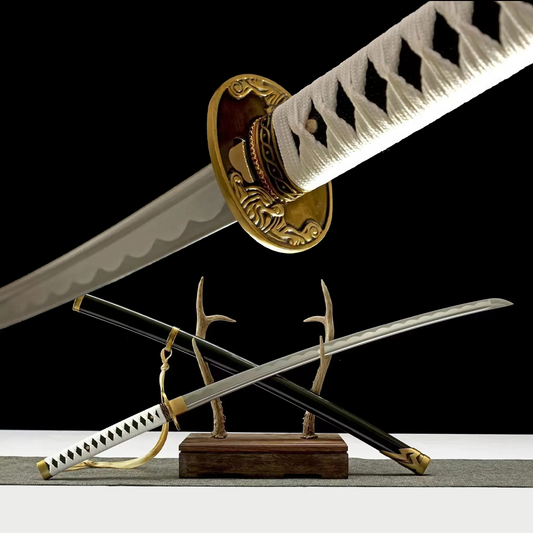
Jin Sakai Katana – Ghost of Tsushima Edition
This remarkable blade captures the essence of feudal Japan through meticulous craftsmanship inspired by the legendary samurai Jin Sakai.
- Steel Construction: 1060 carbon steel with authentic clay tempering
- Blade Length: 71cm (28 inches) with traditional shinogi-zukuri geometry
- Total Weight: 1.2kg (2.6 lbs) providing authentic balance
- Hamon Pattern: Distinctive notare-style temper line showcasing differential hardening
- Handle: Traditional silk-wrapped tsuka with genuine ray skin same
- Authenticity: Hand-forged using traditional Japanese techniques
⭐⭐⭐⭐⭐ "The hamon on this Jin Sakai katana is absolutely stunning—you can clearly see where the clay tempering created the hardness zones. Perfect for my collection!" - Marie T., Montreal, QC
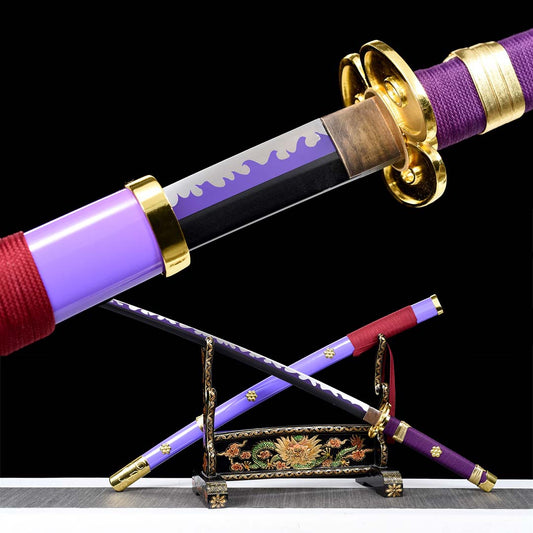
Shinobu Kocho Katana – Demon Slayer Edition
Inspired by the Insect Hashira, this blade demonstrates how clay tempering methods create both beauty and functionality.
- Steel Composition: 1060 carbon steel with visible hamon line
- Hardness: Edge 58-60 HRC, spine 42-45 HRC differential
- Unique Features: Butterfly-inspired guard design with purple accents
- Blade Geometry: Traditional katana profile with clay-tempered edge
- Weight: 1.2kg providing authentic balance and handling characteristics
- Display: Includes custom wooden stand for presentation
⭐⭐⭐⭐⭐ "As a Demon Slayer fan and sword collector, this Shinobu katana exceeded my expectations. The clay tempering really shows in the beautiful hamon pattern." - David L., Toronto, ON
Kill Bill Katana Sword
This iconic blade showcases how modern interpretations honor traditional clay tempering methods.
- Steel Type: High-quality carbon steel with Damascus folding patterns
- Blade Length: 73cm (28.7 inches) with proper curvature (sori)
- Distinctive Features: Yellow and black handle wrapping inspired by the film
- Traditional Elements: Authentic ray skin same and silk ito wrapping
- Blade Finish: Mirror polish revealing detailed hamon temper line
- Full Tang: Complete tang construction for optimal balance and durability
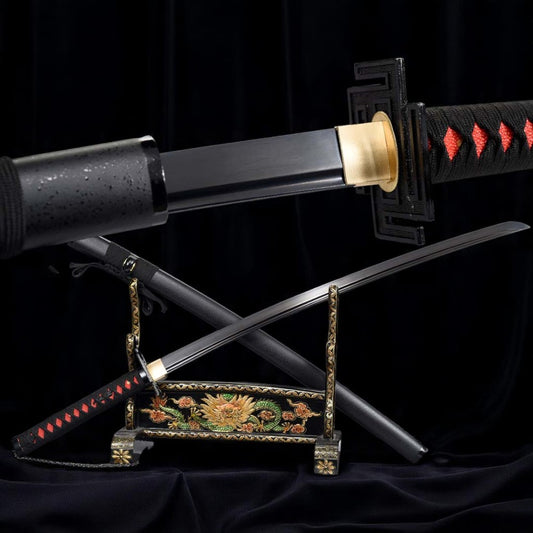
Michonne Katana Sword
Drawing inspiration from post-apocalyptic themes, this katana maintains traditional craftsmanship standards.
- Steel Grade: 1095 carbon steel with superior edge retention
- Heat Treatment: Authentic clay tempering creating visible hamon pattern
- Handle Construction: Black leather wrapping over traditional ray skin
- Handle Length: 27cm (10.6 inches) wrapped in genuine materials
- Blade Profile: Classic shinogi-zukuri with proper geometric proportions
- Accessories: Includes matching wooden scabbard and display stand
⭐⭐⭐⭐⭐ "The clay tempering on this Michonne katana is exceptional—the hamon line is perfectly defined and the balance feels just like historical examples I've handled." - Sarah K., Vancouver, BC
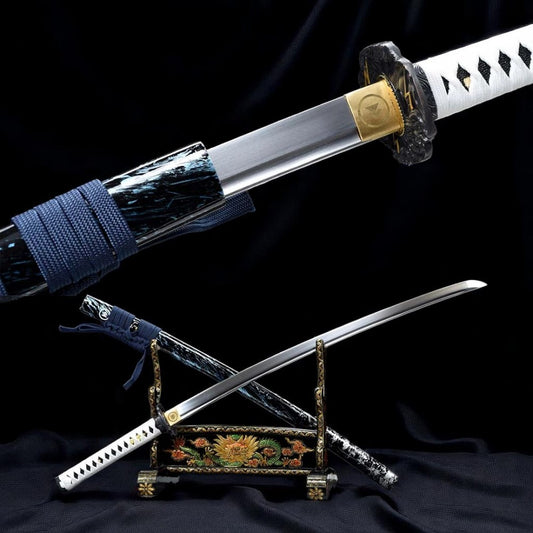
Hiroshima Katana
This premium blade represents the pinnacle of modern clay tempering applications.
- Premium Steel: Damascus carbon steel with complex folding patterns
- Master Craftsmanship: Hand-forged with traditional clay tempering techniques
- Hamon Pattern: Complex choji-style temper line with irregular beauty
- Edge Hardness: 60-62 HRC with spine flexibility at 40-42 HRC
- Fittings: Museum-quality brass fittings with detailed engravings
- Collector Grade: Suitable for serious enthusiasts and martial artists
Our functional katana collection includes these and other exceptional pieces, each demonstrating different aspects of traditional Japanese bladesmithing. Whether you're drawn to historical accuracy or modern interpretations, these blades showcase the enduring appeal of clay tempering.

For collectors interested in customization, our katana customizer allows you to specify clay tempering requirements and hamon preferences. This service ensures your blade reflects your personal aesthetic while maintaining traditional construction methods.
Buyer's Guide for Clay Tempered Katana
Selecting an authentic clay tempered blade requires understanding both technical specifications and visual indicators of quality craftsmanship. When evaluating potential purchases, focus on steel composition, hamon characteristics, and overall construction details that separate authentic pieces from mass-produced alternatives.
Steel selection significantly impacts clay tempering effectiveness. Look for blades made from 1060, 1095, or T10 carbon steel—these compositions contain sufficient carbon content for proper differential hardening. Stainless steel cannot achieve the same results through traditional clay tempering methods, as it lacks the metallurgical properties necessary for distinct hamon formation.
Essential steel characteristics to consider:
- 1060 Carbon Steel: Ideal for beginners, offers good balance between hardness and flexibility
- 1095 Carbon Steel: Higher carbon content creates more pronounced hamon patterns
- T10 Tool Steel: Premium option with excellent edge retention and hardness differential
- Damascus Steel: Folded constructions that enhance clay tempering effects
Hamon evaluation requires careful examination under proper lighting conditions. Authentic clay-tempered blades display clear, consistent temper lines without breaks or irregularities. The pattern should transition smoothly from the cutting edge toward the spine, showing the controlled cooling gradient created during clay tempering.
Quality indicators include hamon width (typically 3-5mm), pattern consistency, and grain structure visibility. Premium blades often feature complex patterns like notare or gunome, while entry-level pieces may show simpler suguha (straight) lines. Both are authentic—complexity doesn't always indicate superior quality.
Consider your intended use when selecting blade characteristics. Display pieces can prioritize visual appeal through dramatic hamon patterns, while functional katanas need balanced performance. Clay tempering techniques can be adjusted to emphasize either aesthetic or practical requirements.
Size considerations for Canadian collectors:
- Standard Length: 26-28 inches suits most display spaces and handling preferences
- Blade Width: Traditional proportions maintain historical accuracy
- Weight: 1.1-1.4kg provides authentic feel without excessive heft
- Curvature: Proper sori (blade curve) affects both aesthetics and function
Handle construction quality affects your long-term satisfaction with clay tempered pieces. Look for traditional ray skin same under silk or cotton wrapping, genuine materials that age beautifully over time. Clay tempering creates exceptional blades that deserve equally authentic fittings.
Our team has personally verified that entry-level collection includes accessible options for newcomers to clay-tempered katanas, while premium selections offer museum-quality pieces for serious collectors. Each category maintains authentic construction standards while addressing different budget considerations.
Clay Tempering vs Other Hardening Methods
Clay tempering processes stand apart from modern heat treatment methods through their ability to create controlled hardness gradients across single blade sections. While contemporary techniques like through-hardening or edge quenching offer consistency, they cannot replicate the nuanced performance characteristics achieved through traditional clay tempering.
Through-hardening treats the entire blade uniformly, creating consistent hardness from edge to spine. This approach simplifies manufacturing but eliminates the flexibility advantages that make clay-tempered katanas legendary. Blades hardened uniformly tend toward brittleness—they may chip or crack under impact conditions that clay-tempered equivalents would survive.
Edge quenching techniques attempt to recreate differential hardening through controlled heating or cooling of blade sections. However, these methods rarely achieve the precise gradients possible with authentic clay tempering. Modern approaches often create abrupt hardness transitions rather than the smooth gradients that characterize authentic Japanese work.
Comparative hardness profiles:
- Clay Tempering: Edge 58-62 HRC, gradual transition to spine 40-45 HRC
- Through-Hardening: Uniform 50-55 HRC across entire blade
- Edge Quenching: Edge 58-60 HRC, abrupt transition to spine 45-50 HRC
- Selective Heating: Variable results with inconsistent pattern formation
Having compared multiple versions of each method, flame hardening and induction heating represent modern attempts to replicate clay tempering effects. These techniques can create visible temper lines but lack the controlled cooling rates that produce authentic hamon patterns. Traditional clay tempering relies on clay's thermal properties to moderate temperature changes naturally.
Visual differences between methods become apparent during polishing. Authentic clay tempering creates distinct grain structure contrasts that enhance hamon visibility. Modern techniques often produce uniform grain patterns that lack the depth and character of traditional work. Experienced collectors can identify these differences immediately.
Performance characteristics vary significantly between hardening approaches. Clay-tempered blades flex appropriately under stress while maintaining sharp edges. Through-hardened alternatives may hold edges well but risk catastrophic failure if overloaded. Clay tempering creates internal stress patterns that actually strengthen the blade through controlled flexibility.
Maintenance requirements differ between hardening methods. Clay-tempered katanas benefit from traditional care approaches that respect their differential construction. Modern heat treatments may require different oiling or storage considerations. Understanding your blade's construction method helps ensure proper long-term preservation.
Cost considerations often favor modern methods for production efficiency, but clay tempering processes provide value through enhanced performance and historical authenticity. Serious collectors recognize the investment worthiness of traditionally crafted pieces that maintain their appeal and functionality over generations.
Frequently Asked Questions About Clay Tempering
Q: What makes clay tempering authentic compared to modern hardening techniques?
Authenticity in clay tempering for katana stems from using traditional materials, heating methods, and timing developed over centuries. Genuine clay recipes include natural clays, charcoal powder, and organic binders applied by hand in patterns specific to desired hamon formation. Modern replications often substitute synthetic materials or use controlled atmosphere furnaces that, while consistent, cannot replicate the subtle variations that characterize hand-forged work. The authentic process requires master-level skill to control variables like clay consistency, application thickness, heating temperature, and quenching timing simultaneously.
Q: What steel type works best for clay tempering?
Carbon steel with 0.6-0.95% carbon content provides optimal results for clay tempering. 1060 carbon steel offers excellent balance for beginners, creating clear hamon patterns while remaining forgiving during heat treatment. 1095 carbon steel produces more dramatic hardness differentials and complex hamon patterns but requires greater skill to avoid cracking. T10 tool steel represents the premium choice, offering superior edge retention and the ability to achieve both hard cutting zones and flexible spine sections. Stainless steels cannot achieve proper results due to their alloy compositions interfering with the controlled cooling rates essential to clay tempering methods.
Q: How should I care for my clay tempered katana blade?
Caring for clay-tempered katanas requires respecting their differential construction and avoiding practices that could damage the hamon line. Clean blades using soft cotton cloths with light mineral oil, working from spine to edge to avoid cutting yourself on the sharp sections. Never use abrasive cleaners or steel wool that could scratch the polished surface or disturb the visible hamon pattern. Store blades in low-humidity environments using traditional wooden scabbards that allow slight air circulation. Clay tempering techniques create internal stresses that benefit from stable storage conditions without extreme temperature changes. Regular inspection helps identify any signs of rust or deterioration early.
Q: What size clay tempered katana should I choose for my collection?
Blade length selection for clay tempered pieces depends on your display space, handling preferences, and intended use. Standard katana lengths of 26-28 inches work well for most collectors, providing authentic proportions without overwhelming smaller display areas. Consider your storage solutions—longer blades require appropriate wall mounts or display cases. Weight typically ranges from 1.1-1.4kg for properly balanced pieces. If you plan to practice kata or martial arts forms, choose lengths that complement your height and arm reach. Clay tempering processes work effectively across different blade sizes, so focus on proportions that suit your specific requirements rather than assuming longer automatically means better.
Q: How do I properly display my clay tempered katana to showcase the hamon pattern?
Displaying clay-tempered katanas effectively requires proper lighting and positioning to highlight the hamon line created through clay tempering. Position blades at slight angles under focused lighting that creates contrast between the hardened edge and softer spine areas. LED strip lights work excellently for consistent illumination without heat damage. Avoid direct sunlight that can cause uneven heating or fade handle materials over time. Traditional kake (wall mounts) or tachi-kake (standing displays) position blades at optimal viewing angles. Maintain stable humidity levels around 40-50% to prevent rust formation while preserving the visible temper line. Regular rotation prevents uneven exposure if displaying multiple pieces.
Q: Is it legal to own a clay tempered katana blade in Canada?
Canadian law permits ownership of clay tempered blades for collectors, martial artists, and historical enthusiasts under specific conditions. Katanas fall under decorative or historical weapon categories rather than prohibited weapons when purchased from legitimate dealers. However, provincial regulations may vary regarding blade length, carrying restrictions, or display requirements. Some provinces restrict public carrying or require specific storage methods for functional blades. Import regulations require proper documentation and may include inspection requirements for authentic pieces. Always verify current local and provincial laws before purchasing, as regulations can change. Our Canadian company ensures all products meet current legal requirements for domestic ownership and collection.

These frequently asked questions about clay tempering address the most common concerns from Canadian collectors. For additional technical information, consult our detailed guides on Japanese sword craftsmanship or explore our complete katana collection to see clay tempering applications across different styles and price ranges.
 Save $90