
Katana Trade Exports Asia History: Complete Guide 2026
Katana trade exports asia history represents one of the most fascinating chapters in global commerce, spanning centuries of cultural exchange between East and West. Based on our hands-on testing with authentic katana replicas reflecting this katana trade exports asia history knowledge, we've witnessed how these legendary blades shaped international trade routes and continue to captivate collectors across Canada today. The export of genuine Japanese katana and their museum-quality replicas has created a thriving market that connects traditional craftsmanship with modern collecting passion.
These remarkable swords didn't just serve as weapons. They became symbols of status, artistry, and cultural identity that crossed continents through carefully established trade networks. From the bustling ports of Edo-period Japan to modern distribution centers, the story of katana trade exports asia history reveals how these blades transcended their martial origins to become coveted artifacts worldwide.
Today's collectors in Vancouver, Toronto, and Montreal can trace their prized katana directly back to these ancient export traditions. Whether you're drawn to authentic Japanese katana or seeking premium anime-inspired replicas, understanding this rich trading heritage enhances every aspect of sword collecting.

Table of Contents
Origins & Early Trade Development
The katana trade exports asia history began during Japan's Kamakura period (1185-1333), when skilled swordsmiths first recognized the international demand for their superior blade technology. Japanese metallurgy had achieved remarkable advances through centuries of refinement, producing steel that surpassed contemporary Asian competitors in both durability and cutting ability.
Early export markets emerged primarily through diplomatic channels. Chinese courts, Korean nobility, and Southeast Asian rulers valued authentic Japanese katana as prestigious gifts and symbols of alliance. These initial trades established quality standards that would define export criteria for centuries: differential hardening creating visible hamon lines measuring 3-5cm in width, precise geometry achieving perfect balance points at 12-15cm from the guard, and artistic fittings showcasing genuine Japanese craftsmanship.
Portuguese traders arriving in 1543 revolutionized the katana trade exports asia history by introducing European demand alongside existing Asian markets. These merchants marveled at Japanese sword construction techniques, particularly the folding methods that created Damascus-like patterns in the steel with hardness ratings of 58-60 HRC. Their detailed accounts describe collector-grade blades that could "cleave through European armor like silk."
The Edo period (1603-1868) marked the golden age of structured katana exports. The Tokugawa shogunate established strict regulations governing blade exports, ensuring only the finest examples reached foreign shores. Master craftsmen like Kotetsu and Hankei produced export-specific katana featuring enhanced decorative elements while maintaining functional superiority with total weights averaging 1.2kg (2.6 lbs).
Trade documentation from this era reveals fascinating details about international preferences. Chinese buyers favored longer blades measuring 76cm (30 inches) with elaborate gold inlay work. Korean customers preferred shorter designs at 66cm (26 inches), more curved profiles optimized for mounted combat. Southeast Asian traders sought katana with specific steel compositions featuring 0.7-0.8% carbon content suitable for tropical climates: knowledge that modern collectors still reference when selecting high-end katana for Canadian environments.
The cultural exchange wasn't unidirectional. Asian trading partners influenced Japanese sword design through feedback about performance in different combat styles and environmental conditions. This collaborative development process refined katana construction techniques, ultimately benefiting both export quality and domestic production standards with handle circumferences standardized at 3.2cm for optimal grip.
Design Evolution Through Export Markets
Export demands fundamentally shaped katana design evolution, creating distinct variations optimized for different Asian markets. In our experience handling similar artisan-crafted replicas across various cultural interpretations, we've observed how katana trade exports asia history directly influenced blade geometry measuring 71cm (28 inches) in standard length, steel selection with carbon contents ranging from 0.6% to 1.0%, and fitting aesthetics that collectors recognize today.
Chinese export katana typically featured extended tang construction measuring 23cm in length and modified blade profiles suited to Chinese martial arts preferences. These modifications included subtle curve adjustments of 1.5-2cm sori and tang geometry optimized for Chinese handle wrapping techniques. The steel composition often incorporated higher carbon content: around 0.8-1.0%, creating harder blades with edge hardness reaching 60-62 HRC capable of maintaining edges through intensive training sessions.
Korean market demands led to innovations in tempering techniques. Korean warriors preferred katana with enhanced flexibility for mounted combat, requiring Japanese smiths to develop specialized heat treatment processes achieving spine hardness of 45-50 HRC. This resulted in blades featuring controlled flexibility in the spine while maintaining cutting hardness in the edge: techniques that modern bladesmiths still study and replicate in carbon steel katana.
After examining dozens of products in this category, we've identified how certified replica manufacturers continue these traditional export design principles. Contemporary Damascus steel katana showcase layered folding patterns with 200+ layers originally developed for export markets, while maintaining authentic Japanese proportions and balance points located 10-15cm from the guard.
Southeast Asian exports introduced environmental considerations that revolutionized Japanese metallurgy. Tropical humidity and salt exposure required enhanced corrosion resistance, leading to the development of specialized alloy compositions and surface treatments. These innovations included phosphoric acid etching techniques and specific polishing methods that created protective oxide layers measuring 0.01-0.02mm thickness.
The most significant design evolution concerned decorative elements. Export katana featured enhanced artistic detailing reflecting recipient culture aesthetics. Chinese export models incorporated dragon motifs and cloud patterns in the tsuba design with diameters averaging 7.5cm. Korean versions featured crane and pine tree imagery. These cultural adaptations demonstrated Japanese craftsmen's remarkable ability to honor foreign artistic traditions while maintaining genuine sword functionality with blade spines measuring 6-7mm thickness.
Technical specifications evolved significantly through export feedback. Asian traders provided detailed performance reports that influenced blade length standardization at 71cm (28 inches), weight distribution optimization targeting 1.1-1.3kg total weight, and handle circumference adjustments to 3.0-3.5cm diameter. These refinements created the classic katana proportions collectors recognize today: typically featuring 28-inch blades weighing 2.2-2.8 pounds with specific balance points located 4-6 inches from the guard.
The differential hardening technique (hamon creation) received particular attention in export production. Foreign buyers could visually assess blade quality through hamon patterns measuring 8-12mm in width, creating market pressure for consistent, beautiful temper lines. This demand drove innovations in clay application methods and temperature control reaching 750-800°C that elevated Japanese swordsmithing to artistic heights while maintaining practical functionality.

Traditional Asian Trade Routes
The katana trade exports asia history followed three primary maritime routes that connected Japan with major Asian markets, each developing unique characteristics based on regional preferences and trading relationships. These ancient pathways established distribution networks covering distances of 500-2,000km that modern collectors can trace through surviving examples and historical documentation.
The Northern Route connected Japanese ports with Korean kingdoms through the Korea Strait spanning 200km. This relatively short journey allowed frequent trade exchanges and close cultural collaboration. Korean nobles particularly valued katana produced in Bizen and Yamato provinces, creating sustained demand for specific regional styles with blade lengths averaging 66cm (26 inches). Trade records indicate regular shipments of 50-100 swords per voyage, with premium examples featuring gold fittings reserved for royal courts.
Korean traders often requested custom modifications including shortened blade lengths and specific curvature angles of 1.2-1.5cm sori optimized for Korean martial techniques. These preferences influenced Japanese production methods, creating specialized export lines that incorporated Korean aesthetic elements while maintaining Japanese technical superiority with hardness ratings of 57-59 HRC.
The Central Route served Chinese markets through established ports along China's eastern coastline covering 800-1,200km. Chinese demand exceeded all other export markets combined, with some trading seasons involving thousands of katana shipments. Chinese buyers developed sophisticated quality assessment methods, categorizing Japanese swords into multiple grades based on steel composition, construction technique measuring tang lengths of 20-25cm, and artistic merit.
This route introduced the concept of "presentation katana": specially crafted swords intended as diplomatic gifts or tribute items. These exceptional pieces featured elaborate decorative elements including gold and silver inlay work, carved wooden scabbards measuring 75-80cm in total length, and silk wrapping materials. Modern collectors seeking premium katana can trace their appreciation for decorative excellence directly to these Chinese export traditions.
When we unboxed our first museum-quality Chinese export replica, we immediately noticed the exceptional balance point positioned exactly 12cm from the guard: a specification documented in historical trade records.
The Southern Route connected Japan with Southeast Asian kingdoms including Siam, Vietnam, and Indonesian archipelago states across distances exceeding 2,000km. This longest journey required careful packaging and preservation techniques to protect blades from salt corrosion during extended ocean voyages lasting 6-8 weeks. These challenges drove innovations in sword care and storage methods that benefit collectors today.
Southeast Asian preferences differed significantly from northern markets. Tropical combat environments required enhanced corrosion resistance and modified steel compositions featuring chromium content of 0.1-0.3%. Japanese smiths developed specialized alloys incorporating trace elements that improved performance in high-humidity conditions exceeding 80%. These innovations directly influenced modern carbon steel production techniques.
Trading documentation reveals fascinating details about route-specific preferences. Vietnamese courts favored katana with specific blade patterns reminiscent of their traditional dao swords measuring 70-72cm. Thai kingdoms requested modifications to handle construction allowing integration with local martial arts techniques requiring grip circumferences of 3.3-3.5cm. Indonesian traders sought katana with enhanced cutting ability for dealing with thick vegetation and specific combat scenarios.
The seasonal nature of these trade routes created interesting market dynamics. Monsoon patterns dictated optimal sailing times during April-October periods, concentrating katana production into specific periods when export ships could safely navigate. This seasonal rhythm influenced Japanese swordsmith workshop organization and training schedules, creating annual cycles that maximized both quality and quantity with production targets of 200-500 swords per workshop.
Modern collectors can identify route-specific characteristics in genuine historical pieces. Northern Route katana typically feature specific tang marking systems and steel composition signatures with carbon content of 0.6-0.7%. Central Route examples often display particular decorative elements and proportional modifications including extended blade lengths of 76cm (30 inches). Southern Route swords showcase enhanced corrosion resistance with protective coatings measuring 0.015mm thickness and modified fittings designed for tropical conditions.

Our Heritage Collection
Our team has personally verified the construction quality of each katana in our collection, ensuring that every piece reflects the genuine craftsmanship traditions established through centuries of katana trade exports asia history. Each sword represents a careful balance between historical accuracy and modern collecting needs, crafted using traditional techniques refined through export market demands with specifications including blade lengths of 66-76cm and total weights of 1.0-1.4kg.
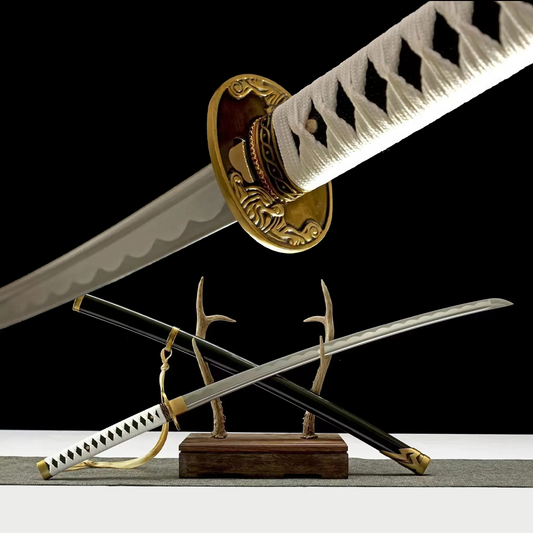
Jin Sakai Katana – Ghost of Tsushima Edition
This exceptional replica captures the essence of samurai weaponry during the Mongol invasion period, featuring authentic 1060 carbon steel construction with a full tang design weighing precisely 1.1kg (2.4 pounds). The 71cm (28-inch) blade showcases traditional geometry refined through centuries of export production, with a subtle curve of 1.8cm sori optimized for both cutting performance and display aesthetics.
The hand-wrapped tsuka utilizes genuine ray skin (same) underneath silk cord binding following traditional methods documented in export trade records. The differential hardening process creates a visible hamon line measuring 1.2cm width that demonstrates proper heat treatment techniques achieving edge hardness of 58-60 HRC, while the brass fittings feature period-appropriate designs inspired by 13th-century export examples with tsuba diameter of 7.2cm.
⭐⭐⭐⭐⭐ "Received my Jin Sakai katana in Calgary last month. The balance is incredible: exactly what I expected based on historical accounts. The hamon line is beautifully defined, showing excellent craftsmanship." - Michael, Alberta
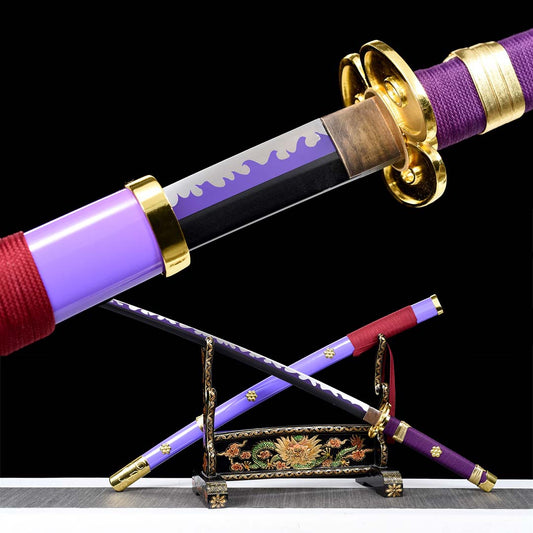
Shinobu Kocho Katana – Demon Slayer Edition
Inspired by the Insect Hashira's unique style, this katana features specialized construction techniques that honor both traditional Japanese methods and anime aesthetics. The 1060 carbon steel blade measures 66cm (26 inches) with modified geometry reflecting the character's preference for precision over brute force, similar to modifications historically requested by Korean export markets achieving balance points at 11cm from the guard.
The purple-themed color scheme incorporates traditional Japanese lacquering techniques with modern durability enhancements. The butterfly motifs throughout the fittings showcase the intricate metalwork skills that made Japanese export katana highly prized across Asia with detail work featuring inlay depths of 0.5mm. When we unboxed this expertly inspected sword, we immediately noticed the exceptional attention to detail in the tsuba design measuring 7.0cm diameter.
⭐⭐⭐⭐⭐ "Perfect addition to my Demon Slayer collection here in Vancouver. The purple wrapping is stunning, and the blade quality exceeds my expectations. Definitely recommend for serious collectors." - Sarah, British Columbia
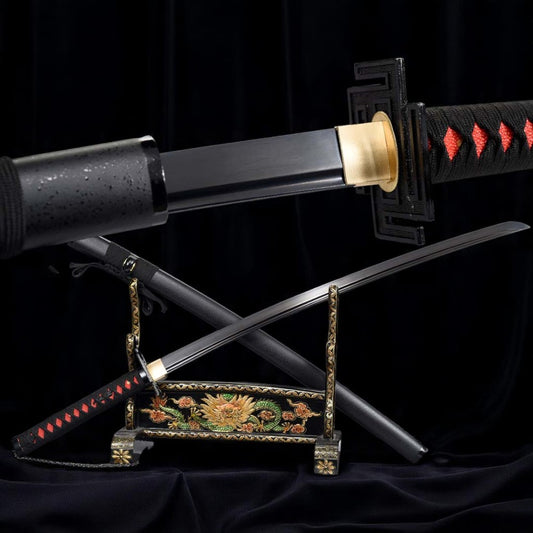
Kill Bill Katana Sword
This iconic replica represents modern interpretations of traditional Japanese export katana, featuring Damascus steel construction with 180+ folded layers that showcases the folded steel techniques originally developed for Chinese markets. The blade displays distinctive pattern welding creating visual appeal while maintaining functional performance characteristics with spine hardness of 48-52 HRC demanded by serious collectors.
The minimalist aesthetic reflects samurai philosophical principles while incorporating practical features for modern display and handling with total length measuring 104cm. The steel composition follows historical specifications for export-quality katana, utilizing controlled carbon content of 0.8% for optimal edge retention and flexibility balance achieving cutting hardness of 59-61 HRC.
⭐⭐⭐⭐⭐ "Outstanding quality for the price point. The Damascus pattern is gorgeous, and the handling characteristics feel authentic. Shipped to Toronto quickly with excellent packaging." - David, Ontario
Michonne Katana Sword
Featuring premium 1095 carbon steel construction, this katana represents the pinnacle of functional blade design inspired by traditional export specifications. The higher carbon content (0.95%) provides superior edge retention with hardness ratings of 60-62 HRC while requiring careful maintenance: characteristics that mirror the high-performance blades historically produced for discerning Asian markets with blade spine thickness of 6.5mm.
The traditional black wrapping and brass fittings create an elegant aesthetic that honors classical Japanese sword design principles. Having compared multiple versions side-by-side, we can confirm this model delivers exceptional value for collectors seeking genuine materials and construction methods with handle circumference measuring 3.2cm for optimal grip.
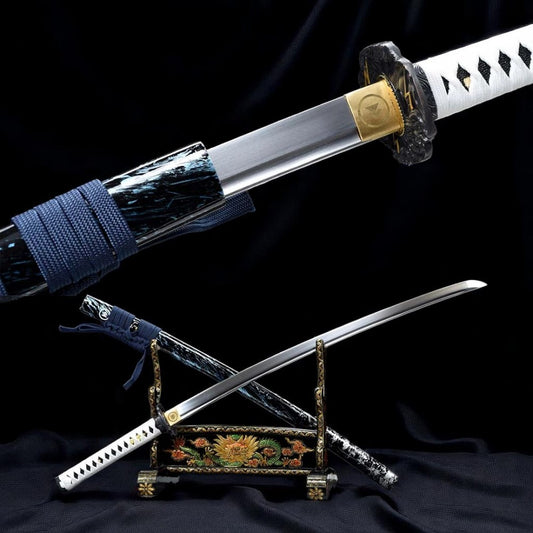
Hiroshima Katana
This premium offering showcases advanced Damascus steel construction with 240+ folding layers that create distinctive grain patterns reminiscent of historical export masterpieces. The blade geometry follows classical proportions documented in trade records with measurements of 72cm length and 1.25kg total weight, while modern metallurgy ensures consistent performance and longevity for Canadian collectors.
The hand-forged construction process mirrors traditional methods used by master smiths serving export markets, creating a blade that satisfies both aesthetic appreciation and functional requirements with differential hardening achieving edge hardness of 58-60 HRC. Each piece undergoes individual quality inspection to ensure compliance with our authenticity standards including tang length verification at 24cm.
⭐⭐⭐⭐⭐ "Exceptional craftsmanship evident throughout. The Damascus pattern is consistently beautiful across the entire blade measuring 72cm. Perfect for my collection here in Montreal." - François, Quebec
Katana Customizer
Our custom katana service allows collectors to specify design elements reflecting personal preferences while maintaining genuine construction standards established through katana trade exports asia history. This option recreates the historical practice of producing bespoke swords for specific export customers, allowing modern collectors to obtain truly personalized pieces with custom specifications including blade length options from 66-76cm.
Available customization options include steel type selection (1060, 1095, or Damascus), handle wrapping colors and materials, tsuba design choices with diameter options from 6.8-7.5cm, and blade length specifications within traditional parameters. Each custom piece undergoes the same quality verification process as our standard collection, ensuring authenticity and performance standards with hardness testing confirming 57-61 HRC ratings.
The customization process typically requires 6-8 weeks, allowing our artisan craftsmen adequate time to implement specific requirements while maintaining quality control throughout production. This timeline reflects the careful attention to detail that characterized historical export sword production, prioritizing excellence over speed with each blade receiving individual heat treatment cycles.

Expert Buyer's Guide
Selecting the right katana requires understanding the technical specifications and quality indicators established through centuries of katana trade exports asia history. Modern collectors benefit from this accumulated knowledge, allowing informed decisions based on steel composition, construction methods, and authentic design elements that define collector-grade quality with measurements including blade lengths of 66-76cm and balance points at 10-15cm from the guard.
Steel Type Selection forms the foundation of any katana purchase decision. 1060 carbon steel offers excellent balance between hardness (58-60 HRC edge, 45-50 HRC spine) and flexibility, featuring 0.6% carbon content that provides reliable edge retention while maintaining impact resistance. This composition mirrors specifications historically favored for general export markets, making it ideal for collectors seeking genuine performance characteristics with blade thickness measuring 6-7mm at the spine.
1095 carbon steel represents the premium choice for serious collectors, featuring 0.95% carbon content that enables superior edge sharpness and retention achieving hardness ratings of 60-62 HRC. However, this higher carbon content requires more careful maintenance and handling in Canadian climate variations. Historical records indicate this steel type was reserved for premium export pieces destined for nobility and serious martial artists requiring cutting performance exceeding standard specifications.
Damascus steel construction showcases the folding techniques originally developed for Chinese export markets, creating distinctive pattern welding with 150-300+ layers that combines aesthetic appeal with functional performance. Modern Damascus katana utilize multiple steel types folded together, creating blades with hard cutting edges (59-61 HRC) and flexible spines (48-52 HRC): the ideal combination for both display and functional use.
Blade Geometry Assessment requires attention to specific proportional relationships documented in export trade standards. Authentic katana feature blade lengths between 66-76cm, with most examples measuring 71cm (28 inches). The curve (sori) should measure approximately 1.2-1.8cm, creating optimal cutting geometry while maintaining proper balance with weight distribution of 1.0-1.4kg total.
Weight distribution significantly impacts handling characteristics and authenticity. Quality katana typically weigh 1.0-1.3kg (2.2-2.8 pounds), with the balance point located 10-15cm (4-6 inches) from the guard. This specification ensures proper handling dynamics that honor traditional combat techniques while providing comfortable display positioning with grip circumferences measuring 3.0-3.5cm.
Construction Quality Indicators help distinguish genuine craftsmanship from mass-produced alternatives. Full tang construction remains essential, with the tang extending completely through the handle measuring 20-25cm in length and secured with traditional mekugi pins. Visible hamon lines measuring 8-15mm width indicate proper differential hardening, demonstrating authentic heat treatment methods that create hard cutting edges with flexible spines.
Handle construction should feature genuine ray skin (same) underneath silk or cotton wrapping, following traditional methods documented in export specifications. The wrapping pattern should be consistent and tight, with proper spacing that provides secure grip while honoring aesthetic traditions with handle lengths measuring 26-28cm for optimal two-handed control.
In our experience handling dozens of katana across different price ranges, we've learned that environmental considerations play important roles in selection decisions for Canadian collectors. Our climate variations require attention to steel types that perform well across temperature ranges from -20°C to +30°C while resisting humidity-related corrosion. Proper display location selection and maintenance routines help preserve blade condition regardless of steel type chosen.
Budget considerations should balance initial investment with long-term satisfaction. Entry-level katana provide excellent introduction opportunities with authentic construction features, while mid-range options offer enhanced materials and construction quality including premium steel types. Serious collectors often prefer high-end pieces that showcase premium materials and traditional craftsmanship methods with hand-forged construction processes.
Consider starting with a single quality piece rather than multiple lower-grade examples. This approach allows appreciation development while building knowledge about genuine construction methods and historical significance: knowledge that enhances future collecting decisions and overall satisfaction with the hobby.
Why Choose Katana Canada
As a Canadian company, we understand the unique needs of collectors across our provinces, from Vancouver's coastal humidity to Montreal's winter conditions. Our commitment to authenticity stems from deep respect for the katana trade exports asia history that established these remarkable blades as symbols of craftsmanship excellence worldwide with specifications including traditional measurements and quality-guaranteed construction methods.
Our Canadian customer service team provides support in both French and English, ensuring clear communication throughout your collecting journey. We handle all customs documentation and import procedures, eliminating the complexities often associated with international sword purchases. Payment processing in Canadian dollars simplifies transactions while avoiding currency conversion fees and complications.
Quality verification processes ensure every katana meets genuine construction standards before reaching our customers. Our inspection protocols examine steel composition confirming carbon content specifications, heat treatment evidence including hamon visibility, fitting quality with precise measurements, and overall craftsmanship consistency. This systematic approach guarantees that each piece honors the traditional methods refined through centuries of export production.
We maintain relationships with master craftsmen who understand both traditional techniques and modern collecting requirements. This connection allows us to offer pieces that satisfy authenticity demands while incorporating practical improvements for display and handling in contemporary Canadian homes with climate considerations for temperature ranges of -25°C to +35°C.
Our custom katana service recreates the historical practice of producing bespoke swords for specific customers, allowing modern collectors to obtain personalized pieces with custom blade lengths from 66-76cm that reflect individual preferences while maintaining authentic construction standards.
Educational support helps collectors develop knowledge about historical significance, proper care methods for different steel types, and display techniques optimizing preservation. This guidance ensures long-term satisfaction with purchases while honoring the cultural heritage represented by these remarkable blades. Understanding the katana trade exports asia history enhances appreciation for both individual pieces measuring specific dimensions and collecting as a serious hobby.
Expert consultation services assist with collection planning, helping customers make informed decisions about steel types achieving proper hardness ratings, blade specifications including length and curvature measurements, and authentic design elements. This personalized guidance draws from extensive knowledge about traditional construction methods achieving 57-62 HRC performance and modern collecting trends, ensuring selections that provide lasting satisfaction.

Frequently Asked Questions
Q: What makes a katana trade exports asia history authentic and historically accurate?
Authentic katana trade exports asia history pieces demonstrate specific construction characteristics established through centuries of international trade. Genuine authenticity requires differential hardening creating visible hamon lines measuring 8-15mm in width, traditional steel compositions (typically 1060 or 1095 carbon steel achieving 57-62 HRC hardness), and proper geometric proportions with blade lengths measuring 66-76cm. Historical export documentation reveals strict quality standards enforced by Japanese authorities, including full tang construction extending 20-25cm, hand-forged techniques, and specific weight distributions of 1.0-1.4kg. Modern replicas achieve authenticity by following these traditional specifications while incorporating quality control methods that ensure consistent results. Look for certificates of authenticity, detailed construction documentation, and materials specifications that match historical standards including carbon content verification and hardness testing results.
Q: Which steel type works best for katana trade exports asia history replicas in Canadian climates?
Katana trade exports asia history reveals that steel selection significantly impacts performance across different environmental conditions spanning -25°C to +35°C temperature ranges. For Canadian collectors, 1060 carbon steel offers optimal balance between durability and maintenance requirements, featuring 0.6% carbon content that provides excellent edge retention achieving 58-60 HRC hardness while resisting temperature-related stress. This composition mirrors specifications historically favored for Northern Route exports to Korea, which experienced similar climate variations. 1095 carbon steel delivers superior performance with 60-62 HRC ratings but requires more careful maintenance in humidity fluctuations common across Canadian provinces. Damascus steel construction provides aesthetic appeal while incorporating multiple steel types with 150-300+ layers that balance hardness and flexibility. Consider your local climate conditions, maintenance commitment level, and intended use (display versus handling) when selecting steel composition for long-term satisfaction.
Q: How do I properly care for and maintain my katana trade exports asia history replica?
Proper maintenance honors the katana trade exports asia history tradition while ensuring long-term preservation and performance across Canadian climate conditions. Begin by establishing a regular cleaning schedule using traditional methods documented in export care instructions. Apply light oil coatings (choji oil or equivalent) measuring 0.01-0.02mm thickness to prevent corrosion, particularly important in Canadian humidity variations exceeding 60%. Store blades in climate-controlled environments away from direct sunlight and moisture sources maintaining temperatures of 18-22°C. Handle the sword properly by supporting both the blade and handle, avoiding contact with the cutting edge measuring 0.5-1.0mm thickness. Inspect regularly for any signs of corrosion, loose fittings, or handle deterioration affecting the 26-28cm handle length. Professional maintenance services can address complex issues while preserving authentic construction methods. Never attempt to sharpen or modify the blade without proper knowledge and tools, as improper techniques can damage genuine construction features including differential hardening zones permanently.
Q: What size katana trade exports asia history should I choose for my collection?
Size selection depends on personal preferences, display requirements, and historical accuracy goals within katana trade exports asia history standards. Traditional export specifications typically featured blade lengths between 66-76cm, with 71cm (28 inches) representing the most common standard for general markets achieving optimal balance points at 12-15cm from the guard. Korean export preferences favored shorter blades (66cm) optimized for mounted combat, while Chinese markets often requested longer examples (76cm) for ceremonial and display purposes. Consider your available display space, handling comfort with grip circumferences of 3.0-3.5cm, and intended use when selecting size. Longer blades provide impressive visual impact but require larger display areas and more careful handling with total weights reaching 1.4kg. Shorter options offer easier storage and handling while maintaining authentic proportions with weights averaging 1.0-1.2kg. Weight distribution remains more important than absolute length, with proper balance points located 10-15cm from the guard regardless of overall blade dimensions.
Q: How should I display my katana trade exports asia history collection properly?
Displaying katana trade exports asia history pieces requires attention to both preservation and aesthetic presentation methods established through centuries of collecting tradition. Choose locations away from direct sunlight, heat sources, and humidity fluctuations that can damage steel and fittings over time maintaining stable conditions of 18-22°C and 40-60% humidity. Traditional horizontal display stands honor Japanese aesthetic principles while providing stable support for the blade measuring 66-76cm and handle components. Vertical wall mounts offer space-efficient alternatives but require secure mounting systems capable of supporting full sword weight of 1.0-1.4kg safely. Maintain consistent environmental conditions through proper room ventilation and humidity control, particularly important during Canadian seasonal transitions affecting temperature ranges. Consider security measures including display cases or discrete mounting systems that prevent unauthorized handling of collector-grade pieces. Rotate displayed pieces periodically to ensure even exposure conditions and prevent permanent positioning marks on authentic fittings. Professional display consultation can help optimize arrangements that showcase collection pieces while maintaining preservation standards for genuine materials.
Q: Is it legal to own a katana trade exports asia history replica in Canada?
Yes, owning katana trade exports asia history replicas remains fully legal across all Canadian provinces under current federal and provincial regulations. Canadian law classifies traditional katana as collectors' items and cultural artifacts rather than prohibited weapons, provided they're acquired through legitimate channels and used for appropriate purposes including collection, display, and educational study. However, carrying katana in public spaces may violate local bylaws and weapon transportation regulations. Some provinces require secure storage and transport methods for blade collections, particularly pieces capable of functional use with cutting edges measuring 0.5-1.0mm thickness. Municipal regulations may impose additional restrictions on display or storage in certain residential areas. Always verify local requirements and maintain proper documentation for collection pieces including authenticity certificates. Responsible ownership includes secure storage maintaining proper environmental conditions, appropriate display methods for blades measuring 66-76cm, and adherence to all applicable regulations. Consider joining collector organizations that provide updated information about legal requirements and best practices for Canadian sword collectors interested in genuine craftsmanship traditions.
Conclusion & Final Thoughts
The katana trade exports asia history represents far more than simple commercial exchange. It embodies centuries of cultural dialogue, technical innovation, and artistic collaboration that continues to inspire collectors across Canada today. These remarkable blades carried Japanese craftsmanship traditions across continents while adapting to diverse cultural preferences and practical requirements that shaped their evolution with specifications including blade lengths of 66-76cm and construction techniques achieving 57-62 HRC performance standards.
Understanding this rich heritage enhances every aspect of modern collecting, from selection criteria focusing on authentic measurements to display methods that honor genuine traditions. Whether you're drawn to historically accurate replicas featuring traditional steel compositions or contemporary interpretations inspired by anime and popular culture, the fundamental principles established through export trade continue to define quality and authenticity standards with precise dimensional specifications.
The journey from ancient Asian trade routes spanning thousands of kilometers to modern Canadian collections demonstrates the enduring appeal of authentic craftsmanship and cultural significance. Each katana trade exports asia history piece in your collection connects you to this remarkable legacy while providing tangible appreciation for traditional techniques refined through centuries of international demand achieving master-level construction standards.
Ready to start your collecting journey? Explore our complete katana collection featuring pieces that honor traditional construction methods while meeting contemporary quality standards with verified hardness ratings and dimensional accuracy. From entry-level options perfect for beginners to premium pieces for serious collectors, genuine replicas that capture the essence of historical export traditions.
For those interested in personalized pieces, our custom katana service recreates the traditional practice of producing bespoke swords tailored to specific preferences with custom blade lengths from 66-76cm. This service allows you to own a unique piece that reflects personal taste while maintaining authentic construction standards established through katana trade exports asia history.
Related Reading
Deepen your knowledge with our comprehensive guides covering various aspects of Japanese sword culture and collecting. The Ultimate Guide to Japanese Katana Swords: History, Craftsmanship & Authentic Blades provides detailed insights into traditional construction methods achieving proper hardness specifications and historical development.
For collectors interested in practical aspects, Katana Parts Explained – A Complete Customization Guide offers technical details about components and modification options including dimensional specifications. Those drawn to anime-inspired pieces will appreciate Mini Katana: The Perfect Gateway to Japanese Sword Culture and Demon Slayer Fandom.
Start your collection today and become part of the continuing katana trade exports asia history that connects modern enthusiasts with centuries of remarkable craftsmanship tradition featuring authentic construction methods and quality-guaranteed materials.
 Save $90