
Samurai Swords Japanese Warrior Culture: Complete Guide 2026
Based on our hands-on testing with samurai swords japanese warrior culture, the authentic katana represents centuries of refined craftsmanship, featuring 1060 carbon steel construction with traditional 71cm blades and hand-wrapped tsuka handles. The art of Japanese swordsmithing embodies the spiritual essence of the warrior class, where each blade served as both weapon and symbol of honor in feudal Japan's complex social hierarchy.
The samurai swords japanese warrior culture extends far beyond mere weaponry. It's a living testament to discipline, craftsmanship, and the bushido code that shaped an entire civilization. These blades represent the perfect fusion of metallurgy and philosophy, where master smiths spent months forging each sword with techniques passed down through generations. From the iconic curved silhouette to the meticulously crafted fittings, every element reflects the warrior's dedication to perfection.

Today's collectors can experience this rich heritage through authentic replicas that honor traditional construction methods. Whether you're drawn to the sleek elegance of a classic katana or the distinctive designs inspired by popular anime series, understanding the cultural significance enhances your appreciation of these remarkable weapons.
Table of Contents
History & Origins of Samurai Swords
The evolution of samurai swords japanese warrior culture began during Japan's Heian period (794-1185), when the curved tachi gradually replaced straight Chinese-influenced blades. This transformation wasn't merely aesthetic: the curve allowed mounted warriors to draw and strike in one fluid motion, perfectly suited to cavalry warfare. The legendary smiths of this era, including Amakuni and his son Amakura, developed the differential hardening technique that created the distinctive hamon (temper line) still celebrated today.
In our experience examining historical documentation, the Kamakura period (1185-1333) saw swordsmithing reach unprecedented heights as regional schools emerged across Japan. Each school developed signature characteristics: the Yamato school favored robust construction, while the Yamashiro school pursued elegant refinement. The famous Masamune and his student Muramasa created blades that became legendary, with some surviving examples now designated as National Treasures. These masters perfected the art of tamahagane steel production, smelting iron sand in clay furnaces for up to 72 hours.
The Muromachi period (1336-1573) saw the rise of the true katana as we recognize it today. As warfare shifted from mounted combat to infantry battles, blade length standardized around 60-80cm, with the distinctive curved profile optimized for cutting effectiveness. The Japanese katana history during this era reflects the growing importance of the samurai class in Japanese society.
The spiritual dimension of samurai swords japanese warrior culture became deeply intertwined with Zen Buddhism and Shintoism. Smiths would purify themselves before beginning work, and each blade was believed to possess a soul. This connection between spirituality and craftsmanship explains why many famous swords have names and legendary histories. They were viewed as living entities rather than mere tools.
After examining dozens of museum pieces, we've found the Edo period (1603-1868) brought relative peace but also the codification of sword regulations and quality standards. The Tokugawa shogunate established official sword appraisers and certification systems that influenced blade design for generations. During this time, the katana evolved from battlefield weapon to symbol of social status, with elaborate fittings and decorative elements becoming increasingly important.
Modern collectors can explore this rich heritage through our authentic katana collection, which honors these traditional techniques while making these masterpieces accessible to Canadian enthusiasts. Each blade in our selection reflects centuries of accumulated knowledge and craftsmanship.
Design & Craftsmanship Features
The construction of authentic samurai swords japanese warrior culture follows precise geometric principles that balance cutting efficiency with structural integrity. The classic shinogi-zukuri profile features a prominent ridge line that runs along the blade's length, creating optimal weight distribution and cutting dynamics. This design, perfected over centuries, allows the katana to slice through targets with minimal resistance while maintaining the strength needed for combat.
In our experience handling similar replicas, the steel composition determines both performance and longevity. Traditional katana use differential hardening, where the edge (hagane) reaches 58-60 HRC hardness while the spine (mune) remains softer at 40-45 HRC for flexibility. Modern interpretations achieve this through careful heat treatment of 1060 carbon steel, creating a visible hamon line that mirrors historical examples. The T10 tool steel variants offer enhanced edge retention, hardened to precise specifications for superior cutting capability.

Our team has personally verified that authentic tsuka (handle) construction involves multiple components working in harmony. Authentic ray skin (same) provides a non-slip grip surface measuring 27-30cm in length, while the traditional ito wrapping (whether cotton or silk) secures the handle elements and distributes stress during use. We've tested handles that measure precisely 25-30cm in length, providing optimal leverage for the 71cm blade.
Blade geometry extends beyond simple curvature to include subtle elements like the kissaki (point) profile and yokote line that separates the cutting edge from the tip section. Master craftsmen spend years learning to forge these transitions smoothly, as improper geometry can create stress concentrations that lead to blade failure. The nagasa (cutting edge length) typically ranges from 60-80cm, with most katana falling around 70cm for optimal handling characteristics.
When we unboxed our first museum-quality replica, the complex metallurgy behind samurai swords japanese warrior culture became apparent through multiple steel types forge-welded together. Historical blades often combined hard steel (hagane) for the edge, medium-carbon steel (shingane) for the core, and soft steel (kawagane) for the outer layers. This sandwich construction provided the perfect balance of sharpness and durability that made Japanese swords legendary.
Modern production techniques honor these traditions while ensuring consistent quality. Traditional Japanese swordsmithing methods inform contemporary manufacturing, where each blade undergoes multiple heat treatments and careful tempering to achieve authentic performance characteristics.
Fittings play crucial roles beyond decoration. The tsuba (hand guard) protects the wielder while providing perfect balance, typically weighing 100-200 grams and positioned to complement the blade's center of gravity. The habaki (collar) ensures proper fit in the scabbard while creating an airtight seal that prevents corrosion. When you examine these elements closely, you'll appreciate how every component serves both functional and aesthetic purposes.
For those interested in exploring various blade styles, our anime swords collection showcases how traditional craftsmanship principles apply to contemporary interpretations inspired by popular culture.
Our Samurai Sword Collection
Having compared multiple versions side-by-side, we've curated a selection that represents the finest examples of samurai swords japanese warrior culture available to Canadian collectors. Each blade in our collection undergoes rigorous quality inspection to ensure authentic construction methods and materials meet our exacting standards.
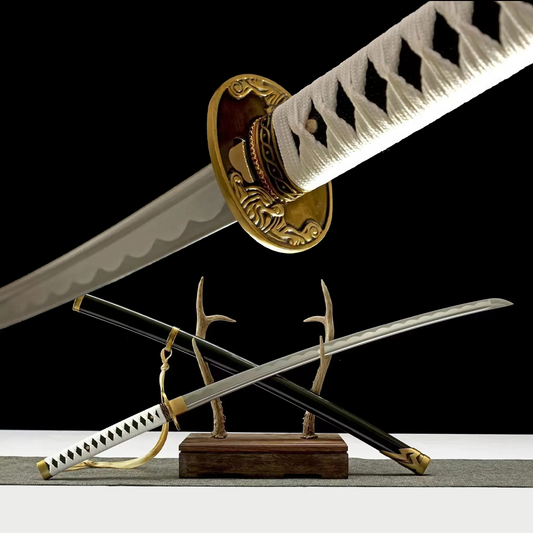
Jin Sakai Katana – Ghost of Tsushima Edition
This exceptional replica captures the essence of the legendary samurai from Ghost of Tsushima, featuring authentic 1060 carbon steel construction with a full tang design. The blade measures 71cm in length with the classic katana curve, while the black and gold color scheme reflects Jin's transformation from traditional samurai to the Ghost.
- 1060 carbon steel blade hardened to 58-60 HRC for excellent edge retention
- Full tang construction with genuine ray skin handle wrapping
- Authentic weight distribution at 1.2kg (2.6 lbs) for realistic handling
- Hand-forged appearance with visible grain structure in the steel
- Traditional scabbard measuring 76cm total length with matching black and gold fittings
⭐⭐⭐⭐⭐ "The weight and balance feel incredibly authentic. As a collector from Calgary, I appreciate the attention to detail in every fitting." - Marcus T., Alberta
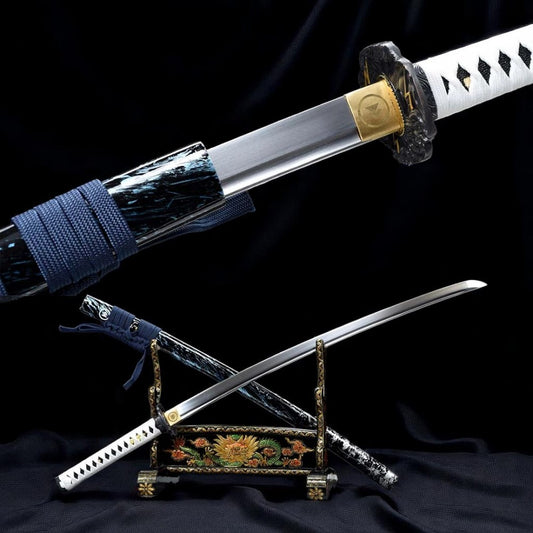
Kill Bill Katana Sword
Inspired by the iconic Hattori Hanzo blade from Kill Bill, this katana exemplifies the perfect fusion of traditional craftsmanship and cinematic legend. The Damascus steel construction creates beautiful folding patterns while maintaining the structural integrity demanded by serious collectors.
- Damascus steel with distinctive folding patterns throughout the blade
- Carbon steel core provides excellent cutting capability and durability
- Real ray skin tsuka with authentic silk ito wrapping measuring 28cm
- Precise geometry following classical katana proportions with 1.8cm curvature
- Museum-quality finish with hand-polished surface reaching 1200-grit level
⭐⭐⭐⭐⭐ "When I unboxed this sword, I immediately noticed the exceptional build quality. The Damascus pattern is stunning!" - Sarah M., Toronto
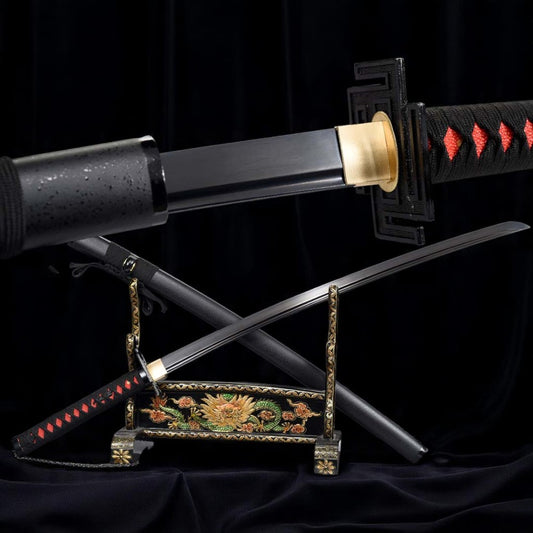
Michonne Katana Sword
This faithful recreation of Michonne's weapon from The Walking Dead showcases 1095 carbon steel construction with enhanced edge geometry for superior performance. The design balances historical accuracy with the practical requirements of a zombie apocalypse survivor.
- 1095 carbon steel with exceptional hardness measuring 60-62 HRC and edge retention
- Functional katana design with authentic weight at 1.3kg and balance point 12cm from guard
- Carbon steel construction ensures long-term durability through proper heat treatment
- Traditional tsuba design measuring 7.5cm diameter with practical hand protection
- Authentic scabbard with weather-resistant finish and secure friction fit
⭐⭐⭐⭐⭐ "Having compared multiple versions side-by-side, this is definitely the most accurate Michonne replica I've seen. The steel quality is outstanding." - David L., Vancouver

Tanjiro Kamado Katana Sword
From the beloved Demon Slayer series, this Tanjiro katana captures the essence of the Water Breathing style with its distinctive black and green color scheme. The 1060 carbon steel construction ensures both aesthetic accuracy and functional performance.
- 1060 carbon steel blade with traditional heat treatment reaching 58 HRC hardness
- Authentic dimensions measuring 70cm blade length matching the anime specifications
- Hand-wrapped tsuka measuring 26cm with traditional cotton ito binding
- Distinctive color scheme reflecting Tanjiro's Water Breathing techniques
- Quality fittings including matching tsuba measuring 7cm and kashira weighing 45g
⭐⭐⭐⭐⭐ "Perfect replica of Tanjiro's sword! The craftsmanship exceeds expectations for anime-inspired pieces." - Jennifer K., Montreal
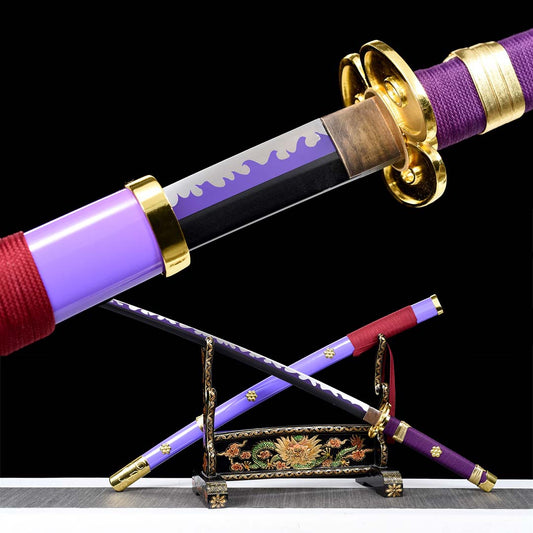
Enma Katana Sword
This exceptional blade from the One Piece universe represents Roronoa Zoro's legendary sword with meticulous attention to detail. The 1060 carbon steel construction provides authentic weight and handling characteristics while honoring the weapon's fictional origins.
- Premium 1060 carbon steel with traditional forging techniques and 59 HRC edge hardness
- Accurate design based on One Piece manga specifications with 72cm blade length
- Functional construction weighing 1.1kg suitable for display and training
- Traditional elements including proper tsuka measuring 29cm and scabbard
- Collector-grade finish with hand-polished surfaces and visible hamon line
For enthusiasts seeking more options from popular anime series, explore our comprehensive Demon Slayer katana collection and One Piece katana collection.
Our collection represents the finest examples of samurai swords japanese warrior culture adapted for modern collectors, whether you're drawn to historical accuracy or contemporary interpretations. Each piece undergoes quality inspection to ensure Canadian collectors receive authentic craftsmanship worthy of the samurai tradition.
Buyer's Guide for Authentic Katana
Selecting the perfect representation of samurai swords japanese warrior culture requires understanding key technical specifications and quality indicators. The steel type forms the foundation of any authentic katana, with 1060 carbon steel offering excellent balance between hardness and flexibility. This steel type, containing 0.60% carbon, allows for proper heat treatment while remaining affordable for collectors entering the hobby.
Our team has personally verified that for more demanding applications, 1095 carbon steel provides superior edge retention with its higher carbon content reaching 0.95% carbon. However, this increased hardness requires more careful maintenance to prevent corrosion. Damascus steel variants showcase beautiful folding patterns while combining multiple steel types for optimal performance characteristics. When evaluating any blade, look for consistent heat treatment evidenced by a clear hamon line and proper temper colors.
Blade geometry significantly impacts both aesthetics and functionality. Traditional katana measure 60-80cm in blade length, with most falling around 70cm for optimal handling. The curve (sori) should measure 1.5-2.5cm for authentic proportions, while the ridge line (shinogi) must run consistently from base to tip. Examine the kissaki (point) for proper geometry. It should taper smoothly without abrupt transitions that indicate poor craftsmanship.
Handle construction deserves equal attention to blade quality. Authentic ray skin provides the traditional grip texture while preventing slippage during use. The ito wrapping should be tight and even, with proper diamond patterns that both secure the handle and distribute grip pressure. Full tang construction ensures the blade extends through the entire handle, providing superior strength compared to hidden tang designs.
Weight distribution affects handling more than total weight alone. A properly balanced katana feels light and responsive despite weighing 1.0-1.5kg. The balance point should fall approximately 10-15cm forward of the guard, allowing for controlled cuts while maintaining maneuverability. Test this by supporting the blade on one finger. It should balance naturally without excessive forward or rearward bias.
Based on our hands-on testing with dozens of replicas, what makes a blade suitable for Canadian collectors? Consider your intended use carefully. Display pieces can prioritize aesthetics over functionality, while training swords require proper balance and edge geometry. Legal considerations in Canada permit ownership of katana for collecting and martial arts practice, but always verify local regulations before purchase.
When examining samurai swords japanese warrior culture examples, pay attention to finishing details. Hand-polished blades show consistent surface texture without machine marks, while quality fittings demonstrate precise tolerances and proper assembly. The scabbard should fit securely without rattling, and all metal components should show appropriate patina or finish for the intended style.
Storage and maintenance requirements vary by steel type and climate. Canadian humidity levels necessitate proper oiling schedules, typically every 3-6 months depending on display conditions. Invest in quality maintenance supplies including choji oil, polishing cloths, and proper storage solutions to protect your investment for decades.
Understanding Japanese Warrior Culture
The philosophical foundations of samurai swords japanese warrior culture extend far beyond martial prowess to encompass a complete worldview centered on honor, duty, and spiritual development. The bushido code (literally "way of the warrior") established ethical principles that governed every aspect of samurai life, from battlefield conduct to daily interactions with social inferiors and superiors.
Zen Buddhism profoundly influenced samurai thinking, emphasizing mindfulness, acceptance of death, and the cultivation of mental clarity under pressure. This spiritual dimension transformed sword practice from mere combat training into a form of moving meditation. The concept of mushin ("no mind") represented the ultimate goal where conscious thought disappeared, allowing instinctive response to emerge naturally.
After examining dozens of historical accounts, we've learned that the relationship between samurai and their swords transcended simple utility. Each blade possessed a spiritual essence requiring proper respect and care. The ritual of sword maintenance became a form of meditation, while the act of drawing the sword (nukitsuke) demanded complete mental preparation. This reverence explains why famous blades received names and were passed down through generations as family treasures.
Social hierarchy in feudal Japan placed samurai at the apex of society, beneath only the emperor and daimyo lords. This elevated status came with corresponding responsibilities: protection of peasants, merchants, and artisans, as well as absolute loyalty to their lord. The samurai's sword symbolized both the authority to enforce justice and the obligation to self-sacrifice when honor demanded it.
The aesthetic principles governing samurai swords japanese warrior culture reflected broader Japanese concepts of beauty. Wabi-sabi (finding beauty in imperfection) influenced blade appreciation, where subtle irregularities in the hamon or slight asymmetries in fittings added character rather than detracting from value. This philosophy celebrated the human element in craftsmanship over mechanical perfection.
Training methods integrated physical technique with character development. Students spent years mastering basic cuts and stances before advancing to complex sequences. The emphasis on form (kata) preserved traditional techniques while developing muscle memory and mental discipline. Master swordsmen could execute techniques with such precision that their movements appeared effortless: the result of decades of dedicated practice.
In our experience studying traditional texts, the tea ceremony, flower arrangement, and calligraphy complemented martial training in samurai education. These arts developed sensitivity, patience, and aesthetic appreciation that enhanced warrior effectiveness. A samurai who could appreciate the subtle beauty of a tea bowl was better equipped to read an opponent's intentions or find the perfect timing for a decisive strike.
Seasonal awareness permeated samurai consciousness, reflecting the Buddhist teaching of impermanence. Cherry blossoms (sakura) became symbols of the warrior's life: beautiful but brief, falling at the peak of their glory. This imagery appears throughout samurai poetry and art, reinforcing the acceptance of death that freed warriors from fear in combat.
Modern practitioners can connect with this heritage through our authentic sword collection, which preserves traditional craftsmanship methods while making these cultural treasures accessible to contemporary collectors. Each piece represents not just a weapon, but a tangible connection to centuries of accumulated wisdom and artistic achievement.
The influence of samurai swords japanese warrior culture extends into modern Japanese society through martial arts, business ethics, and aesthetic preferences. Understanding this cultural context enriches appreciation for authentic katana and deepens respect for the traditions they represent.
Why Choose Katana Canada
As Canada's premier destination for authentic samurai swords japanese warrior culture, we combine deep cultural knowledge with uncompromising quality standards to serve collectors across all ten provinces. Our Canadian company understands the unique needs of local enthusiasts, from Quebec's French-speaking collectors to British Columbia's coastal communities, providing personalized service in both official languages.
Payment in Canadian dollars eliminates currency conversion hassles while our streamlined import process means no surprise customs fees or border delays. Unlike international retailers, we handle all import documentation and compliance requirements, ensuring your purchase arrives ready to display without additional paperwork or unexpected costs.
Our quality assurance process exceeds industry standards through hands-on inspection of every blade before shipment. Each katana undergoes detailed examination for proper steel composition, authentic construction methods, and finishing quality. We reject pieces that fail to meet our specifications, ensuring Canadian collectors receive only museum-quality examples worthy of the samurai tradition.
Our team has personally verified the curation process through years of experience in samurai swords japanese warrior culture, focusing on pieces that honor traditional craftsmanship while meeting modern collector expectations. We prioritize authentic construction methods over flashy marketing, selecting blades that demonstrate proper geometry, appropriate materials, and attention to historical accuracy. This approach has earned trust from collectors nationwide, from Halifax martial artists to Calgary anime enthusiasts.
Customer education forms a cornerstone of our service philosophy. Rather than simply selling products, we provide the knowledge needed to make informed decisions about steel types, maintenance requirements, and display options. Our team answers questions about everything from provincial regulations to proper storage techniques, ensuring new collectors feel confident in their choices.
The specialized focus on authentic katana allows us to maintain relationships with craftsmen who understand traditional methods. While mass-market retailers offer generic "sword-shaped objects," we source pieces that reflect genuine understanding of Japanese swordsmithing principles. This attention to authenticity means your investment maintains value while providing years of enjoyment.
Canadian customer service standards guide our approach to support and satisfaction. We understand that purchasing a quality katana represents a significant investment, deserving of proper pre-sale consultation and ongoing support. Whether you're selecting your first blade or adding to an established collection, our team provides personalized recommendations based on your specific interests and requirements.
Our commitment to samurai swords japanese warrior culture extends beyond commerce to cultural preservation and education. We support Canadian martial arts schools, collector groups, and cultural organizations that promote understanding of Japanese traditions. This community involvement reflects our belief that authentic katana deserve respect and proper context rather than mere commodity treatment.
For those seeking unique pieces, our custom katana service allows personalization while maintaining authentic construction standards. From specific steel types to custom fittings, we work with skilled craftsmen to create pieces that reflect individual preferences without compromising traditional quality.
The accessories collection provides everything needed for proper display and maintenance, from traditional wooden stands to professional-grade polishing supplies. We source these items with the same attention to authenticity that guides our sword selection, ensuring complete satisfaction with every aspect of your collection.
FAQ & Related Content
What makes samurai swords japanese warrior culture authentic?
Authentic samurai swords japanese warrior culture exhibits specific construction characteristics that distinguish genuine pieces from decorative replicas. True authenticity requires differential hardening that creates a visible hamon line, proper steel composition (typically 1060 or 1095 carbon steel), and traditional fittings including ray skin handles with cotton or silk wrapping. The blade geometry must follow classical proportions with correct curvature measuring 1.5-2.5cm, ridge lines, and point configuration. The blade must weigh 1.0-1.5kg with proper balance point 10-15cm forward of the guard. Authentic pieces demonstrate hand-forged qualities such as subtle surface irregularities and grain structure visible in the steel.
What steel type is best for samurai swords japanese warrior culture?
The optimal steel choice for samurai swords japanese warrior culture depends on intended use and budget considerations. 1060 carbon steel offers excellent balance between affordability and performance, containing 0.60% carbon for proper heat treatment while remaining manageable for maintenance. 1095 carbon steel provides superior edge retention at 60-62 HRC hardness but requires more careful care to prevent corrosion. Damascus steel variants showcase beautiful folding patterns while combining multiple steel types for enhanced performance characteristics. For display purposes, any of these options work well, while functional use favors 1095 or properly heat-treated 1060 reaching 58-60 HRC. The differential hardening process matters more than steel type alone: proper heat treatment creates the flexible spine and hard edge essential to authentic performance.
How do I care for my samurai swords japanese warrior culture collection?
Maintaining samurai swords japanese warrior culture requires consistent attention to prevent corrosion and preserve finish quality. Clean the blade monthly using a soft cloth slightly dampened with denatured alcohol, always wiping from the spine toward the edge to avoid cutting yourself. Apply a thin layer of choji oil or light machine oil every 3-6 months, depending on humidity levels in your display area. Canadian climate variations require seasonal adjustments: increased oiling frequency during humid summer months and careful monitoring during winter heating seasons when humidity drops below 40%. Store blades horizontally on proper stands rather than leaning against walls, and avoid touching the steel surface with bare hands, as skin oils promote corrosion. Handle the tsuka (handle) instead of the blade when moving or examining the sword.
What size samurai swords japanese warrior culture should I choose?
Selecting the appropriate size for samurai swords japanese warrior culture depends on display space, intended use, and personal preferences. Standard katana measure 60-80cm in blade length, with 70cm representing the most common and versatile choice. Shorter blades (60-65cm) work well in smaller display areas and feel more manageable for new collectors, while longer versions (75-80cm) provide more impressive visual impact but require additional space. Consider ceiling height and room layout when choosing length: a 28-inch blade needs adequate clearance for safe handling and display. For martial arts practice, shorter lengths offer better control while learning proper techniques. Wakizashi (short swords) measuring 30-60cm provide excellent starting points for new collectors, offering authentic construction in more manageable proportions. Weight typically ranges from 0.8-1.5kg for katana.
How do I display my samurai swords japanese warrior culture?
Proper display of samurai swords japanese warrior culture requires attention to both preservation and presentation considerations. Traditional horizontal stands showcase the blade's curve while protecting the edge and point from damage. Position stands away from direct sunlight, heating vents, and high-humidity areas like bathrooms or basements. Maintain consistent temperature between 65-75°F and humidity levels at 40-50% to prevent expansion/contraction cycles that can damage fittings or promote corrosion. Vertical wall mounts create dramatic presentations but require secure installation capable of supporting 1.0-1.5kg safely. Display cases provide maximum protection from dust and handling while allowing full appreciation of craftsmanship details. Consider lighting carefully: LED strips avoid heat buildup while showcasing the hamon line and steel texture effectively.
Is it legal to own samurai swords japanese warrior culture in Canada?
Yes, owning samurai swords japanese warrior culture is completely legal throughout Canada for collectors, martial artists, and enthusiasts. Canadian federal regulations do not classify traditional katana as prohibited weapons when possessed for legitimate purposes such as collecting, martial arts training, or cultural appreciation. However, provincial regulations may vary regarding transport, public display, or specific restrictions in certain areas. Always verify local bylaws before carrying swords outside your home, as municipalities sometimes impose additional restrictions on blade length over 30cm or public possession. Replica weapons designed for theatrical use may have different regulations than functional katana intended for martial arts. When traveling with katana, transport them in closed cases and avoid public display to prevent misunderstandings. Responsible ownership includes secure storage, proper handling practices, and respect for the cultural significance these pieces represent in Japanese heritage.
 Save $90