The Ultimate Guide to Katana: Legendary Japanese Swords for Modern Collectors

The Ultimate Guide to Katana: Legendary Japanese Swords for Modern Collectors

The moonlight catches the polished steel as the blade slides from its scabbard with barely a whisper. For over a thousand years, this sound has preceded moments of honor, duty, and destiny. The katana—more than a weapon, more than art—stands as the soul of the samurai, forged in fire and tempered by tradition. Today, these legendary Japanese swords continue to captivate collectors, martial artists, and enthusiasts worldwide, their curved edges holding secrets of ancient Japanese craftsmanship that modern technology still struggles to replicate.

Table of Contents

  1. The Sacred Origins: History and Cultural Significance
  2. Anatomy of Legend: Understanding the Katana
  3. Forge and Fire: Traditional Craftsmanship
  4. Our Collection: Featured Authentic Katana
  5. The Collector's Path: Choosing Your Katana
  6. Steel Speaks: Understanding Materials and Quality
  7. Why Choose Katana Canada

The Sacred Origins: History and Cultural Significance

The katana emerged during Japan's Heian period (794-1185), born from the practical needs of mounted warriors who required a curved blade optimized for slashing attacks. Unlike the straight-bladed tachi that preceded it, the samurai sword's gentle curve and single-edged design made it devastatingly effective in the hands of the warrior class. The Complete Guide to The Legendary Swords King: Anime Swords: The Ultimate King of Swords: The Anime Swords Canada: The Hattori Hanzo Sword: The Black Bladed Katana: The Sasuke Katana: The Ultimate The Art and Mastery Buy Swords Online Canada:

But these legendary blades transcended mere functionality to become the spiritual embodiment of the warrior's soul. The samurai believed their sword contained their honor, their ancestors' spirits, and their destiny. This mystical connection led to the famous saying "the sword is the soul of the samurai"—a philosophy that elevated sword-making from craft to sacred art.

Master swordsmiths like Masamune and Muramasa achieved legendary status, their names whispered with reverence across generations. These craftsmen didn't merely forge metal; they channeled spiritual energy into each blade through ritual purification, prayer, and months of meticulous work. The resulting Japanese swords were considered living entities, each with its own personality and spiritual power.

The Tokugawa period (1603-1868) saw the katana's role evolve from battlefield weapon to symbol of social status. Strict laws regulated sword ownership, making these curved blades a privilege reserved for the samurai class. This exclusivity only heightened the sword's mystique and cultural importance.

Today, authentic Japanese sword craftsmanship continues through licensed Japanese swordsmiths who maintain these ancient traditions. Each genuine blade requires hundreds of hours of work, following techniques passed down through centuries. For collectors seeking to understand this rich heritage, exploring The History of the Katana – From Samurai Symbol to Modern Icon provides deeper insight into these remarkable weapons' evolution.

Anatomy of Legend: Understanding the Katana

The katana's distinctive silhouette tells a story of engineering perfection refined over centuries. Its curved, single-edged blade typically measures between 24 and 30 inches, with the curvature (called sori) carefully calculated to optimize cutting efficiency. This isn't mere aesthetics—every element serves a tactical purpose born from battlefield experience.

The blade's cross-section reveals its sophisticated construction. Traditional Japanese swords feature a complex geometry with a thick spine (mune) for structural strength and a razor-sharp edge (ha) for cutting. The ridge line (shinogi) creates the blade's distinctive profile while distributing stress during impact. This engineering marvel allows the samurai sword to maintain flexibility while delivering devastating cuts.

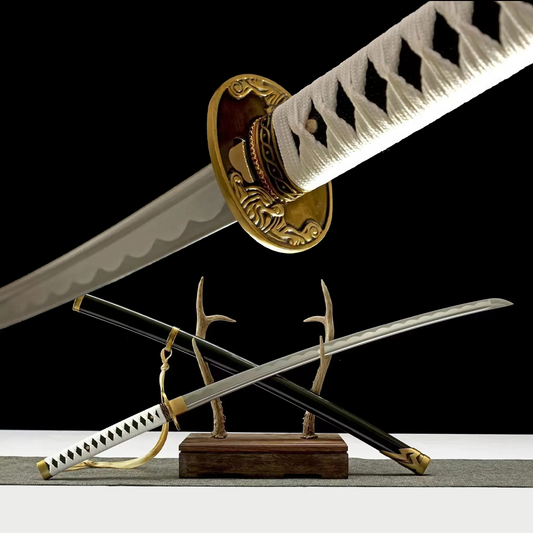
The hamon—the visible temper line along the blade's edge—represents one of these weapons' most distinctive features. Created during the differential hardening process, this wavy pattern isn't decorative but functional, marking where the hardened steel meets the softer spine. Master smiths developed signature hamon patterns, making each blade as unique as a fingerprint.

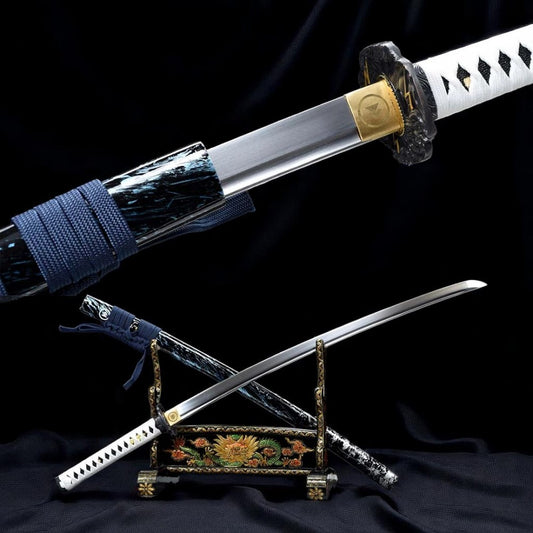
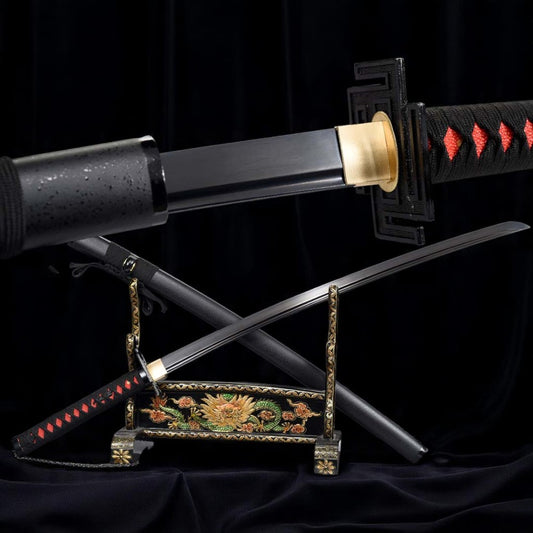
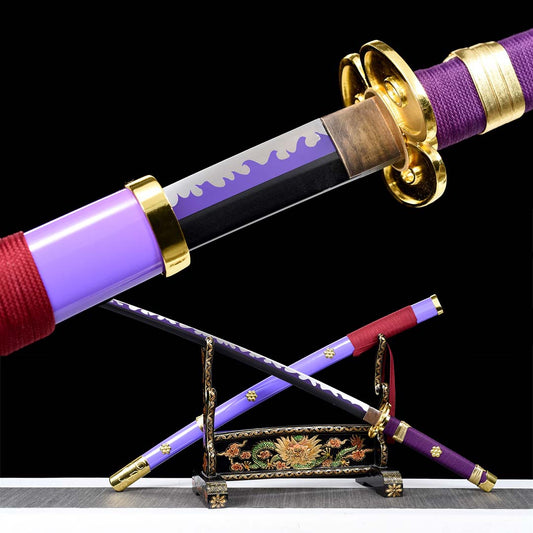
The sword's handle (tsuka) and guard (tsuba) complete its identity. Traditionally wrapped in ray skin and silk cord, the handle provides secure grip during combat while the circular guard protects the wielder's hand. These components, while seemingly simple, require precise craftsmanship to ensure proper balance and functionality.

Modern collectors appreciate how each component contributes to the sword's overall character. The curve facilitates the drawing motion, the blade geometry optimizes cutting power, and the weight distribution enables swift, controlled movements. Understanding these elements helps collectors appreciate why this design evolved into history's most recognizable sword form.

For those interested in the complete sword family, A Timeline of the Japanese Sword – Tachi, Katana, Wakizashi explores how different blade types developed to serve specific purposes in Japanese warrior culture.

Forge and Fire: Traditional Craftsmanship

The creation of an authentic Japanese sword represents one of metallurgy's greatest achievements, combining ancient wisdom with precise technical skill. Traditional Japanese swordsmiths developed sophisticated steel-folding techniques that eliminated impurities while creating complex carbon gradients throughout the blade—technology that remained unmatched until modern industrial processes.

The process begins with tamahagane steel, produced in clay furnaces using traditional smelting methods. Master smiths carefully select steel pieces with different carbon contents, then forge them into distinct layers. The hagane (hard steel) forms the cutting edge, while shingane (soft steel) provides the spine's flexibility. Some blades incorporate sanmai construction, adding medium-carbon steel between these layers for optimal performance.

Temperature control during forging requires decades of experience to master. Smiths judge heat by color changes in dim workshop lighting, adjusting their hammering rhythm to work the steel at precisely the right moment. The folding process—repeated up to sixteen times—creates thousands of microscopic layers that give the finished blade its legendary strength and flexibility.

The differential hardening process creates the samurai sword's most distinctive characteristic: the hamon. Smiths apply special clay mixtures to the blade before heating, controlling cooling rates to create varying steel hardness across the blade's width. This technique produces the sharp, hard edge necessary for cutting while maintaining the flexible spine that prevents breakage.

Polishing represents the final and most time-consuming stage, often taking longer than forging itself. Master polishers use increasingly fine stones over several weeks, removing microscopic amounts of steel to reveal the blade's true geometry and grain structure. This process doesn't merely create shine—it optimizes the blade's cutting performance and reveals the steel's internal beauty.

Modern replica swords honor these traditional methods while incorporating contemporary quality controls. The finest examples still require months of handwork, ensuring each blade meets the exacting standards established by centuries of Japanese craftsmanship. Collectors seeking to understand these construction methods benefit from studying detailed guides about traditional sword-making techniques.

The Collector's Path: Choosing Your Katana

Selecting your first Japanese sword—or adding to an existing collection—requires understanding both personal preferences and objective quality markers. The right blade should resonate with your aesthetic sensibilities while meeting practical standards for construction and materials.

Begin by considering your primary purpose. Display pieces prioritize visual impact and historical accuracy, while functional swords emphasize structural integrity and edge geometry. Many collectors eventually acquire both types, appreciating how different approaches serve distinct roles in understanding Japanese sword culture.

Blade steel represents the most crucial technical consideration. Carbon steel options like 1060 and 1095 offer excellent performance characteristics, while Damascus steel provides stunning visual patterns alongside functional benefits. Each steel type requires different maintenance approaches, so consider your willingness to perform regular care routines.

Examine the tang construction carefully—authentic blades feature full tangs that extend through the entire handle, ensuring proper balance and structural integrity. Rat-tail tangs or welded constructions indicate inferior quality that compromises both safety and authenticity.

Handle wrapping quality significantly impacts both appearance and functionality. Traditional ray skin (same) provides superior grip and authenticity, while the silk cord (tsuka-ito) wrapping should exhibit even tension and consistent diamond patterns. These details separate quality pieces from mass-produced imitations.

The hamon temper line serves as both functional element and artistic feature. Authentic differential hardening creates genuine hamon patterns, while etched or painted lines indicate inferior construction. Understanding this distinction helps collectors identify truly functional blades versus decorative replicas.

Weight and balance profoundly affect a sword's character. Traditional pieces balance slightly forward of the guard, facilitating smooth cutting motions while maintaining control. Poorly balanced replicas feel awkward and betray their inferior construction through basic handling.

Documentation and provenance add significant value to collector pieces. Certificates of authenticity, maker information, and construction details help establish a sword's legitimacy and provide important context for its place in your collection.

Budget considerations should account for long-term satisfaction rather than immediate cost savings. Quality Japanese swords represent significant investments that appreciate over time, while inferior pieces often disappoint and require replacement. Starting with fewer, higher-quality pieces typically provides greater satisfaction than accumulating numerous lesser swords.

Steel Speaks: Understanding Materials and Quality

The steel composition of your Japanese sword determines its fundamental character—from edge retention and flexibility to maintenance requirements and longevity. Understanding different steel types helps collectors make informed decisions that align with their priorities and experience levels.

1060 Carbon Steel represents an excellent balance between performance and practicality. With 0.60% carbon content, this steel offers good hardness for edge retention while maintaining sufficient flexibility for structural integrity. The relatively lower carbon content makes 1060 steel easier to maintain and less prone to rust than higher-carbon alternatives, making it ideal for beginning collectors or those seeking low-maintenance options.

1095 Carbon Steel delivers superior performance characteristics with its 0.95% carbon content enabling exceptional edge sharpness and retention. However, this higher carbon content demands more careful maintenance to prevent corrosion and requires proper heat treatment to achieve optimal properties. Experienced collectors often prefer 1095 steel for its authentic feel and cutting performance that closely matches historical Japanese swords.

Damascus Steel combines multiple steel types through folding techniques that create distinctive wave patterns while optimizing performance characteristics. Modern Damascus blades typically layer high-carbon cutting edges with flexible spine steel, producing swords that offer both functional excellence and stunning visual appeal. The complex manufacturing process makes Damascus steel more expensive, but the resulting pieces represent pinnacle achievements in modern sword craftsmanship.

Steel quality extends beyond composition to include heat treatment, forging techniques, and finishing processes. Proper differential hardening creates authentic hamon patterns while optimizing blade geometry for cutting performance. Machine-made blades often lack these subtle characteristics that distinguish authentic pieces from mass-produced replicas.

Forge quality becomes apparent through careful inspection of the blade's grain structure, surface finish, and overall geometry consistency. Hand-forged swords exhibit subtle irregularities that reflect human craftsmanship, while machine-made pieces show mechanical precision that lacks character. These differences become more apparent with experience handling various quality levels.

Maintenance requirements vary significantly between steel types and quality levels. Higher-carbon steels demand regular oiling and climate control to prevent rust formation, while lower-carbon options tolerate more casual care routines. Understanding these requirements before purchase prevents disappointment and helps preserve your investment's long-term value.

Why Choose Katana Canada

As a Canadian company, we understand the unique needs of collectors and enthusiasts across Canada. Our commitment to authentic Japanese sword traditions combined with exceptional Canadian customer service creates an unparalleled purchasing experience that honors both heritage and practicality.

Shopping with us eliminates the complexity of international purchases. Payment in Canadian dollars means transparent pricing without exchange rate surprises or international transaction fees. No customs fees simplify the purchasing process, ensuring the price you see represents your total investment without unexpected additional costs.

Our bilingual French and English support reflects Canada's cultural diversity and ensures every customer receives assistance in their preferred language. Whether you're exploring your first sword purchase or expanding an established collection, our knowledgeable team provides detailed guidance about construction methods, steel types, and care requirements.

Quality assurance remains our paramount concern. Every sword undergoes thorough inspection before shipping to verify construction quality, finish standards, and component authenticity. This attention to detail ensures your piece meets the exacting standards that define genuine Japanese sword craftsmanship.

Our commitment extends beyond the initial sale through comprehensive support for maintenance questions, display recommendations, and collection development advice. Building long-term relationships with collectors allows us to provide personalized service that evolves with your growing expertise and changing interests.

Frequently Asked Questions

Q: How can I tell if a katana is authentic versus a decorative replica?

Authentic functional Japanese swords exhibit several key characteristics that distinguish them from decorative replicas. First, examine the tang construction—genuine swords feature full tangs that extend completely through the handle, providing structural integrity essential for functional use. The blade steel should be genuine carbon steel (such as 1060 or 1095) rather than stainless steel, which indicates decorative purpose only. Authentic differential hardening creates real hamon patterns visible as actual changes in steel structure, not merely etched or painted lines. Weight distribution feels balanced and purposeful, typically weighing between 2-3 pounds with the balance point slightly forward of the guard. Traditional construction materials like ray skin handle covering and silk cord wrapping indicate attention to historical accuracy. Finally, authentic pieces come with documentation about steel composition, forging methods, and maker information, while decorative replicas often lack such details.

Q: What's the difference between 1060 and 1095 carbon steel for katana?

The primary difference lies in carbon content and resulting performance characteristics. 1060 steel contains 0.60% carbon, making it slightly softer but more flexible and easier to maintain. This steel type offers good edge retention while being more forgiving for beginners and requiring less intensive maintenance routines. 1095 steel contains 0.95% carbon, enabling superior hardness and exceptional edge sharpness that closely matches historical Japanese swords. However, higher carbon content demands more careful maintenance to prevent rust and requires proper heat treatment to achieve optimal properties. 1095 steel can achieve sharper edges and better retention but becomes more brittle if improperly treated. For collectors prioritizing authenticity and performance, 1095 steel provides superior cutting characteristics. For those seeking easier maintenance and greater durability, 1060 steel offers excellent compromise between performance and practicality. Both steel types can produce high-quality functional pieces when properly forged and heat-treated.

Q: What should I consider for katana sizing and dimensions?

Traditional sizing follows established parameters that affect both functionality and authenticity. Blade length typically ranges from 24-30 inches (60-76cm), with most authentic reproductions falling between 26-28 inches for optimal balance and handling characteristics. Overall length including handle usually measures 38-42 inches, providing proper proportions for the complete sword. Handle length affects grip comfort and leverage, typically measuring 10-12 inches to accommodate both single and two-handed gripping techniques. Blade curvature (sori) should measure 15-25mm for authentic geometry that facilitates proper drawing and cutting motions. Weight considerations matter significantly—authentic pieces typically weigh 2-3 pounds, with heavier pieces often indicating inferior construction or inappropriate materials. The balance point should fall 4-6 inches from the guard toward the tip, creating the forward balance essential for effective cutting while maintaining control. Consider your physical dimensions and intended use when selecting size parameters, as improperly sized swords feel awkward and may not provide the authentic handling experience that makes collecting rewarding.

Q: How do I properly care for and maintain my katana?

Proper maintenance preserves both functionality and investment value while honoring the sword's cultural significance. Regular cleaning removes moisture and contaminants that cause corrosion—wipe the blade with soft, lint-free cloth after any handling or display exposure. Apply light coat of mineral oil or specialized sword oil every 2-3 months, working systematically from spine to edge while avoiding the handle and guard areas. Store in dry environment with consistent temperature and humidity levels, as fluctuations promote rust formation. Traditional wooden scabbards (saya) provide ideal storage by allowing air circulation while protecting the blade surface. Avoid touching the blade with bare hands, as skin oils accelerate corrosion processes. For deeper cleaning, use fine polishing powder (uchiko) sparingly and only when necessary, as excessive polishing gradually removes steel and shortens blade life. Inspect regularly for any signs of rust, chips, or handle loosening that require professional attention. Never attempt major repairs yourself—qualified professionals understand proper techniques for addressing structural issues without compromising authenticity or safety. For comprehensive maintenance guidance, consult our How to Care for a Katana – Cleaning, Oiling & Storage Tips for detailed step-by-step instructions.

Q: What are the best options for displaying my katana collection?

Effective display showcases your collection while protecting from damage and environmental factors. Traditional sword stands (katana kake) support the blade horizontally with the edge facing upward, following historical protocols while providing stable, attractive presentation. Wall-mounted displays save space while creating dramatic visual impact, but ensure mounting hardware can support the sword's weight safely and securely. Climate control prevents humidity fluctuations that promote rust formation—avoid locations near heating vents, windows, or high-moisture areas like basements. Lighting enhances visual appeal while requiring consideration of UV exposure that can fade traditional silk wrapping materials over time. Security considerations become important for valuable collections—visible displays attract attention while concealed storage reduces theft risk but limits enjoyment. Rotating displays allows showcasing multiple pieces while reducing constant exposure for any single sword. Document your collection through photography that captures important details for insurance purposes and personal records. Consider professional consultation for valuable pieces, as improper display can cause permanent damage that reduces both aesthetic appeal and monetary value.

Q: Are katana legal to own and display in Canada?

Ownership and display remain legal throughout Canada for collectors and enthusiasts, though specific regulations govern blade length, carrying, and transport requirements. Swords with blades under 30cm require no special considerations beyond standard safe storage and transport practices. Longer blades like traditional pieces require secure storage in private locations and cannot be carried in public spaces or vehicles without legitimate purposes such as transport between residences or to martial arts training. Municipal bylaws may impose additional restrictions, particularly in urban areas, so verify local regulations before making purchases. Transportation must occur in secure containers that prevent casual access and clearly identify the contents as collectible items rather than weapons. Import regulations occasionally change, though established dealers typically handle necessary documentation for legal compliance. Home display requires no special permits but prudent security measures protect both collection value and legal standing. Educational purposes like historical study or martial arts training provide additional legal context for ownership and use. Insurance considerations may require documentation of collection value and security measures. Consulting local law enforcement or legal professionals provides definitive guidance for specific situations, though recreational collecting remains widely accepted and legally protected throughout Canada.

Conclusion

The enduring appeal of these legendary blades transcends their origins as warrior weapons to embody timeless principles of craftsmanship, honor, and artistic achievement. Whether you're drawn to the intricate Damascus patterns of our premium katana, the authentic functionality of our traditional carbon steel blades, or the accessibility of our entry-level collection, each sword represents a connection to over a thousand years of Japanese sword-making mastery.

Your journey into collecting opens doors to rich cultural heritage while providing tangible connections to legendary craftsmanship. From the whisper-quiet draw of a perfectly balanced blade to the mesmerizing patterns revealed in authentic Damascus steel, every authentic piece offers unique discoveries that deepen with time and experience.

At Katana Canada, we're honored to serve as your guide through this remarkable tradition. Our commitment to authenticity, quality, and customer service ensures that your collection reflects the same dedication to excellence that characterized the original samurai who carried these legendary swords into history. Whether you're acquiring your first piece or adding to an established collection, we're here to help you find the perfect blade that speaks to your spirit and serves your collecting goals for generations to come.

Begin your journey today—discover how these remarkable swords can transform your appreciation for Japanese culture while providing lifelong enjoyment through their timeless beauty and craftsmanship.

Back to blog

Leave a comment

Please note, comments need to be approved before they are published.