
Kill Bill Katana: The Legendary Sword That Defined Cinema
The steel sang through the air with a whisper of death. In that pivotal moment when The Bride faced off against the Crazy 88, Quentin Tarantino didn't just create a fight scene: he forged a legend. The katana in her hands became more than a weapon; it became the soul of vengeance itself, cutting through the darkness of betrayal with surgical precision. This wasn't just any sword. This was the Kill Bill katana, a blade that would forever change how the world viewed Japanese swords in popular culture.

The yellow jumpsuit, the blood-soaked floor of the House of Blue Leaves, and that unmistakable sound of steel meeting flesh. These images burned themselves into the collective consciousness of cinema lovers worldwide. But beyond the choreographed action and artistic spectacle lay something deeper: a profound respect for the ancient art of Japanese sword-making, wrapped in the package of modern storytelling.
Table of Contents
- The Hattori Hanzo Legend: Where Fiction Meets History
- Anatomy of The Bride's Weapon: Design and Symbolism
- Authentic Craftsmanship: Traditional Japanese Techniques
- Our Kill Bill Collection: Premium Replica Katanas
- Collector's Guide: Choosing Your Perfect Blade
- Understanding Steel: The Heart of Every Katana
- Why Choose Katana Canada for Your Collection
- Frequently Asked Questions
The Hattori Hanzo Legend: Where Fiction Meets History
When Tarantino penned the character of Hattori Hanzo in Kill Bill, he wasn't creating fiction from whole cloth. The name carries weight in Japanese history: the real Hattori Hanzo was a legendary ninja and samurai who served under Tokugawa Ieyasu during the late 16th century. This historical figure was renowned not just for his martial prowess, but for his understanding of weaponry that bordered on the mystical.
In the film, Sonny Chiba's portrayal of the sword-maker Hanzo represents the bridge between ancient tradition and modern necessity. His reluctant emergence from retirement to forge one final blade, a weapon worthy of The Bride's final reckoning with Bill, speaks to the sacred nature of the katana in Japanese culture. The sword isn't merely a tool; it's an extension of the wielder's soul, imbued with purpose and honor.
The cinematic Hanzo's insistence on crafting the perfect blade for The Bride reflects centuries of Japanese sword-making tradition. Master smiths would spend months, sometimes years, perfecting a single katana. They understood that the sword's spirit (its tamashii) was as important as its cutting edge. This reverence for the craft transforms the legendary Kill Bill katana from a mere movie prop into a symbol of artistic dedication.
The film's portrayal of Japanese sword culture, while stylized, captures essential truths about the relationship between warrior and weapon. When The Bride receives her katana, the ceremony isn't just about acquiring a tool. It's about accepting a responsibility. The sword chooses its wielder as much as the wielder chooses the sword, a concept deeply rooted in Japanese philosophy.
This cultural authenticity elevates Kill Bill beyond typical action cinema, creating a modern mythology that resonates with both sword enthusiasts and casual viewers. The katana becomes a character in its own right, with its own arc of redemption and purpose. To learn more about the rich tradition behind these magnificent weapons, explore The History of the Katana – From Samurai Symbol to Modern Icon.
Anatomy of The Bride's Weapon: Design and Symbolism
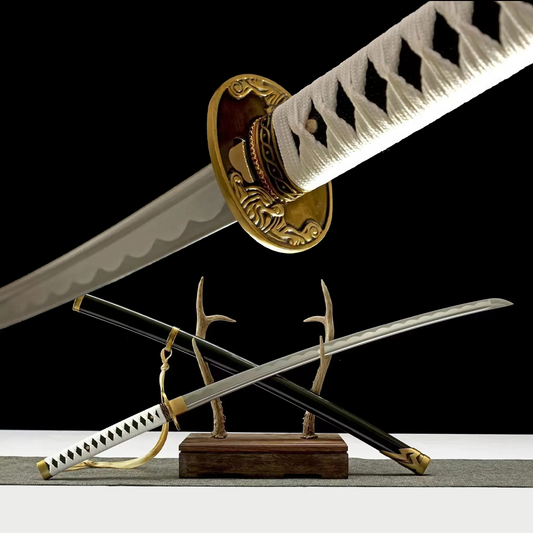
The Kill Bill katana represents perfection in both form and function, embodying design elements that have defined Japanese swords for over a millennium. The blade's distinctive curve, known as sori, serves both practical and aesthetic purposes, providing optimal cutting efficiency while creating the graceful silhouette that makes the katana instantly recognizable.
Measuring approximately 28 inches in blade length, The Bride's sword falls within traditional specifications for a functional katana. This length provides the perfect balance between reach and maneuverability, allowing for both precise cuts and sweeping strikes. The full tang construction, where the blade extends completely through the handle, ensures structural integrity under the most demanding conditions.
The tsuba (hand guard) featured in the film showcases classic Japanese design principles. Its circular form represents the void or emptiness central to Zen philosophy, while its practical function protects the wielder's hand during combat. The subtle engravings often found on such guards tell stories of their own, speaking to the sword's lineage and purpose.
Perhaps most striking is the hamon: the visible line along the blade's edge created during the differential hardening process. This isn't merely decorative; it represents the meeting point between the sword's hard cutting edge and its more flexible spine. In traditional Japanese belief, the hamon is where the sword's spirit resides, making each katana unique and alive in its own way.

The silk-wrapped handle, or tsuka-ito, follows patterns perfected over centuries. The diamond-shaped gaps in the wrapping, called hineri, aren't just aesthetic. They provide grip and allow the wielder's hands to "breathe" during extended use. The ray skin beneath, known as same, adds texture and moisture absorption, crucial for maintaining control in combat situations.
Color symbolism plays a significant role in the film's katana design. The golden menuki (ornamental elements) beneath the wrap represent prosperity and honor, while the overall aesthetic speaks to the sword's noble purpose. Every element, from the curved kashira (pommel) to the precisely fitted habaki (collar), demonstrates the harmonious integration of beauty and functionality that defines true Japanese craftsmanship.
The scabbard, or saya, deserves special mention for its role in the film's most iconic scenes. Traditionally made from lightweight wood and lacquered for protection, the saya isn't just storage. It's an extension of the sword's personality. The smooth draw and satisfying click of the blade seating properly became part of Kill Bill's signature sound design, creating an auditory symbol as powerful as any visual element.
Authentic Craftsmanship: Traditional Japanese Techniques
The creation of an authentic katana remains one of humanity's most demanding metallurgical achievements. Master smiths spend decades perfecting techniques passed down through generations, creating blades that are simultaneously functional weapons and artistic masterpieces. Understanding these methods illuminates why genuine katanas command such respect and why their replicas must meet exacting standards.
The process begins with tamahagane steel, traditionally produced in a clay furnace called a tatara. This ancient smelting method creates steel with varying carbon content, allowing the smith to select materials with specific properties for different parts of the blade. Higher carbon steel forms the cutting edge, while lower carbon steel provides flexibility for the spine: a combination that gives the katana its legendary performance characteristics.
Folding and refolding the steel, sometimes thousands of times, eliminates impurities while creating the complex grain patterns visible in finished blades. This labor-intensive process, known as kitae, can take weeks to complete properly. Each fold doubles the number of steel layers, eventually creating metal with hundreds of thousands of microscopic layers that contribute to the blade's strength and beauty.
The differential hardening process, or yaki-ire, represents the pinnacle of the swordsmith's art. Clay mixed with charcoal powder is applied to the blade in specific patterns before heating. This coating controls how quickly different areas cool during quenching, creating the famous hamon line where hard and soft steel meet. The resulting blade has a razor-sharp edge backed by a resilient spine that can withstand tremendous impact without breaking.
Modern reproduction techniques strive to honor these traditional methods while adapting to contemporary materials and safety standards. High-quality Kill Bill katana replicas utilize advanced metallurgy to achieve similar results through more controlled processes. Carbon steel alloys like 1060 and 1095 provide excellent performance characteristics, while careful heat treatment creates authentic-looking hamon patterns.
The hand-forging process remains largely unchanged, even in modern reproductions. Skilled craftsmen shape each blade individually, ensuring proper geometry and balance. The rhythmic hammering not only forms the blade's profile but also compacts the steel's grain structure, contributing to overall strength and performance. This personal touch distinguishes authentic replicas from mass-produced imitations.
Quality control in traditional katana production extends beyond the blade itself. The fitting process requires precise measurement and adjustment to ensure perfect alignment between all components. A properly assembled katana should feel like a natural extension of the wielder's arm, balanced and responsive to the slightest movement. This attention to detail separates true craftsmanship from mere approximation.
For collectors seeking authentic experiences, understanding these traditional techniques helps identify quality reproductions. Genuine attention to historical methods, even when adapted for modern production, creates katanas that honor the original spirit of Japanese sword-making while remaining accessible to contemporary enthusiasts.
Our Kill Bill Collection: Premium Replica Katanas
At Katana Canada, we understand that owning a piece of cinematic history requires more than surface-level similarity. It demands authentic craftsmanship worthy of the legendary original. Our carefully curated collection of Kill Bill-inspired katanas represents the perfect fusion of traditional Japanese sword-making techniques and modern metallurgical precision, allowing collectors to experience the weight and balance that made The Bride's weapon so formidable.
Kill Bill Katana Sword
Our flagship Kill Bill Katana Sword captures the essence of Tarantino's vision with meticulous attention to detail. This premium replica features:
• Full-tang construction using differential hardened carbon steel for authentic performance
• Hand-forged Damascus steel blade with visible hamon line mimicking traditional Japanese techniques
• Genuine rayskin handle with silk-wrapped tsuka-ito for superior grip and historical accuracy
• Traditional fittings including iron tsuba and brass menuki crafted using time-honored methods
• Functional design suitable for serious collectors and martial arts practitioners
⭐⭐⭐⭐⭐ "The weight and balance are absolutely perfect. You can feel the quality in every detail, from the perfectly wrapped handle to the stunning hamon pattern. This isn't just a display piece. It's a work of art." - Michael T., Toronto, ON
The blade's 28-inch length matches film specifications while providing optimal handling characteristics. Our master craftsmen pay particular attention to the curvature and taper, ensuring each sword possesses the graceful lines that define authentic Japanese katanas. The differential hardening process creates a genuine hamon that isn't merely etched or painted. It's formed through careful heat treatment that gives the blade its functional properties.
Jin Sakai Katana – Ghost of Tsushima Edition
While not directly from Kill Bill, our Jin Sakai Katana – Ghost of Tsushima Edition at shares the same commitment to authenticity that drives our Kill Bill collection:
• 1060 carbon steel construction providing excellent durability and edge retention • Traditional Japanese sword geometry with proper sori curvature • Hand-wrapped tsuka with authentic diamond pattern and genuine same underneath • Functional katana suitable for cutting practice and martial arts training • Inspired by another iconic character who embodies the samurai spirit
⭐⭐⭐⭐⭐ "Exceptional craftsmanship at an amazing price point. The blade holds an edge beautifully and the balance is spot-on for iaido practice." - Sarah L., Vancouver, BC
Premium Collection Highlights
For collectors seeking the ultimate expression of Japanese sword artistry, our premium offerings represent the pinnacle of modern katana craftsmanship. The Hiroshima Katana showcases:
• Master-level Damascus steel with complex folding patterns • Premium fittings including gold-plated menuki and high-grade iron fittings • Museum-quality presentation worthy of serious collectors • Functional design meeting historical Japanese specifications
The Kiryu Katana offers similar premium quality with its own distinctive character, featuring hand-forged construction and traditional polishing techniques that create mirror-like surfaces reflecting centuries of Japanese tradition.

Character-Inspired Alternatives
Our anime-inspired collection provides additional options for enthusiasts of cinematic swords. The Shinobu Kocho Katana – Demon Slayer Edition demonstrates our commitment to character authenticity:
• 1060 carbon steel blade with butterfly-inspired design elements • Authentic Japanese construction techniques adapted for modern collectors • Premium silk wrapping with custom color schemes matching the character • Functional katana suitable for cosplay and collection display • Includes traditional maintenance kit for long-term preservation
⭐⭐⭐⭐⭐ "The attention to detail is incredible. Every element from the guard design to the silk wrapping perfectly captures Shinobu's elegant yet deadly nature." - James K., Calgary, AB
For those drawn to other iconic sword-wielding characters, our Michonne Katana Sword and Michonne Katana – Premium Edition offer different approaches to the same legendary weapon, each crafted with the same attention to authentic Japanese sword-making principles.
Customization Options
Understanding that every collector has unique preferences, we also offer our Katana Customizer service. This innovative program allows enthusiasts to create their own interpretation of the Kill Bill aesthetic while maintaining authentic construction standards. From blade geometry to fitting materials, every aspect can be tailored to create a truly personal connection with Japanese sword tradition.
Our commitment to authenticity extends beyond mere appearance. Each katana in our collection undergoes rigorous quality testing to ensure proper balance, appropriate flexibility, and authentic handling characteristics. We believe that owning a replica of The Bride's legendary weapon should provide the same sense of connection to Japanese warrior culture that made the original so compelling on screen.
Collector's Guide: Choosing Your Perfect Blade
Selecting the right Kill Bill-inspired katana requires understanding both your personal goals and the technical aspects that define quality Japanese swords. Whether you're drawn to the cinematic mystique or the authentic martial tradition, certain principles guide wise collecting decisions that ensure satisfaction and value preservation over time.
First, consider your primary purpose. Display collectors prioritize visual accuracy and aesthetic appeal, seeking blades that capture the film's iconic appearance while complementing their presentation space. Functional collectors, however, need katanas capable of cutting practice or martial arts training, requiring different steel properties and construction standards. Understanding this distinction helps narrow choices significantly.
Blade steel represents the most crucial technical consideration. High-carbon steels like 1060 and 1095 offer excellent performance for functional use, holding sharp edges while maintaining appropriate flexibility. Damascus steel provides stunning visual patterns but requires careful evaluation: authentic Damascus involves complex folding techniques, while some producers simply etch patterns onto plain steel surfaces.
Handle construction demands equal attention. Authentic ray skin (same) underneath silk wrapping (ito) provides the traditional grip texture that Japanese swordsmen perfected over centuries. Synthetic alternatives may look similar but lack the moisture absorption and tactile qualities that make extended handling comfortable. The wrapping pattern itself should be tight and even, with proper diamond-shaped gaps (hineri) that aren't merely decorative.
Balance point location significantly affects handling characteristics. Traditional katanas balance approximately 4-6 inches from the guard, creating the nimble responsiveness that defines Japanese sword technique. Poorly balanced replicas feel sluggish and unnatural, regardless of visual accuracy. Testing balance before purchase, when possible, reveals manufacturing quality immediately.
Authentication marks and certificates provide valuable information about construction methods and materials. Reputable manufacturers provide detailed specifications about steel composition, hardening processes, and construction techniques. Documentation also helps establish provenance for insurance and resale purposes, important considerations for valuable pieces.
Storage and display requirements influence blade selection significantly. Functional katanas need regular maintenance including oiling and proper climate control, while display pieces may prioritize appearance over preservation of cutting edges. Understanding long-term care requirements prevents disappointment and ensures your investment maintains its value.
Budget considerations should account for total ownership costs, not just initial purchase prices. Quality maintenance supplies, proper storage solutions, and potential restoration needs add to the investment over time. Higher-quality pieces often prove more economical long-term due to superior materials and construction that resist deterioration.
Regional considerations matter for Canadian collectors. Import regulations, customs procedures, and shipping methods affect both cost and delivery timeframes. Domestic suppliers often provide advantages in customer service, warranty support, and reduced complexity for legal ownership requirements.
For additional guidance on selecting the perfect katana for your needs, our Katana Parts Explained – A Complete Customization Guide provides detailed technical information about each component's role in overall performance and aesthetics.
Understanding Steel: The Heart of Every Katana
The soul of every katana lies in its steel: the carefully selected and meticulously processed metal that determines everything from cutting performance to visual beauty. Understanding steel types and their properties empowers collectors to make informed decisions while appreciating the metallurgical mastery that transforms raw iron into legendary blades.
Carbon content represents the primary factor distinguishing different steel types. Low-carbon steels (0.3-0.6% carbon) offer excellent flexibility and shock resistance but struggle to hold sharp edges. High-carbon steels (0.7-1.5% carbon) provide superior edge retention and hardness but become brittle without proper heat treatment. The optimal range for katana construction typically falls between 0.6-1.0% carbon, balancing performance characteristics.
1060 carbon steel, containing approximately 0.60% carbon, represents an excellent entry point for serious collectors. This composition provides good hardness for edge retention while maintaining sufficient flexibility to prevent breakage under stress. Properly heat-treated 1060 blades can achieve impressive sharpness while remaining forgiving for beginners learning proper handling techniques.
1095 carbon steel, with its 0.95% carbon content, pushes performance boundaries toward maximum hardness and edge retention. Master smiths prize this steel for creating incredibly sharp blades capable of effortless cutting through various materials. However, the increased carbon content demands more sophisticated heat treatment and careful maintenance to prevent chipping or cracking.
Damascus steel deserves special mention for its distinctive patterns and complex construction. Authentic Damascus involves folding different steel types together repeatedly, creating alternating layers that produce striking visual effects after etching. Beyond aesthetics, this process distributes carbon content variably throughout the blade, potentially combining hard edges with flexible cores in sophisticated patterns.
The differential hardening process, regardless of base steel type, creates the famous hamon line visible along authentic Japanese blades. This technique involves coating the blade with clay before heating, controlling cooling rates to produce varying hardness levels. The resulting structure features a hard edge (hagane) backed by a softer spine (shingane), optimizing both cutting ability and durability.
Modern production techniques can simulate traditional results while maintaining consistency and safety standards. Computer-controlled heat treatment allows precise temperature management, creating predictable hardness patterns without the variables that occasionally caused historical failures. These advances make contemporary replicas more reliable while honoring traditional aesthetics.
Quality control extends beyond metallurgy to include proper tempering: the process of reheating hardened steel to reduce brittleness while retaining hardness. Properly tempered katana blades exhibit spring-like flexibility along their spines while maintaining razor-sharp edges. This balance requires precise temperature control and timing that separates master craftsmen from casual producers.
Surface finishes reveal construction quality and metallurgical properties. Hand-polished blades require dozens of hours using progressively finer abrasives, eventually achieving mirror-like surfaces that reveal the steel's internal structure. Machine polishing can approximate these results but lacks the subtle variations that characterize authentic hand finishing.
Why Choose Katana Canada for Your Collection
As a proudly Canadian company, we understand the unique needs of collectors across our vast country, from the Maritime provinces to British Columbia's Pacific coast. Our commitment to serving Canadian enthusiasts extends beyond mere convenience. We've built our entire operation around providing exceptional value, authentic products, and unmatched customer service for fellow Canadians passionate about Japanese sword culture.
Payment in Canadian dollars eliminates currency conversion uncertainties and hidden fees that plague international purchases. When you see our prices, that's exactly what you'll pay: no surprises at checkout, no fluctuating exchange rates affecting your budget. This transparency allows collectors to plan their acquisitions confidently while supporting a Canadian business that understands our market's specific requirements.
Our bilingual customer service team provides support in both French and English, ensuring every Canadian collector receives assistance in their preferred language. Whether you need technical guidance about steel types, maintenance advice, or help selecting the perfect piece for your collection, our knowledgeable staff speaks your language and understands your needs personally.
Purchasing from a Canadian company eliminates customs fees and international shipping complications that often double the cost of overseas purchases. Your katana arrives directly without customs delays, additional charges, or potential seizure issues that sometimes affect international sword shipments. This streamlined process gets your new acquisition into your hands faster while avoiding bureaucratic complications.
Our deep understanding of Canadian regulations ensures every piece in our collection complies with federal and provincial requirements for sword ownership and importation. We handle all legal complexities so you can focus on enjoying your collection rather than worrying about compliance issues. This expertise protects your investment while ensuring responsible ownership practices.
Quality assurance represents our cornerstone commitment. Every katana undergoes thorough inspection before shipping, verifying construction standards, finish quality, and authenticity details. Our reputation depends on delivering exactly what we promise: authentic replicas worthy of serious collectors who appreciate both cinematic history and traditional craftsmanship.
Canadian climate considerations influence our storage and shipping protocols. We understand how temperature variations and humidity changes affect sword preservation, packaging each piece appropriately for our unique environmental challenges. This attention to detail prevents damage during transit and helps your katana arrive in perfect condition.
Frequently Asked Questions
Q: Are these Kill Bill katanas authentic replicas suitable for serious collectors?
Absolutely. Our Kill Bill sword collection represents authentic Japanese sword-making techniques adapted for modern production standards. Each blade features traditional construction methods including full-tang design, differential hardening for genuine hamon patterns, and authentic materials like ray skin and silk wrapping. We work with master craftsmen who understand both historical accuracy and contemporary quality requirements. The steel compositions (primarily 1060 and 1095 carbon steel) match historical Japanese specifications while providing excellent performance characteristics. These aren't mere decorative pieces; they're functional katanas that honor the craftsmanship tradition while capturing the cinematic mystique of Tarantino's masterpiece. Serious collectors appreciate the attention to detail in every component, from the precisely fitted tsuba to the traditionally wrapped tsuka.
Q: What steel types do you use and how do they compare for performance?
We primarily use 1060 and 1095 carbon steels, both excellent choices for authentic katana construction. The 1060 steel contains approximately 0.60% carbon, providing an ideal balance of hardness for edge retention and flexibility to prevent breakage: perfect for collectors who want functional capability without excessive maintenance demands. Our 1095 steel, with 0.95% carbon content, offers superior edge retention and maximum hardness but requires more careful handling and maintenance. Damascus steel options feature complex folding patterns that create stunning visual effects while potentially combining different carbon levels throughout the blade. All our steels undergo proper heat treatment and tempering to achieve authentic Japanese sword characteristics, including the differential hardening that creates visible hamon lines distinguishing quality katanas from simple steel blades.
Q: What are the typical dimensions and weight specifications?
Our Kill Bill-inspired swords follow traditional Japanese measurements adapted for the film's aesthetic. Blade lengths typically measure 28-30 inches (71-76 cm), providing optimal balance between reach and maneuverability that made The Bride's weapon so effective. Overall length including handle ranges from 39-41 inches (99-104 cm), matching classical katana proportions. Weight varies between 2.2-2.8 pounds (1.0-1.3 kg) depending on specific steel and fittings used, but each piece balances approximately 4-6 inches from the guard for proper handling characteristics. The curvature (sori) measures 15-20mm, creating the graceful profile that defines authentic Japanese swords while ensuring optimal cutting geometry. Handle length accommodates traditional two-handed grip while allowing single-handed techniques when necessary. These specifications ensure our replicas feel authentic while maintaining the cinematic presence that made the original so memorable.
Q: How should I maintain and care for my katana properly?
Proper maintenance preserves both function and beauty while honoring Japanese sword traditions. Clean the blade after each handling using a soft cloth to remove fingerprints and moisture that can cause corrosion over time. Apply a thin layer of mineral oil or specialized sword oil every few months, especially in humid conditions or if the katana isn't regularly used. Store the blade in its scabbard (saya) in a dry environment away from temperature extremes that can cause expansion and contraction stress. Avoid touching the blade directly; always handle by the handle or use cotton gloves when necessary. The silk wrapping (ito) should be kept clean and dry: professional rewrapping may be needed every several years with regular use. Never attempt to sharpen the blade yourself unless you have proper training; improper grinding can destroy the temper line and ruin the sword's value. For comprehensive guidance, consult our How to Care for a Katana – Cleaning, Oiling & Storage Tips.
Q: What display options work best for showcasing these katanas?
Traditional Japanese sword stands (katana-kake) provide the most authentic and secure display method, supporting the katana horizontally with the edge facing upward according to historical protocol. Wall-mounted displays create dramatic focal points while saving space, but ensure the mounting system can safely support the sword's weight and won't damage the scabbard. Glass display cases offer protection from dust and handling while allowing 360-degree viewing: ideal for valuable pieces requiring extra security. Consider lighting carefully; LED strips or spotlights can highlight the hamon pattern and blade geometry without generating heat that might affect the steel or wrappings. Humidity control becomes critical in display environments; avoid basements or areas with significant temperature fluctuations that can cause condensation. Room positioning should minimize direct sunlight that can fade silk wrappings and affect wooden scabbards over time. Many collectors rotate displayed pieces periodically to prevent long-term stress on any single mounting point while allowing appreciation of their entire collection.
Q: Is it legal to own and collect katanas in Canada?
Yes, katana ownership is completely legal across Canada for collectors, martial artists, and enthusiasts. Canadian federal law recognizes swords as collectible items rather than restricted weapons, provided they're owned for legitimate purposes like collecting, martial arts practice, or historical study. Provincial regulations may vary slightly, but katanas face no special restrictions beyond normal knife laws regarding carry in public spaces. Home ownership, transportation in vehicles (properly secured), and private property display encounter no legal obstacles. However, carrying any sword in public areas, schools, or government buildings violates weapons laws regardless of intent. Some municipalities may have specific bylaws about sword possession, but these rarely affect private collectors. Import regulations allow katana entry without special permits when purchased from legitimate dealers who handle customs documentation properly. Our Canadian operation ensures all pieces comply with federal requirements while eliminating international shipping complications that sometimes create legal uncertainties for collectors purchasing overseas.
Conclusion
The Kill Bill katana represents more than cinematic memorabilia. It embodies the eternal appeal of Japanese sword artistry married to modern storytelling genius. When The Bride drew her blade in that iconic yellow jumpsuit, she awakened something primal in audiences worldwide: the recognition that some objects transcend their utilitarian purpose to become vessels of legend.
At Katana Canada, we understand that owning a piece of this mythology requires more than surface similarity. Our commitment to authentic construction, traditional techniques, and modern quality standards ensures that your Kill Bill Katana Sword captures not just the visual impact of Tarantino's vision, but the deeper spiritual connection that makes Japanese swords eternally fascinating.
Whether you're drawn to the precise craftsmanship of our premium collection or seeking your first authentic katana to begin a lifelong passion, our Canadian expertise and dedication to customer satisfaction ensure your journey into sword collecting begins with confidence and authenticity.
The legendary blade awaits: will you answer its call? Browse our complete katana collection today and discover the perfect fusion of cinematic history and traditional Japanese artistry, delivered with the reliability and service only a Canadian company can provide.
⭐⭐⭐⭐⭐ "From ordering to delivery, everything was perfect. The katana exceeded my expectations in every way, and the customer service team answered all my questions with genuine expertise. This isn't just a purchase. It's an investment in authentic craftsmanship." - David M., Halifax, NS
 Save $90