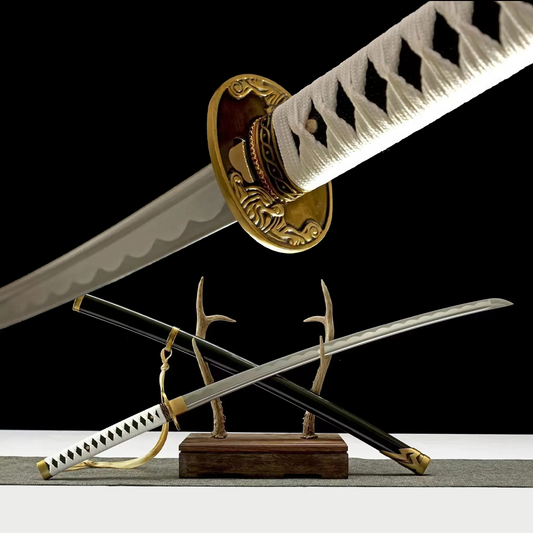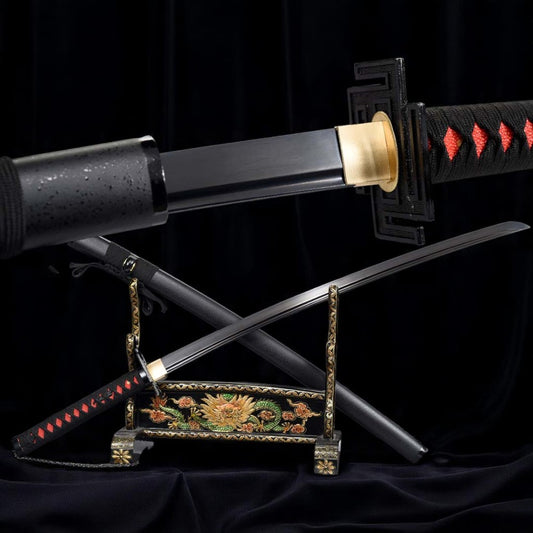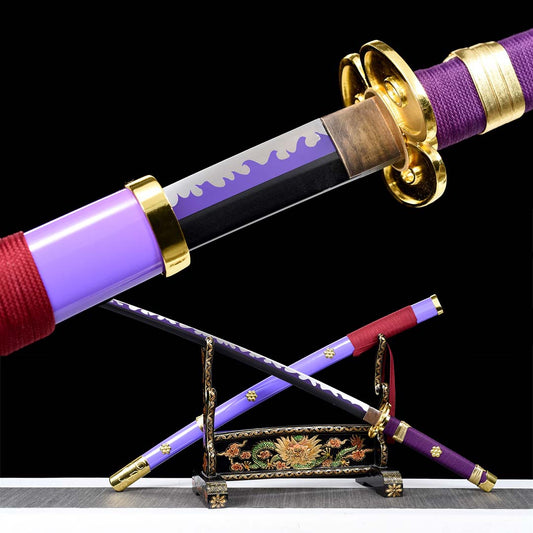

Functional Katana: Your Guide to Authentic Japanese Blades
The steel whispers as it cuts through the air, carrying with it centuries of samurai tradition and the soul of Japanese craftsmanship. A functional katana isn't merely a weapon or decoration—it's a bridge connecting you to an ancient warrior culture where honor, discipline, and artistry converged in perfect harmony. Whether you're drawn to the legendary blades of anime heroes or the historical masterpieces wielded by samurai, functional katanas represent the pinnacle of sword-making artistry.
Table of Contents
- The Living History of Functional Katanas
- Iconic Blades and Their Warriors
- Masterful Design & Traditional Craftsmanship
- Our Premium Collection - Featured Functional Katanas
- The Collector's Essential Guide
- Understanding Steel Types & Quality
- Why Choose Katana Canada
- Frequently Asked Questions

The Living History of Functional Katanas
The functional katana emerged during Japan's Kamakura period (1185-1333) as the ultimate evolution of sword craftsmanship. Unlike ceremonial blades, these weapons were forged for actual combat, demanding perfect balance between deadly efficiency and artistic beauty. Each functional katana carries the DNA of ancient Japanese swordsmiths who understood that a warrior's life depended on their blade's reliability.
The term "functional" distinguishes these authentic pieces from decorative replicas. While display katanas prioritize visual appeal, functional katana blades undergo rigorous testing—their tang construction, heat treatment, and steel composition must meet standards established over eight centuries ago. The legendary swordsmiths of feudal Japan created blades that could slice through armor while maintaining their edge through countless battles.
Today's functional katanas honor this legacy through traditional forging methods. Modern smiths study ancient texts, recreating the folding techniques that create distinctive hamon patterns and achieve optimal hardness gradients. Each functional katana represents hundreds of hours of meticulous work, from initial steel selection to final polishing. These aren't mass-produced items but carefully crafted instruments that embody the samurai spirit.
The cultural significance extends beyond warfare into philosophy and art. Samurai viewed their katana as an extension of their soul, requiring daily maintenance and respectful handling. This reverence transforms ownership of a functional katana into a spiritual journey, connecting modern collectors to warriors who lived by the code of Bushido.
Iconic Blades and Their Warriors
Throughout history and popular culture, certain functional katanas have achieved legendary status through their wielders' deeds. The real Jin Sakai's blade from the Mongol invasions inspired countless replicas, each seeking to capture the honor and sacrifice of Tsushima's last samurai. These historical connections give functional katanas deeper meaning beyond their physical properties.
Modern entertainment has introduced new generations to katana culture through characters like Michonne from The Walking Dead, whose twin blades symbolized survival and determination in a post-apocalyptic world. The Kill Bill saga elevated katana appreciation to mainstream consciousness, showcasing the deadly artistry possible with properly forged steel. Each fictional blade draws inspiration from real functional katanas, maintaining authentic proportions and design elements.
Anime has revolutionized katana appreciation, particularly through Demon Slayer's Nichirin blades. While fantastical in their elemental powers, these swords maintain traditional katana geometry and showcase authentic Japanese aesthetics. Characters like Shinobu Kocho demonstrate how blade design reflects personality—her slender, poison-enhanced sword mirrors her graceful yet deadly fighting style. These cultural touchstones introduce collectors to functional katanas through emotional connections with beloved characters.
The symbolism embedded in each blade design tells stories of honor, sacrifice, and artistic expression. Functional katanas carry these narratives forward, allowing owners to hold pieces of living history. Whether inspired by historical figures or beloved characters, each sword represents the eternal appeal of Japanese craftsmanship and warrior philosophy.
Masterful Design & Traditional Craftsmanship
The anatomy of a functional katana reflects centuries of refined engineering. The distinctive curved blade, known as sori, isn't merely aesthetic—it optimizes cutting mechanics while maintaining structural integrity during combat. Traditional smiths achieved this curvature through differential cooling, where the spine cools slower than the edge, creating natural tension that forms the characteristic arc.

The hamon, or temper line, serves as both functional and artistic element. This visible boundary between hardened edge and softer spine demonstrates the smith's mastery of heat treatment. Different hamon patterns—notare, gunome, or choji—require precise temperature control and timing. Modern Japanese sword forging techniques preserve these traditional methods, ensuring authentic results.
Steel selection profoundly impacts functional katana performance. Premium carbon steels like 1060 and 1095 provide the hardness necessary for razor-sharp edges while maintaining enough flexibility to prevent fracturing. Damascus steel adds visual appeal through folded patterns while enhancing durability. Each steel type requires specific heat treatment protocols developed over generations of trial and refinement.
The construction process begins with careful steel preparation, often involving multiple types welded together. The hagane (hard steel) forms the cutting edge, while shingane (medium steel) creates the core structure. Kawagane (soft steel) provides the outer jacket, absorbing impact while protecting the harder interior components. This sophisticated metallurgy distinguishes functional katanas from simpler decorative pieces.
Handle construction demands equal attention to detail. The nakago (tang) extends deep into the tsuka (handle), secured by traditional bamboo mekugi pins. Authentic ray skin samegawa provides grip texture, while silk ito wrapping offers comfort and control. These elements must work harmoniously to create a blade worthy of the samurai tradition.
Our Premium Collection - Featured Functional Katanas
Jin Sakai Katana – Ghost of Tsushima Edition
Honor the legendary Ghost of Tsushima with this meticulously crafted functional katana. Forged from premium 1060 carbon steel, this blade captures the essence of feudal Japan's most celebrated warrior.
- Full-tang construction with traditional bamboo mekugi pin assembly
- Authentic 1060 carbon steel blade with hand-polished finish
- Ray skin handle wrapping with black silk cord for superior grip
- Includes lacquered wooden scabbard with brass fittings
- 40.5-inch overall length with 28-inch cutting edge
⭐⭐⭐⭐⭐ "The weight and balance are perfect for kata practice. The steel quality exceeded my expectations." - Marcus from Toronto, ON
Kill Bill Katana Sword
Channel the deadly precision of cinema's most famous revenge saga with this Damascus steel masterpiece. Every detail honors the film's iconic blade while delivering authentic functional performance.
- Premium Damascus carbon steel construction with distinctive folding patterns
- Real ray skin handle with yellow cord wrapping
- Traditional brass tsuba guard with film-accurate design elements
- Hand-forged using traditional Japanese folding techniques
- Razor-sharp edge suitable for cutting demonstrations
⭐⭐⭐⭐⭐ "The Damascus pattern is absolutely stunning. This katana feels like a piece of art that happens to be a functional weapon." - Sarah from Vancouver, BC
Michonne Katana Sword
Survive the apocalypse with this battle-ready reproduction of The Walking Dead's most trusted blade. Crafted from 1095 carbon steel for maximum edge retention and durability.
- 1095 high-carbon steel blade with differential hardening
- Authentic black cord handle wrapping over ray skin
- Damascus steel construction for enhanced visual appeal
- Full-tang design ensuring superior structural integrity
- Perfect for cosplay or serious collection display
⭐⭐⭐⭐⭐ "I've owned several katanas, but this one's edge retention is incredible. The 1095 steel holds up to serious cutting tests." - David from Calgary, AB
Michonne Katana – Premium Edition
The ultimate expression of post-apocalyptic survival weaponry, featuring enhanced Damascus steel construction and premium finishing details that set it apart from standard models.
- Enhanced Damascus carbon steel with complex folding patterns
- Premium ray skin handle with reinforced cord wrapping
- Traditional saya with high-gloss black lacquer finish
- Hand-sharpened to razor-keen edge geometry
- Includes custom display stand and maintenance kit
Hiroshima Katana
A tribute to traditional Japanese craftsmanship, this premium functional katana showcases the pinnacle of Damascus steel artistry combined with time-honored forging methods.
- Multi-layer Damascus carbon steel with flowing hamon pattern
- Traditional oak handle with authentic ray skin covering
- Brass menuki and kashira with classical Japanese motifs
- Hand-polished blade reflecting traditional sword polishing techniques
- Includes silk storage bag and care instructions
⭐⭐⭐⭐⭐ "The attention to historical detail is remarkable. This feels like holding a piece of samurai history." - Jennifer from Montreal, QC
Kiryu Katana
Experience the power of legendary yakuza honor with this Damascus steel functional katana. Designed for collectors who appreciate both traditional craftsmanship and modern pop culture influences.
- Premium Damascus carbon steel with distinctive wave patterns
- Black cord ito wrapping over genuine ray skin handle
- Traditional brass fittings with dragon-inspired designs
- Full-tang construction for maximum reliability
- Includes custom wooden display box
Shinobu Kocho Katana – Demon Slayer Edition
Embrace the grace and deadly precision of the Insect Hashira with this stunning reproduction featuring authentic 1060 carbon steel construction and butterfly-inspired aesthetics.
- 1060 carbon steel blade with hand-forged construction
- Purple and white handle wrapping matching Shinobu's color scheme
- Butterfly-themed tsuba guard with intricate cut-out patterns
- Traditional saya with purple lacquer finish
- Includes certificate of authenticity and care guide
⭐⭐⭐⭐⭐ "As a Demon Slayer fan, this katana exceeded all my expectations. The butterfly details are absolutely perfect." - Alex from Ottawa, ON
Katana Customizer
Create your ultimate functional katana with our comprehensive customization service. Choose every detail from steel type to handle materials, creating a truly unique blade.
- Select from 1060, 1095, or Damascus carbon steel options
- Customize handle wrapping colors and patterns
- Choose from traditional or modern tsuba guard designs
- Personalize blade engravings with meaningful symbols
- Professional consultation throughout the design process
These best-selling functional katanas represent the perfect fusion of traditional craftsmanship and modern quality standards. Each blade undergoes rigorous testing to ensure it meets both aesthetic and performance requirements.

The Collector's Essential Guide
Building a functional katana collection requires understanding both historical significance and modern craftsmanship standards. Start by establishing your collecting focus—whether historical periods, anime influences, or specific steel types. This direction helps avoid impulsive purchases while building a cohesive collection that tells a story.
Authentication marks the difference between valuable pieces and expensive mistakes. Examine the hamon pattern for consistency and depth—machine-etched lines lack the organic flow of genuine heat treatment. Check tang construction for proper full-tang design with traditional mekugi pin holes. Quality ray skin should show natural texture variations, not uniform artificial patterns common in cheap reproductions.
Display considerations extend beyond aesthetics to preservation. Avoid direct sunlight that can fade handle wrapping and damage lacquered scabbards. Maintain proper humidity levels to prevent rust formation on exposed steel surfaces. Horizontal display stands distribute weight evenly, preventing warping that can occur with vertical storage over time.
Regular maintenance preserves both function and value. Oil blades monthly using traditional choji oil or modern synthetic alternatives. Inspect handle wrapping for loosening and address issues promptly to prevent permanent damage. Store blades partially drawn in their scabbards to prevent edge contact with wood, which can cause microscopic chipping over time.
Investment potential varies significantly between mass-produced and artisan-crafted pieces. Limited editions often appreciate in value, particularly those tied to popular anime series or historical commemorations. Document provenance with certificates of authenticity and detailed photographs. Consider professional appraisals for insurance purposes, especially for high-end Damascus steel pieces or custom katanas with unique specifications.
Understanding Steel Types & Quality
Steel selection fundamentally determines a functional katana's performance characteristics and longevity. Carbon content directly affects hardness potential, edge retention, and overall durability. Understanding these metallurgical principles helps collectors make informed decisions about their investments.
1060 carbon steel provides the perfect balance for most collectors. With 0.60% carbon content, it achieves excellent hardness while maintaining enough flexibility for safe handling. This steel type responds well to heat treatment, producing attractive hamon patterns while remaining relatively affordable. Most traditional Japanese swords used similar carbon levels, making 1060 an authentic choice for historical reproductions.
1095 carbon steel offers maximum hardness potential with 0.95% carbon content. This high-carbon composition enables razor-sharp edges that retain their keenness through extensive use. However, higher carbon content increases brittleness, requiring expert heat treatment to prevent fracturing. Professional-grade functional katanas often utilize 1095 for serious practitioners who prioritize cutting performance above all else.
Damascus steel combines multiple steel types through folding and welding techniques. This process creates distinctive pattern welding visible on the finished blade while theoretically improving strength through alternating hard and soft layers. Modern Damascus often emphasizes visual appeal over functional advantages, though properly executed examples can offer excellent performance characteristics.
Heat treatment transforms raw steel into functional katana blades through carefully controlled heating and cooling cycles. The differential hardening process creates the characteristic hamon line while establishing optimal hardness gradients. Edge zones achieve maximum hardness for cutting ability, while spine areas remain softer for impact absorption. This sophisticated metallurgy distinguishes authentic functional katanas from simple steel bars shaped like swords.
Quality assessment requires examining multiple factors beyond steel composition. Proper tempering prevents excessive brittleness while maintaining hardness. Polishing quality affects both appearance and corrosion resistance. Tang construction determines long-term structural integrity under stress. These elements work together to create blades worthy of the functional katana designation.
Why Choose Katana Canada
Katana Canada stands as the premier destination for functional katana enthusiasts across the Great White North. As a proudly Canadian company, we understand the unique needs of collectors in our diverse climate and cultural landscape. Our commitment to authenticity ensures every blade meets traditional Japanese standards while satisfying modern quality expectations.
Our Canadian customer service team provides bilingual support in both French and English, offering expert guidance throughout your katana journey. Whether you're selecting your first functional blade or adding to an extensive collection, our specialists understand the nuances of Japanese sword culture and can help match you with the perfect piece. Payment in Canadian dollars eliminates currency conversion complications, making your purchase straightforward and transparent.
The absence of customs fees when shopping with Katana Canada represents significant savings compared to international alternatives. Import duties and brokerage charges can add substantial costs to functional katana purchases from overseas suppliers. Our Canadian business model ensures the price you see reflects your total investment, with no unpleasant surprises at delivery.
Our curated selection focuses on quality over quantity, featuring only functional katanas that meet rigorous authentication standards. We maintain relationships with established forges and artisans who understand traditional craftsmanship requirements. This careful vetting process ensures every blade in our collection represents genuine value for serious collectors and practitioners.
From coast to coast, Canadian enthusiasts trust Katana Canada for their functional katana needs. Our growing community of satisfied customers spans from the Maritime provinces to British Columbia, united by their appreciation for authentic Japanese craftsmanship. Join thousands of fellow Canadians who have discovered the difference that genuine expertise and dedicated service make in building meaningful collections.

Frequently Asked Questions
Q: How can I verify that a functional katana is truly authentic and not just a decorative replica?
Authentic functional katanas possess several distinguishing characteristics that separate them from decorative pieces. First, examine the tang construction—functional blades feature full-tang design with the steel extending completely through the handle, secured by traditional bamboo mekugi pins. Decorative replicas often use rat-tail tangs welded to the blade, creating weak points that could fail under stress. Second, inspect the hamon pattern for depth and organic flow. Genuine heat treatment creates natural variations in the temper line, while machine-etched patterns appear artificially uniform. Third, check the steel quality through magnet testing—authentic carbon steel exhibits magnetic properties, while stainless steel decorative pieces do not. Finally, authentic functional katanas typically weigh between 2.5-4 pounds, reflecting proper steel thickness and construction density. Documentation from reputable dealers, including certificates of authenticity and detailed specifications, provides additional verification of genuine functional status.
Q: What's the difference between 1060 and 1095 carbon steel, and which is better for beginners?
The numerical designation refers to carbon content percentage—1060 contains 0.60% carbon while 1095 contains 0.95% carbon. This difference significantly impacts blade characteristics and maintenance requirements. 1060 steel offers excellent balance between hardness and flexibility, making it forgiving for beginners who might accidentally strike hard objects or apply improper cutting techniques. It achieves sufficient hardness for sharp edges while remaining less brittle than higher-carbon alternatives. 1095 steel provides superior edge retention and can achieve razor-sharpness, but requires more careful handling to prevent chipping or cracking. For beginners, 1060 represents the ideal starting point, offering authentic functional performance while being more forgiving of handling mistakes. Experienced practitioners often prefer 1095 for its maximum cutting potential, but this requires proper maintenance knowledge and careful use. Both steel types respond well to traditional heat treatment methods and can produce beautiful hamon patterns when properly forged. Consider your experience level, intended use, and maintenance commitment when choosing between these options.
Q: What are the proper dimensions and weight specifications for an authentic functional katana?
Traditional functional katanas follow specific dimensional standards developed over centuries of refinement. Overall length typically ranges from 39-42 inches, with blade length (nagasa) measuring 26-30 inches. The handle (tsuka) should measure 10-12 inches, providing sufficient grip length for two-handed techniques while maintaining proper balance. Blade width at the habaki (collar) measures approximately 1.2-1.4 inches, tapering to a sharp point. Proper curvature (sori) ranges from 0.5-0.8 inches, measured from the spine to a straight line drawn from tip to tang. Weight should fall between 2.5-4 pounds for most functional katanas, with balance point located 4-6 inches from the tsuba (guard). These specifications ensure proper handling characteristics while maintaining structural integrity. Variations exist based on specific historical periods and regional styles, but functional katanas that deviate significantly from these parameters may compromise performance or authenticity. Custom pieces can adjust dimensions for specific user requirements while maintaining functional integrity.
Q: How should I properly care for and maintain my functional katana to ensure longevity?
Proper maintenance preserves both functional performance and aesthetic beauty of your katana. Begin each maintenance session by carefully removing the blade from its scabbard, checking for any signs of rust, nicks, or damage. Clean the blade using a soft cloth with traditional choji oil or modern equivalents, wiping along the blade's length rather than across it to avoid damaging the polish. Apply a thin coat of oil to prevent corrosion, paying special attention to the tang area where moisture can accumulate. Inspect the handle wrapping for loosening or wear, addressing issues promptly to prevent permanent damage to the ray skin underneath. Store the katana horizontally when possible, as vertical storage can cause warping over time due to gravitational stress. Maintain proper humidity levels in storage areas—excessive moisture promotes rust while overly dry conditions can crack wooden components. Avoid touching the blade directly with bare hands, as natural skin oils can cause corrosion over time. Professional polishing may be necessary every few years for actively used pieces, but this should only be performed by qualified specialists familiar with traditional Japanese techniques.
Q: What are the best options for displaying functional katanas safely and attractively?
Displaying functional katanas requires balancing aesthetic appeal with proper preservation and safety considerations. Traditional horizontal stands (katana kake) provide optimal support while showcasing the blade's curvature and craftsmanship details. These stands distribute weight evenly across multiple contact points, preventing stress concentrations that could cause warping. Wall-mounted displays offer space-efficient solutions but require secure mounting to prevent accidental falls. Ensure wall anchors can support at least four times the katana's weight to account for dynamic loading. Display cases provide protection from dust, moisture, and unauthorized handling while allowing full visibility of your collection. Choose cases with museum-quality materials that won't off-gas chemicals harmful to steel or organic components. Lighting should utilize LED sources to minimize heat generation and UV exposure that can fade silk wrapping or damage lacquered surfaces. Position displays away from direct sunlight, heating vents, and high-humidity areas like bathrooms or basements. Consider security measures for valuable pieces—functional katanas represent significant investments that warrant appropriate protection. Document your collection with detailed photographs for insurance purposes and maintain climate-controlled storage conditions whenever possible.
Q: Are functional katanas legal to own in Canada, and are there any restrictions I should be aware of?
Functional katanas are legal to own in Canada for collectors and martial arts practitioners, but specific regulations vary by province and municipality. Federal legislation classifies katanas as prohibited weapons only when carried or intended for use as weapons against persons. Ownership for collecting, martial arts practice, or cultural purposes remains legal across Canada. However, transportation requires following specific guidelines—blades must be securely wrapped or contained, and carrying in public spaces without legitimate purpose may violate local bylaws. Some provinces have additional restrictions on blade length or carrying permits required for transport to training facilities. Educational institutions and workplaces may prohibit bringing katanas onto premises regardless of legal status. Check with local law enforcement agencies for specific regulations in your area, as municipal bylaws can impose stricter requirements than federal legislation. When purchasing online, ensure vendors understand Canadian import regulations to avoid customs complications. Maintain documentation proving legitimate collecting or martial arts purposes, especially for high-value pieces that might attract customs attention. Consider joining recognized martial arts organizations or collector groups that can provide legal guidance and community support for enthusiasts navigating regulatory requirements.
Conclusion
The journey into functional katana ownership transcends mere collecting—it connects you to an unbroken chain of Japanese craftsmanship stretching back eight centuries. Every authentic blade in your hands carries the spirit of samurai warriors who trusted their lives to similar steel, forged with identical techniques by masters who understood that excellence admits no compromise.
Whether you're drawn to the historical authenticity of traditional designs or the cultural resonance of modern interpretations like the Ghost of Tsushima series, functional katanas offer tangible connections to stories that continue inspiring generations. The weight of properly forged carbon steel, the whisper of silk-wrapped handles, and the mirror polish of authentic blades create experiences that decorative replicas simply cannot match.
Your functional katana collection awaits at Katana Canada, where authentic Japanese craftsmanship meets Canadian values of quality and service. From entry-level pieces perfect for beginning your journey to premium masterpieces that rival museum collections, functional katanas worthy of the samurai tradition they represent.
Discover your next legendary blade today and join thousands of Canadian collectors who trust Katana Canada for their most prized possessions.
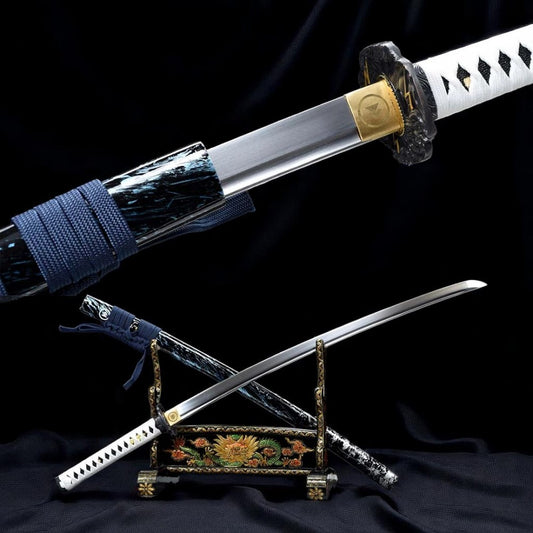
 Save $90