
Katana Carbon Steel Distribution Smithing: The Art of Authentic Japanese Blade Making
The rhythmic hammering echoes through the forge as sparks dance in the darkness. A master smith, sweat glistening on his brow, shapes molten steel with centuries-old techniques passed down through generations. This is katana carbon steel distribution smithing – an art form that transforms raw metal into legendary blades capable of cutting through history itself. In the heart of feudal Japan, these weapons weren't merely tools of war; they were the soul of the samurai, forged through carbon steel distribution smithing methods so precise and sacred that even today, authentic reproduction requires the same meticulous attention to detail.

Modern katana steel distribution smithing combines ancient wisdom with contemporary metallurgy, creating blades that honor the past while meeting today's standards for collectors, martial artists, and enthusiasts. Understanding this carbon steel forging process reveals why authentic katanas command such reverence – and why choosing the right blade requires knowledge of these time-tested techniques. The Art and Mastery
Table of Contents
- The Ancient Legacy of Japanese Steel Smithing
- Carbon Steel Types and Their Characteristics
- Traditional Smithing Techniques and Modern Applications
- Featured Collection: Authentic Carbon Steel Katanas
- Collector's Guide to Evaluating Quality
- Steel Distribution and Quality Grading
- Why Katana Canada Stands Apart
- Frequently Asked Questions
- Related Resources
The Ancient Legacy of Japanese Steel Smithing
Japanese sword smithing emerged during the Heian period (794-1185), born from necessity and refined through spiritual discipline. The legendary smiths of old understood that katana carbon steel distribution smithing was not merely metalwork – it was a sacred communion between craftsman, fire, and iron. These master artisans developed katana forging techniques that remain unmatched in their sophistication, creating blades that could bend without breaking, cut through armor with surgical precision, and maintain their edge through countless battles.
The geographical isolation of Japan played a crucial role in developing unique carbon steel distribution methods. Japanese iron, known as tamahagane, was smelted from native iron sand (satetsu) in clay furnaces called tatara. This process produced steel with varying carbon content, which smiths learned to sort and distribute strategically throughout the blade. The resulting katanas exhibited the perfect balance of hardness and flexibility – hard enough to maintain a razor edge, yet flexible enough to absorb the shock of combat.
Traditional katana steel smithing involved complex folding techniques that could incorporate thousands of layers. Master smiths would fold the steel repeatedly, welding it back upon itself to distribute carbon evenly and eliminate impurities. This process, combined with differential hardening techniques, created the distinctive hamon (temper line) that became the hallmark of authentic Japanese blades.
The spiritual aspect of smithing was equally important. Smiths underwent ritual purification, worked in sanctified spaces, and approached their craft as a form of meditation. This reverence for the process ensured that every authentic katana carried not just superior metallurgy, but the soul of its creator. To understand more about this rich heritage, explore The History of the Katana – From Samurai Symbol to Modern Icon.
Carbon Steel Types and Their Characteristics
Modern katana carbon steel distribution smithing utilizes several grades of carbon steel, each offering distinct properties that affect the blade's performance, durability, and appearance. Understanding these carbon steel differences is crucial for selecting the right katana for your needs.
1060 Carbon Steel represents the most accessible entry point for authentic katana ownership. With approximately 0.60% carbon content, this steel offers excellent flexibility and durability while remaining relatively easy to maintain. The moderate carbon content makes 1060 steel forgiving for beginners, as it's less prone to cracking during use or improper care. Many entry-level functional katanas utilize 1060 carbon steel because it provides genuine cutting ability while remaining budget-friendly.
1095 Carbon Steel contains approximately 0.95% carbon, making it significantly harder and capable of achieving extremely sharp edges. This higher carbon content allows for superior edge retention but requires more careful maintenance to prevent rust and corrosion. Experienced collectors often prefer 1095 carbon steel for its ability to take and hold a razor-sharp edge, though it demands respect in handling and storage.
Damascus Steel represents the pinnacle of katana carbon steel distribution smithing artistry. Created by folding and welding multiple types of steel together, Damascus blades display distinctive wave-like patterns across their surface. These patterns aren't merely decorative – they indicate the complex steel structure beneath, which combines hard and soft elements for optimal performance. True Damascus steel requires master-level smithing skills and represents the ultimate fusion of beauty and functionality.
The distribution of carbon throughout the blade affects more than just performance metrics. It influences the blade's responsiveness during cutting, its ability to maintain geometry under stress, and even its acoustic properties – the distinctive ring of a well-made katana when tapped. Modern smiths must understand these carbon distribution subtleties to create blades worthy of the katana tradition.

Traditional Smithing Techniques and Modern Applications
Authentic katana carbon steel distribution smithing relies on techniques perfected over centuries, adapted for modern production while maintaining essential traditional elements. The forging process begins with careful selection and preparation of raw materials, followed by precise temperature control during forging, shaping, and heat treatment.
The foundation of traditional smithing lies in understanding fire management. Ancient smiths could judge steel temperature by color alone, knowing that each shade of red, orange, or yellow indicated specific molecular changes occurring within the metal. Modern smiths combine this intuitive knowledge with precise pyrometry, ensuring consistent results while honoring traditional methods.
Folding and forge welding remain central to authentic katana steel distribution smithing. The process involves heating steel to welding temperature (approximately 2000°F), hammering it flat, cutting it, and folding it over itself. Each fold doubles the number of layers, creating increasingly fine grain structure and distributing carbon content evenly throughout the material. Master smiths might perform twelve to sixteen folds, resulting in thousands of microscopic layers.
Clay application before the final heat treatment allows for differential hardening – the technique that creates the distinctive hamon line. The clay mixture, containing charcoal powder and iron filings, acts as insulation during quenching. Areas covered with thick clay cool slowly, remaining relatively soft, while exposed areas cool rapidly, becoming extremely hard. This creates the perfect combination of a hard cutting edge with a flexible spine.
The quenching process itself requires split-second timing and perfect technique. The heated blade is plunged into water or oil at precisely the right moment, with the smith often covering specific areas with wet cloths to control cooling rates. This moment determines whether months of work result in a masterpiece or a pile of scrap metal.
Modern katana carbon steel distribution smithing incorporates computer-controlled furnaces, precise alloy compositions, and advanced testing methods while preserving these essential traditional techniques. The result is blades that meet or exceed historical standards while offering consistency impossible to achieve through purely traditional methods.
Featured Collection: Authentic Carbon Steel Katanas
Our curated selection represents the finest examples of Japanese blade forging available to Canadian collectors, each blade showcasing different aspects of this ancient art form.
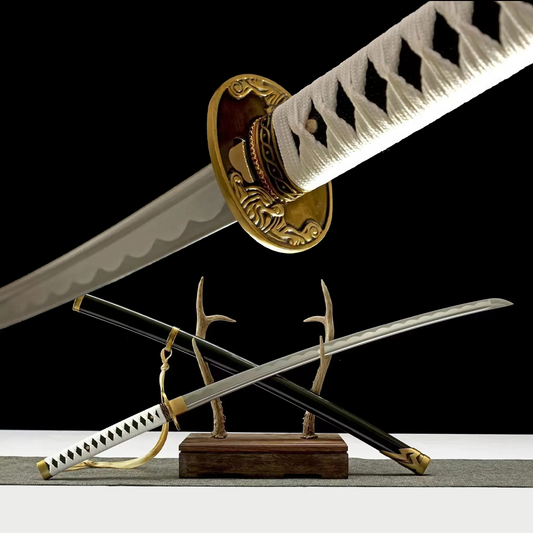
Jin Sakai Katana – Ghost of Tsushima Edition
Inspired by the legendary Ghost of Tsushima, this exceptional blade demonstrates masterful carbon steel smithing through its 1060 carbon steel construction. The functional design honors both historical authenticity and modern gaming culture.
Key Features: • Hand-forged 1060 carbon steel blade with authentic hamon line • Full tang construction ensuring superior balance and durability • Traditional silk wrapping (ito) over genuine ray skin (same) • Functional cutting edge suitable for martial arts practice • Includes wooden scabbard (saya) with traditional lacquer finish
⭐⭐⭐⭐⭐ "Absolutely stunning craftsmanship. The balance is perfect and the edge geometry is spot-on. As a martial artist in Calgary, I appreciate the attention to authentic details." - Marcus T., Calgary, AB
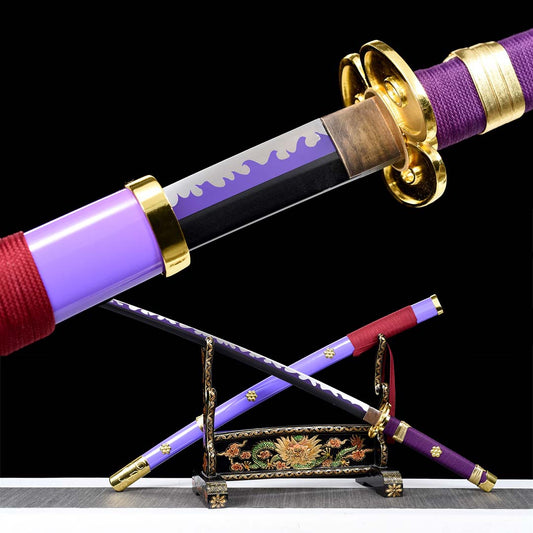
Shinobu Kocho Katana – Demon Slayer Edition
This elegant blade captures the essence of the Insect Hashira through sophisticated carbon steel forging techniques. The 1060 carbon steel construction provides both beauty and functionality.
Key Features: • Premium 1060 carbon steel with differential hardening • Distinctive butterfly-themed tsuba (hand guard) design • Purple and white color scheme faithful to the anime • Sharp, functional blade suitable for cutting practice • Custom wooden display stand included
⭐⭐⭐⭐⭐ "The detail work on this katana is incredible. The purple accents are beautiful and the blade quality exceeded my expectations. Perfect addition to my collection!" - Sarah M., Toronto, ON
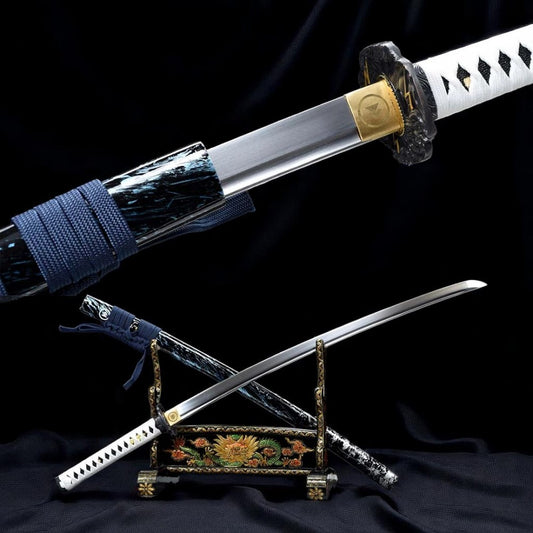
Kill Bill Katana Sword
Representing iconic modern cinema, this blade showcases advanced steel distribution smithing through its Damascus steel construction. The intricate folded steel pattern demonstrates centuries-old techniques applied to contemporary design.
Key Features: • Authentic Damascus steel with visible folded patterns • Real ray skin handle wrapping for superior grip • Museum-quality blade polish revealing steel grain • Functional full tang construction • Traditional wooden scabbard with custom fittings
⭐⭐⭐⭐⭐ "This is hands down the most beautiful sword I've ever owned. The Damascus pattern is mesmerizing and the cutting performance is outstanding." - David L., Vancouver, BC
Michonne Katana Sword
Inspired by The Walking Dead's iconic character, this 1095 carbon steel blade represents the pinnacle of katana forging smithing for functional use. The superior steel grade offers exceptional performance characteristics.
Key Features: • High-grade 1095 carbon steel for maximum sharpness • Damascus steel pattern for enhanced durability • Battle-ready construction suitable for heavy use • Authentic samurai-style fittings and hardware • Includes maintenance kit for proper care
Michonne Katana – Premium Edition
The premium edition elevates carbon steel blade smithing to art form status. Enhanced materials and finishing techniques create a blade worthy of the most discerning collectors.
Key Features: • Master-grade 1095 carbon steel with premium heat treatment • Hand-folded Damascus steel with exceptional pattern clarity • Premium fittings including gold-plated menuki ornaments • Custom lacquered scabbard with mother-of-pearl inlays • Certificate of authenticity with individual blade specifications
⭐⭐⭐⭐⭐ "Worth every penny. This isn't just a sword, it's a work of art. The premium materials and craftsmanship are evident in every detail." - Robert K., Montreal, QC

Hiroshima Katana
,110.00 CAD
Representing the absolute pinnacle of katana carbon steel distribution smithing, this masterwork demonstrates what's possible when traditional techniques meet modern metallurgy. Each blade requires months of careful craftsmanship.
Key Features: • Master-forged carbon steel with complex laminated construction • Hand-polished blade revealing extraordinary Damascus patterns • Museum-quality fittings crafted from precious metals • Individual numbering and master smith signature • Lifetime warranty covering craftsmanship defects
Kiryu Katana
,110.00 CAD
This exceptional blade showcases advanced steel distribution and forging through its sophisticated metallurgy and artistic finishing. Named after the legendary dragon, it embodies power and elegance.
Key Features: • Multi-layered Damascus steel construction with dragon-scale pattern • Differential hardening creating distinctive hamon line • Hand-carved dragon motifs on premium fittings • Traditional polish requiring over 100 hours of hand work • Custom presentation case with authentication documents
⭐⭐⭐⭐⭐ "The level of detail is absolutely incredible. You can see the individual layers in the Damascus steel, and the dragon carvings are museum quality." - Jennifer W., Ottawa, ON
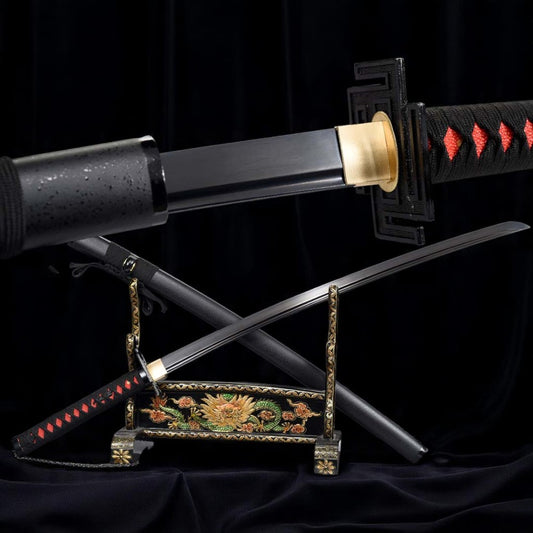
Black Blade Katana
Featuring innovative carbon steel forging with specialized coating techniques, this blade offers both traditional performance and modern aesthetics. The blackened finish provides enhanced corrosion resistance.
Key Features: • 1060 carbon steel core with protective black oxide coating • Full tang construction with traditional handle wrapping • Matte black finish reducing reflection during use • Functional geometry suitable for martial arts training • Includes cleaning kit and storage accessories
The diversity of our collection demonstrates how katana steel smithing can be adapted to meet different needs while maintaining authentic quality standards. For detailed information about blade construction and customization options, visit our comprehensive Katana Parts Explained – A Complete Customization Guide.
Collector's Guide to Evaluating Quality
Understanding authentic carbon steel distribution smithing enables collectors to distinguish genuine quality from mass-produced imitations. Several key indicators reveal the level of craftsmanship and materials invested in each blade.
Hamon Inspection represents the most telling sign of authentic smithing. A genuine hamon results from differential hardening during the clay-tempering process. Look for irregular, cloud-like patterns rather than perfectly uniform lines. Real hamon patterns should vary in intensity and follow the natural contours of the blade. Artificial hamon, created through acid etching, appears too regular and lacks the subtle gradations of authentic differential hardening.
Steel Grain Structure becomes visible under proper lighting and reveals the quality of carbon steel forging smithing. Authentic folded steel displays fine, consistent grain patterns throughout the blade. Damascus steel should show clear demarcation between different steel types, with patterns that extend through the entire blade thickness rather than existing only on the surface.
Balance and Weight Distribution reflect the skill invested in the forging process. A properly made katana feels alive in the hand, with the balance point typically located 4-6 inches from the guard. The blade should feel substantial without being unwieldy, and subtle weight shifts should be perceptible when changing grip or stance.
Fit and Finish Quality indicates attention to detail throughout the construction process. Examine how cleanly the blade enters the scabbard, whether the guard fits snugly without gaps, and if the handle wrapping maintains consistent tension. Quality katana steel distribution extends beyond the blade itself to encompass every component.
Sound Characteristics provide another authenticity indicator. When lightly tapped, a well-made katana produces a clear, sustained ring. The frequency and duration of this sound depend on the steel's internal structure and the precision of the heat treatment process.
For those new to collecting, starting with mid-range examples allows for hands-on learning while building appreciation for the subtle differences that distinguish exceptional blades. Our entry-level collection provides excellent starting points for developing your expertise.
Steel Distribution and Quality Grading
Modern katana carbon steel distribution smithing employs sophisticated metallurgical principles to create blades that exceed historical standards while honoring traditional techniques. Understanding these principles helps collectors make informed decisions and appreciate the craftsmanship behind authentic blades.
Carbon Distribution Patterns determine blade performance characteristics more than raw carbon percentage alone. Even distribution throughout the blade creates consistent hardness but may lack the subtle flexibility needed for optimal cutting. Skilled smiths create graduated carbon distribution, with higher concentrations near the edge tapering to lower levels in the spine and tang.
Grain Size Control affects both strength and aesthetics. Smaller grain structures generally provide superior strength and toughness but require more complex heat treatment cycles. The repeated folding process inherent in traditional carbon steel smithing naturally refines grain size while distributing carbon evenly.
Quality Grading Standards help collectors understand what they're purchasing. Entry-level functional katanas typically use 1060 steel with basic heat treatment. Mid-range blades feature more sophisticated steel compositions and enhanced heat treatment protocols. Premium examples incorporate master-level smithing techniques including complex laminated construction and artistic finishing.
Heat Treatment Verification ensures proper hardness distribution. Quality blades undergo hardness testing at multiple points to verify differential hardening success. The edge should measure 58-62 HRC (Rockwell C scale) while the spine remains 40-50 HRC for optimal performance balance.
Contemporary katana forging benefits from advanced metallurgy while preserving essential traditional elements. Computer-controlled furnaces enable precise temperature management, while modern steel alloys provide consistent starting materials. However, the fundamental principles of folding, forge welding, and differential hardening remain unchanged from medieval techniques.
Why Katana Canada Stands Apart
As a proudly Canadian company, Katana Canada combines passion for authentic carbon steel blade smithing with exceptional customer service tailored specifically for Canadian collectors. Our commitment to quality extends beyond product selection to encompass every aspect of the customer experience.
Our Canadian customer service team understands the unique needs of collectors across our vast nation. Whether you're in downtown Toronto or rural Alberta, you'll receive the same knowledgeable support from representatives who share your enthusiasm for authentic Japanese blades. Payment in Canadian dollars eliminates exchange rate uncertainty, while our French and English support ensures clear communication regardless of your preferred language.
Understanding Canadian import regulations and customs procedures means no surprise fees or delays. We handle all necessary documentation and compliance requirements, ensuring your katana arrives safely without additional charges that might surprise collectors purchasing from overseas suppliers.
Our careful curation process means every blade in our collection represents authentic steel distribution smithing rather than decorative wall-hangers masquerading as functional swords. Each piece undergoes thorough inspection before joining our inventory, ensuring customers receive exactly what they expect – genuine quality that honors the traditions of Japanese sword making.
The Canadian collecting community benefits from our local presence through educational content, maintenance guidance, and ongoing support. We understand that owning an authentic katana represents more than simple purchase – it's an entry into a rich cultural tradition that deserves proper respect and understanding.

Frequently Asked Questions
Q: How can I verify authentic katana carbon steel distribution smithing versus machine-made replicas?
Authentic katana carbon steel distribution smithing produces specific characteristics that distinguish genuine blades from machine-made replicas. Examine the hamon (temper line) first – genuine differential hardening creates irregular, cloud-like patterns that vary in intensity along the blade's length. Machine-made replicas often feature artificially etched lines that appear too uniform and geometric. Additionally, authentic forged blades display visible grain patterns in the steel when viewed under proper lighting, while machine-cut blanks lack this texture. The blade geometry also differs significantly; hand-forged katanas have subtle variations in thickness and curvature that reflect human craftsmanship, whereas machine production creates perfectly uniform dimensions. Sound testing provides another indicator – tap the blade lightly with a small metal object and listen for a clear, sustained ring that indicates proper heat treatment and steel quality. Finally, examine the construction details: authentic katanas feature full-tang construction where the blade steel extends through the entire handle, while cheaper replicas often use welded or partial tang construction that compromises structural integrity.
Q: What maintenance requirements come with different carbon steel types used in katana construction?
Different carbon steel grades used in katana forging require varying maintenance approaches based on their carbon content and alloy composition. 1060 carbon steel, being more forgiving with moderate carbon content, requires basic maintenance including light oiling after handling, proper storage in dry conditions, and occasional cleaning to prevent surface oxidation. 1095 carbon steel, with its higher carbon content, demands more diligent care due to increased susceptibility to corrosion. This includes immediate cleaning and drying after any contact with moisture, regular application of protective oil (sword-specific products like choji oil work best), and storage in climate-controlled environments. Damascus steel requires the most careful attention due to its complex layered structure; the different steel types within the pattern can oxidize at different rates, potentially creating uneven corrosion patterns. Regular maintenance should include gentle cleaning with appropriate solvents, careful drying to prevent moisture retention between layers, and consistent oiling to protect all steel elements equally. Regardless of steel type, avoid storing katanas in leather scabbards long-term, as leather retains moisture that can cause corrosion. For comprehensive care instructions, consult our detailed guide: How to Care for a Katana – Cleaning, Oiling & Storage Tips.
Q: What size and weight specifications should I consider when selecting a katana for my needs?
Katana sizing in authentic steel distribution smithing follows traditional proportions that balance cutting efficiency with handling characteristics. Standard katana blade lengths range from 24 to 28 inches (60-70 cm), with overall length including handle typically measuring 38-42 inches (95-105 cm). Your height and arm length primarily determine ideal sizing – taller individuals generally benefit from longer blades that provide extended reach, while shorter practitioners might prefer more compact dimensions for better control. Weight considerations are equally important; functional katanas typically weigh 2.2 to 3.5 pounds (1-1.6 kg), with the balance point located 4-6 inches from the guard (tsuba). Heavier blades offer more cutting power but require greater strength for extended use, while lighter models provide better speed and maneuverability. Consider your intended use carefully: martial arts practice benefits from historically accurate proportions that match your physical dimensions, while display pieces offer more flexibility in sizing. The curve (sori) of the blade also affects handling characteristics; deeper curves enhance cutting geometry but may feel awkward for thrusting techniques. Many collectors start with mid-range proportions (26-inch blade, 2.5-3 pound weight) that accommodate various applications while providing authentic handling characteristics representative of historical examples.
Q: How should I properly display and store my katana collection to preserve the steel and prevent damage?
Proper display and storage of katanas preserves both the steel quality achieved through carbon steel smithing and the aesthetic beauty of these remarkable blades. For display purposes, use purpose-built katana stands that support the blade at multiple points to prevent stress concentration and warping. Position displays away from direct sunlight, which can fade wrappings and accelerate oxidation, and maintain stable humidity levels between 30-50% to prevent moisture-related corrosion. Horizontal displays work best for long-term storage, as vertical positioning can cause slight warping over extended periods. When storing katanas not on display, use breathable storage solutions rather than sealed containers that might trap moisture. Traditional wooden scabbards (saya) provide excellent storage when properly maintained, but avoid leather scabbards for long-term storage as leather retains moisture that promotes corrosion. Create a slight gap between blade and scabbard by inserting small wooden spacers at the opening to allow air circulation while preventing direct contact that might cause scratching. For valuable pieces, consider climate-controlled storage areas with dehumidifiers or silica gel packets to maintain optimal conditions. Regular inspection schedules allow early detection of any storage-related issues; monthly checks of blade condition ensure problems are identified before becoming serious. Document storage conditions and any changes in blade appearance to track long-term preservation effectiveness and adjust procedures as needed.
Q: What legal considerations apply to katana ownership and transportation within Canada?
Canadian law regarding katana ownership reflects the distinction between decorative items and functional weapons, with carbon steel quality often determining legal classification. Generally, katanas are legal to own in Canada when purchased for legitimate purposes such as collecting, martial arts practice, or cultural interest. However, provincial regulations vary, and some municipalities impose additional restrictions on blade length, carry permissions, or storage requirements. Transportation requires particular attention to legal compliance; katanas must be transported in appropriate containers (typically locked cases) and should never be readily accessible while in vehicles. Public carry is generally prohibited regardless of ownership legality – katanas should remain in private spaces or designated practice facilities. Import considerations include customs classification and duty requirements, though domestic purchases eliminate these complications. Educational or demonstration contexts may permit public display under specific circumstances, but organizers should verify local regulations beforehand. Some provinces require registration for certain blade lengths or impose restrictions on sales to minors. Martial arts schools and cultural organizations often qualify for exemptions that allow broader usage permissions. Responsible ownership includes understanding both federal and local laws, maintaining appropriate storage and transportation practices, and avoiding any activities that might be construed as threatening or intimidating. When in doubt, contact local law enforcement agencies for clarification on specific situations or transport requirements.
Q: How do I distinguish between functional katanas suitable for martial arts practice and decorative pieces?
Distinguishing functional katanas from decorative pieces requires understanding the engineering and materials standards inherent in authentic steel distribution forging. Functional katanas feature full-tang construction where the blade steel extends completely through the handle, creating a single continuous piece that can withstand the stresses of cutting practice. Decorative pieces often use welded tangs or rat-tail construction where a thin extension is welded to the blade and inserted into the handle – these connections represent weak points that can fail under stress. Steel quality provides another key differentiator; functional blades use properly heat-treated carbon steel (typically 1060, 1095, or Damascus variants) that achieves appropriate hardness levels for cutting performance, while decorative pieces might use stainless steel, mild steel, or inadequately heat-treated alloys that cannot maintain sharp edges or withstand impact. Edge geometry differs significantly between categories – functional katanas feature carefully shaped cutting bevels with consistent angles optimized for slicing, while decorative pieces often have thick, blunt edges that prioritize appearance over performance. Hardware quality reflects intended use; functional katanas use properly fitted components that can withstand the forces of martial arts practice, including secure handle wrapping, properly sized guards, and durable scabbard construction. Weight and balance also indicate functionality – authentic katanas feel alive and responsive in the hand with historically accurate balance points, while decorative pieces often feel dead or awkward due to improper weight distribution or incorrect proportions. Always verify the seller's specifications regarding intended use and examine product descriptions for terms like "functional," "battle-ready," or "martial arts grade" versus "decorative," "replica," or "costume" designations.
Conclusion
Katana carbon steel distribution smithing represents far more than metallurgical technique – it embodies the marriage of ancient wisdom with contemporary precision, creating blades that honor centuries of tradition while meeting modern standards for quality and performance. From the rhythmic hammering of master smiths to the final polish that reveals each blade's unique character, every step in the process connects today's collectors to an unbroken lineage of craftsmanship stretching back over a millennium.
Whether you're drawn to the functional elegance of our best katana collection, the cultural significance of authentic katana reproductions, or the artisanal beauty of hand-forged katana masterpieces, each blade represents a tangible connection to the warriors, craftsmen, and artists who shaped Japanese history.
The investment in an authentic katana extends beyond ownership of a remarkable weapon – it's an invitation to participate in living tradition, to appreciate the subtle perfection achieved through steel distribution smithing, and to become a steward of cultural heritage for future generations. As you hold a properly made katana, feeling its perfect balance and seeing the light play across its polished steel, you're experiencing the culmination of humanity's most sophisticated metallurgical achievements.
Explore our complete collection at Katana Canada and discover the blade that speaks to your spirit. Each piece represents not just exceptional craftsmanship, but your personal gateway into a world where steel becomes art, where tradition meets innovation, and where the legacy of the samurai lives on through the enduring beauty of the katana.
 Save $90