
The Ultimate Guide to Swords in Canada: Where Tradition Meets Modern Craftsmanship
Share
The morning mist clings to the ancient temple grounds as the master swordsmith raises his hammer one final time. Each strike against the heated steel echoes through centuries of tradition, forging not just a weapon, but a piece of living history. In a world where digital dominates, the timeless art of sword craftsmanship continues to captivate collectors, martial artists, and enthusiasts across Canada, bridging the gap between ancient Japanese traditions and contemporary appreciation for masterful metalwork.
Table of Contents
- The Ancient Art of Sword Making
- Types of Swords and Their Legendary Wielders
- Craftsmanship and Materials: What Makes a Superior Blade
- Featured Collection: Premium Swords for Canadian Collectors
- The Collector's Guide: Choosing Your Perfect Blade
- Understanding Steel Types and Quality Standards
- Why Canadian Sword Enthusiasts Choose Katana Canada
The Ancient Art of Sword Making
The history of sword making stretches back over three millennia, with each civilization contributing unique techniques and philosophies to the craft. In feudal Japan, the katana emerged not merely as a weapon, but as the soul of the samurai warrior. These curved, single-edged blades represented honor, discipline, and the spiritual connection between warrior and blade. Japanese Swords: The Soul Canada Swords: The Rising Katana Langley: The Art Buy Swords Online Canada:
Japanese sword making reached its pinnacle during the Kamakura period (1185-1333), when legendary smiths like Masamune perfected techniques that remain unsurpassed today. The process involved folding steel thousands of times, creating layers that would result in the distinctive hamon (temper line) visible along the blade's edge. This wasn't just functional – it was art.
The significance of swords extends beyond Japan. European longswords dominated medieval battlefields, while curved sabers became synonymous with cavalry charges across the steppes of Asia. Each design reflected the fighting styles, metallurgy knowledge, and cultural values of its creators.
In modern Canada, this ancient tradition finds new life among collectors, martial artists, and pop culture enthusiasts. The appreciation for authentic craftsmanship has never been higher, with Canadian sword collectors seeking blades that honor traditional techniques while meeting contemporary quality standards. Whether inspired by historical accuracy or popular anime series, today's enthusiasts understand that true quality lies in the marriage of time-tested methods with modern metallurgical precision.
Types of Swords and Their Legendary Wielders
The world of bladed weapons encompasses a vast array of designs, each with its own purpose, fighting style, and cultural significance. Understanding these differences helps collectors appreciate the nuances that separate a display piece from a functional work of art.
The katana stands as perhaps the most recognizable sword type, characterized by its distinctive curved blade, circular or squared guard (tsuba), and long grip designed for two-handed use. Legendary historical figures like Miyamoto Musashi wielded these blades with unprecedented skill, developing fighting techniques that are still studied today.
In the realm of popular culture, iconic characters have brought renewed attention to specific sword types. Tanjiro Kamado's Nichirin blade from Demon Slayer showcases the traditional katana form while incorporating fantastical elements that capture modern imaginations. Similarly, Roronoa Zoro's three-sword style has introduced countless fans to the beauty and complexity of Japanese blade design.
The tanto, a shorter companion blade, served samurai as both weapon and ceremonial tool. Its compact size made it ideal for close-quarters combat and everyday carry, while its craftsmanship often matched or exceeded that of longer blades. Modern interpretations maintain these proportions while adapting to contemporary collecting and display needs.
European influences appear in longswords and rapiers, each designed for specific combat scenarios and cultural contexts. These straight-bladed weapons required different forging techniques and fighting styles, demonstrating the global diversity within sword craftsmanship.
Understanding the symbolic meaning behind each design enhances appreciation for these works. The katana's curve represents the moon's crescent, while the straight tanto symbolizes the sun's direct power. These philosophical elements transform functional weapons into expressions of deeper cultural understanding and artistic vision.
Craftsmanship and Materials: What Makes a Superior Blade
Authentic sword craftsmanship begins with material selection and extends through every aspect of construction. The steel used in premium blades undergoes extensive refinement, with carbon content carefully controlled to achieve the perfect balance of hardness and flexibility.
Traditional Japanese sword making employs differential hardening techniques, where the blade's edge (hagane) receives different heat treatment than the spine (mune). This creates a hard cutting edge while maintaining a flexible backbone that prevents catastrophic failure under stress. Modern reproductions of historical pieces maintain these principles using contemporary metallurgical knowledge.
The forging process involves multiple heating and folding cycles, removing impurities while creating the distinctive grain patterns visible in finished blades. Skilled craftsmen can produce thousands of layers through this methodical approach, resulting in steel that surpasses modern industrial alternatives in both performance and beauty.
Handle construction (tsuka) requires equal attention to detail. Authentic wrapping techniques using silk or cotton ito (cord) provide secure grip while allowing for proper hand positioning. The menuki (ornamental pieces) underneath the wrapping aren't merely decorative – they create pressure points that enhance control during use.
Quality assessment involves examining the hamon (temper line), which should display consistent patterns without irregularities that might indicate poor heat treatment. The blade's geometry must maintain precise angles from edge to spine, while the overall balance point should fall within specific parameters based on the sword's intended use.
Modern Canadian collectors benefit from manufacturers who combine traditional techniques with contemporary quality control standards. This ensures that each piece meets both aesthetic expectations and functional requirements, whether intended for martial arts practice, display, or serious collecting.
Featured Collection: Premium Swords for Canadian Collectors
Our carefully curated selection represents the finest examples of sword craftsmanship available to Canadian enthusiasts. Each piece undergoes rigorous quality inspection to ensure it meets our exacting standards for materials, construction, and historical accuracy.
Demon Slayer Inspired Masterpieces
The 1060">Tanjiro Kamado Katana Sword V2 at exemplifies the perfect fusion of traditional craftsmanship and modern pop culture appreciation. This exceptional piece features:
• Premium 1060 carbon steel construction for optimal durability and edge retention • Hand-forged blade with authentic differential hardening techniques • Traditional silk-wrapped handle with custom menuki inspired by the series • Stunning tsuba design featuring water-breathing technique motifs • Complete with wooden scabbard (saya) featuring traditional lacquer finish
⭐⭐⭐⭐⭐ "Absolutely stunning piece! The attention to detail is incredible, and the weight feels perfect in hand. Shipping to Toronto was smooth and packaging was excellent." - Michael K., Toronto
The original Tanjiro Kamado Katana Sword at offers another interpretation of this beloved character's weapon. Distinguished by its unique guard design and handle wrapping pattern, this version appeals to collectors seeking subtle variations within their display.
• Authentic 1060 carbon steel with traditional folding techniques • Distinctive flame-pattern hamon representing fire breathing forms • Ergonomic handle design optimized for both display and practice • Museum-quality finish with natural steel patina • Includes certificate of authenticity and care instructions
One Piece Legendary Collection
Fans of the world's most popular manga series will appreciate our One Piece inspired selections. The Shusui Katana Sword at represents one of the twenty-one Great Grade blades, featuring:
• Black blade finish achieved through traditional oxidation techniques • Superior 1060 carbon steel core with exceptional edge geometry • Distinctive reversed-curve design unique to this legendary weapon • Intricate tsuba featuring autumn leaf motifs • Premium silk ito wrapping in traditional black and gold pattern
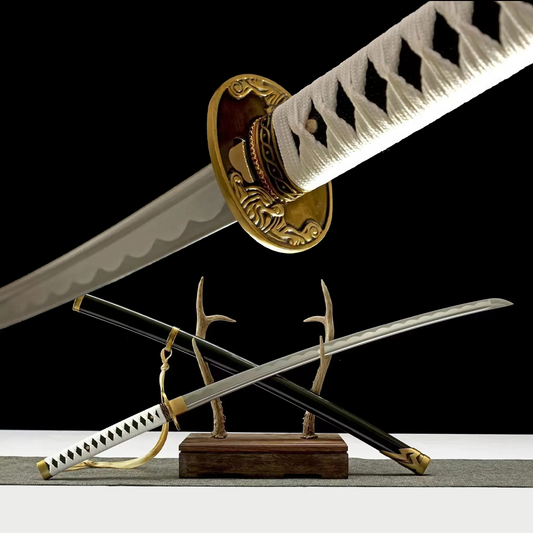
The Wado Ichimonji Katana Sword at honors Zoro's most treasured blade with meticulous attention to canonical accuracy:
• Pure white handle wrapping representing the sword's "White Dove" translation • Pristine steel finish with subtle hamon visible along the cutting edge • Perfectly balanced for two-handed kata practice • Traditional wooden scabbard with minimalist aesthetic • Includes detailed information about the sword's significance in the series
⭐⭐⭐⭐⭐ "As a longtime One Piece fan, this sword exceeded all expectations. The craftsmanship rivals pieces costing twice as much. Highly recommended!" - Sarah L., Vancouver
Gaming Culture Tributes
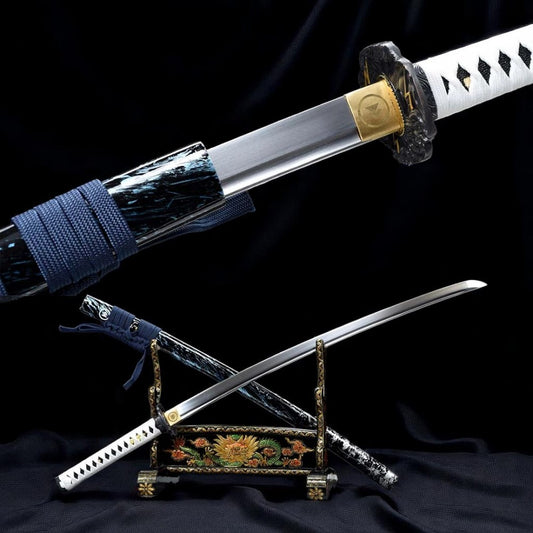
The Jin Sakai Katana – Ghost of Tsushima Edition at brings video game artistry into physical form. This premium piece captures the essence of feudal Japan as portrayed in the critically acclaimed game:
• Museum-grade 1060 carbon steel with authentic Japanese styling • Weather-worn finish simulating the battle-tested appearance from the game • Distinctive white and gold handle wrapping pattern • Custom tsuba design featuring the Sakai family mon (crest) • Includes replica of the in-game carrying case with weathered leather finish
Unique Character Weapons
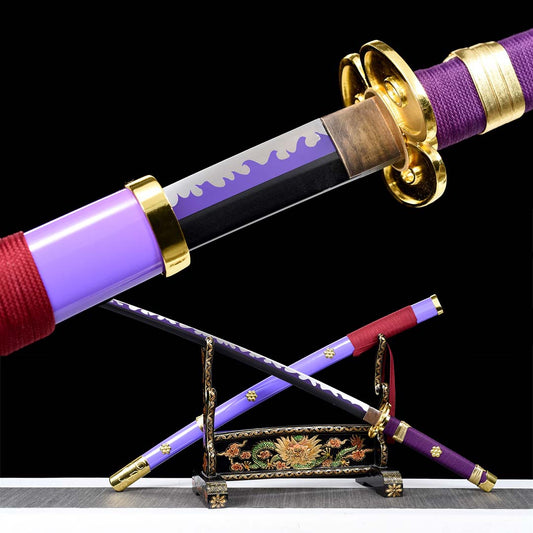
The Enma Katana Sword at represents one of the most powerful weapons in anime lore:
• Exceptional 1060 carbon steel with superior heat treatment • Distinctive purple-tinted blade finish • Ornate tsuba featuring traditional demon-warding symbols • Premium leather-wrapped scabbard with metal accents • Balanced specifically for advanced kata and demonstration use
The Sasuke Katana Sword at appeals to Naruto enthusiasts with its sleek, modern interpretation of traditional design:
• High-carbon 1060 steel with contemporary edge geometry • Striking blue and black color scheme • Lightning-inspired tsuba design • Ergonomic grip designed for single-handed techniques • Includes wall-mounting hardware for display
⭐⭐⭐⭐⭐ "The quality is outstanding for the price point. Perfect addition to my anime collection, and the steel quality is genuinely impressive." - David M., Calgary
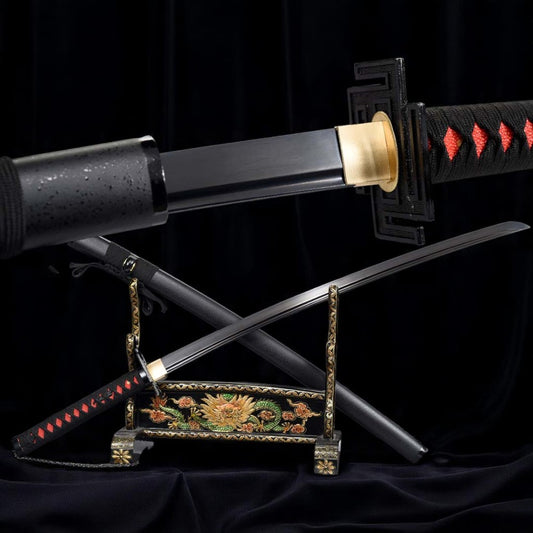
The Sandai Kitetsu Katana Sword at represents one of the most feared blades in the One Piece universe:
• Premium 1060 carbon steel with traditional differential hardening • Distinctive curved blade profile optimized for cutting performance • Intricate devil-inspired tsuba design • Traditional red and black ito wrapping pattern • Comes with detailed historical information about the Kitetsu lineage
Each piece in our collection undergoes final inspection by our Canadian customer service team, ensuring that every blade meets our rigorous standards before shipping. Payment in Canadian dollars eliminates currency conversion concerns, while our bilingual support team provides assistance in both French and English.
The Collector's Guide: Choosing Your Perfect Blade
Selecting the right sword requires careful consideration of multiple factors, from intended use to display requirements. Understanding these elements helps ensure your investment brings years of satisfaction and appreciation.
Purpose determines many design decisions. Collectors seeking display pieces can prioritize aesthetic elements like ornate tsuba designs and decorative scabbards, while martial artists require functional balance and appropriate weight distribution. Many modern enthusiasts choose pieces that excel in both categories.
Budget considerations extend beyond initial purchase price to include maintenance, display accessories, and potential insurance needs. Premium bladed weapons require climate-controlled storage and regular maintenance to preserve their condition. However, quality swords canada often appreciate in value when properly cared for, making them worthwhile investments.
Authenticity verification involves examining construction methods, materials, and historical accuracy. Reputable dealers provide detailed specifications and certificates of authenticity. Look for evidence of traditional forging techniques, appropriate steel types, and accurate historical or character details when relevant.
Display considerations affect both preservation and presentation. Direct sunlight can damage traditional lacquer finishes and cause steel discoloration over time. Proper stands support the blade correctly while showcasing its design elements. Many collectors rotate their displays to feature different pieces while allowing others to rest in protective storage.
Space requirements vary significantly between different sword types. Full-length katana need substantial display areas, while tanto and wakizashi work well in smaller spaces. Consider your available area before committing to larger pieces, and remember that proper display enhances appreciation while protecting your investment.
Research enhances collecting enjoyment by providing historical context and cultural understanding. Learning about the original purpose, fighting techniques, and cultural significance of different designs deepens appreciation for craftsmanship details that might otherwise go unnoticed.
Understanding Steel Types and Quality Standards
Steel selection forms the foundation of any quality sword, with different alloys offering distinct advantages for various applications. Understanding these differences helps collectors make informed decisions based on their specific needs and preferences.
1060 carbon steel represents an excellent balance of performance and affordability. This medium-carbon alloy contains approximately 0.60% carbon, providing sufficient hardness for edge retention while maintaining enough flexibility to resist breakage under stress. Most of our featured pieces utilize this proven formula, which responds well to traditional heat treatment methods.
1095 carbon steel offers higher carbon content (0.95%) for superior edge-holding capabilities. However, this increased hardness requires more careful heat treatment and makes the steel more brittle. Advanced collectors often prefer 1095 for its exceptional cutting performance, though it demands greater maintenance attention.
Damascus steel combines multiple steel types through pattern welding or folding techniques. The resulting blade displays distinctive wavy patterns while theoretically combining the best properties of different alloys. Modern Damascus reproductions focus primarily on aesthetic appeal, though quality examples can offer excellent performance characteristics.
Differential hardening creates varying hardness levels within a single blade through selective heat treatment. The edge (hagane) receives intense heating and rapid cooling for maximum hardness, while the spine (mune) undergoes gentler treatment for flexibility. This traditional technique produces the visible hamon line that distinguishes authentic Japanese-style blades.
Quality assessment involves multiple factors beyond steel type alone. Proper heat treatment ensures optimal hardness distribution, while grinding accuracy affects both performance and appearance. Edge geometry must maintain consistent angles throughout the blade's length, and the tang (nakago) should display appropriate construction for the handle type.
Maintenance requirements vary with steel type and intended use. Carbon steels require regular oil application to prevent rust formation, while stainless alloys offer greater corrosion resistance at the cost of reduced performance. Understanding these trade-offs helps collectors choose pieces that match their maintenance preferences and display conditions.
Why Canadian Sword Enthusiasts Choose Katana Canada
As a Canadian company, we understand the unique needs and preferences of collectors across our diverse nation. Our commitment to exceptional customer service extends beyond the initial purchase to include ongoing support and expertise sharing that builds lasting relationships with our community.
Payment in Canadian dollars eliminates currency conversion uncertainties and associated fees that can significantly increase costs when dealing with international suppliers. This transparency allows collectors to budget accurately while supporting Canadian business operations that contribute to our local economy.
Our bilingual customer service team provides expert guidance in both French and English, ensuring that collectors from coast to coast receive assistance in their preferred language. This commitment to accessibility reflects our understanding that blade collecting crosses all cultural and linguistic boundaries within Canada.
No customs fees or border delays complicate your collecting experience. When you order from Katana Canada, you can focus on the excitement of adding to your collection rather than worrying about unexpected charges or extended waiting periods that often accompany international shipments.
Our Canadian customer service team possesses deep knowledge about sword construction, historical accuracy, and maintenance requirements. This expertise helps collectors make informed decisions while providing ongoing support for care and display questions that arise over time.
Quality assurance standards reflect Canadian expectations for excellence and value. Every piece undergoes comprehensive inspection before shipment, ensuring that our reputation for quality remains intact with each transaction. Our commitment to customer satisfaction drives continuous improvement in both product selection and service delivery.
Frequently Asked Questions
Q: How can I verify the authenticity and quality of swords available in Canada?
Authentic sword quality involves multiple verification points that distinguish genuine craftsmanship from mass-produced replicas. First, examine the steel composition and forging methods – legitimate pieces specify exact carbon content (like our 1060 carbon steel options) and demonstrate traditional construction techniques. Look for evidence of differential hardening through visible hamon lines, proper blade geometry with consistent edge angles, and appropriate weight distribution. Reputable Canadian dealers provide detailed specifications, construction method descriptions, and certificates of authenticity. Additionally, authentic pieces feature traditional components like properly wrapped handles using silk or cotton ito, functional tsuba guards, and appropriate scabbard construction. At Katana Canada, every blade undergoes rigorous quality inspection by our expert team, ensuring that each piece meets strict standards for materials, construction methods, and historical accuracy before reaching Canadian collectors.
Q: What materials and steel types should I prioritize when selecting a sword?
Material selection significantly impacts both performance and longevity, making it crucial to understand different steel options available. 1060 carbon steel offers an excellent balance of hardness and flexibility, containing 0.60% carbon content that provides good edge retention while maintaining durability under stress. This steel responds well to traditional heat treatment methods and represents our most popular choice for both display and functional pieces. For collectors seeking maximum cutting performance, 1095 carbon steel contains higher carbon content (0.95%) for superior edge-holding capabilities, though it requires more careful maintenance to prevent brittleness. Damascus steel combines multiple alloys through pattern welding, creating distinctive visual patterns while potentially offering combined benefits of different steel types. Beyond the blade itself, handle materials matter significantly – premium pieces feature genuine silk or cotton wrapping (ito) over ray skin (same) for optimal grip and traditional appearance. Avoid pieces with synthetic materials or painted finishes that compromise authenticity and durability.
Q: How do I determine appropriate sizing and dimensions for my collection?
Blade dimensions directly impact display options, handling characteristics, and collection organization, making proper sizing crucial for satisfaction. Traditional katana typically measure 28-30 inches in blade length with overall lengths reaching 40-42 inches including the handle, requiring substantial display space and mounting systems. Wakizashi offer more compact options at 12-24 inch blade lengths, while tanto provide excellent starter pieces at 6-12 inches. Consider your available display area, storage capacity, and intended use when selecting sizes. For martial arts practice, blade length should correspond to your physical proportions – the sword tip should reach approximately your navel when held at your side. Display considerations include ceiling height, wall space, and furniture arrangements that accommodate safe mounting while showcasing the piece effectively. Many collectors start with mid-sized pieces (wakizashi) before expanding to full katana as their space and appreciation develop. Weight distribution matters as much as overall dimensions – properly balanced blades feel lighter and more controllable than poorly constructed alternatives regardless of actual weight measurements.
Q: What maintenance and care requirements should I expect?
Proper maintenance ensures your investment retains both value and appearance over time, while neglect can cause irreversible damage to even premium pieces. Carbon steel blades require regular attention to prevent rust formation – apply a thin coat of blade oil (choji oil or mineral oil) every few months, or more frequently in humid climates. Use a soft cloth to remove fingerprints and moisture after handling, as natural skin oils contain corrosive elements. Store weapons in climate-controlled environments away from direct sunlight, extreme temperatures, and high humidity levels that accelerate corrosion and damage traditional finishes. Handle wrapping (ito) benefits from occasional inspection for loosening or wear, though unwrapping should only be attempted by experienced collectors or professionals. The scabbard (saya) requires gentle cleaning with appropriate wood care products to maintain its finish and functionality. Avoid touching the blade directly whenever possible – use cotton gloves when necessary and never use abrasive cleaners or materials that could scratch the steel. Professional maintenance services can address serious issues like rust removal or handle rewrapping when needed. With proper care, quality bladed weapons maintain their condition indefinitely while potentially appreciating in value.
Q: What display options work best for showcasing sword collections?
Effective display combines protection, accessibility, and aesthetic appeal while showcasing your collection's finest features. Wall-mounted stands offer space-efficient solutions while creating striking visual presentations – ensure mounts support the blade at appropriate balance points without stress concentration. Horizontal displays work well for longer pieces, while vertical orientations suit smaller spaces and create dramatic visual impact. Dedicated display cabinets provide protection from dust, UV light, and environmental contaminants while allowing full visibility of your collection. Consider lighting carefully – LED systems produce minimal heat while highlighting blade patterns, handle details, and scabbard artistry without causing damage. Rotation schedules prevent constant light exposure while allowing you to feature different pieces regularly. Group displays can create thematic presentations (historical periods, anime series, steel types) that enhance educational value and visual cohesion. Avoid direct sunlight, heating vents, and high-humidity areas that can damage finishes and promote corrosion. Security considerations include discrete mounting systems that deter theft while maintaining easy access for inspection and maintenance. Many collectors combine multiple display methods to accommodate different piece sizes and significance levels within their collection.
Q: Are there legal considerations for sword ownership in Canada?
Canadian sword ownership involves federal regulations and provincial variations that collectors must understand to ensure compliance. Federally, bladed weapons are generally legal to own, purchase, and collect in Canada, though specific restrictions apply to carrying or transporting them in public spaces. Prohibited weapons lists focus primarily on concealed weapons, spring-loaded devices, and martial arts weapons designed specifically for combat rather than traditional pieces intended for collection or martial arts practice. Provincial regulations may impose additional restrictions on blade length, carrying permits, or public display that vary by location. Municipal bylaws can further regulate storage, transportation, and display requirements within city limits. Import regulations require proper documentation when purchasing from international sources, though domestic Canadian suppliers like Katana Canada eliminate these complications entirely. Age restrictions typically require purchasers to be 18 or older, with some provinces imposing additional identification requirements. Collectors should store weapons responsibly, particularly in households with children, using appropriate security measures that prevent unauthorized access. Transportation requires proper packaging and storage within vehicles, avoiding public visibility that might alarm others or violate local ordinances. When in doubt, consult local law enforcement or legal professionals for specific guidance based on your location and intended use.
Related Reads
Explore these comprehensive guides to deepen your understanding of sword craftsmanship and collecting:
For those interested in broader sword traditions, our Complete Guide to Types of Swords: From Ancient Blades to Modern Masterpieces provides detailed analysis of global sword-making traditions and their evolution through history.
Anime enthusiasts will find valuable insights in Demon Slayer Swords: The Ultimate Guide to Nichirin Blades and Their Legendary Wielders, which explores the intricate world of demon-hunting weapons and their unique properties.
One Piece fans should not miss Roronoa Zoro Swords: The Complete Guide to the Three Sword Style Legacy, offering detailed examination of the world's most famous three-sword fighting style.
Conclusion
The world of sword collecting in Canada continues to flourish as enthusiasts discover the perfect balance between historical authenticity and contemporary accessibility. Whether drawn by the spiritual discipline of traditional martial arts, the artistic beauty of masterful craftsmanship, or the emotional connection to beloved fictional characters, Canadian collectors have never had better access to premium quality pieces that honor the ancient traditions while meeting modern expectations.
From the differential hardening techniques that create distinctive hamon patterns to the meticulous silk wrapping that ensures proper grip and traditional aesthetics, every element of authentic sword construction serves both functional and artistic purposes. Understanding these details enhances appreciation while guiding collectors toward pieces that will provide lasting satisfaction and value.
Our carefully curated collection represents the finest examples available to Canadian enthusiasts, with each piece selected for its exceptional quality, historical accuracy, and cultural significance. Whether you're beginning your collecting journey with a character-inspired piece or expanding an existing collection with premium historical reproductions, the right sword awaits your discovery.
The ancient art of sword making continues to evolve, incorporating modern metallurgical knowledge with time-tested traditional techniques. This fusion ensures that today's collectors receive pieces that surpass historical examples in consistency and quality while maintaining the spiritual essence that makes these weapons truly special.
Embrace the legacy. Honor the craft. Begin your journey into the timeless world of sword collecting, where every blade carries the weight of history and the promise of future generations who will appreciate the artistry you preserve today.
 Save $90