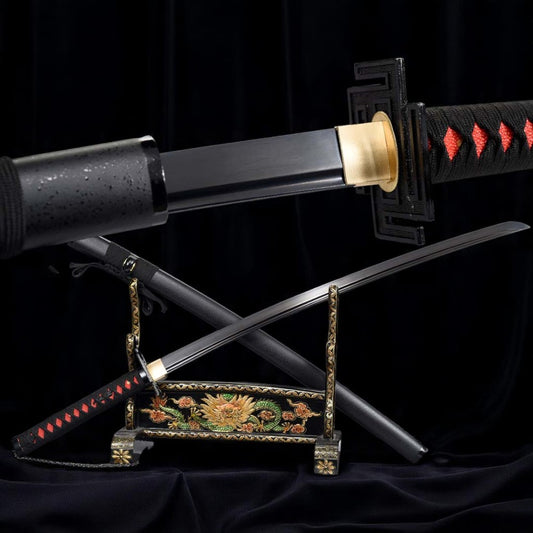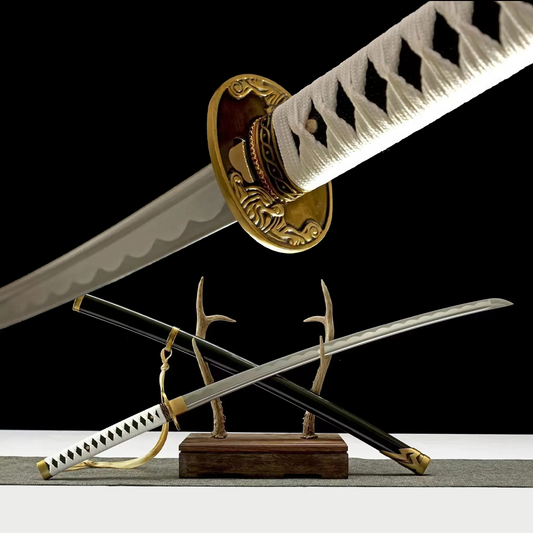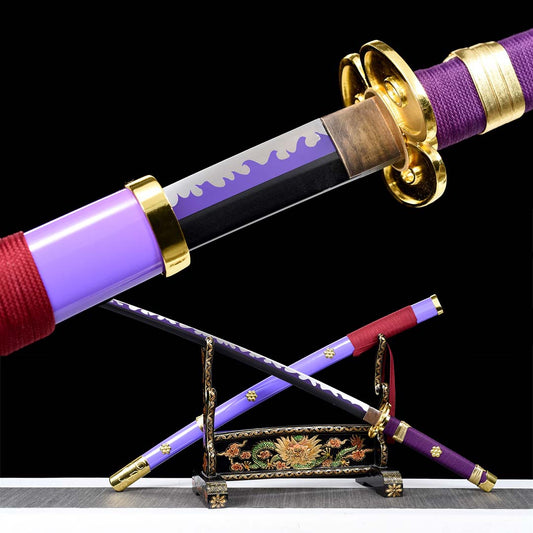

The Complete Guide to Katana Sheaths and Scabbards: Protecting Japan
Share
The soft click of bamboo against lacquered wood echoes through the dojo as the samurai slowly draws his katana from its saya. In that moment, centuries of tradition unfold—not just in the gleaming steel that emerges, but in the carefully crafted katana sheath scabbard that has protected this sacred blade through countless battles, ceremonies, and quiet moments of contemplation. The katana sheath, known as a saya in Japanese, is far more than a simple protective cover; it is an integral part of the sword's soul, a work of art that speaks to the same dedication and craftsmanship that forged the blade itself.
Table of Contents
- The Sacred Art of Saya: Understanding Katana Sheaths
- Types of Katana Sheaths and Scabbards
- Materials and Construction: The Craftsman's Touch
- Our Premium Collection: Featured Katana with Exceptional Sheaths
- Choosing the Perfect Sheath: A Collector's Guide
- Steel Quality and Sheath Compatibility
- Why Choose Katana Canada for Your Collection
- Frequently Asked Questions
The Sacred Art of Saya: Understanding Katana Sheaths
The relationship between a katana and its katana sheath scabbard transcends mere functionality—it represents one of the most profound expressions of Japanese aesthetic philosophy. In feudal Japan, the saya was considered the katana's "resting place," a sanctuary where the blade could maintain its spiritual energy between uses. Samurai warriors understood that a blade without proper sheath protection was not just vulnerable to physical damage, but also to the loss of its spiritual essence. The Complete Guide to
Traditional saya construction follows principles established over a millennium ago during the Heian period (794-1185). Master craftsmen, known as sayashi, dedicated their entire lives to perfecting the art of katana sheath scabbard making. These artisans worked closely with swordsmiths, ensuring that each protective covering was custom-fitted to its specific blade with tolerances measured in fractions of millimeters. The process began with selecting the perfect piece of honoki wood (Japanese magnolia), prized for its fine grain and natural resistance to moisture.
The cultural significance of the protective covering extends far beyond its functional purpose. In Japanese sword culture, the act of drawing the blade (nukitsuke) and returning it to its sheath (noto) were considered sacred rituals. The saya served as a visual indicator of the samurai's status and aesthetic sensibilities. Elaborate decorative elements, from intricate lacquerwork to precious metal fittings, transformed functional sheaths into works of art worthy of museum display.
During the Edo period (1603-1868), when Japan experienced relative peace, the katana sheath scabbard evolved to emphasize artistic expression over purely martial function. This era saw the development of various protective covering styles, from the understated elegance of the court nobles' sheaths to the bold, practical designs favored by the merchant class. Each style reflected the owner's social position and personal taste, making the saya an extension of the samurai's identity.
Types of Katana Sheaths and Scabbards
Understanding the different types of protective coverings reveals the rich diversity of Japanese sword culture and the practical considerations that shaped their development. Each style emerged from specific historical periods and use cases, creating a fascinating taxonomy of protective designs.
The Tachi-style saya represents one of the earliest sheath designs, developed for the curved tachi swords that preceded the katana. These protective coverings featured elaborate suspension systems with decorative hangers (ashi) and were worn edge-down from the belt. The tachi saya typically showcased the most ornate decorative work, as these swords were primarily ceremonial and status symbols rather than battlefield weapons.
Katana saya evolved from tachi designs but incorporated practical modifications for the katana's edge-up carrying position. This fundamental change required completely rethinking the sheath's internal structure and external fittings. The katana sheath scabbard featured a more streamlined profile and incorporated the kojiri (protective tip) and koiguchi (mouth opening) as integral design elements rather than mere functional additions.
Tanto saya designed for shorter blades required different proportional considerations and construction techniques. These compact protective coverings often featured more elaborate decorative work relative to their size, as they served as personal accessories worn close to the body. The tanto saya frequently incorporated precious materials like ivory, coral, or exotic hardwoods that would be impractical for larger sheaths.
Wakizashi saya bridged the gap between tanto and katana designs, creating unique challenges for craftsmen. These medium-length protective coverings needed to balance portability with protection while maintaining the aesthetic harmony essential to the daisho (matched sword set) tradition. Many wakizashi saya featured complementary but distinct decorative themes that created visual dialogue with their katana counterparts.
Modern interpretations have expanded this traditional taxonomy to include tactical sheaths designed for contemporary collectors and practitioners. These designs incorporate modern materials like reinforced polymers or metal reinforcements while maintaining traditional aesthetic principles. Some contemporary katana sheath scabbard designs feature modular components that allow customization of carrying options and protective features.
Display saya represents another modern category, designed specifically for exhibition and storage rather than regular use. These protective coverings prioritize visual impact and long-term blade protection over portability or quick access. Museum-quality display saya often incorporate climate control features and specialized mounting systems that protect valuable blades during extended exhibition periods.
Materials and Construction: The Craftsman's Touch
The construction of an authentic katana sheath scabbard represents one of the most demanding challenges in traditional Japanese craftsmanship. Master sayashi dedicate decades to perfecting techniques that have remained largely unchanged for centuries, creating protective works of art that rival the blades they house.
Honoki wood remains the gold standard for traditional saya construction. This Japanese magnolia wood possesses unique properties that make it ideal for sword protection: fine, straight grain that resists splitting, natural oils that repel moisture, and a density that provides protection without excessive weight. The wood's cellular structure creates a natural buffer that absorbs minor impacts while maintaining the precise fit essential for proper blade protection.
The construction process begins with splitting honoki logs along natural grain lines, then air-drying the wood for several years to achieve optimal moisture content. Traditional craftsmen can determine wood readiness through subtle visual and tactile cues developed through generations of experience. The selected wood pieces undergo careful inspection for defects that could compromise the protective covering's integrity or damage the blade's edge.
Modern materials have expanded sheath construction possibilities while respecting traditional aesthetic principles. High-quality hardwoods like ebony, rosewood, and maple offer different visual and protective characteristics. Some contemporary craftsmen incorporate carbon fiber reinforcements or specialized polymers that enhance durability while maintaining traditional appearance. These materials allow for thinner sheath walls without sacrificing protection, creating lighter and more comfortable carrying options.
Lacquerwork (urushi) represents perhaps the most complex aspect of saya decoration. Traditional urushi application involves dozens of thin layers applied over months of careful work. Each layer must cure completely before the next application, creating depth and luminosity impossible to achieve with modern finishes. Master lacquer artists can create incredibly complex designs using techniques like maki-e (sprinkled picture), where precious metal powders create intricate patterns within the lacquer layers.
The internal structure of a quality saya requires precision engineering disguised as simple craftsmanship. The koiguchi (mouth) must provide secure blade retention without binding, while the internal channel must guide the blade smoothly without allowing lateral movement. Traditional construction uses carefully fitted wood pieces joined with natural adhesives, creating a structure that can flex slightly without failing.
Metal fittings transform functional components into decorative elements. The kojiri (tip protector) prevents moisture infiltration while adding visual weight to the sheath's terminus. Kurikata (knob for cord attachment) must be positioned precisely for balanced carrying while providing secure attachment points. These metal components often feature matching designs that unify the sheath's overall aesthetic.
Our Premium Collection: Featured Katana with Exceptional Sheaths
At Katana Canada, we understand that the protective covering is as crucial as the blade itself in creating a truly exceptional katana. Our carefully curated collection features swords with katana sheath scabbard designs that exemplify both traditional craftsmanship and modern protective excellence.
Jin Sakai Katana – Ghost of Tsushima Edition
Inspired by the legendary samurai of Tsushima Island, this remarkable katana comes with a beautifully crafted traditional saya that captures the essence of feudal Japan. The protective covering features authentic materials and construction techniques that honor centuries of sword-making tradition.
- High-quality Carbon Steel">1060 carbon steel blade with exceptional edge retention
- Traditional wood saya with hand-applied lacquer finish
- Authentic brass fittings including kozuka and kogai accessories
- Wrapped handle with genuine silk ito over traditional same (ray skin)
- Complete with wooden storage box and maintenance kit
⭐⭐⭐⭐⭐ "The attention to detail on both the blade and sheath is incredible. The saya fits perfectly with that satisfying click when sheathing the blade. Arrived safely in Calgary with excellent packaging." - Michael T., Calgary
Shinobu Kocho Katana – Demon Slayer Edition
This stunning tribute to the Insect Hashira features a uniquely designed protective covering that reflects Shinobu's butterfly-themed aesthetic while maintaining traditional functionality. The saya incorporates symbolic elements that make this piece perfect for both display and practice.
- Precision-forged 1060 carbon steel with distinctive hamon pattern
- Custom butterfly-motif saya with intricate decorative elements
- Purple and white color scheme matching Shinobu's character design
- Hand-carved wooden components with premium finish
- Includes display stand and authentication certificate
⭐⭐⭐⭐⭐ "As a huge Demon Slayer fan, this exceeded all expectations. The sheath design is absolutely gorgeous and the craftsmanship rivals pieces costing twice as much. Shipping to Vancouver was quick and secure." - Sarah L., Vancouver
Kill Bill Katana Sword
Inspired by the iconic film series, this katana features a sleek, minimalist saya that emphasizes function and elegance. The protective covering design reflects the sword's role as both weapon and work of art, perfect for serious collectors who appreciate cinematic history.
- Premium carbon steel construction with Damascus folding patterns
- Traditionally lacquered wooden saya in classic black finish
- Real rayskin handle wrap with silk ito binding
- Brass tsuba with geometric design elements
- Complete documentation and care instructions included
⭐⭐⭐⭐⭐ "The quality is outstanding - you can feel the weight and balance immediately. The sheath protection is excellent and the traditional styling makes it perfect for my collection. Excellent customer service from the Montreal team." - Pierre D., Montreal
Michonne Katana Sword
This Walking Dead-inspired katana combines post-apocalyptic functionality with traditional Japanese aesthetics. The robust saya design prioritizes protection and durability while maintaining the visual impact that made Michonne's sword legendary.
- 1095 carbon steel blade with superior edge retention
- Reinforced wooden saya designed for heavy use
- Damascus steel construction with distinctive folding patterns
- Tactical-style fittings with enhanced durability
- Comprehensive maintenance kit and storage solutions
Michonne Katana – Premium Edition
The premium version elevates the Michonne design with enhanced materials and superior craftsmanship. The saya features museum-quality construction with advanced protective features perfect for serious collectors and practitioners.
- Master-crafted 1095 carbon steel with complex Damascus patterns
- Premium hardwood saya with multiple protective coatings
- Enhanced metal fittings with corrosion-resistant treatments
- Professional-grade storage and display accessories
- Lifetime craftsmanship warranty and authentication
⭐⭐⭐⭐⭐ "Absolutely stunning piece. The premium saya feels incredibly solid and the finish is flawless. Worth every penny for the quality upgrade. Fast delivery to Toronto and excellent packaging." - James R., Toronto
Hiroshima Katana
Our flagship piece represents the pinnacle of traditional katana craftsmanship. The Hiroshima features a museum-quality saya created using techniques passed down through generations of master craftsmen.
- Hand-forged carbon steel blade with traditional tamahagane steel elements
- Master-crafted honoki wood saya with authentic urushi lacquerwork
- Precious metal fittings including gold-accented details
- Traditional construction using historic techniques
- Complete provenance documentation and collector certification
Kiryu Katana
The Kiryu represents exceptional value in the premium katana category. Its sophisticated saya demonstrates advanced craftsmanship while maintaining traditional aesthetic principles.
- Premium carbon steel construction with complex Damascus patterns
- Hand-selected hardwood saya with traditional joinery
- Museum-quality metal fittings with historical accuracy
- Professional display and storage accessories
- Detailed craftsmanship documentation
⭐⭐⭐⭐⭐ "The Kiryu exceeded my expectations in every way. The saya craftsmanship is absolutely incredible - you can see the hours of work in every detail. Proud to display this in my Edmonton home." - David K., Edmonton
Katana Customizer
For collectors seeking the ultimate personalization, our Katana Customizer service allows you to create a completely bespoke saya designed to your specifications. Work directly with our craftsmen to create a protective covering that reflects your vision while maintaining traditional quality standards.
- Complete customization of wood species, finish, and decoration
- Traditional or modern fitting options
- Personalized engraving and design elements
- Expert consultation throughout the design process
- Museum-quality construction and lifetime warranty
Choosing the Perfect Sheath: A Collector's Guide
Selecting the ideal protective covering requires understanding both aesthetic preferences and practical considerations. A well-chosen saya enhances not only the sword's protection but also its visual impact and handling characteristics. Expert collectors evaluate several key factors when assessing sheath quality and suitability.
Fit and tolerance represent the most critical technical consideration. A properly fitted saya provides secure blade retention without binding during drawing or sheathing movements. The koiguchi opening should allow smooth entry while maintaining enough friction to prevent accidental blade exposure. Traditional craftsmen aim for a fit tight enough that the sword will not fall from an inverted protective covering, yet loose enough for single-handed drawing in emergency situations.
Wood quality directly impacts both protection and longevity. Premium sheaths use carefully selected hardwoods with appropriate grain orientation and density characteristics. Look for consistent grain patterns without knots or defects that could weaken the structure. The wood should feel solid and substantial without excessive weight that would compromise balance during use or display.
Finish quality reveals the craftsman's skill level and attention to detail. Traditional urushi lacquer should show consistent color and depth without brush marks or contamination spots. Modern finishes should demonstrate similar uniformity while providing appropriate protection against moisture and handling damage. Quality finishes enhance the wood's natural beauty while providing necessary protection.
For serious practitioners, durability considerations become paramount. Training sheaths must withstand repeated drawing and sheathing cycles without loosening or developing play that could damage the blade edge. Look for reinforcement at stress points and construction techniques that distribute forces evenly throughout the sheath structure.
Display compatibility influences protective covering selection for collectors prioritizing exhibition over use. Display-oriented saya can incorporate more delicate materials and finishes that would be impractical for regular handling. Consider how the sheath will appear in various lighting conditions and viewing angles when selecting decorative elements and color schemes.
Maintenance requirements vary significantly between different sheath types and materials. Traditional urushi finishes require periodic care and professional restoration to maintain their appearance and protective qualities. Modern synthetic finishes may offer easier maintenance but lack the depth and character of traditional materials. Consider your commitment to ongoing care when selecting sheath types.
Historical accuracy matters for collectors focused on authentic period representations. Research appropriate sheath styles for specific time periods and sword types to ensure historical consistency. Museum-quality reproductions should demonstrate understanding of traditional construction techniques and decorative conventions.
Steel Quality and Sheath Compatibility
The relationship between blade steel and sheath construction represents a crucial but often overlooked aspect of katana ownership. Different steel types require specific protective considerations, and understanding these relationships ensures optimal preservation of your investment.
1060 carbon steel blades, featured in many of our entry and mid-level katana, require sheaths that balance protection with accessibility. This steel grade offers excellent edge retention and traditional forging characteristics while maintaining affordability for serious collectors. Compatible protective coverings should provide moisture protection without creating environments that could promote corrosion. Traditional wood construction with appropriate finishes offers ideal protection for 1060 steel blades.
1095 carbon steel represents a premium option with higher carbon content that delivers superior edge retention and authentic traditional properties. However, this increased carbon content also requires more careful protection from moisture and environmental factors. Sheaths for 1095 blades often incorporate enhanced moisture barriers and climate control features. The Michonne collections showcase how premium protective coverings can provide optimal protection for high-carbon steel while maintaining traditional aesthetics.
Damascus steel constructions, featured in several of our premium offerings, combine multiple steel types to create complex folding patterns and performance characteristics. These blades require sheaths that protect the intricate surface patterns from damage while highlighting their visual appeal. Premium hardwood protective coverings with museum-quality finishes provide appropriate protection while showcasing the blade's artistic elements.
Traditional saya construction accounts for steel expansion and contraction caused by temperature changes. Quality sheaths maintain consistent fit across seasonal temperature variations without binding or developing excessive play. This requires precise engineering of internal dimensions and selection of wood species with appropriate expansion coefficients.
Modern protective treatments can enhance traditional sheath designs without compromising authenticity. Specialized linings and moisture control systems provide enhanced protection for valuable blades while maintaining traditional external appearance. These treatments are particularly valuable for high-end pieces like our Hiroshima and Kiryu models, where blade protection justifies additional investment in sheath technology.
For collectors interested in authentic katana with traditional steel treatments, understanding the interaction between blade and sheath materials becomes essential. Authentic tamahagane steel requires specific protection protocols that honor traditional methods while providing modern security standards.
Why Choose Katana Canada for Your Collection
As a Canadian company, we understand the unique needs of collectors across our vast country. From the Maritime provinces to British Columbia, Canadian enthusiasts deserve access to authentic, high-quality katana with exceptional protective coverings that protect their investments while honoring traditional craftsmanship.
Our commitment to excellence extends beyond simply offering premium products. We provide comprehensive Canadian customer service with support available in both French and English, ensuring every collector receives the guidance needed to make informed decisions. Our team includes experienced practitioners and collectors who understand both the technical and aesthetic aspects of katana ownership.
Payment in Canadian dollars eliminates currency conversion uncertainties and allows precise budgeting for your acquisitions. No customs fees simplify the acquisition process, removing unexpected costs that can impact collection planning. These practical advantages, combined with our expertise in Canadian import regulations, ensure smooth transactions from selection to delivery.
Our relationship with master craftsmen and traditional workshops enables us to offer authentic pieces that meet the most demanding collector standards. We personally inspect each katana and its accompanying protective covering to ensure quality consistency and authenticity. This hands-on approach guarantees that every piece meets our exacting standards before reaching your collection.
The diversity of our collection reflects understanding of Canadian collectors' varied interests and experience levels. Whether you're beginning your journey with traditional pieces or seeking hand forged katana for advanced practice, our selection provides options that grow with your expertise and appreciation.
Educational support distinguishes our service from simple retail transactions. We provide detailed information about traditional techniques, proper care, and historical context that enhances ownership satisfaction. This educational approach helps collectors make informed decisions while developing deeper appreciation for their acquisitions.
Our commitment extends to long-term collector relationships rather than simple transactions. We provide ongoing support for maintenance questions, upgrade recommendations, and collection development guidance. This partnership approach ensures your collection continues meeting your evolving needs and interests.
Frequently Asked Questions
Q: How can I tell if a katana sheath is authentically made versus a modern reproduction?
Authentic traditional saya construction exhibits specific characteristics that distinguish master craftsmanship from mass-produced alternatives. Examine the wood grain alignment - authentic pieces use carefully selected honoki wood with consistent, straight grain that runs parallel to the blade's length. The koiguchi (mouth opening) should show hand-fitting marks and slight asymmetries that indicate individual craftsmanship rather than machine precision. Traditional urushi lacquer demonstrates depth and luminosity that synthetic finishes cannot replicate, often showing subtle texture variations from brush application. Metal fittings on authentic pieces typically display hand-finishing marks and slight irregularities that machine-made components lack. Weight distribution provides another indicator - authentic saya feel balanced and substantial without unnecessary bulk, reflecting generations of refinement in traditional proportions. Finally, examine the internal channel construction. Traditional methods create smooth, consistent surfaces achieved through patient hand-shaping rather than modern machining techniques. These subtle indicators, when combined, distinguish authentic traditional construction from contemporary interpretations.
Q: What materials are best for long-term katana blade protection in Canadian climates?
Canadian climate variations, from humid Maritime summers to dry Prairie winters, require carefully selected sheath materials that manage moisture fluctuations effectively. Traditional honoki wood remains superior for stable protection due to its natural oils and cellular structure that buffers humidity changes without dramatic dimensional changes. Quality hardwoods like maple or cherry, locally available in Canada, can provide excellent alternatives when properly treated and finished. The finish type becomes crucial in Canadian climates - traditional urushi lacquer offers superior moisture regulation, creating a breathing barrier that prevents condensation while blocking external humidity. Modern polyurethane finishes, while durable, can trap moisture and create corrosion-promoting conditions. For extreme climate variations, consider museum-quality storage solutions that incorporate climate control elements within traditional protective covering construction. Avoid synthetic materials that don't breathe or metal components that can create temperature differentials leading to condensation. Regular seasonal maintenance, including gentle oiling of metal fittings and inspection for finish integrity, becomes essential in Canadian conditions where freeze-thaw cycles can stress materials over time.
Q: How do I determine the correct saya dimensions for my specific katana blade?
Proper saya fitting requires precise measurements and understanding of traditional proportional relationships between blade and protective covering. Begin by measuring the nagasa (blade length) from the habaki notch to the kissaki tip, as this determines the internal channel length. The saya length should extend approximately 2-3 centimeters beyond the blade tip to accommodate the kojiri fitting and provide adequate protection. Measure the blade width at the habaki area and at the midpoint, as these dimensions determine the internal channel taper that ensures proper fit without binding. The curvature (sori) measurement affects internal channel shaping and overall saya profile - record the maximum curvature point and degree of curve for accurate reproduction. Handle length influences overall proportions and carrying balance, though it doesn't directly affect saya construction. For existing blades requiring new protective coverings, consider consulting with experienced craftsmen who can assess wear patterns and recommend adjustments for optimal fit. Traditional proportions follow established relationships developed over centuries of refinement, but individual blade characteristics may require modifications to standard dimensions. Document all measurements carefully, as even small errors can result in binding, play, or inadequate protection that could damage valuable blades over time.
Q: What specific maintenance does a high-quality wooden saya require, and how often?
Traditional wooden saya maintenance follows seasonal cycles that account for environmental changes and usage patterns. Monthly inspection should examine finish integrity, looking for chips, scratches, or wear areas that could admit moisture or damage the blade during drawing. Clean external surfaces gently with soft, dry cloth, avoiding harsh cleaners or excessive moisture that could penetrate the finish or grain. Every three to six months, depending on usage and climate, apply appropriate maintenance products - traditional saya benefit from specialized wood oils that nourish the substrate without compromising lacquer finishes. Annual deep maintenance should include professional inspection of internal channel condition, checking for wear spots or rough areas that could damage blade edges. Metal fittings require periodic attention with appropriate cleaning and light oiling to prevent corrosion, particularly in humid climates or with frequent handling. For museum-quality pieces with urushi finishes, professional restoration every five to ten years maintains optimal appearance and protection. Storage environment significantly impacts maintenance frequency - climate-controlled conditions reduce stress on materials and extend maintenance intervals. Document maintenance activities and any changes in fit or condition, as these records help identify developing issues before they become serious problems. Quality saya construction, properly maintained, can provide centuries of protection while developing the patina and character that enhance collector value.
Q: Can I display my katana with the saya, and what are the best practices for long-term exhibition?
Displaying katana with their protective coverings creates visually striking presentations while providing educational value about traditional sword culture. However, long-term exhibition requires specific considerations to protect both blade and sheath from environmental damage and security concerns. Position displays away from direct sunlight, which can fade lacquer finishes and cause uneven heating that leads to material stress. Maintain stable humidity levels between 45-55% to prevent wood movement and metal corrosion - sudden humidity changes can cause binding or excessive play in the fit. Secure mounting systems should support the katana without stress concentration points that could damage saya construction over time. Consider rotation schedules that alternate between full display and protective storage, particularly for valuable pieces with authentic finishes. Lighting should use LED systems with UV filtering to minimize photochemical damage while providing adequate illumination for appreciation. Case displays offer enhanced protection from dust, handling, and environmental fluctuations while maintaining visual access. For public display situations, security considerations become paramount - ensure mounting systems prevent unauthorized removal while allowing legitimate viewing. Document display conditions and any changes in appearance or condition, as exhibition can accelerate wear in ways not immediately apparent. Professional conservation assessment before long-term display ensures valuable pieces receive appropriate protection protocols that preserve their condition and collector value.
Q: Are there legal considerations for owning katana with traditional saya in Canada?
Canadian federal and provincial laws generally permit katana ownership and collection, but specific regulations vary by jurisdiction and blade characteristics. Under federal law, katana typically fall under antique or historical reproduction categories rather than prohibited weapons, provided they meet specific criteria regarding age, construction, and intended use. Traditional saya construction doesn't affect legal status, as protective coverings are considered accessories rather than weapon components for classification purposes. However, some municipalities maintain bylaws restricting display or transportation of bladed weapons, regardless of historical significance or collector value. Importing katana requires compliance with Canada Border Services Agency regulations, which examine blade length, construction methods, and intended use. Documentation proving historical accuracy, collector intent, and appropriate craftsmanship can support legal ownership and importation. Transportation requires discrete packaging and awareness of local restrictions - some provinces prohibit carrying bladed weapons in public spaces regardless of cultural or collector significance. Insurance considerations become important for valuable pieces, as standard homeowner policies may not cover specialized collections without specific riders or modifications. Consult local law enforcement or legal professionals for jurisdiction-specific guidance, as regulations can change and interpretation may vary between enforcement agencies. Responsible ownership includes secure storage, appropriate handling practices, and awareness of local community standards regarding historical weapon collections. Membership in recognized collector organizations can provide additional legal resources and community support for navigation regulatory requirements.
Related Reads
For collectors interested in deepening their understanding of Japanese sword culture, we recommend exploring our comprehensive guide Scabbard vs Sheath: The Art of Protecting a Katana, which delves into the technical distinctions between different protective systems and their historical development.
Those seeking to understand the broader context of sword development should read The History of the Katana – From Samurai Symbol to Modern Icon, which traces the evolution of these legendary blades through Japan's cultural transformation.
For practical guidance on customization options, our Katana Parts Explained – A Complete Customization Guide provides detailed information about traditional components and modern alternatives.
Anime enthusiasts will appreciate Mini Katana: The Perfect Gateway to Japanese Sword Culture and Demon Slayer Fandom, which explores how contemporary media has renewed interest in traditional sword arts.
Essential maintenance information can be found in How to Care for a Katana – Cleaning, Oiling & Storage Tips, providing practical guidance for preserving your investment.
Conclusion
The katana sheath scabbard represents far more than simple blade protection—it embodies centuries of Japanese craftsmanship, aesthetic philosophy, and practical wisdom. From the carefully selected honoki wood to the intricate urushi lacquerwork, every element of traditional saya construction reflects deep understanding of both material properties and cultural significance. Whether you're drawn to historically accurate reproductions like our Hiroshima collection or contemporary interpretations inspired by popular culture, the quality of the protective covering directly impacts your ownership experience and the blade's long-term preservation.
As you build your collection, remember that the most expensive katana becomes merely an ornament without proper protection and care. The masters who developed these traditions understood that true appreciation comes from understanding every aspect of the sword's construction and preservation. Choose pieces that speak to your aesthetic sensibilities while meeting practical requirements for your intended use and display goals.
At Katana Canada, we're committed to helping you navigate this fascinating world of traditional craftsmanship and modern collecting. Whether you're taking your first steps with an entry-level piece or seeking museum-quality additions to an established collection, our expertise and carefully curated selection ensure you'll find the perfect katana and saya combination. Explore our complete collection today and discover how the right protective covering can transform your appreciation of these legendary blades while protecting your investment for generations to come.
 Save $90