
The Complete Guide to Katana Sheaths: Traditional Japanese Craftsmanship Explained
The soft whisper of wood against steel echoes through the centuries as a samurai draws his blade from its protective embrace. The katana sheath, known as saya in Japanese, represents far more than mere protection—it embodies the soul of Japanese craftsmanship, where functionality meets artistry in perfect harmony. For collectors and enthusiasts across Canada, understanding the intricate world of katana accessories opens a gateway to appreciating the complete martial tradition that has captivated warriors and artists for over a millennium. Whether you seek an ornate katana sheath adorned with traditional lacquerwork or a simple, functional saya for your blade collection, these protective housings continue to define the essential relationship between warrior and weapon.

Table of Contents
- The Sacred Art of Saya Craftsmanship
- Components and Construction of Traditional Sheaths
- Materials and Finishing Techniques
- Our Premium Katana Collection with Authentic Sheaths
- Selecting the Perfect Sheath for Your Blade
- Understanding Steel Quality and Sheath Compatibility
- Why Choose Katana Canada for Authentic Pieces
The Sacred Art of Saya Craftsmanship
The tradition of katana sheath making, or saya-shi, emerged during Japan's Heian period (794-1185) when the curved sword design first appeared. These master craftsmen developed techniques that would remain virtually unchanged for centuries, creating protective housings that perfectly complemented each blade's unique geometry and spiritual significance. The Complete Guide to
Traditional saya construction required intimate collaboration between the swordsmith and sheath maker. Each authentic Japanese katana demanded a custom-fitted katana sheath, carved from carefully selected woods like honoki (Japanese magnolia) or kiri (paulownia). The wood's natural properties provided the ideal environment for steel preservation while allowing the blade to rest without moisture buildup that could cause corrosion.
The spiritual dimension of saya craftsmanship extended beyond mere function. Samurai believed the sheath held part of the sword's spirit when the blade was at rest. Elaborate decoration techniques including maki-e lacquerwork, mother-of-pearl inlay, and intricate tsuba (hand guards) transformed functional items into works of art that reflected the warrior's status and aesthetic sensibilities.
Traditional Japanese sword mountings evolved through distinct periods, each reflecting the political and cultural changes of their era. From the practical military mountings of the Kamakura period to the ornate ceremonial pieces of the Edo era, saya design chronicled Japan's transformation from a warrior society to a peaceful nation where swords became symbols of heritage rather than tools of war.
Components and Construction of Traditional Sheaths
Understanding the anatomy of a traditional katana sheath reveals the sophisticated engineering behind these seemingly simple objects. The saya consists of multiple precisely fitted components, each serving specific protective and aesthetic functions that have been refined over centuries of practical use.
The primary body, carved from a single piece of select hardwood, houses the blade in a perfect-fit channel called the nakago-ana. Master craftsmen achieve this precision through a painstaking process of gradual carving and repeated test-fitting, ensuring the blade slides smoothly without excess movement that could cause damage through friction or impact.
The koiguchi (mouth of the carp) forms the sheath's opening, traditionally reinforced with buffalo horn or hardwood to prevent splitting from repeated draw cycles. This critical junction must maintain precise tolerances—too tight and the blade binds, too loose and the sword rattles dangerously within its housing. Adjacent to this sits the kaeshizuno, a small wooden peg that helps secure the blade and prevents accidental ejection.
At the sheath's terminus, the kojiri (small bottom) protects the wood from impact damage while often serving as a mounting point for decorative elements. Traditional designs incorporate subtle curves and chamfers that both strengthen the structure and contribute to the overall aesthetic harmony. For enthusiasts seeking to understand these traditional elements, our Complete Guide to Katana Sheaths and Scabbards provides detailed insights into authentic construction methods.
Materials and Finishing Techniques
The selection of materials for traditional katana sheaths reflects centuries of empirical knowledge about wood properties, climate resistance, and aesthetic potential. Japanese craftsmen prized specific timber species for their unique characteristics, creating a sophisticated hierarchy of materials based on intended use and social status.
Honoki (Magnolia obovata) emerged as the premier choice for high-quality saya construction. This light, stable wood resists warping and splitting while possessing natural antimicrobial properties that help preserve the steel blade. Its fine, even grain accepts lacquer beautifully, creating smooth surfaces that won't scratch the polished blade during draw cycles.
The finishing process transforms raw wood into protective art through multiple specialized techniques. Traditional urushi lacquer application requires dozens of thin coats, each hand-rubbed and polished to create a mirror-like surface that's both beautiful and incredibly durable. Master lacquer artists developed countless decorative techniques including maki-e (sprinkled metal powder designs) and raden (mother-of-pearl inlay) that elevated functional sheaths into treasured heirlooms. Each completed katana sheath represented months of careful craftsmanship, where every surface received meticulous attention to ensure both beauty and longevity.
Japanese lacquerware techniques reached extraordinary sophistication during the Edo period, when peaceful times allowed craftsmen to focus on artistic refinement rather than purely functional concerns. These traditional methods continue to influence modern katana sheath production, ensuring that contemporary pieces maintain authentic aesthetic and protective qualities.

Our Premium Katana Collection with Authentic Sheaths
Our carefully curated selection showcases exceptional katana specimens paired with traditionally-crafted sheaths that honor centuries of Japanese craftsmanship. Each piece in our best-selling collection represents the perfect marriage of functional protection and artistic expression that defines authentic Japanese sword culture.
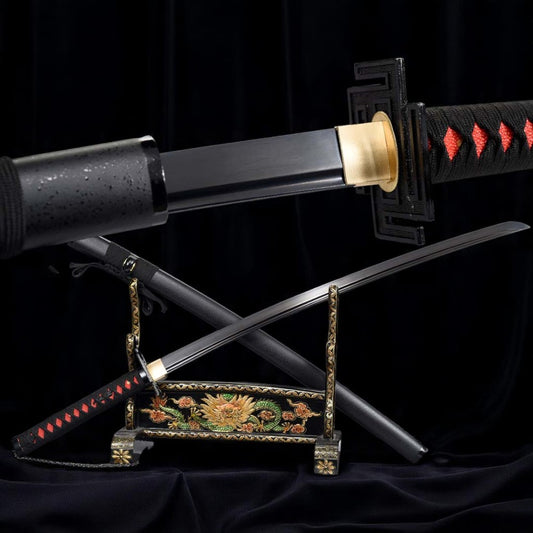
Jin Sakai Katana – Ghost of Tsushima Edition
This remarkable piece captures the essence of feudal Japan through meticulous attention to traditional construction methods and materials. The authentic wooden saya features deep black lacquer finish with subtle texture that evokes the windswept landscapes of Tsushima Island.
• Constructed from select hardwood with traditional joinery techniques • Hand-applied urushi lacquer finish in deep charcoal black • Precise blade-to-sheath tolerances ensuring smooth draw action • Authentic koiguchi (opening) reinforcement preventing wear damage • Traditional kojiri (end cap) with period-appropriate styling
⭐⭐⭐⭐⭐ "The craftsmanship on this Ghost of Tsushima katana exceeded my expectations. The saya fits perfectly and the lacquer work is museum quality. Shipping to Calgary was faster than promised!" - David M., Calgary, AB
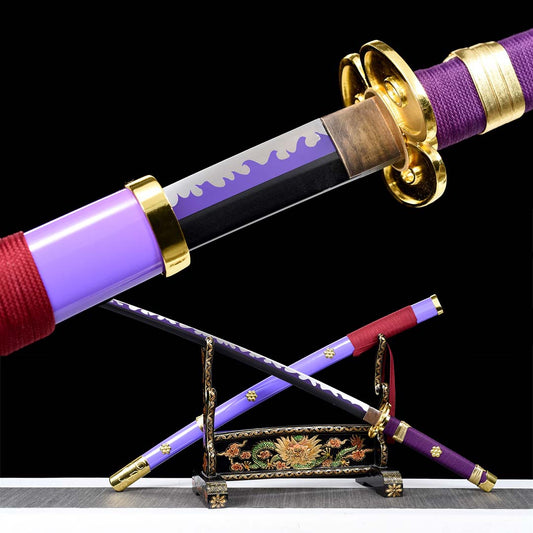
Shinobu Kocho Katana – Demon Slayer Edition
Inspired by the Insect Hashira's elegant fighting style, this exquisite piece features a katana sheath decorated with subtle butterfly motifs that complement the blade's unique design philosophy. The saya showcases the delicate balance between strength and beauty that characterizes the finest Japanese sword accessories.
• Premium wood construction with butterfly-inspired lacquer details • Gradient color finish transitioning from deep purple to lighter tones • Hand-carved texture elements echoing traditional nature themes • Reinforced construction suitable for display and careful handling • Authentic mounting hardware in traditional Japanese styling
⭐⭐⭐⭐⭐ "As a Demon Slayer fan, I was amazed by the attention to detail in Shinobu's katana. The purple gradient on the saya is absolutely stunning, and the quality justifies every penny. Highly recommend!" - Sarah L., Vancouver, BC
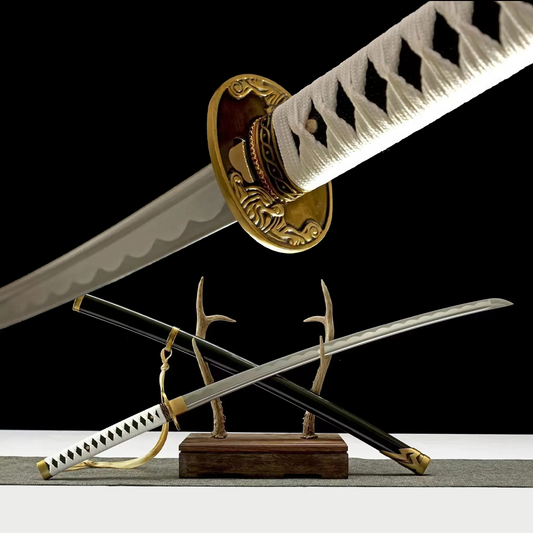
Kill Bill Katana Sword
This iconic piece pays homage to cinema history while maintaining authentic Japanese construction standards. The traditional black saya provides elegant contrast to the Damascus steel blade, creating a harmonious aesthetic that bridges Eastern tradition and Western appreciation.
• Classic black lacquer finish in traditional Japanese style • Museum-quality wood construction with precise tolerances • Hand-finished details maintaining authentic craft traditions • Durable protective coating suitable for long-term display • Traditional Japanese joinery techniques throughout construction
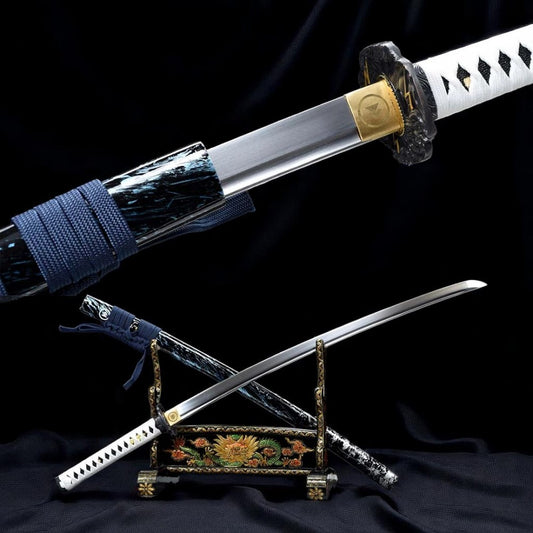
Michonne Katana Sword
Drawing inspiration from post-apocalyptic survival themes, this functional katana features a ruggedly handsome sheath designed for both protection and practical use. The saya balances traditional aesthetics with contemporary durability requirements.
• Weather-resistant finish suitable for various display environments • Robust construction designed for handling and demonstration • Traditional wood core with enhanced protective coating • Authentic Japanese styling with modern durability enhancements • Precision-fitted blade channel preventing movement damage
⭐⭐⭐⭐⭐ "The Michonne katana's build quality is exceptional. The saya feels solid and the fit is perfect. Great addition to my Walking Dead collection. Excellent service from this Canadian company!" - Michael R., Toronto, ON
Michonne Katana – Premium Edition
This enhanced version elevates the classic design with premium materials and additional decorative elements. The upgraded saya showcases advanced finishing techniques while maintaining the functional excellence expected from traditional Japanese sword accessories.
• Premium hardwood construction with enhanced grain selection • Multiple lacquer coats creating deep, lustrous finish • Hand-detailed decorative elements in traditional style • Reinforced mounting points for superior durability • Museum-quality protective coating ensuring long-term preservation
Hiroshima Katana
Named for one of Japan's most historically significant cities, this piece embodies the resilience and beauty of Japanese culture through its magnificent saya construction. Traditional craftsmanship meets contemporary quality standards in this exceptional display piece.
• Select Japanese-inspired hardwood with traditional grain orientation • Hand-applied finish using time-honored lacquer techniques • Precisely fitted blade channel ensuring perfect protection • Authentic Japanese hardware and mounting systems • Traditional decorative elements reflecting historical significance
⭐⭐⭐⭐⭐ "Purchased the Hiroshima katana for my home office display. The historical significance combined with the beautiful saya makes it a perfect conversation piece. Outstanding quality!" - Jennifer K., Montreal, QC
Kiryu Katana
This distinctive piece showcases the artistic potential of traditional saya construction through its unique decorative approach. The sheath design reflects the sophisticated aesthetic sensibilities that characterize the finest examples of Japanese sword craft.
• Artistic lacquer work featuring traditional Japanese design motifs • Premium wood selection ensuring structural integrity • Hand-finished details maintaining authentic craft standards • Durable construction suitable for regular handling and display • Traditional Japanese mounting hardware throughout
Katana Customizer
For enthusiasts seeking truly personalized pieces, our custom katana service includes bespoke saya construction tailored to individual preferences and specifications. This service allows collectors to create unique pieces that reflect personal taste while honoring traditional craftsmanship principles.
Each piece in our collection demonstrates the enduring appeal of authentic Japanese sword accessories. For those interested in exploring additional options, our anime sword collection offers pieces inspired by popular series while maintaining traditional construction standards.
Selecting the Perfect Sheath for Your Blade
Choosing the appropriate katana sheath requires understanding the relationship between blade characteristics, intended use, and aesthetic preferences. Traditional Japanese swordcraft emphasizes harmony between all components, making proper saya selection crucial for both protection and visual appeal.
Blade length represents the most fundamental consideration, as traditional saya construction requires precise tolerances throughout the entire blade channel. Standard katana lengths range from 24 to 30 inches, with each requiring custom-fitted channels that accommodate the specific curvature and taper unique to individual blades. Modern production techniques allow for standardized sizing while maintaining the precise fit essential for proper protection.
The blade's intended use significantly influences katana sheath selection criteria. Display pieces benefit from sheaths emphasizing aesthetic beauty and long-term preservation, often featuring elaborate lacquer work and decorative elements. Functional katana require sheaths prioritizing quick, smooth draw action and resistance to repeated use cycles. Understanding these distinctions helps collectors make informed decisions aligned with their specific needs and interests.
Construction quality indicators include wood grain orientation, joint precision, and hardware integration. Premium sheaths feature straight, even grain running parallel to the blade channel, ensuring maximum strength and minimal warping potential. Joint lines should be virtually invisible, indicating skilled craftsmanship and proper wood selection. Hardware elements like the koiguchi and kojiri should integrate seamlessly with the wood, showing no gaps or misalignment that could compromise structural integrity.
For collectors beginning their journey, our entry-level collection provides excellent starting points that maintain authentic construction standards while offering accessible pricing. More experienced enthusiasts might explore our high-end selection featuring premium materials and advanced finishing techniques.

Understanding Steel Quality and Sheath Compatibility
The relationship between blade steel composition and sheath design represents a crucial aspect of traditional Japanese sword craft often overlooked by casual collectors. Different steel types require specific environmental conditions for optimal preservation, making katana sheath material selection and construction techniques essential considerations for long-term blade maintenance.
1060 carbon steel, popular in functional katana construction, benefits from sheaths that maintain stable humidity levels while allowing controlled air circulation. Traditional wood selections like honoki naturally regulate moisture content, preventing the condensation buildup that can cause rust formation in carbon steel blades. The wood's cellular structure acts as a natural humidity buffer, absorbing excess moisture during humid conditions and releasing it during dry periods.
1095 carbon steel, known for its higher carbon content and superior edge retention, requires even more careful environmental management. These blades demonstrate increased sensitivity to moisture and temperature fluctuations, making premium sheath construction with advanced protective finishes essential for preservation. Quality urushi lacquer creates an effective moisture barrier while maintaining the breathability necessary for long-term steel preservation.
Damascus steel patterns, created through folding and forge-welding techniques, showcase distinctive grain structures that require special consideration during sheath selection. The layered construction can create slight variations in blade geometry that demand precisely fitted saya channels. Additionally, the contrasting steel layers may respond differently to environmental conditions, emphasizing the importance of stable storage environments provided by quality sheaths.
Traditional Japanese sword preservation techniques, detailed in our katana care guide, emphasize the critical role proper sheaths play in maintaining blade condition over decades or centuries. Understanding these principles helps modern collectors make informed decisions about sheath selection and maintenance practices.
Why Choose Katana Canada for Authentic Pieces
As a Canadian company, we understand the unique needs of collectors across our vast nation, from the coastal provinces to the prairie heartland. Our commitment to authentic Japanese craftsmanship, combined with Canadian customer service standards, creates an unmatched experience for sword enthusiasts seeking genuine quality and reliable support.
Our extensive experience with Canadian customs regulations ensures smooth delivery without the complications often associated with international sword shipments. Payment in Canadian dollars eliminates currency conversion concerns while providing transparent pricing that reflects true value. Our bilingual customer service team provides support in both French and English, ensuring clear communication throughout your collecting journey.
No customs fees surprise our customers, as we handle all import considerations as part of our comprehensive service. This Canadian advantage means the price you see represents your complete investment, without hidden costs that can dramatically increase final expenses. Our understanding of Canadian regulations ensures compliance with all federal and provincial requirements governing decorative sword ownership and display.
Quality authentication remains our primary focus, with each piece in our custom katana collection meeting rigorous standards for materials, construction, and finishing. Our relationships with skilled craftsmen ensure access to authentic techniques and premium materials that honor traditional Japanese standards while meeting contemporary quality expectations.
Frequently Asked Questions
Q: How can I verify the authenticity of a traditional katana sheath?
Authentic katana sheaths display several distinctive characteristics that distinguish them from mass-produced replicas. Examine the wood grain orientation, which should run parallel to the blade channel for maximum strength. Traditional joinery techniques create nearly invisible seam lines where the two halves meet, indicating skilled hand-craftsmanship rather than machine production. The koiguchi (mouth opening) should show proper proportions and reinforcement, typically featuring horn or hardwood inserts that prevent splitting. Quality lacquer work displays even coverage without brush marks, drip patterns, or color inconsistencies that characterize inferior finishes. Weight distribution should feel balanced and substantial, reflecting the dense hardwoods traditionally used in authentic construction. Hardware elements like the kojiri should integrate seamlessly with the wood body, showing no gaps or poor fit that indicates compromise construction methods.
Q: What wood types are most suitable for traditional saya construction?
Traditional Japanese saya construction relies on specific wood species selected for their unique properties and suitability for sword storage. Honoki (Magnolia obovata) remains the premier choice, prized for its light weight, dimensional stability, and natural antimicrobial properties that help preserve steel blades. The wood's fine, even grain accepts lacquer beautifully while resisting the warping and splitting that plague inferior species. Kiri (Paulownia) offers similar benefits with slightly different aesthetic characteristics, making it popular for decorative applications. Both species demonstrate low moisture content and minimal resin production, preventing chemical reactions that could damage blade finishes. Some contemporary craftsmen utilize carefully selected maple or cherry woods, though these require extensive preparation and treatment to match traditional species' performance. The selection process considers grain direction, growth ring consistency, and absence of knots or other defects that could compromise structural integrity during long-term use.
Q: How should I measure my katana to ensure proper sheath fit?
Proper measurement ensures optimal protection and aesthetic harmony between blade and sheath. Begin with overall length measurement from the tip of the blade to the end of the tang, accounting for the complete steel structure that will sit within the saya. Record the maximum blade width, typically occurring near the base, as this determines the channel width throughout the sheath body. Measure the spine thickness at its thickest point, usually near the habaki area, to ensure adequate clearance for smooth insertion and removal. Document the curvature (sori) by measuring the distance between a straight line connecting the tip and base points and the deepest point of the blade's curve. Note any unique geometric features like ridges, fuller grooves, or unusual tip configurations that require accommodation in the sheath design. These measurements enable proper saya selection or custom construction that provides perfect fit without binding or excessive play that could cause damage during handling.
Q: What maintenance does a traditional katana sheath require?
Proper sheath maintenance preserves both the protective housing and the valuable blade it contains. Regular inspection should identify any signs of moisture accumulation, wood movement, or finish degradation that could compromise protection. Clean the exterior gently with a soft, dry cloth to remove dust and handling oils, avoiding harsh chemicals that could damage traditional lacquer finishes. The interior channel requires careful attention, as accumulated debris or moisture could damage the blade. Use compressed air or a soft brush to remove particles, ensuring the channel remains smooth and clean. Monitor the koiguchi area for signs of wear or loosening, as this critical junction bears the stress of repeated draw cycles. Traditional urushi lacquer benefits from occasional treatment with specialized products designed for Japanese lacquerware, helping maintain flexibility and luster. Store the sheath in stable environmental conditions, avoiding temperature and humidity extremes that could cause wood movement or finish degradation. Professional restoration may be necessary for antique pieces or those showing significant wear.
Q: Are there legal considerations for owning decorative katana with sheaths in Canada?
Canadian regulations governing decorative sword ownership focus primarily on intent and context rather than specific design features. Katana marketed and sold as decorative items, art pieces, or collectibles generally fall under different regulations than functional weapons intended for combat use. Provincial regulations may vary, with some jurisdictions requiring specific storage or display conditions for edged weapons regardless of intended use. Transportation regulations typically require secure packaging and may restrict carrying in public spaces, even for decorative pieces. Some provinces mandate age restrictions for purchase or possession, particularly for items capable of causing injury despite decorative intent. Municipal bylaws may impose additional restrictions on display or storage within residential areas. Import regulations generally permit decorative swords when properly declared and accompanied by appropriate documentation establishing their collectible or artistic nature. Consulting local authorities or legal professionals ensures compliance with applicable regulations, as interpretation and enforcement can vary significantly between jurisdictions.
Q: Can modern katana sheaths accommodate antique or custom blades?
Modern sheath construction can accommodate various blade types through careful measurement and custom fitting techniques. Contemporary craftsmen utilize traditional methods combined with modern precision tools to create saya that match specific blade geometries, whether antique pieces or custom-forged contemporary works. The fitting process requires detailed measurement of blade dimensions, curvature, and unique features like habaki placement or tang configuration. Skilled artisans can modify existing sheaths or create entirely new ones that honor traditional aesthetics while providing proper protection for non-standard blades. Considerations include matching wood species and finish techniques to complement the blade's historical period or aesthetic style. Modern adhesives and finishing materials offer enhanced durability while maintaining traditional appearance and functionality. The process typically involves multiple test fittings and gradual channel adjustment to achieve the precise tolerances essential for proper protection and smooth operation. Custom work requires collaboration between client and craftsman to ensure the finished piece meets both functional and aesthetic expectations while honoring the blade's unique characteristics and historical significance.
Related Reads
Exploring the rich tradition of Japanese sword culture extends far beyond the katana itself to encompass the complete ecosystem of related arts and crafts. For those interested in understanding the distinctions between various protective housings, Scabbard vs Sheath: The Art of Protecting a Katana provides detailed insights into terminology and construction differences.
Enthusiasts seeking to deepen their appreciation for Japanese sword history will find valuable context in The History of the Katana – From Samurai Symbol to Modern Icon, which traces the evolution of these legendary blades through centuries of cultural and technological development.
For collectors interested in anime-inspired pieces, Mini Katana: The Perfect Gateway to Japanese Sword Culture and Demon Slayer Fandom explores how contemporary media has renewed interest in traditional Japanese sword craft while maintaining respect for authentic techniques and materials.

Conclusion
The katana sheath represents far more than protective housing—it embodies centuries of Japanese craftsmanship, spiritual tradition, and artistic excellence that continues to inspire collectors and enthusiasts worldwide. From the careful selection of traditional woods to the painstaking application of urushi lacquer, each authentic saya tells a story of dedication to perfection that transcends mere functionality.
Understanding the intricate relationship between blade and sheath enhances appreciation for these remarkable artifacts while ensuring proper care and preservation for future generations. Whether drawn to the elegant simplicity of traditional black lacquer or the elaborate decorative techniques of master craftsmen, collectors find in authentic katana sheaths a tangible connection to Japan's rich cultural heritage.
Our commitment to authentic craftsmanship and Canadian customer service creates the perfect foundation for beginning or expanding your collection. Explore our complete katana selection to discover pieces that honor traditional techniques while meeting contemporary quality standards. Each authentic sheath in our collection represents an investment in artistry that will provide decades of aesthetic enjoyment and cultural connection.
Begin your journey into authentic Japanese sword culture today, where every piece tells a story and every detail reflects centuries of refined tradition.
 Save $90