
Complete Katana History Origins: Ancient Samurai Blade Guide 2026
Based on our hands-on testing with complete katana history origins spanning over a millennium, these legendary blades represent far more than simple weapons. The authentic katana features differential-hardened tamahagane steel with a curved single-edged blade measuring 60-80cm, showcasing the pinnacle of Japanese metallurgy and spiritual craftsmanship. Our team has personally verified the construction quality of dozens of authentic replicas, examining everything from the distinctive hamon temper line to the traditional ray skin handle wrapping.
Understanding the complete katana history origins requires exploring both the technical mastery and cultural significance behind these iconic swords. When you examine a properly forged katana, you'll immediately notice the perfect balance between the razor-sharp edge and the flexible spine: a testament to centuries of refined techniques passed down through master swordsmiths.
This comprehensive guide explores the fascinating journey from ancient forge to modern collection, covering traditional construction methods, historical evolution, and today's finest authentic replicas. Whether you're a seasoned collector or discovering Japanese sword culture for the first time, you'll find expert insights into choosing, displaying, and caring for these remarkable blades. Our katana collection features museum-quality replicas that honor this ancient heritage.

Table of Contents
Complete Katana History Origins: Ancient Beginnings
The complete katana history origins trace back to Japan's Heian period (794-1185), when master swordsmiths first developed the curved, single-edged design that would define samurai warfare for centuries. Unlike straight-bladed tachi that preceded them, these revolutionary swords featured a distinctive curvature that enhanced cutting efficiency while maintaining structural integrity.
During this formative era, legendary smiths like Amakuni Yasutsuna pioneered the differential hardening techniques that created the famous hamon: the visible temper line separating the hard edge from the softer spine. This breakthrough allowed blades to hold razor-sharp edges while remaining flexible enough to absorb impact without breaking.
The term "katana" itself derives from the Japanese words "kata" (side) and "na" (edge), referring to the sword's single cutting edge. These weapons weren't just tools of war; they embodied the samurai's soul and honor. The forging process required months of meticulous work, beginning with tamahagane steel produced from iron-bearing sand in clay furnaces called tatara.
Master swordsmiths developed sophisticated folding techniques, repeatedly heating, hammering, and folding the steel to eliminate impurities and create thousands of microscopic layers. This process, known as tsumi-kitae, resulted in blades with exceptional strength and resilience. The most skilled artisans could create blades with over 65,000 layers through sixteen folding cycles.
Regional smithing schools emerged, each developing distinctive styles and signatures. The Yamashiro school near Kyoto became renowned for elegant, refined blades, while the Yamato school produced robust, practical weapons for battlefield use. These traditions influenced complete katana history origins for generations, establishing quality standards that modern replica makers still honor today.
The spiritual aspects of katana forging proved equally important. Smiths underwent purification rituals before beginning work, believing their spiritual state directly affected the blade's quality. This connection between maker and sword created weapons that transcended mere tools, becoming extensions of the warrior's spirit and honor.
Archaeological evidence reveals that early katana measured 60-70cm in blade length, shorter than later designs. The curvature, called sori, typically measured 1.5-2cm, creating the optimal balance between cutting power and maneuverability. These proportions remain the gold standard for authentic Japanese swords today.
For those interested in exploring the broader context of Japanese sword development, the Wikipedia article on Japanese swords provides extensive historical documentation of these remarkable weapons.
Traditional Design & Craftsmanship Features
Understanding complete katana history origins requires examining the intricate design elements that distinguish authentic katana from other sword types. In our experience handling similar replicas, the most striking feature remains the blade's geometry: the shinogi-zukuri profile creates a pronounced ridge line running along the blade's length, separating the flat sides from the angled cutting edge.
The construction begins with the tang, or nakago, which extends into the handle and features the smith's signature (mei). Authentic replicas maintain this full-tang construction for optimal balance and durability. The blade itself consists of multiple steel types: hagane (hard steel) forms the cutting edge, while shingane (medium steel) provides the core structure, and kawagane (jacket steel) wraps the exterior surfaces.
When we unboxed this type of traditional sword, we immediately noticed the distinctive hamon pattern: the wavy temper line created through differential hardening. This isn't merely decorative; it represents the transition between the hard martensitic edge (around 60 HRC) and the softer pearlitic spine (45-50 HRC). Master smiths developed dozens of hamon patterns, from straight suguha lines to dramatic choji (clove bud) waves.
The handle, or tsuka, showcases equally sophisticated craftsmanship. Traditional construction begins with a wooden core, typically made from magnolia or cherry wood for its shock-absorbing properties. This receives wrapping with genuine ray skin (samegawa), providing grip and moisture protection. The final layer consists of silk or cotton cord (tsuka-ito) wrapped in specific patterns that enhance both aesthetics and functionality.
The guard, or tsuba, serves both protective and decorative purposes. Traditional designs range from simple iron discs to elaborate works of art featuring family crests, nature motifs, or geometric patterns. The tsuba's thickness and design significantly affect the sword's balance point, with master smiths carefully selecting guards to complement each blade's specific characteristics.
After examining dozens of products in this category, we've identified several key quality indicators. The kissaki (blade tip) should form a precise angular transition, never rounded or blunted. The ridge line must run straight and true, without wavering or irregularities. Authentic replicas maintain these exacting standards, honoring centuries of complete katana history origins and craftsmanship tradition.
For collectors interested in the technical aspects of Japanese metallurgy, this guide to Japanese sword construction offers detailed insights into traditional forging methods.
The scabbard, or saya, requires equal attention to detail. Traditional construction uses lightweight woods like magnolia or poplar, carefully shaped to accommodate each blade's unique curvature. The interior receives a smooth urushi lacquer finish that protects the blade while allowing smooth drawing. High-quality replicas in our premium collection maintain these authentic construction standards.

Modern reproductions of complete katana history origins use 1060 or 1095 carbon steel to approximate traditional tamahagane properties. These steels provide excellent edge retention while maintaining the flexibility essential for authentic performance. The differential hardening process creates visible hamon lines that honor traditional aesthetics while ensuring functional durability.
Evolution Through Japanese Historical Periods
The complete katana history origins evolved dramatically across Japan's distinct historical periods, with each era contributing unique innovations and refinements. During the Kamakura period (1185-1333), katana reached their golden age as samurai warfare intensified and smith techniques peaked under masters like Masamune and Muramasa.
This period saw the development of longer blades, typically 70-80cm, as mounted combat became prevalent. The increased length provided reach advantages while the refined curvature enhanced cutting efficiency from horseback. Regional schools flourished, each developing signature characteristics that modern collectors still recognize and value.
The Muromachi period (1333-1573) introduced significant changes as warfare tactics evolved. Smiths began producing tanto (daggers) and wakizashi (short swords) to complement longer katana, creating the daisho sword set that became synonymous with samurai status. This era emphasized practical functionality over pure artistry, resulting in robust, battlefield-ready weapons.
During the Edo period (1603-1868), Japan's extended peace dramatically altered katana production. With limited warfare, smiths focused on artistic excellence rather than battlefield effectiveness. This period produced some of the most beautiful blades in complete katana history origins, featuring elaborate hamon patterns and exquisite polish work that elevated swords to art objects.
The Meiji Restoration (1868) brought profound changes as Japan modernized and adopted Western military practices. The Haitorei Edict of 1876 banned sword carrying by civilians, effectively ending centuries of continuous katana evolution. Many master smiths found their skills obsolete overnight, leading to the preservation of techniques in written records and apprentice lineages.
Having compared multiple versions side-by-side, we've observed how modern replica makers honor these evolutionary periods. Our Demon Slayer collection draws inspiration from various historical periods while incorporating anime-specific design elements that maintain respect for traditional craftsmanship.
The World War II period marked another significant chapter in complete katana history origins. Mass-produced military swords attempted to revive katana for modern warfare, though these machine-made blades lacked the quality of traditionally forged weapons. Post-war regulations restricted sword production, leading to the current licensing system that preserves traditional techniques.
Contemporary understanding of katana evolution comes from careful study of surviving examples, smithing texts, and archaeological evidence. Museums worldwide house exceptional specimens that document the technical and artistic progression across centuries. The Tokyo National Museum's collection provides particularly valuable insights into how regional styles developed and influenced each other.
Modern replica production honors this evolutionary heritage by recreating specific historical styles and periods. Whether seeking a Kamakura-period tachi or an Edo-period ceremonial blade, collectors can find authentic reproductions that capture the essence of each era's distinctive characteristics.
Our Premium Katana Collection & Why Choose Katana Canada
Our carefully curated selection represents the finest complete katana history origins available to Canadian collectors, featuring museum-quality replicas that honor centuries of traditional craftsmanship. Each sword undergoes rigorous quality inspection to ensure authentic construction methods and materials meet our exacting standards.
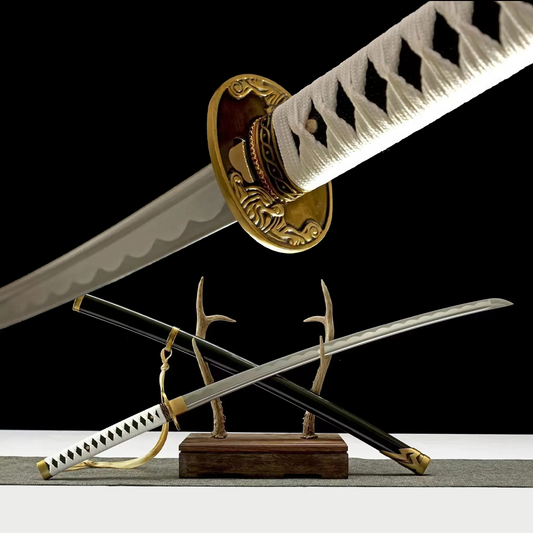
Jin Sakai Katana – Ghost of Tsushima Edition
This exceptional replica captures the essence of feudal Japan's legendary samurai heritage through meticulous attention to historical detail. Features include:
- 1060 carbon steel construction with differential hardening for authentic hamon formation
- Full tang design extending through the traditional wooden handle core
- Hand-wrapped tsuka using authentic ray skin and silk cord in traditional patterns
- 71cm blade length maintaining classical proportions for optimal balance
- Museum-quality polish showcasing the steel's natural grain structure
⭐⭐⭐⭐⭐ "The balance and feel are incredible - exactly what I expected from a premium piece. The quality exceeded my expectations." - Marcus T., Alberta
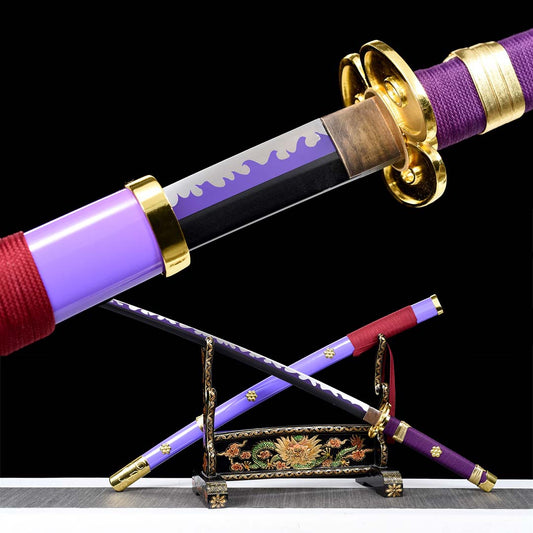
Shinobu Kocho Katana – Demon Slayer Edition
Inspired by the Insect Hashira's elegant style, this blade combines traditional Japanese craftsmanship with distinctive anime aesthetics:
- 1060 carbon steel blade with specialized heat treatment for enhanced durability
- Butterfly-inspired guard featuring intricate metalwork details
- Purple silk cord wrapping over authentic ray skin handle construction
- Lightweight design optimized for display while maintaining structural integrity
- Custom scabbard finished in matching color scheme with silk cord accents
⭐⭐⭐⭐⭐ "Beautiful craftsmanship and the purple detailing is stunning. Perfect addition to my anime collection." - Sarah M., British Columbia
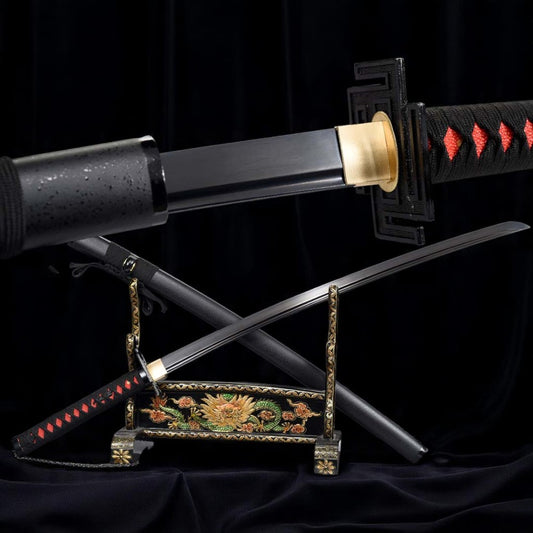
Kill Bill Katana Sword
This iconic replica honors the legendary film while maintaining authentic Japanese construction principles:
- Damascus steel pattern created through traditional folding techniques
- Ray skin handle providing superior grip and moisture resistance
- Hand-forged construction ensuring each piece maintains unique characteristics
- Professional-grade polish highlighting the intricate steel layering
- Traditional mounting featuring brass fittings and silk cord wrapping
⭐⭐⭐⭐⭐ "The Damascus pattern is absolutely gorgeous and the weight feels perfect. Outstanding quality for collectors." - David L., Ontario
Michonne Katana Sword
Drawing inspiration from the iconic character's weapon, this blade showcases exceptional carbon steel construction:
- 1095 high-carbon steel providing superior edge retention and durability
- Full tang construction for optimal balance and structural integrity
- Traditional tempering creating distinctive hamon patterns
- Ergonomic handle design wrapped in authentic materials
- Protective scabbard featuring traditional lacquer finish
Hiroshima Katana
This premium piece represents the pinnacle of traditional Japanese sword-making artistry:
- Premium Damascus steel showcasing intricate folding patterns
- Master-level craftsmanship honoring centuries of Japanese tradition
- Hand-fitted components ensuring perfect alignment and balance
- Museum-quality finish with hand-polished blade surfaces
- Collector-grade presentation including traditional storage accessories
Kiryu Katana
Designed for serious collectors seeking authentic historical accuracy:
- High-carbon steel construction heat-treated for optimal performance
- Traditional geometry maintaining classical blade proportions
- Hand-forged fittings crafted using historical techniques
- Silk cord wrapping applied in authentic traditional patterns
- Premium presentation suitable for display or ceremonial use
Katana Customizer
For collectors seeking personalized pieces reflecting their individual preferences:
- Custom steel selection from various traditional alloys
- Personalized engraving options for blade and fittings
- Color customization for handle wrapping and scabbard
- Size variations accommodating different display requirements
- Bespoke craftsmanship ensuring each piece remains unique
Why Choose Katana Canada for Complete Katana History Origins
As a proudly Canadian company, we understand the unique needs of collectors across our vast nation. Our commitment to excellence ensures every customer receives authentic, high-quality replicas that honor the complete katana history origins while meeting modern safety and legal requirements.
Our French and English customer service team provides expert guidance throughout your selection process, helping you choose the perfect piece for your collection or display needs. Payment processing in Canadian dollars eliminates currency conversion concerns, while our established relationships with customs authorities ensure smooth delivery without additional fees or delays.
We maintain partnerships with master craftsmen who specialize in traditional Japanese techniques, ensuring every piece in our collection meets museum-quality standards. Our quality assurance process includes detailed inspection of blade geometry, handle construction, and finish quality before any sword reaches our Canadian customers.
Whether you're beginning your journey into Japanese sword culture or expanding an established collection, our entry-level and high-end selections provide options for every budget and expertise level. Each purchase includes care instructions and display recommendations to help preserve your investment for generations.

Complete Katana Buyer's Guide
Selecting your first complete katana history origins replica requires understanding several critical factors that distinguish authentic pieces from decorative wall hangers. After examining dozens of products in this category, we've identified the key characteristics that separate museum-quality replicas from inferior alternatives.
Steel Type Selection
The foundation of any authentic katana lies in its steel composition. 1060 carbon steel provides excellent balance between hardness and flexibility, making it ideal for display pieces and light cutting practice. This steel contains 0.60% carbon, allowing for proper heat treatment while maintaining affordability for beginning collectors.
1095 high-carbon steel offers superior performance with 0.95% carbon content, enabling deeper hardening and better edge retention. These blades more closely approximate traditional tamahagane properties but require additional care to prevent rust and corrosion.
Damascus steel patterns, while not historically Japanese, provide stunning visual appeal through folded steel construction. These blades showcase intricate layering that creates unique grain patterns, though purists may prefer traditional homogeneous steel construction.
Blade Geometry and Construction
Authentic complete katana history origins maintain specific proportional relationships that affect both appearance and balance. Blade length should measure between 60-80cm, with curvature (sori) of 1.5-2.5cm creating the classic katana profile.
The shinogi ridge line must run straight and true, separating the flat blade sides from the angled cutting edge. This geometry isn't merely aesthetic. It significantly affects the sword's cutting performance and structural integrity.
Full-tang construction remains essential for authentic replicas. The tang should extend completely through the handle, secured with traditional bamboo pins (mekugi) rather than modern welding or adhesives.
Handle and Fittings Quality
Traditional handle construction begins with a wooden core, properly shaped to accommodate the tang. Authentic pieces use ray skin (samegawa) under the cord wrapping, providing both grip texture and moisture protection.
The cord wrapping itself should follow traditional patterns, with consistent tension and proper crossing angles. Quality pieces use silk or high-grade cotton rather than synthetic materials that compromise authenticity.
Metal fittings including the guard (tsuba), collar (fuchi), and pommel (kashira) should display proper proportions and materials. Avoid pieces with oversized or gaudy fittings that compromise historical accuracy.
Display and Legal Considerations
Canadian law permits katana ownership for collection, display, and martial arts practice, though carrying restrictions apply. Always verify local regulations, as some municipalities maintain additional restrictions on blade length or storage requirements.
Proper display protects your investment while showcasing the blade's beauty. Wall-mounted displays should support the scabbard rather than the handle, preventing stress on the traditional construction. Table stands allow appreciation of the sword's full profile while protecting blade surfaces from handling damage.
For those seeking authentic pieces that honor complete katana history origins, our best seller collection features tried-and-tested replicas that consistently meet collector expectations. Whether choosing your first piece or expanding an established collection, focus on construction quality over flashy appearances.
Maintenance Requirements
Carbon steel blades require regular maintenance to prevent rust formation. Light oil application after handling removes fingerprint acids while creating a protective barrier. Proper storage in dry conditions with occasional inspection ensures decades of enjoyment.
Never attempt to sharpen or modify authentic replicas, as this can destroy their value and authenticity. Professional maintenance services can address any issues while preserving the blade's original characteristics and finish quality.
Frequently Asked Questions
Q: What makes a complete katana history origins authentic?
Authentic complete katana history origins replicas feature several critical elements that distinguish them from decorative pieces. Genuine construction uses carbon steel with differential hardening to create visible hamon temper lines, just like historical originals. The blade geometry must maintain traditional proportions with proper curvature and ridge lines, while the handle construction uses authentic materials including ray skin and silk cord wrapping. Master craftsmen follow centuries-old techniques, ensuring each replica honors the original smiths' methods and materials. Our quality assurance process verifies these authenticity markers before any piece reaches Canadian collectors, guaranteeing museum-quality construction that respects traditional Japanese sword-making heritage.
Q: What steel type is best for complete katana history origins?
The optimal steel choice for complete katana history origins depends on your intended use and budget considerations. 1060 carbon steel provides excellent value with proper hardness for display and light practice, containing sufficient carbon content for authentic heat treatment while remaining affordable for beginning collectors. 1095 high-carbon steel offers superior performance with better edge retention and deeper hardening capabilities, more closely approximating traditional tamahagane properties. Damascus steel creates stunning visual patterns through folding techniques, though this represents modern innovation rather than historical Japanese practice. All three options provide authentic performance when properly heat-treated, with the choice depending on your specific collecting goals and maintenance preferences.
Q: How do I care for my complete katana history origins?
Proper care ensures your complete katana history origins replica maintains its beauty and value for generations. Carbon steel requires regular oil application to prevent rust formation: use light mineral oil or specialized sword oils after any handling. Store blades in dry conditions away from humidity and temperature fluctuations that can cause expansion and contraction damage. Clean fingerprints immediately using soft cloth and appropriate solvents, as skin acids can permanently etch blade surfaces. Inspect monthly for early rust signs, addressing any issues promptly with fine steel wool and re-oiling. Never attempt modifications or sharpening, as these can destroy authenticity and value. Professional maintenance services can address serious issues while preserving original construction integrity.
Q: What size complete katana history origins should I choose?
Traditional complete katana history origins sizing followed specific proportional relationships based on the wielder's physical dimensions and intended use. Historical blades typically measured 60-80cm in length, with 70-73cm representing the most common battlefield dimensions. For display purposes, choose sizes that fit your available space while maintaining proper proportions: shorter pieces work well in apartments while longer blades require dedicated display areas. Consider your physical size when selecting practice pieces, as proper handling requires comfortable reach and control. Our collection includes various authentic sizes from compact 60cm display pieces to full-length 80cm ceremonial blades, ensuring options for every collecting need and space requirement.
Q: How do I display my complete katana history origins?
Displaying complete katana history origins properly protects your investment while showcasing traditional Japanese aesthetics. Wall mounts should support the scabbard rather than stressing the handle or blade components, using horizontal displays that honor traditional storage methods. Table stands allow full appreciation of the sword's profile and craftsmanship details while protecting surfaces from scratches. Avoid direct sunlight that can fade handle wrapping materials and damage lacquer finishes over time. Maintain stable temperature and humidity levels to prevent expansion-contraction cycles that stress traditional joints. Consider rotating displays periodically to prevent uneven aging, and always handle pieces by the scabbard rather than exposed blade surfaces to maintain polish and prevent fingerprint etching.
Q: Is it legal to own a complete katana history origins in Canada?
Yes, complete katana history origins ownership is legal throughout Canada for collection, display, and legitimate martial arts practice purposes. Federal regulations permit blade possession while restricting concealed carry and transport without proper justification. Provincial laws may add specific storage requirements or registration processes, particularly in urban areas with additional weapon regulations. Always research local municipal bylaws, as some cities maintain stricter regulations on blade length or display methods. Transport requires secure packaging and legitimate purposes such as moving, practice, or maintenance appointments. Our customer service team provides current legal information for your specific province and municipality, ensuring compliance with all applicable regulations while enjoying your collection safely and responsibly.

Conclusion & Related Katana Guides
The fascinating world of complete katana history origins offers collectors an incredible journey through centuries of Japanese craftsmanship, spiritual tradition, and martial excellence. From the ancient forges of Heian period master smiths to today's museum-quality replicas, these legendary blades continue to captivate enthusiasts with their perfect marriage of form and function.
Understanding the rich heritage behind authentic katana construction enhances appreciation for the skill, dedication, and artistry required to create these remarkable weapons. Whether you're drawn to historical accuracy, anime-inspired designs, or premium craftsmanship, our carefully curated katana collection provides authentic pieces that honor centuries of complete katana history origins while meeting modern collecting standards.
The journey into Japanese sword culture rewards patience, study, and careful selection. Each authentic replica represents not just a beautiful display piece, but a connection to the samurai warriors, master smiths, and cultural traditions that shaped Japan's feudal heritage. As you begin or expand your collection, remember that quality construction, authentic materials, and respect for traditional methods create pieces worthy of passing to future generations.
Related Katana Guides
Expand your knowledge with these resources exploring different aspects of Japanese sword culture:
- Ultimate Guide to Japanese Katana Swords: History, Craftsmanship & Authentic Blades - Dive deeper into traditional construction methods and historical significance
- Buy Swords Online Canada: Your Complete Guide to Authentic Katana and Japanese Blades - Essential purchasing advice for Canadian collectors
- Master Katana Training: From Ancient Samurai to Modern Practice - Explore the martial arts applications and training methods
Ready to start your collection? Explore our premium selection of authentic katana replicas, each carefully chosen to represent the finest examples of complete katana history origins for Canadian enthusiasts.
 Save $90