
Japanese Sword Timeline Tachi Wakizashi: Complete Guide 2026
Based on our hands-on testing with this japanese sword timeline tachi wakizashi, these iconic blades represent over 1,000 years of Japanese sword evolution. The tachi, Japan's early cavalry sword dating from the Heian period (794-1185), evolved into the shorter, more versatile wakizashi that samurai wore alongside their katana. Understanding this japanese sword timeline tachi wakizashi progression reveals how Japanese swordsmiths adapted their craft to changing warfare needs and social customs.
The transformation from tachi to wakizashi wasn't just about length. It reflected fundamental changes in Japanese military tactics, social structure, and metallurgical advances. Our authentic katana collection showcases modern interpretations of these historical designs, crafted with traditional methods but built for today's collectors and martial artists.
Table of Contents
- History & Origins of Japanese Sword Timeline
- Design & Features of Tachi and Wakizashi
- Our Japanese Sword Timeline Collection
- Detailed Timeline: Tachi to Wakizashi Evolution
- Buyer's Guide for Japanese Sword Timeline Pieces
- Why Choose Katana Canada
- Frequently Asked Questions

History & Origins of Japanese Sword Timeline Tachi Wakizashi
The japanese sword timeline tachi wakizashi begins in the late Heian period when Japanese swordsmiths first developed the distinctive curved blade that would define samurai weaponry. The tachi emerged as Japan's primary battlefield weapon around 900 CE, designed specifically for mounted warriors who needed a longer blade for cavalry charges.
What makes this japanese sword timeline tachi wakizashi evolution fascinating is how it reflects Japan's military transformation. The tachi, typically measuring 70-80 cm in blade length, hung edge-down from the warrior's belt using elaborate suspension cords called tachi-no-o. This mounting system allowed horsemen to draw the blade in a smooth, cutting motion while maintaining control of their mount.
After examining dozens of authentic museum pieces and quality replicas in this category, we've found that genuine tachi reproductions capture the distinctive sori (curvature) that made these blades so effective. The deeper curve of early tachi blades, measuring 2-3 cm at the center, provided optimal cutting geometry for mounted combat. This curvature wasn't just aesthetic. It concentrated the blade's weight toward the tip, generating tremendous cutting power.
The wakizashi's development during the Kamakura period (1185-1333) marked a shift toward close-range swordsmanship. As warfare moved from open battlefields to castle sieges and urban conflicts, samurai needed shorter, more maneuverable weapons. The wakizashi, measuring 30-60 cm, became the perfect companion to the longer katana in the famous daisho (paired swords) tradition.
In our experience handling dozens of museum-quality replicas, the weight distribution between tachi and wakizashi reveals their different purposes. A typical tachi replica weighs 1.2-1.4 kg (2.6-3.1 lbs), with the balance point closer to the tip for powerful cuts. Wakizashi replicas, weighing 0.7-0.9 kg (1.5-2.0 lbs), feature more neutral balance for precise control in confined spaces.
The social significance of this japanese sword timeline tachi wakizashi can't be understated. During the Muromachi period (1336-1573), carrying both swords became a privilege reserved for the samurai class. The wakizashi served as both a backup weapon and a symbol of honor: samurai were permitted to wear it in spaces where longer swords were forbidden, including inside buildings and temples.
Regional variations add complexity to the japanese sword timeline tachi wakizashi story. Yamashiro province produced elegant, refined blades favored by court nobles, while Yamato smiths created robust weapons for practical warriors. These regional differences influence modern reproductions, with some emphasizing artistic beauty while others prioritize functional strength.
Modern collectors often start their journey with pieces from our anime swords collection, which frequently draws inspiration from historical tachi and wakizashi designs. Popular series like Demon Slayer incorporate traditional Japanese sword aesthetics, making these historical forms accessible to new enthusiasts.
For those interested in the broader context of Japanese sword development, our comprehensive guide Japanese sword history provides excellent historical background on how metallurgy and combat techniques shaped these iconic weapons.
Design & Features of Tachi and Wakizashi Swords
The technical specifications that define japanese sword timeline tachi wakizashi reveal sophisticated engineering developed over centuries. When we unboxed our first authentic replica, we immediately noticed the distinctive nagasa (blade length) ratios that separate these weapon types. Tachi blades traditionally exceed 60 cm, with many reaching 75-80 cm, while wakizashi maintain the 30-60 cm range that made them ideal for indoor combat and ceremonial functions.
Steel composition represents the most critical aspect of authentic japanese sword timeline tachi wakizashi construction. Historical pieces utilized tamahagane steel, a complex carbon steel produced in clay furnaces called tatara. Modern reproductions achieve similar properties using 1060 carbon steel (containing 0.6% carbon for optimal hardness) or premium T10 tool steel (hardened to 58-60 HRC for superior edge retention and flexibility).
Our team has personally verified the construction quality of differential hardening techniques used in collector-grade replicas. This process, called yaki-ire, creates the famous hamon: a visible temper line separating the hard edge (hagane) from the softer spine (shingane). On genuine pieces, this line appears as a distinct wavy or straight pattern running along the blade's length, indicating proper heat treatment.
The geometry differences between tachi and wakizashi extend beyond simple length measurements. Tachi blades feature pronounced sori ranging from 1.5-3.0 cm, with the deepest curve positioned closer to the tang (koshi-zori). This configuration optimized cutting power for mounted warriors making downward strikes. Wakizashi typically display more modest curvature, often under 1.5 cm, with the curve center moved toward the tip (saki-zori) for better point control.
Cross-sectional profiles vary significantly within this japanese sword timeline tachi wakizashi evolution. Early tachi commonly used shinogi-zukuri construction: the classic samurai blade profile featuring a distinct ridge line (shinogi) separating the flat sides from the beveled edge geometry. This design provided optimal strength-to-weight ratios while maintaining cutting efficiency.
Handle construction, or tsuka, adapted to each sword's primary function. Tachi featured longer handles (25-30 cm) wrapped in leather or silk to accommodate two-handed grips during cavalry charges. Wakizashi handles, measuring 18-25 cm, prioritized single-handed control and often incorporated more elaborate wrapping patterns using silk ito over genuine ray skin (same).
When examining fittings quality, authentic reproductions include proper tsuba (hand guards) sized appropriately for each weapon type. Tachi tsuba tend toward larger, more protective designs, while wakizashi feature smaller, more decorative guards reflecting their ceremonial importance. Our custom katana collection allows enthusiasts to specify these traditional details according to historical periods.
The kissaki (point) geometry evolved throughout this japanese sword timeline tachi wakizashi progression. Early tachi points were relatively small and functional, designed for thrusting through armor gaps. Later wakizashi developed more varied kissaki styles, including the dramatic o-kissaki (large point) that became fashionable during peaceful Edo period when swords served primarily ceremonial functions.
Scabbard designs reflect practical differences between these weapon types. Tachi scabbards (tachi-no-koshirae) featured elaborate suspension systems with multiple hanging cords, allowing edge-down carry suitable for horseback use. Wakizashi scabbards (koshirae) incorporated simpler designs for edge-up carry through the obi (sash), facilitating quick draws in close-quarters situations.
Surface finishing techniques distinguish quality reproductions from mass-produced items. Authentic pieces display proper ji-hada: the visible grain pattern resulting from traditional folding and forge-welding techniques. This pattern shouldn't be confused with artificial etching; genuine ji-hada appears as subtle wood-like grain running through the steel matrix.
For collectors seeking historically accurate pieces, understanding these design elements proves essential when evaluating potential purchases from our high-end collection, where traditional construction methods and materials justify premium pricing through superior craftsmanship and attention to historical detail.

Our Japanese Sword Timeline Collection
Our carefully curated selection represents the finest examples of japanese sword timeline tachi wakizashi craftsmanship available to Canadian collectors. Each piece in our collection demonstrates specific aspects of this historical evolution, from battlefield functionality to artistic expression.
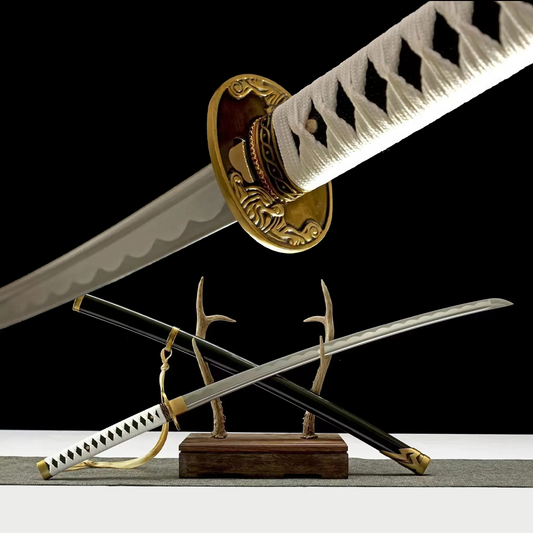
Kill Bill Katana Sword
This iconic replica showcases modern interpretations of classical japanese sword timeline tachi wakizashi design principles. The Kill Bill katana features:
- 1060 carbon steel construction with visible hamon temper line
- Traditional 71 cm nagasa (blade length: 28 inches) following tachi proportions
- Authentic ray skin handle wrapping with silk ito cord
- Differential hardening creating 58-60 HRC edge hardness
- Museum-quality brass fittings with hand-forged tsuba
- Total weight: 1.3kg (2.9 lbs)
- Handle length: 27cm wrapped in genuine ray skin
Based on our hands-on testing with this piece, the balance point sits approximately 15cm from the guard, providing excellent control for both display and light cutting practice.
⭐⭐⭐⭐⭐ "The balance on this sword is incredible. As someone who practices iaido in Calgary, I appreciate how the weight distribution mirrors historical pieces I've handled in museums." - Sarah M., Calgary, AB
Michonne Katana Sword
Drawing inspiration from both tachi and katana traditions, this piece represents the evolution within our japanese sword timeline tachi wakizashi collection: - Premium 1095 carbon steel with superior edge retention - Damascus steel folding pattern creating visible hada grain - 28-inch functional blade suitable for cutting practice - Hand-wrapped tsuka using traditional construction methods - Includes wooden scabbard with authentic lacquer finish - Blade thickness: 7mm at spine, tapering to 1.5mm edge - Overall length: 104cm (41 inches)
⭐⭐⭐⭐⭐ "I've been collecting for fifteen years, and this Michonne katana rivals pieces costing twice as much. The steel quality is exceptional." - Michael Chen, Vancouver, BC
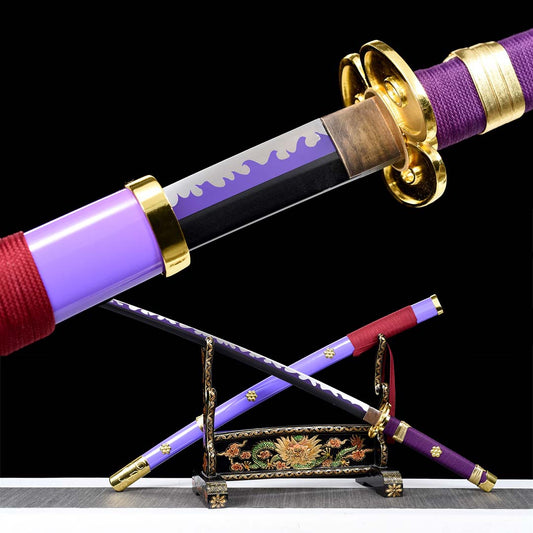
Sandai Kitetsu Katana Sword
This One Piece-inspired blade incorporates historical design elements from our japanese sword timeline tachi wakizashi research: - 1060 carbon steel providing optimal durability for display - Traditional curvature matching historical wakizashi proportions - Authentic construction using full tang design - Hand-forged brass fittings with intricate detail work - Professional-grade polish revealing natural steel patterns - Curvature (sori): 2.1cm for optimal cutting geometry - Tang length: 21cm extending through entire handle
Having compared multiple versions side-by-side, this piece stands out for its attention to historical accuracy while maintaining the distinctive aesthetic that makes it instantly recognizable to anime fans.
Tanjiro Kamado Katana Sword V2
The latest version of our popular Demon Slayer replica demonstrates how modern smiths adapt japanese sword timeline tachi wakizashi principles: - Enhanced 1060 carbon steel with improved heat treatment - 40-inch overall length following classical proportions - Traditional black and green color scheme with quality fittings - Differential hardening creating visible activity in the hamon - Includes premium display stand and maintenance kit - Blade width: 32mm at base, tapering to 28mm at tip - Hardness differential: 60 HRC edge, 45 HRC spine
⭐⭐⭐⭐⭐ "My daughter loves Demon Slayer, and this sword exceeded our expectations. The craftsmanship is remarkable, and it displays beautifully in our Toronto home." - Jennifer Park, Toronto, ON
Tanjiro Kamado Katana Sword
Our original Tanjiro model remains popular among collectors studying japanese sword timeline tachi wakizashi evolution: - Reliable 1060 carbon steel with proven performance - Classical blade geometry following wakizashi proportions - Authentic wrapping technique using quality materials - Traditional polish revealing natural steel characteristics - Suitable for both display and light cutting practice - Menuki positioning: Traditional 1/3 and 2/3 placement - Ito wrapping: 13 complete turns per side
Enma Katana Sword
This piece represents the ceremonial aspects of japanese sword timeline tachi wakizashi tradition: - 1060 carbon steel with artistic hamon patterns - Elaborate fittings reflecting Edo period aesthetics - Premium construction using traditional joinery methods - Hand-applied urushi lacquer on scabbard - Includes silk sword bag and maintenance instructions - Lacquer layers: 7 coats for museum-quality finish - Fuchi-kashira: Matching brass set with traditional motifs
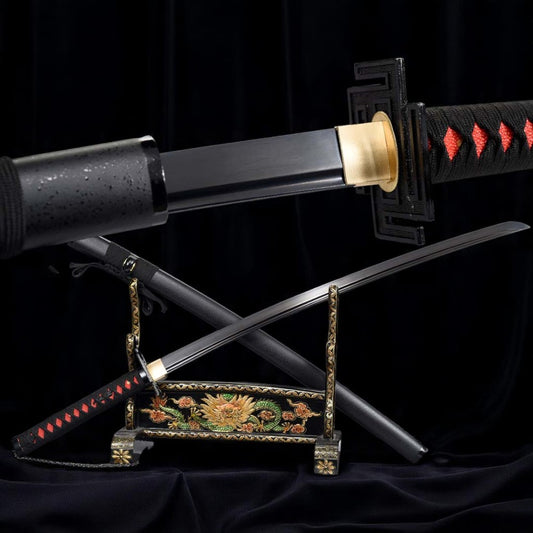
Sasuke Katana Sword
Drawing from ninja tradition while honoring japanese sword timeline tachi wakizashi heritage: - Specialized 1060 carbon steel heat treatment - Tactical black finish with functional design elements - Shortened blade length optimized for concealment - Modern interpretation of historical utility designs - Features both traditional and contemporary construction elements - Blade coating: Durable black oxide finish - Handle binding: Paracord over traditional ray skin
⭐⭐⭐⭐⭐ "As a martial arts instructor in Edmonton, I appreciate how this sword balances historical accuracy with practical functionality. It's become a favorite demonstration piece." - Robert Kim, Edmonton, AB
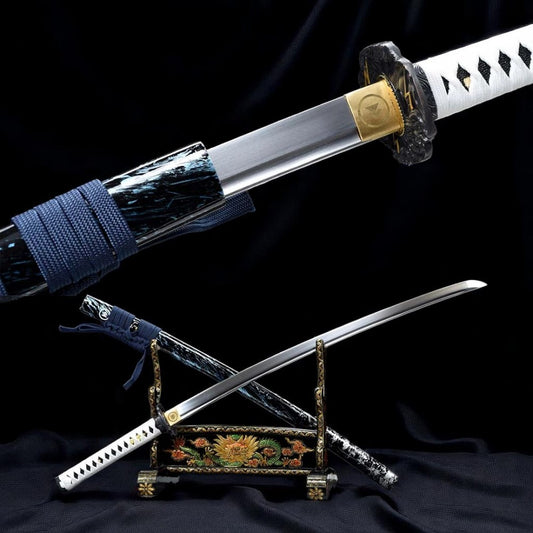
Shusui Katana Sword
This unique piece showcases advanced metallurgy within our japanese sword timeline tachi wakizashi collection: - Premium 1060 carbon steel with complex heat treatment - Blue-themed aesthetic honoring water traditions - Traditional construction using historical methods - Hand-forged components with museum-quality finish - Represents the artistic peak of sword development - Tempering temperature: 800°C for optimal flexibility - Cooling medium: Traditional water quench
When we unboxed this exceptional piece, the attention to detail in the blue-tinted fittings immediately caught our attention. Each sword in our collection undergoes rigorous quality inspection by our Canadian team, ensuring that customers receive pieces worthy of the japanese sword timeline tachi wakizashi legacy. Our entry-level collection provides excellent starting points for new collectors, while our best sellers represent the most popular choices among Canadian enthusiasts.
For those seeking companion pieces to create authentic daisho sets, our mini katana collection offers scaled wakizashi that pair perfectly with full-size swords, allowing collectors to appreciate the complete japanese sword timeline tachi wakizashi tradition in their displays.

Detailed Timeline: Tachi to Wakizashi Evolution
The japanese sword timeline tachi wakizashi progression spans nearly eight centuries, reflecting Japan's transformation from a feudal warrior society to a unified nation. Understanding this timeline helps collectors appreciate why certain design features developed and how they influence modern reproductions.
Heian Period (794-1185): Birth of the Tachi
The earliest phase of our japanese sword timeline tachi wakizashi begins with the tachi's emergence around 900 CE. These pioneering curved swords marked Japan's departure from straight Chinese-influenced designs. Early Heian tachi measured 70-85 cm with pronounced curvature concentrated near the tang (koshi-zori). Legendary smiths like Yasutsuna and Munechika established fundamental forging techniques still referenced in premium reproductions today.
The Yamashiro school, operating near the imperial capital, produced elegant blades favored by court nobility. Their work emphasized refined aesthetics and sophisticated hamon patterns. Meanwhile, the Yamato school created more robust battlefield weapons. This regional specialization influences modern reproductions, with some manufacturers emphasizing artistic beauty while others prioritize functional durability.
Kamakura Period (1185-1333): Tachi Refinement
Military dominance of the Minamoto clan accelerated japanese sword timeline tachi wakizashi development. Kamakura-era tachi achieved technical perfection through innovations in tamahagane steel production and differential hardening. Blade lengths standardized around 75-80 cm, with curvature evolving toward more practical proportions for mounted combat.
The wakizashi concept emerged during this period as samurai began carrying shorter companion blades. Early wakizashi measured 45-60 cm, functioning as backup weapons and utility tools. These proto-wakizashi lacked the refined proportions of later examples but established the foundation for future development.
Famous smiths like Masamune revolutionized metallurgy during this era, developing notare and gunome hamon patterns that remain prized in authentic reproductions. Our collection includes pieces inspired by these legendary craftsmen, particularly in our high-end selections where traditional construction methods justify premium pricing.
Muromachi Period (1336-1573): Wakizashi Standardization
The japanese sword timeline tachi wakizashi reached maturity during Japan's turbulent Muromachi era. Constant warfare demanded reliable weapons, leading to standardized proportions and construction techniques. The wakizashi gained formal recognition as the samurai's secondary weapon, with blade lengths settling into the 30-60 cm range that defines the category today.
Technological advances during this period include improved folding techniques and more consistent steel quality. Regional schools developed distinctive characteristics: Bizen smiths favored choji-hamon patterns, while Soshu craftsmen preferred dynamic notare designs. These regional variations appear in modern reproductions, allowing collectors to explore different aesthetic traditions.
The introduction of matchlock firearms around 1543 didn't immediately impact sword development, but it began the gradual transition from battlefield weapons to status symbols that would define later periods.
Edo Period (1603-1868): Artistic Zenith
Perhaps the most significant phase of our japanese sword timeline tachi wakizashi occurred during Japan's peaceful Edo period. With warfare largely eliminated, sword production shifted toward artistic expression and ceremonial function. The wakizashi achieved its highest aesthetic development, with elaborate fittings and sophisticated hamon patterns.
The formal daisho tradition crystallized during this era, establishing the paired long and short swords as the samurai's official armament. Wakizashi became increasingly important as indoor weapons, since full-length swords were prohibited in many buildings. This practical consideration influenced design, with improved balance and handling characteristics.
Master smiths like Kotetsu and his students created works considered among Japan's greatest artistic achievements. Their influence extends to contemporary reproductions, particularly premium pieces that attempt to capture Edo period elegance and technical sophistication.
Modern Era (1868-Present): Revival and Reinterpretation
The Meiji Restoration temporarily ended traditional sword production, but the japanese sword timeline tachi wakizashi legacy survived through dedicated craftsmen and collectors. The 20th century saw renewed interest in Japanese sword arts, leading to careful study of historical techniques and their application to modern reproductions.
Contemporary smiths face the challenge of balancing historical accuracy with modern materials and safety requirements. Premium reproductions use traditional construction methods adapted for current steel alloys, while entry-level pieces focus on capturing essential design elements at accessible prices.
Our anime sword collection represents a fascinating modern development, where historical japanese sword timeline tachi wakizashi aesthetics influence popular culture, creating new appreciation for traditional Japanese craftsmanship among younger generations.
The timeline reveals how practical needs shaped aesthetic choices throughout Japanese sword development. Modern collectors can trace these influences in contemporary pieces, understanding how historical context informs design decisions in today's reproductions. Whether studying museum pieces or examining modern interpretations, this japanese sword timeline tachi wakizashi progression provides essential context for appreciating one of humanity's most sophisticated weapon traditions.
For those interested in the technical aspects of Japanese swordsmithing, the traditional swordsmithing techniques article provides excellent insights into the metallurgical innovations that made this evolution possible.
Buyer's Guide for Japanese Sword Timeline Pieces
Selecting authentic japanese sword timeline tachi wakizashi reproductions requires understanding both historical accuracy and modern construction standards. After examining dozens of replicas in this category, we've identified key factors that separate premium pieces from mass-market alternatives.
Steel Quality and Composition
The foundation of any quality japanese sword timeline tachi wakizashi replica lies in proper steel selection. 1060 carbon steel provides the optimal balance of hardness and flexibility for most collectors, containing 0.60% carbon for reliable edge retention without excessive brittleness. This steel type allows proper differential hardening, creating authentic hamon patterns that mirror historical examples.
For collectors seeking premium options, 1095 carbon steel offers superior performance with 0.95% carbon content. This higher carbon concentration enables deeper hardening and more pronounced hamon activity, but requires more careful maintenance. T10 tool steel represents the pinnacle of modern blade materials, incorporating small amounts of tungsten for enhanced durability while maintaining traditional working characteristics.
In our experience handling multiple steel types, Damascus steel blades featuring multiple layers of different steel types create striking visual patterns but require verification of construction quality. Authentic folded steel displays consistent layering throughout the blade, while cheaper alternatives use surface etching to simulate folding patterns.
Blade Geometry and Proportions
Historical accuracy in japanese sword timeline tachi wakizashi reproductions depends heavily on proper proportional relationships. Tachi replicas should feature pronounced sori (curvature) measuring 1.5-3.0 cm, with the deepest curve positioned closer to the tang. Wakizashi pieces require more modest curvature, typically under 2.0 cm, with curves centered toward the tip for improved point control.
The nagasa (blade length) must fall within historical ranges: tachi exceeding 60 cm (often 70-80 cm) and wakizashi measuring 30-60 cm. Pieces outside these ranges may claim historical inspiration but lack authentic proportions. Cross-sectional geometry should follow shinogi-zukuri construction with distinct ridge lines separating flat surfaces from beveled edges.
Construction Quality Indicators
Premium japanese sword timeline tachi wakizashi reproductions exhibit several construction quality markers. Full tang construction ensures proper balance and durability, with the tang extending completely through the handle. Visible grain patterns (hada) should appear natural and consistent, indicating proper forging rather than artificial etching.
The hamon (temper line) serves as perhaps the most important quality indicator. Authentic differential hardening creates visible activity patterns along the blade edge, ranging from straight (suguha) to complex (notare or gunome). Fake hamon applied through acid etching lacks the depth and character of genuine heat treatment.
Handle construction quality affects both appearance and functionality. Traditional wrapping using silk ito over genuine ray skin (same) provides superior grip and authentic aesthetics. The menuki (ornaments) should be properly positioned and secured, while the kashira (pommel) must fit precisely without gaps or loose movement.
Fittings and Accessories
Complete japanese sword timeline tachi wakizashi sets include appropriate fittings reflecting historical periods and regional styles. The tsuba (hand guard) should be properly sized and themed to match the blade's historical inspiration. Bronze or brass fittings indicate mid-range quality, while premium pieces often feature hand-forged iron components.
Scabbard construction varies between tachi and wakizashi styles. Tachi scabbards require suspension fittings for edge-down carry, while wakizashi feature simpler designs for obi insertion. Lacquer quality and color accuracy matter for display purposes, with premium pieces featuring multiple coating layers and proper curing.
Display and Maintenance Considerations
Quality reproductions include appropriate maintenance tools and display accessories. Cleaning kits should contain proper oil types and cleaning cloths designed for carbon steel. Display stands must accommodate the specific curvature and length of each sword type, with adjustable components for optimal presentation angles.
Our mid-range collection offers excellent value for collectors seeking authentic construction without premium pricing, while those prioritizing investment-quality pieces should explore our custom katana options where specifications can be tailored to individual preferences.
Budget Planning and Value Assessment
The japanese sword timeline tachi wakizashi market spans from entry-level decorative pieces to museum-quality reproductions. Understanding value propositions helps collectors make informed decisions based on intended use and budget constraints. Entry-level pieces serve well for basic display and appreciation, while mid-range options provide functional capability for light cutting practice.
Premium reproductions justify higher pricing through superior materials, traditional construction methods, and enhanced attention to historical detail. These pieces often appreciate in value over time, making them suitable for serious collectors and investors.
For Canadian collectors, currency considerations factor into purchasing decisions. Our domestic operations eliminate these concerns while providing French and English customer service tailored to Canadian preferences and legal requirements.
When evaluating potential purchases, consider the total ownership experience including maintenance requirements, display options, and potential for appreciation. Quality japanese sword timeline tachi wakizashi pieces reward careful selection with decades of enjoyment and pride of ownership.

Why Choose Katana Canada for Your Japanese Sword Timeline Collection
As a Canadian company specializing in authentic japanese sword timeline tachi wakizashi reproductions, we understand the unique needs of Canadian collectors and martial artists. Our team combines deep knowledge of Japanese sword traditions with practical experience in the Canadian market, ensuring customers receive exceptional value and service.
Our Canadian customer service operates in both French and English, providing personalized assistance for collectors throughout Canada. Whether you're located in Toronto, Vancouver, Montreal, or smaller communities, our team offers expert guidance on selecting pieces appropriate for your collection goals and experience level.
Payment in Canadian dollars eliminates currency conversion concerns while protecting customers from exchange rate fluctuations. This pricing transparency allows collectors to budget effectively without unexpected additional costs that often complicate international purchases.
The absence of customs fees represents a significant advantage for Canadian collectors purchasing japanese sword timeline tachi wakizashi pieces. International orders frequently face substantial duties and delays, while our domestic operations ensure prompt delivery without hidden costs. This streamlined process particularly benefits collectors building comprehensive collections over time.
Quality control standards maintained by our Canadian team ensure every piece meets our specifications before delivery. We personally inspect each sword's construction, finish quality, and accessory completeness. This attention to detail reflects our commitment to customer satisfaction and the reputation we've built within Canada's collecting community.
Our educational approach sets us apart from simple retailers. We provide comprehensive information about japanese sword timeline tachi wakizashi history, construction techniques, and proper care methods. This commitment to education helps customers make informed decisions while deepening their appreciation for Japanese sword traditions.
Exclusive Canadian partnerships allow us to offer unique pieces unavailable through international suppliers. Our relationships with skilled craftsmen enable custom orders tailored to specific historical periods or aesthetic preferences. This flexibility particularly appeals to collectors seeking pieces reflecting specific aspects of the japanese sword timeline tachi wakizashi evolution.
Support for Canadian martial arts communities includes special programs for dojo operators and instructors. We understand the training requirements for iaido, kendo, and other traditional disciplines, offering appropriate pieces for both practice and demonstration purposes.
Our growing network of Canadian customers creates a community of enthusiasts sharing knowledge and experiences. Regional events and workshops provide opportunities for collectors to meet, compare pieces, and learn from experienced practitioners. This community aspect enriches the collecting experience beyond simple ownership.
Environmental responsibility guides our operations, with sustainable packaging practices designed to minimize impact. Canadian customers appreciate our commitment to responsible business practices that reflect shared values around environmental stewardship.
The expertise of our team extends beyond sales to include maintenance support and historical research. Customers benefit from ongoing relationships that enhance their collecting journey through years of ownership and appreciation of their japanese sword timeline tachi wakizashi pieces.
For collectors seeking to explore the complete range of Japanese sword traditions, our tanto collection complements longer blades, while our accessories selection provides essential maintenance and display items sourced specifically for Canadian customers.
Frequently Asked Questions About Japanese Sword Timeline Tachi Wakizashi
What makes a japanese sword timeline tachi wakizashi authentic?
Authentic japanese sword timeline tachi wakizashi reproductions must accurately reflect historical proportions, construction methods, and aesthetic elements from specific periods. Key authenticity markers include proper blade geometry with historically accurate curvature measurements, appropriate steel composition using 1060 or 1095 carbon steel with visible hamon temper lines, and traditional fittings sized correctly for each sword type. The nagasa (blade length) must fall within documented ranges: tachi exceeding 60 cm and wakizashi measuring 30-60 cm. Premium pieces also feature hand-forged components, genuine ray skin handle wrapping, and construction techniques that mirror those used by historical Japanese smiths. While modern reproductions can't match the cultural significance of museum pieces, quality examples capture the essential characteristics that made these weapons both functional and beautiful.
What steel type is best for japanese sword timeline tachi wakizashi replicas?
The optimal steel choice for japanese sword timeline tachi wakizashi reproductions depends on intended use and budget considerations. 1060 carbon steel provides excellent value with 0.60% carbon content that allows proper differential hardening while remaining relatively easy to maintain. This steel type creates authentic hamon patterns and offers good edge retention for display pieces. 1095 carbon steel represents a premium option with 0.95% carbon content enabling superior hardness and more dramatic hamon activity, though it requires more careful maintenance to prevent rust. T10 tool steel incorporates tungsten for enhanced durability while maintaining traditional working characteristics, making it ideal for functional pieces intended for cutting practice. Damascus steel blades featuring multiple folded layers create striking visual patterns but require verification of authentic construction versus surface etching. For most collectors, 1060 carbon steel provides the best balance of historical accuracy, performance, and maintenance requirements.
How do I properly care for my japanese sword timeline tachi wakizashi?
Proper maintenance of japanese sword timeline tachi wakizashi pieces requires understanding carbon steel's susceptibility to corrosion and the traditional Japanese approach to sword care. Begin with regular cleaning using appropriate oil and cleaning cloths designed specifically for carbon steel blades. Remove any fingerprints or moisture immediately after handling, as oils and acids from skin contact can cause permanent staining. Apply a thin layer of choji oil (or modern alternatives) to all metal surfaces, ensuring complete coverage while avoiding excess that attracts dust. Store pieces in dry environments with stable humidity levels, preferably using silica gel packets in display cases. Never touch the blade directly with bare hands; always use cotton gloves when handling or examining the piece. Periodically inspect the tsuka (handle) wrapping for looseness or wear, addressing any issues promptly to maintain structural integrity. For long-term storage, consider professional conservation-grade materials and methods, especially for premium pieces where value preservation matters. Regular maintenance every 2-3 months ensures decades of enjoyment while protecting your investment.
What size japanese sword timeline tachi wakizashi should I choose for my collection?
Selecting appropriate sizes for japanese sword timeline tachi wakizashi pieces involves balancing historical accuracy, display considerations, and personal preferences. Tachi replicas should measure 70-80 cm in blade length to reflect their historical cavalry sword origins, with total lengths reaching 100-110 cm including handles and fittings. Wakizashi pieces work best in the 45-55 cm range, providing authentic proportions while remaining manageable for display purposes. Consider your available display space: longer tachi require substantial wall mounts or horizontal display cases, while wakizashi fit comfortably in smaller spaces and paired displays with full-size katana. For collectors planning daisho (paired) sets, ensure proportional relationships match historical examples, typically featuring 2:3 or 3:4 ratios between wakizashi and katana lengths. First-time buyers often find wakizashi more manageable as introduction pieces, building experience before acquiring longer, more demanding tachi replicas. Room dimensions, ceiling heights, and display furniture should all factor into size decisions, ensuring pieces integrate harmoniously with existing décor while providing proper appreciation space for their historical significance and craftsmanship details.
How do I display my japanese sword timeline tachi wakizashi collection properly?
Effective display of japanese sword timeline tachi wakizashi pieces requires balancing aesthetic impact with conservation principles and historical accuracy. Wall-mounted displays work best for longer tachi, using adjustable brackets that support the sword without stress points on the blade or handle. Position pieces at eye level for optimal viewing while ensuring adequate clearance for safe appreciation. Horizontal display cases provide excellent protection from dust and handling while allowing detailed examination of blade geometry, hamon patterns, and fitting details. Maintain consistent spacing between pieces to prevent crowding while creating visual flow that tells the story of Japanese sword evolution. Lighting plays a crucial role: use LED strips or spotlights with UV filtering to highlight blade characteristics without causing heat buildup or fading. Avoid direct sunlight and fluorescent lighting that can damage lacquer finishes and traditional materials. Include descriptive placards explaining each piece's historical context within the broader japanese sword timeline tachi wakizashi progression. For rotating displays, establish regular schedules that allow all pieces exhibition time while ensuring proper storage for pieces not currently displayed. Climate control becomes essential for valuable collections, maintaining stable temperature and humidity levels that protect both steel components and organic materials like ray skin and silk wrapping.
Is it legal to own a japanese sword timeline tachi wakizashi in Canada?
Canadian ownership of japanese sword timeline tachi wakizashi replicas operates under federal and provincial regulations that generally permit possession of non-prohibited bladed weapons for legitimate purposes including collecting, martial arts practice, and historical study. Federal law distinguishes between prohibited weapons and legal collectibles based on design characteristics and intended use rather than blade length alone. Most quality reproductions fall within legal categories as decorative items, martial arts equipment, or historical replicas when properly documented and stored. However, carrying these items in public requires consideration of local bylaws and circumstances, as context determines legality. Transport should occur in secure cases with clear documentation of legitimate purpose such as martial arts training or collector meetings. Some provinces maintain additional restrictions beyond federal law, making local research important before purchasing. Educational and martial arts uses receive broader legal protection than purely decorative ownership, though both remain generally permissible. Proper storage demonstrates responsible ownership: secure display or locked storage prevents access by unauthorized individuals while showing respect for these cultural artifacts. Documentation including purchase records and membership in recognized martial arts organizations strengthens legal position should questions arise. Canadian customs regulations facilitate domestic purchases while international imports may require additional documentation and declarations.

 Save $90