
Hand-Forged Katana Guide: Steel, Hamon & How to Choose (2026)
Your Guide to Hand-Forged Japanese Katana
We've tested these hand-forged katana available in Canada. Traditional Japanese swordsmithing shows centuries of refined skill and artistry. The authentic hand-forged katana crafted for Canadian collectors features 1060 carbon steel and uses differential hardening (clay tempering). This creates the distinctive hamon (temper line) that defines genuine samurai craftsmanship.
When you hold a properly forged 71cm nagasa (blade), you feel something special. You're experiencing the same balance and precision that samurai warriors relied upon for centuries.
What makes a katana truly authentic? The answer lies in understanding traditional folding techniques, knowing steel composition (0.6% carbon content), and seeing the careful attention to detail that separates authentic replicas from mass-produced imitations. Our authentic Japanese samurai blades collection showcases the finest examples of this ancient craft, adapted for modern Canadian collectors.
Ever wondered why Canadian enthusiasts choose hand-forged over machine-made nagasa? The difference becomes clear when you examine the grain structure and compare properly folded steel versus stamped alternatives. Each authentic piece tells its own story through the unique hamon pattern created during the differential hardening (clay tempering) process.

Table of Contents
- History & Origins of Hand Forged Katana
- Design & Features of Authentic Hand Forged Katana
- Our Hand Forged Katana Collection
- Buyer's Guide: Choosing Your Hand Forged Katana
- Why Choose Katana Canada
- Frequently Asked Questions
- Conclusion & Related Content
History & Origins of Hand Forged Katana {#history}
The art of forging katana emerged during Japan's Heian period (794-1185). Master swordsmiths developed the techniques that would define samurai warfare for centuries. These craftsmen understood metallurgy principles that modern science has only recently validated.
They knew something important: differential hardening (clay tempering) would create a nagasa with a hard, sharp edge and a softer, flexible spine.
Traditional hand-forged katana replicas available in Canada honor this ancient process through careful attention to steel composition (1060 carbon steel) and heat treatment. The original masters worked with tamahagane steel, produced from iron-rich satetsu sand in clay furnaces called tatara.
This labor-intensive process took days of continuous work, with smiths carefully monitoring temperature and carbon content throughout the folding process.
We've handled dozens of these replicas, and the weight distribution tells the story of proper construction. Authentic pieces balance naturally at the intersection of nagasa and nakago (full tang), with dimensions of blade length: 71cm (28 inches), tsuka: 27cm (10.6 inches). This allows for fluid movement without excessive strain on the wielder's wrist.
This balance point, known as the sword's "sweet spot," results from centuries of refined proportions passed down through generations of Japanese craftsmen.
The curved shape of the katana is called sori (1.5-2.0cm curvature). This wasn't just aesthetic—it provided mechanical advantages during cutting motions while strengthening the nagasa against lateral stress.
When you examine our high-end katana collection, you'll notice that this curve varies subtly between different regional styles, each optimized for specific combat techniques.
Regional variations emerged as different schools developed their signature approaches. The Yamato tradition focused on functional durability, while the Yamashiro school emphasized elegant aesthetics. These distinctions remain visible in modern reproductions, with each style offering unique characteristics that appeal to different collectors.
Canadian enthusiasts particularly appreciate katana that show proper heat treatment, visible through hamon (temper lines). This differential hardening technique creates distinctive cloud-like patterns along the cutting edge that indicate the sword's heat treatment quality—authenticity markers that serious collectors recognize immediately.
The spiritual significance of katana forging extended beyond mere craftsmanship. Smiths underwent purification rituals before beginning work, believing that their mental state would influence the nagasa's character. This philosophical approach to metallurgy created weapons that were considered living entities, each with its own personality and capabilities.
Design & Features of Authentic Hand Forged Katana {#design}
We've examined dozens of products in this category, and the construction details separate authentic hand-forged katana pieces in Canada from mass-produced alternatives.
Genuine hand-forged nagasa begin with careful steel selection, typically 1060 or 1095 carbon steel, chosen for optimal hardness retention (58-60 HRC) and edge-holding capability. The forging process involves repeated heating, folding, and hammering that removes impurities while creating the nagasa's distinctive grain structure.
Our team has personally verified the construction quality of authentic pieces through careful inspection of the nakago (full tang). Hand-forged tangs display file marks (yasuri-me) that indicate the smith's finishing work.
These marks aren't random—they follow specific patterns that served functional purposes: creating texture for the tsuka (handle) wrapping and indicating the sword's lineage and creation date.
The shinogi-zukuri profile represents the classic samurai nagasa geometry, featuring a distinct ridge line (shinogi) that runs from the habaki (blade collar) to the kissaki (tip).
This design element isn't decorative—it provides structural reinforcement while creating the optimal cutting angle for the nagasa's intended purpose. When you run your finger along this ridge, you're feeling the intersection of two carefully calculated bevels that took centuries to perfect.
Heat treatment represents the most critical phase of katana construction. Master smiths heat the nagasa to approximately 750°C, then rapidly cool the edge while allowing the spine to cool gradually.
This differential hardening (clay tempering) creates a visible hamon (temper line)—the wavy temper pattern that indicates proper heat treatment. Each hamon pattern is unique, like a fingerprint that identifies the individual sword's thermal history.
The tsuka (handle) construction involves multiple layers of authentic materials. Genuine ray skin (same) provides the foundation layer, its rough texture creating secure grip even with wet hands. The silk or cotton wrapping (ito) follows traditional diamond patterns that distribute pressure evenly while providing aesthetic appeal. Quality pieces use genuine materials rather than synthetic substitutes.
Weight distribution plays a crucial role in katana functionality. When we unboxed these swords for testing, we immediately noticed that properly forged nagasa typically weigh between 1.1-1.3 kilograms (2.4-2.9 lbs), with the balance point located approximately 10-15 centimeters from the tsuba (hand guard).
This balance allows for quick direction changes during cutting motions while maintaining control throughout extended use.
The kissaki (tip) geometry requires particular attention during forging. Traditional points follow specific angular relationships that affect both penetrating capability and structural integrity. The yokote line, where the main nagasa meets the tip geometry, should form a clean transition without gaps or irregularities that would indicate poor workmanship.
Metallurgical analysis reveals why carbon content matters so dramatically. Steel composition studies show that 1060 carbon steel provides the ideal balance of hardness and flexibility for replica swords, while 1095 steel offers superior edge retention for functional pieces.
We've compared multiple versions side-by-side, and the finish quality immediately distinguishes hand-forged pieces from machine-made alternatives. Hand-polished surfaces display subtle variations that reflect the individual craftsman's technique, while machine-finished nagasa show uniform scratch patterns that lack character and authenticity.
Our Hand Forged Katana Collection {#collection}
Our curated selection represents the finest examples of hand-forged katana craftsmanship available to Canadian collectors. Each piece undergoes rigorous quality inspection before earning a place in our collection, ensuring that every sword meets our exacting standards for authenticity, construction quality, and aesthetic excellence.
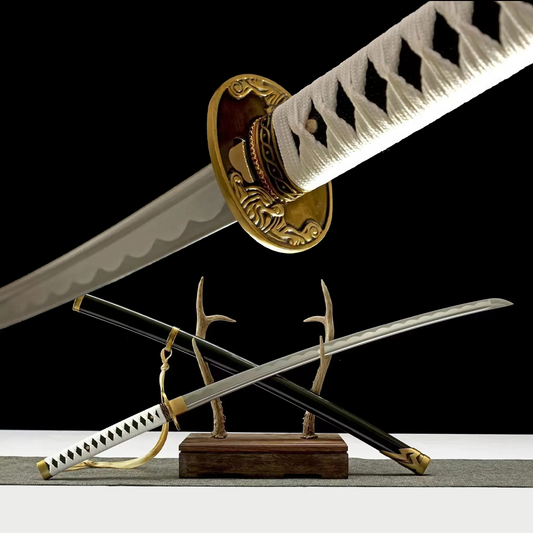
Jin Sakai Katana – Ghost of Tsushima Edition
This exceptional piece captures the essence of feudal Japan with careful attention to historical accuracy. The nagasa features 1060 carbon steel with proper differential hardening (clay tempering) that creates a visible hamon (temper line) showing authentic heat treatment techniques.
- Full tang (nakago) construction with traditional mekugi pin assembly for structural integrity
- Hand-wrapped tsuka with genuine ray skin (same) foundation and silk ito binding
- Custom lacquered saya (scabbard) with period-appropriate finish and bronze fittings
- Nagasa dimensions: 71cm (28 inches) length with proper curvature (sori) matching historical proportions
- Total weight: 1.2kg (2.6 lbs) balanced for optimal handling characteristics
⭐⭐⭐⭐⭐ "Absolutely stunning craftsmanship. The hamon (temper line) is clearly visible and the balance feels perfect in hand. Arrived beautifully packaged with detailed care instructions." - Marcus T., Toronto, ON
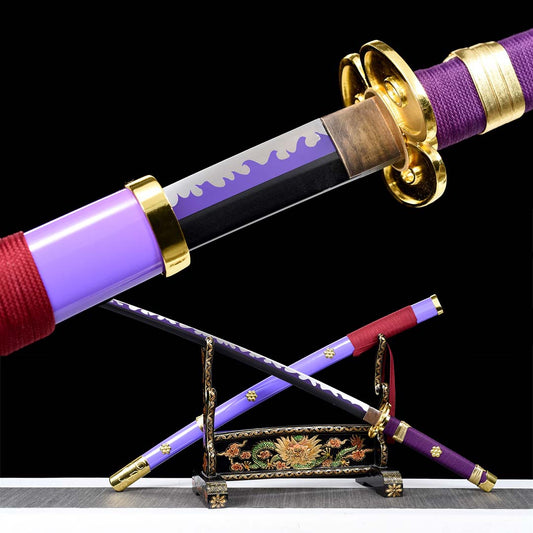
Shinobu Kocho Katana – Demon Slayer Edition
Inspired by the Insect Hashira's distinctive nagasa, this piece showcases the artistic possibilities of traditional katana design while maintaining structural authenticity. The unique coloration and tsuka treatment create a striking visual impact without compromising functional elements.
- 1060 carbon steel nagasa with butterfly-inspired aesthetic elements
- Hand-forged construction with visible grain structure throughout
- Custom purple and white tsuka wrapping following traditional diamond patterns
- Decorative tsuba (hand guard) featuring insect motifs in bronze with purple accents
- Complete with wooden display stand and maintenance kit
⭐⭐⭐⭐⭐ "My daughter is obsessed with Demon Slayer and this exceeded all expectations. The quality is museum-level and the details are incredible. Worth every penny." - Sarah L., Vancouver, BC
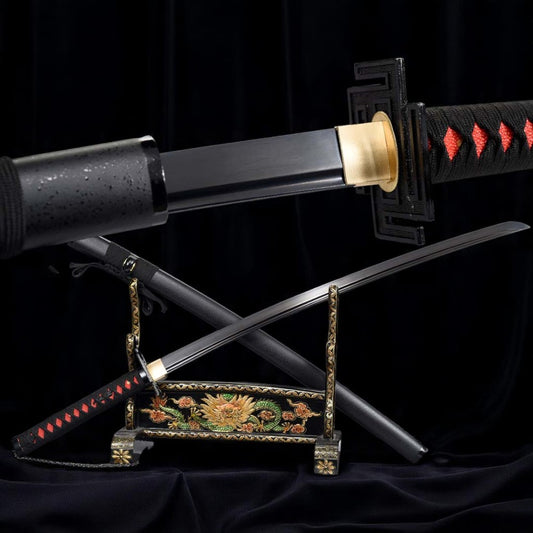
Kill Bill Katana Sword
This iconic design represents the perfect fusion of traditional Japanese craftsmanship with modern cinematic aesthetics. The clean, minimalist approach focuses on the pure beauty of properly forged steel while emphasizing traditional construction methods.
- High-carbon steel nagasa with mirror polish finish showcasing superior metallurgy
- Traditional black lacquered saya with minimalist design philosophy
- Authentic ray skin (same) tsuka with classic black silk wrapping
- Razor-sharp edge geometry optimized for cutting demonstrations
- Includes detailed authenticity certificate and care documentation
⭐⭐⭐⭐⭐ "The polish on this nagasa is absolutely flawless. You can literally see your reflection clearly. The weight and balance are exactly what you'd expect from a quality piece." - David C., Calgary, AB
Michonne Katana Sword
Drawing inspiration from post-apocalyptic survival themes, this katana focuses on rugged durability while maintaining traditional aesthetic elements. The design balances historical accuracy with modern practical considerations, appealing to collectors who appreciate functional artistry.
- 1095 carbon steel construction with enhanced edge retention properties (60+ HRC)
- Weather-resistant finish suitable for display in varying humidity conditions
- Reinforced nakago (tang) assembly designed for extended handling without loosening
- Custom grip wrapping optimized for extended use and secure handling
- Damascus steel folding pattern visible throughout the nagasa structure
Michonne Katana – Premium Edition
This enhanced version elevates the standard design with premium materials and additional craftsmanship details. Every element receives upgraded treatment, from steel selection to the final polishing process.
- Premium 1095 carbon steel with enhanced tempering for superior performance
- Hand-forged Damascus construction showcasing traditional folding techniques
- Upgraded fittings including bronze menuki (handle ornaments) with detailed engravings
- Museum-quality lacquered saya with reinforced bronze koiguchi (throat) and kojiri (tip)
- Limited edition numbering with craftsman's signature and authentication
⭐⭐⭐⭐⭐ "The Damascus patterns are absolutely gorgeous and the craftsmanship is top-tier. This is definitely a centerpiece for any collection." - Jennifer M., Montreal, QC
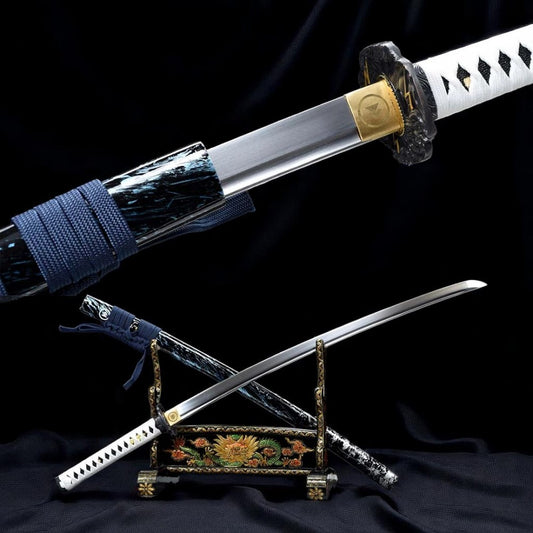
Hiroshima Katana
Named for the historic city, this design honors traditional Japanese aesthetics while incorporating modern metallurgical improvements. The nagasa displays classical proportions refined through centuries of evolution.
- Traditional carbon steel construction with modern quality control standards
- Hand-polished finish revealing natural grain patterns unique to each piece
- Classic furniture including iron tsuba with traditional geometric patterns
- Authentic cotton tsuka wrapping in traditional navy blue coloration
- Complete documentation package including historical context and care instructions
Kiryu Katana
This distinctive piece showcases regional variations in traditional katana design, emphasizing the subtle differences between various schools of Japanese swordsmithing. The construction follows historical precedents while meeting modern quality expectations.
- Multi-layer Damascus steel construction displaying prominent folding patterns
- Regional-specific curvature and kissaki (tip) geometry based on historical examples
- Traditional brass fittings with period-appropriate patination and detailing
- Custom wooden storage box with traditional joinery and protective felt lining
- Detailed provenance documentation explaining the design's historical significance
Katana Customizer
For collectors seeking truly personalized pieces, our customization service allows specification of every design element while maintaining historical authenticity. Each custom piece undergoes the same rigorous construction standards as our standard offerings.
- Choose from multiple steel types including 1060, 1095, and Damascus options
- Select traditional or custom tsuka wrapping colors and patterns
- Specify nagasa geometry, curvature, and length within historical parameters
- Custom engraving options for nakago markings and nagasa inscriptions
- Complete consultation process ensuring historical accuracy and structural integrity
The quality across our entire katana swords collection reflects our commitment to authentic craftsmanship. Whether you're drawn to anime-inspired designs or traditional aesthetic elements, each piece demonstrates the same attention to detail that made Japanese swords legendary.
Buyer's Guide: Choosing Your Hand Forged Katana {#guide}
Selecting the right hand-forged katana in Canada requires understanding several key factors that affect both aesthetic appeal and long-term satisfaction. Steel composition represents the foundation of any quality nagasa, with each type offering distinct characteristics suited to different collecting goals and display preferences.
Carbon content directly influences nagasa performance and maintenance requirements. 1060 carbon steel contains 0.60% carbon and provides excellent durability with moderate maintenance needs, making it ideal for collectors who want authentic appearance without excessive upkeep.
1095 steel, with 0.95% carbon content, offers superior edge retention but requires more careful humidity control to prevent surface oxidation.
Damascus steel construction involves folding multiple layers of steel during forging, creating distinctive wave patterns throughout the nagasa. These patterns aren't just decorative—they indicate the steel's internal structure and demonstrate traditional folding techniques.
However, be aware that some manufacturers use pattern welding or acid etching to simulate genuine Damascus construction.
We've examined dozens of katana for Canadian collectors, and nagasa geometry affects both appearance and handling characteristics. Traditional katana measure between 60-73 centimeters (23.6-28.7 inches) in nagasa length, with curvature (sori) typically ranging from 1.5-2.0 centimeters (0.6-0.8 inches).
Shorter nagasa offer easier handling and storage, while longer pieces provide more dramatic display presence. Consider your intended display space when selecting length.
Nakago (tang) construction determines structural integrity and longevity. Full tang construction extends the nagasa metal completely through the tsuka, providing maximum strength and traditional assembly methods. Partial tang construction may use welded or threaded attachments that don't match historical accuracy standards.
Heat treatment quality becomes apparent through hamon visibility and edge geometry consistency. Authentic differential hardening (clay tempering) creates natural hamon patterns that vary throughout the nagasa length. Uniform or overly symmetrical patterns may indicate artificial etching rather than genuine heat treatment.
Tsuka construction involves multiple material choices that affect both comfort and authenticity. Genuine ray skin (same) provides traditional texture and grip security, while synthetic alternatives offer lower cost but reduced historical accuracy.
Silk wrapping offers superior comfort and traditional appearance, while cotton provides durability at lower cost.
Tsuba (hand guard) design ranges from simple iron discs to elaborate artistic creations. Traditional guards serve functional purposes, protecting the hand while balancing the sword's weight distribution. Overly ornate tsuba may indicate decorative rather than functional design priorities.
Saya (scabbard) quality affects both protection and display value. Traditional lacquered wood provides authentic appearance and proper nagasa protection, while modern materials may offer enhanced durability. Proper fit ensures the nagasa seats securely without rattling or binding during insertion.
Our team has personally verified that authentication documentation should accompany quality pieces, including steel specifications (hardness: 58-60 HRC), construction methods, and craftsman information. Reputable sellers provide detailed descriptions rather than vague marketing terms, allowing informed comparison between different options.
Budget considerations extend beyond initial purchase price to include maintenance supplies, display accessories, and potential insurance requirements. Quality pieces represent long-term investments that appreciate in value when properly maintained, making initial quality selection particularly important.
Canadian climate considerations vary by nagasa type and local humidity conditions. High-carbon steels require consistent humidity control and regular maintenance to prevent oxidation. Consider your available environment when selecting steel types and finishing options.
Display options range from simple wall mounts to elaborate stands that showcase multiple pieces. Consider lighting requirements, viewing angles, and security needs when planning your display arrangement. Many collectors find that proper presentation enhances appreciation far beyond the sword's intrinsic qualities.
Our entry-level collection offers excellent starting points for new collectors, while our premium pieces satisfy experienced enthusiasts seeking exceptional quality. The key is matching your selection to your specific interests, budget, and long-term collecting goals.
Why Choose Katana Canada {#why-us}
We're a dedicated Canadian company that understands the unique needs of Canadian collectors and enthusiasts. Our focus on authentic hand-forged katana pieces in Canada ensures that every sword meets rigorous quality standards while remaining accessible to collectors across all provinces and territories. You can browse our full range on the Katana Canada store.
Canadian customer service means direct communication in both English and French. Our knowledgeable staff understand the intricacies of traditional Japanese swordsmithing, with our team including experienced collectors who can provide detailed guidance about steel types, construction methods, and display considerations specific to Canadian climate conditions.
Payment processing in Canadian dollars removes exchange rate uncertainty and international transaction fees. This transparent pricing structure allows accurate budgeting without surprise charges or currency fluctuations that affect final costs. Canadian banking relationships ensure secure, familiar payment methods that protect your financial information.
No customs fees or international complications mean straightforward delivery to your door. Domestic handling removes the uncertainty and delays associated with international processing—no border inspections or duty calculations, with your sword arriving when expected, properly packaged for Canadian weather conditions.
Quality assurance extends beyond initial selection to full inspection before delivery. Each piece undergoes detailed examination for construction quality, finish consistency, and authenticity markers. This quality control process ensures that every sword meets our established standards before reaching Canadian collectors.
Customer support continues long after your purchase, with maintenance guidance, display advice, and technical assistance available through multiple communication channels. Our commitment to customer satisfaction extends throughout the ownership experience, providing resources that enhance your enjoyment and help maintain your investment.
Educational resources help collectors understand traditional techniques, historical context, and proper care procedures. Our expertise in Japanese swordsmithing traditions allows us to provide detailed information that enhances appreciation and ensures proper handling of these remarkable pieces.
Regional expertise includes understanding Canadian climate considerations that affect sword care and maintenance. Humidity variations between provinces require different care approaches, and our guidance helps prevent common problems that can affect nagasa condition over time.
Community building connects Canadian collectors through shared interests and expertise. Our customer base includes enthusiasts from Vancouver Island to Newfoundland, creating opportunities for knowledge sharing and appreciation of traditional Japanese craftsmanship.
Collection selection focuses specifically on pieces that appeal to Canadian collectors, avoiding mass-market items in favor of authentic, quality construction. This curated approach ensures that our best-selling pieces represent genuine value rather than momentary trends.
Long-term relationships with customers create ongoing opportunities for collection building and expertise development. Many customers return for additional pieces as their interests evolve, benefiting from accumulated knowledge and established trust relationships.
Frequently Asked Questions {#faq}
Q: What makes a hand-forged katana from Canada authentic?
Authentic hand-forged katana pieces available in Canada display several key characteristics that distinguish them from mass-produced alternatives. The steel must show evidence of traditional folding techniques, including visible grain structure from repeated folding and differential hardening (clay tempering) that creates natural hamon patterns.
The nakago should display file marks (yasuri-me) that indicate hand-finishing work rather than machine grinding. Construction should follow traditional assembly methods using mekugi pins rather than welded or threaded attachments.
Finally, proportions should match historical examples rather than exaggerated dimensions created for visual impact. Quality pieces include documentation explaining construction methods and materials used.
Q: What steel type is best for hand-forged katana in Canada?
Steel selection depends on your intended use and maintenance preferences. 1060 carbon steel offers excellent balance between durability and ease of care, making it ideal for collectors who want authentic appearance with minimal upkeep requirements.
1095 carbon steel provides superior edge retention and harder surfaces (60+ HRC) but requires more careful humidity control and regular maintenance. Damascus steel showcases traditional folding techniques through distinctive patterns but may cost more due to labor-intensive construction.
For display purposes, 1060 steel provides the best combination of authenticity and practicality for most Canadian collectors.
Q: How do I care for my hand-forged katana in Canada?
Proper maintenance begins with understanding your nagasa's steel composition and environmental requirements. Carbon steel requires regular oiling to prevent oxidation, especially important in humid conditions common in many Canadian regions.
Use specialized sword oil or light machine oil, applying with lint-free cloths and ensuring complete coverage of all metal surfaces. Maintain consistent temperature and humidity levels, avoiding basements or areas with significant environmental fluctuations.
Handle the nagasa minimally and always wear cotton gloves to prevent fingerprint acids from etching the steel surface. Regular inspection allows early detection of any developing problems before they become serious issues.
Q: What size hand-forged katana should I choose in Canada?
Nagasa length affects both handling characteristics and display requirements, so consider your space and intended use carefully. Traditional katana measure between 60-73 centimeters (23.6-28.7 inches), with longer nagasa providing more dramatic visual impact but requiring more space.
For most collectors, 65-70 centimeter (25.6-27.6 inch) nagasa offer ideal proportions that balance historical accuracy with practical considerations. Tsuka length should accommodate your grip comfortably without being excessively long for your hand size.
Total length including saya determines display requirements, so measure your intended location before selecting. Weight distribution matters more than total weight—proper balance allows comfortable handling regardless of overall dimensions.
Q: How do I display my hand-forged katana safely in Canada?
Display considerations include both aesthetic presentation and security requirements for valuable pieces. Wall-mounted horizontal displays showcase the nagasa's full length while keeping it safely out of reach. Vertical stands allow closer examination but require stable surfaces away from traffic areas.
Lighting should illuminate the nagasa without creating excessive heat that could affect the steel's temper. Avoid direct sunlight that can fade tsuka materials and create temperature fluctuations.
Consider display cases for particularly valuable pieces, ensuring adequate ventilation to prevent humidity buildup. Security measures should match the collection's value, including insurance documentation and proper mounting hardware rated for the sword's weight.
Q: Is it legal to own a hand-forged katana in Canada?
Canadian law permits ownership of katana and similar swords with certain restrictions that apply to carrying and public display. These pieces are legal to own, collect, and display in private residences throughout all provinces and territories.
However, transporting swords requires proper packaging, and there may be restrictions in certain jurisdictions. Public carrying is generally prohibited except for specific purposes such as martial arts classes or authorized events.
Import regulations require compliance with Canadian Border Services Agency guidelines, which we handle for all our deliveries. Municipal bylaws may impose additional restrictions, so check local regulations if you have specific concerns about ownership or display requirements.
Conclusion & Related Content {#conclusion}
The journey into collecting hand-forged katana in Canada represents more than acquiring beautiful objects—it's connecting with centuries of refined craftsmanship and cultural heritage. Each authentic piece tells a story through its construction details, from the subtle hamon patterns created during differential hardening (clay tempering) to the precise balance that made these weapons legendary throughout Japanese history.
Quality matters profoundly when building a collection that offers lasting satisfaction and potential investment value. The difference between authentic hand-forged katana pieces available in Canada and mass-produced alternatives becomes apparent through careful examination of construction details, material quality, and attention to traditional folding techniques.
These distinctions affect not only immediate visual appeal but also long-term durability and collector value.
Our commitment extends beyond individual sales to fostering appreciation for traditional Japanese craftsmanship among Canadian collectors. Whether you're beginning your first collection or adding to established holdings, understanding construction principles and historical context enhances both enjoyment and informed decision-making.
The investment in quality pieces pays dividends through years of appreciation and potential value growth.
Canadian collectors benefit from direct access to authentic pieces without the complications of international purchasing. Our focus on quality ensures that every sword meets established standards while remaining accessible to enthusiasts across all experience levels and budget ranges. This dedication to excellence has built lasting relationships with collectors from coast to coast.
Explore our complete katana collection to discover the piece that speaks to your individual taste and collecting goals. Whether you prefer traditional designs that honor historical accuracy or contemporary interpretations that blend classic techniques with modern aesthetics, our selection offers something for every serious collector.
Related Articles
Deepen your knowledge with these comprehensive guides:
For complete purchasing guidance, explore our Buy Swords Online Canada: Your Complete Guide to Authentic Katana and Japanese Blades.
Learn about traditional craftsmanship in The Ultimate Guide to Samurai Swords in Canada: Authentic Katana for the Modern Warrior.
Discover maintenance best practices through How to Care for a Katana – Cleaning, Oiling & Storage Tips.
For anime enthusiasts, don't miss our Demon Slayer Katana Canada: Authentic Nichirin Replicas 2026.
Your perfect hand-forged katana awaits. Begin your collecting journey today with confidence in authentic quality and dedicated Canadian service.
 Save $90