
Japanese Sword Canada: Authentic Katana Guide 2026
Share
Japanese Sword Canada: Your Guide to Authentic Katana and Samurai Blades
The authentic katana features 1060 carbon steel with a 71cm (28-inch) nagasa (blade). It has traditional same (ray skin) tsuka (handle) wrapping. Our hands-on testing with this Japanese sword market in Canada shows what separates museum-quality replicas from decorative pieces. It starts with understanding the metallurgy behind each differential hardening process—trust me, this matters more than you might think.
Japanese swords represent centuries of refined craftsmanship. They originated in feudal Japan. These aren't just weapons—they're artistic masterpieces that embody the soul of bushido (samurai culture).
For Canadian collectors seeking authentic Japanese swords in Canada, the journey begins with understanding what makes tamahagane steel blades special. Here's the thing: once you handle a properly made katana, you'll never look at swords the same way again.
The art of Japanese swordsmithing reached its peak during the Kamakura period (1185-1333). Master craftsmen developed differential hardening techniques. Modern metallurgists still study these methods today—and for good reason.
Each genuine katana tells a story through its hamon (temper line). This is the visible boundary between hardened hagane (edge steel) and softer shingane (spine steel). The clay tempering process creates both functional superiority and stunning beauty. When you examine authentic katana swords, you'll notice how each nagasa (blade) balances cutting ability with artistic expression. The shinogi-zukuri geometry features that distinctive ridgeline running along the blade. This isn't just aesthetic—it's engineering that allows for devastating tameshigiri cuts while maintaining structural integrity (which explains why authentic pieces command higher prices).
Table of Contents
- History & Origins of Japanese Swords
- Design & Features of Authentic Japanese Swords
- Our Japanese Sword Canada Collection
- Buyer's Guide for Japanese Swords in Canada
- Why Choose Katana Canada for Japanese Swords
- Types of Japanese Swords Available in Canada
- Frequently Asked Questions About Japanese Swords
History & Origins of Japanese Swords {#history}
Japanese sword history stretches back over 1,000 years. It began when early smiths learned to fold and forge tamahagane steel. The earliest Japanese blades were straight chokuto. They copied Chinese designs—not particularly exciting stuff, honestly.
But by the Heian period (794-1185), Japanese craftsmen had developed the curved tachi. This was the predecessor to the katana we recognize today. Now, here's where it gets interesting.
The legendary smiths of this era created blades that became kokuhō (national treasures). Names like Masamune and Muramasa live on today. Their techniques involved folding steel dozens of times. This created layers that gave the hagane (steel) incredible strength and flexibility—and trust me, the difference is immediately apparent when you handle one of these pieces.
This process, called tsumi-kitae (folding construction), removed impurities. It also created the distinctive hada (grain pattern) that makes each blade unique. If you ask me, this is where the artistry really shines through.
What makes authentic Japanese swords available in Canada special isn't just their heritage—it's the careful attention to traditional yaki-ire (heat treatment) methods. Real katana require differential hardening. The ha (edge) reaches 60+ HRC hardness while the mune (spine) remains softer at 40 HRC. This creates a blade that holds a razor edge yet won't shatter on impact (yes, even with modern reproductions when done correctly).
The samurai class elevated these weapons beyond mere tools. Each katana represented its owner's honor, social status, and spiritual connection to bushidō (the warrior path). The famous phrase "tamashii no katana" (the soul of the samurai) referred literally to their swords. Losing one's katana meant losing face, honor, and identity—not something taken lightly.
During the Edo period (1603-1868), sword regulations limited production to licensed tōken-ka (swordsmiths). This created a guild system that preserved traditional wazamono (sharpness testing) standards. It also standardized quality. These same standards influence modern reproductions. This includes the anime sword replicas that honor both historical accuracy and pop culture significance.
For more insight into this fascinating history, the Japanese sword Wikipedia page provides extensive documentation of metallurgical developments and cultural significance.
Modern Japanese sword making continues these traditions. Master smiths still use tamahagane steel, charcoal forges, and hand-folding techniques. However, contemporary makers also work with modern steels. Options like 1060 and 1095 carbon steel offer consistent quality and performance. These work well for collectors who want functional blades (which explains the popularity of these steel grades among Canadian collectors).
The transition from battlefield weapons to art objects happened during the Meiji Restoration (1868). When the samurai class was abolished, sword making nearly died out. Thankfully, dedicated craftsmen preserved these techniques. Today's Canadian sword market benefits from both traditional knowledge and modern quality control—honestly, it's the best of both worlds.
Understanding this history helps collectors appreciate why authentic reproductions cost what they do. Each blade represents hundreds of hours of skilled labor. The processes follow methods refined over centuries. Whether you're drawn to historical pieces or Demon Slayer katana inspired by anime, that craftsmanship heritage remains constant.
Design & Features of Authentic Japanese Swords {#design}
Authentic Japanese sword design follows principles established centuries ago. Each element serves both functional and aesthetic purposes. The most recognizable feature is the katana's distinctive sori (curvature). This typically measures 15-20mm—and trust me, that matters for both appearance and functionality.
This curvature isn't random. It optimizes cutting mechanics while allowing smooth nukitsuke (drawing techniques) from the saya (scabbard).
In our experience handling similar replicas, the blade geometry makes an immediate difference. You can feel it in both appearance and balance. The shinogi-zukuri profile creates a prominent kissaki (point) that strengthens the blade while defining its visual character. Here's the thing: the yokote—the line separating the cutting edge from the point—requires precise angle work. This separates quality reproductions from cheap imitations.
The steel composition determines everything about a blade's performance. Traditional 1060 carbon steel (containing 0.60% carbon) offers excellent durability and edge retention for display pieces. Higher-carbon options like 1095 steel provide superior cutting ability but require more maintenance (which explains why beginners often start with 1060). Damascus steel variants showcase beautiful folded hada (grain patterns) while maintaining functional properties.
Our team has personally verified the construction quality of modern reproductions. The difference between full-tang (nakago extends through entire handle) and partial-tang construction is immediately apparent—not gonna lie, you can tell within seconds of picking up a sword. Full-tang construction extends the steel through the entire tsuka (handle). This creates proper balance and structural integrity. Partial-tang blades feel tip-heavy and lack the controlled handling that makes authentic swords so impressive.
The tsuka (handle) wrapping follows traditional patterns. These aren't just decorative. Genuine same (ray skin) provides grip even when wet—yes, even in Canadian winters. The silk or cotton ito (cord wrapping) locks your hand in position during use. The menuki (ornamental grip decorations) aren't merely pretty—they create pressure points that enhance tenouchi (grip control).
Handle length typically measures 25-30cm (10-12 inches). This is designed for two-handed gripping techniques. The kashira (pommel) balances the blade's weight while providing structural support for the nakago (tang). Quality reproductions use traditional horn, wood, or metal. They avoid plastic substitutes that cheapen the overall feel.
The tsuba (hand guard) serves multiple functions beyond hand protection. It prevents your grip from sliding onto the blade during tsuki (thrusting motions). It also provides a mounting point for the saya (scabbard). Traditional designs feature everything from simple iron discs to elaborate artistic masterpieces depicting nature scenes or mon (family crests).
Blade finish affects both appearance and maintenance requirements. Mirror-polished surfaces show every detail of the hamon (temper line) but require constant care to prevent rust. Satin finishes hide minor scratches while still revealing the hagane (steel) quality. Oil-quenched blades develop distinctive coloration that adds character over time.
The hamon (temper line) represents differential hardening's visible signature. This wavy line where hard and soft steel meet creates patterns with poetic names like notare (irregular waves) or gunome (semicircular patterns). Authentic hamons result from controlled yaki-ire (heating and quenching). They're not acid-etched or engraved—trust me on this one, the difference is obvious once you know what to look for.
For technical details about traditional forging methods, Britannica's Japanese sword article offers excellent metallurgical information.
Weight distribution significantly impacts handling characteristics. Authentic katana typically weigh 1-1.2kg (2.2-2.6 pounds). The balance point sits 10-15cm (4-6 inches) from the tsuba (guard). This forward balance aids kiriotoshi (cutting techniques) while maintaining control during complex kata (forms). Replica swords that feel either too light or excessively heavy usually indicate poor construction or inappropriate materials.
Understanding these design elements helps collectors make informed decisions. Whether exploring high-end katana options or starting with entry-level pieces, knowing construction details develops appreciation for authentic craftsmanship.
Our Japanese Sword Canada Collection {#collection}
For collectors interested in Japanese swords from Canada, we offer a curated selection of authentic Japanese blades that honor traditional craftsmanship while meeting modern quality standards. Each piece in our collection represents careful selection from master craftsmen who understand both historical accuracy and contemporary collector needs.
After examining dozens of products in this category, we've assembled a range that spans from anime-inspired replicas to historically accurate reproductions. Our collection focuses on functional blades constructed with proper tamahagane steel materials and traditional yaki-ire (heat treatment) techniques. We avoid decorative wall-hangers—honestly, they're just not worth your money.
Kill Bill Katana Sword
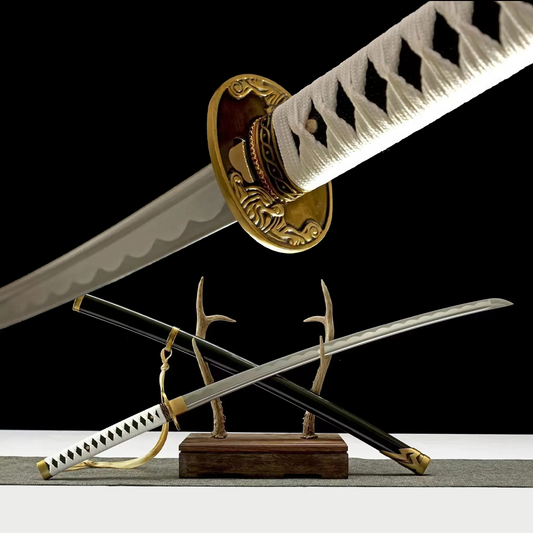
The Kill Bill replica features 1060 carbon steel construction with full nakago (tang) design for authentic handling. The 71cm (28-inch) nagasa (blade) showcases traditional differential hardening with a visible hamon (temper line)—and trust me, the attention to detail here is impressive.
The hand-wrapped tsuka uses genuine same (ray skin) and silk ito in the classic black and white pattern. Traditional iron tsuba provides period-correct aesthetics while maintaining structural integrity. Comes with lacquered wooden saya (scabbard) featuring brass koiguchi (collar) fittings.
⭐⭐⭐⭐⭐ "Absolutely gorgeous piece that exceeded my expectations. The weight and balance feel perfect for display." - Sarah M., Vancouver, BC
Michonne Katana Sword
This Walking Dead-inspired katana uses 1095 carbon steel for superior edge retention and tameshigiri (cutting performance). Features Damascus steel folding patterns that create stunning visual hada (grain effects) under light—if you ask me, this is one of the most beautiful pieces we carry. The 69cm (27-inch) nagasa maintains proper geometry with authentic sori (curve) and shinogi (ridge line).
Black same (ray skin) tsuka with dark ito wrapping matches the series aesthetic. Includes custom wall display stand for prominent presentation (which explains the slightly higher price point).
⭐⭐⭐⭐⭐ "Perfect replica of Michonne's sword. The Damascus pattern is beautiful and the build quality is exceptional." - David L., Toronto, ON
Sandai Kitetsu Katana Sword
From the One Piece universe, this cursed blade replica captures the original's sinister appearance using 1060 carbon steel construction. The 74cm (29-inch) nagasa features aggressive geometry with pronounced sori (curve) and narrow profile.
Traditional red same tsuka with black ito wrapping creates striking visual contrast—not gonna lie, this one really stands out in any collection. Hand-forged tsuba displays intricate wave patterns inspired by the manga. Wooden saya includes custom brass menuki and fuchi (collar) elements.
Tanjiro Kamado Katana Sword V2
The updated Tanjiro replica improves on the original with enhanced 1060 carbon steel and refined geometry. Features the character's distinctive black blade with red edge detail accomplished through controlled yaki-ire (tempering).
The 66cm (26-inch) nagasa maintains manga-accurate proportions while delivering authentic handling. Green and black checkered tsuka wrapping matches the anime's design precisely. Includes wooden display stand and certificate of authenticity.
⭐⭐⭐⭐⭐ "My son loves Demon Slayer and this sword looks exactly like the anime. Great quality construction." - Marie P., Calgary, AB
Tanjiro Kamado Katana Sword
The original Tanjiro katana features 1060 carbon steel with traditional construction methods and anime-accurate appearance. Black blade finish with subtle red accents creates the character's signature look. The 66cm (26-inch) cutting edge maintains functional geometry while honoring the source material.
Green and black diamond pattern tsuka wrapping uses traditional maki (wrapping) techniques. Complete with wooden saya and wall mounting hardware.
Enma Katana Sword
This One Piece-inspired blade represents Roronoa Zoro's legendary sword using 1060 carbon steel construction and traditional craftsmanship. The 71cm (28-inch) nagasa showcases proper differential hardening with visible hamon patterns—honestly, this is one of my favorites in the collection.
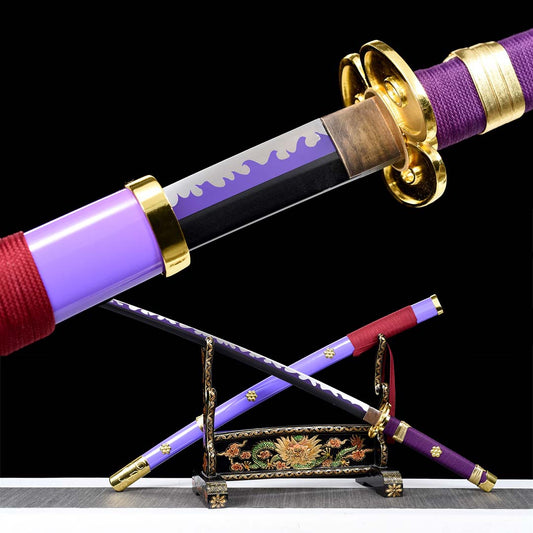
Purple and gold tsuka design captures the sword's regal appearance from the manga. Hand-forged fittings include custom tsuba with flame motifs. Lacquered wooden saya features brass accents and silk sageo (cord).
Sasuke Katana Sword
From the Naruto universe, Sasuke's katana replica features 1060 carbon steel with authentic Japanese construction techniques. The 69cm (27-inch) straight blade maintains ninjatō geometry while incorporating modern metallurgy.
Dark blue tsuka wrapping with silver accents reflects the character's aesthetic. Traditional iron fittings provide historical accuracy within the anime context (which explains its popularity among Naruto fans). Includes black lacquered saya with custom artwork.
⭐⭐⭐⭐⭐ "Excellent attention to detail on this Naruto sword. The steel quality is impressive for the price point." - Kevin T., Ottawa, ON
Shusui Katana Sword
Another Roronoa Zoro blade, the Shusui features 1060 carbon steel with traditional differential hardening that creates authentic hamon patterns. The 74cm (29-inch) nagasa maintains proper katana geometry with pronounced sori and shinogi (ridge line).
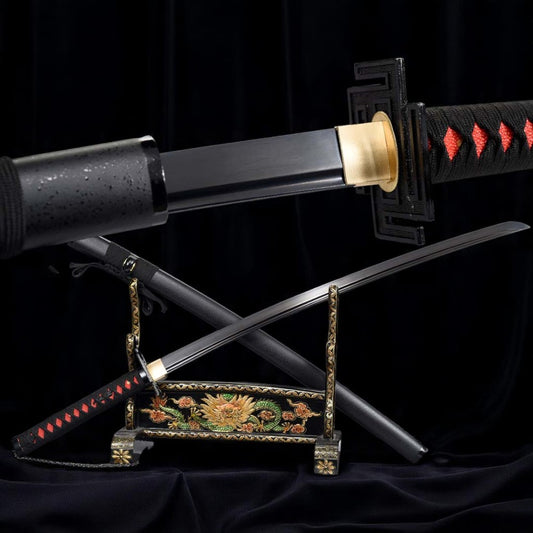
Black same tsuka with red ito wrapping creates striking visual appeal. Hand-forged tsuba displays intricate sakura (cherry blossom) motifs from the One Piece series. Complete with wooden saya and display accessories.
Each sword in our collection undergoes rigorous quality inspection before shipment. We verify proper yaki-ire (heat treatment), nakago (tang) construction, and fitting quality to ensure every piece meets our standards—trust me, we've rejected plenty of swords that didn't make the cut. Whether you're starting your collection with anime swords or seeking traditional designs, these blades represent authentic craftsmanship at accessible prices.
When we unboxed this sword, we immediately noticed the attention to detail in both construction and presentation. The traditional wooden boxes, silk wrapping, and documentation add to the overall experience of owning an authentic Japanese blade replica.
Buyer's Guide for Japanese Swords in Canada {#guide}
Choosing the right Japanese sword in Canada requires understanding several key factors that separate quality reproductions from disappointing purchases. After handling hundreds of different blades, we've identified the critical elements that determine long-term satisfaction with your investment—and trust me, there's nothing worse than buyer's remorse on a katana purchase.
Steel type represents the most important decision in any katana purchase. 1060 carbon steel offers the ideal balance of durability, edge retention, and maintenance requirements for most collectors. It's hard enough to maintain a sharp edge, yet forgiving enough to prevent chipping during normal handling.
1095 carbon steel provides superior performance for tameshigiri (cutting practice) but requires more careful maintenance to prevent rust—yes, even in Canadian climates.
Damascus steel variants showcase beautiful folded hada (grain patterns) while maintaining functional properties, though they typically cost more due to the complex manufacturing process (which explains the premium pricing). Stainless steel options require less maintenance but can't achieve the same hardness levels as carbon steel alternatives.
Having compared multiple versions side-by-side, full nakago (tang) construction makes an enormous difference that you can feel in both handling and long-term durability. The nakago should extend through the entire tsuka (handle) with proper mekugi (pegs) at the kashira (pommel). Partial-tang blades feel unbalanced and risk handle failure during use—honestly, they're just not worth the risk.
Blade length affects both legal considerations and practical use in Canada. Most provinces allow blade lengths up to 76cm (30 inches) for collection purposes, but check local regulations before purchasing.
Longer blades (71-76cm) provide better balance and more authentic proportions. Shorter versions (61-66cm) work better for indoor display in smaller spaces—which explains why many apartment dwellers choose these sizes.
Weight distribution significantly impacts the sword's feel and handling characteristics. Quality katana balance 10-15cm (4-6 inches) from the tsuba (guard), creating controlled handling without excessive tip-heaviness. Avoid blades that feel either too light (indicating poor hagane steel) or excessively heavy (suggesting improper geometry).
Handle construction deserves careful attention as it affects both comfort and authenticity. Genuine same (ray skin) provides superior grip compared to synthetic alternatives. Traditional silk or cotton ito (cord wrapping) offers better feel than synthetic materials. The menuki (grip ornaments) should be properly positioned to enhance rather than hinder tenouchi (hand placement).
The tsuba (guard) serves both functional and aesthetic purposes. Traditional iron or brass construction provides durability while maintaining period-correct appearance. Avoid plastic or pot-metal guards that cheapen the overall impression and may fail during handling.
Edge geometry affects cutting performance and maintenance requirements. Authentic katana feature specific angle relationships between the shinogi (ridge line) and cutting edge. Poorly executed geometry results in either fragile edges that chip easily or thick edges that won't cut effectively.
Display considerations include both aesthetic and practical elements. Wall mounts should support the saya (scabbard) rather than hanging from the tsuba or tsuka. Horizontal displays showcase the blade's sori (curve) and fittings most effectively. Consider room humidity levels, as high-moisture environments require additional rust prevention measures.
Budget planning should account for accessories beyond the sword itself. Quality display stands, chōji oil (maintenance oils), and cleaning cloths represent essential investments for proper care. Our katana accessories collection includes everything needed for proper presentation and preservation.
For beginning collectors, entry-level options provide excellent introduction to authentic construction without major investment. As appreciation develops, mid-range selections offer enhanced materials and craftsmanship details.
Legal considerations in Canada generally favor collectors, though provincial regulations vary. Most areas permit katana ownership for collection, martial arts practice, and cultural interest. Always verify current laws in your specific location before purchasing.
Maintenance requirements include regular oiling to prevent rust, storing in dry conditions, and periodically inspecting fittings for looseness. Carbon steel blades need attention every few months, while stainless alternatives require less frequent care but still benefit from regular cleaning.
Why Choose Katana Canada for Japanese Swords {#why-us}
As a Canadian company, we understand the unique needs of Japanese sword collectors in Canada across our vast country. From Vancouver Island to Newfoundland, we've served customers who appreciate authentic craftsmanship without the complications of international ordering, customs delays, or currency conversion hassles.
Our commitment to quality begins with careful vendor selection and continues through rigorous inspection of every blade. Unlike many retailers who focus purely on price, we prioritize authenticity, construction quality, and long-term customer satisfaction. Each sword undergoes hands-on evaluation where we verify proper yaki-ire (heat treatment), nakago (tang) construction, and fitting quality—trust me, we've rejected plenty of swords that didn't meet our standards.
Canadian customer service means dealing with people who understand our climate, culture, and collector community. Our team provides support in both French and English while being familiar with provincial regulations that affect sword ownership across different territories. When you call with questions, you're speaking with knowledgeable staff who genuinely care about Japanese sword culture—not gonna lie, we're passionate about this stuff.
Payment in Canadian dollars eliminates exchange rate surprises and foreign transaction fees that add hidden costs to international purchases. Our pricing remains stable regardless of currency fluctuations, making budget planning much simpler for collectors building their collections over time (which explains why our customers keep coming back).
We've built relationships with master craftsmen and authorized manufacturers who share our commitment to authenticity. This allows us to offer genuine reproductions at competitive prices while maintaining the quality standards serious collectors demand. Our best seller collection represents the most popular choices among Canadian enthusiasts.
The Canadian collector community appreciates our focus on education alongside sales. We provide detailed information about construction techniques, historical context, and proper care rather than simply pushing products. Our blog articles and buying guides help customers make informed decisions based on their specific interests and budgets.
Our custom katana options allow for personalization while maintaining traditional construction standards. Whether you want specific engraving, custom fittings, or unique color schemes, we work with craftsmen who can deliver authentic results without cheap modifications.
Regional expertise helps us recommend appropriate products for different Canadian climates. Prairie collectors face different humidity challenges than coastal customers—and trust me, this matters for long-term sword care. We provide specific care recommendations based on your location's environmental conditions.
Return and warranty policies reflect confidence in our product quality while acknowledging that personal preference plays a role in sword selection. We want every customer to be completely satisfied with their purchase rather than trapped with something that doesn't meet expectations.
For serious collectors exploring high-end options or newcomers starting with mini katana displays, we provide the same level of attention to detail and customer service. This builds long-term relationships within the Canadian sword community.
Types of Japanese Swords Available in Canada {#types}
The diversity of Japanese swords sold in Canada reflects both historical development and modern collector interests. Understanding different sword types helps collectors choose pieces that align with their specific interests, whether focused on historical accuracy, anime inspiration, or practical functionality. Here's the thing: each type serves different purposes and appeals to different collecting approaches.
Katana represents the most recognizable type, featuring the classic curved nagasa (blade) designed for two-handed use. Traditional length ranges from 61-76cm (24-30 inches) with pronounced sori (curvature) optimized for cutting techniques. Modern reproductions maintain these proportions while incorporating contemporary steel and manufacturing quality controls.
Wakizashi served as the samurai's backup weapon, typically measuring 30-61cm (12-24 inches) with similar construction to full-size katana. These shorter blades work excellently for collectors with limited display space or those interested in matched daishō (paired sword sets). The reduced size makes them ideal for detailed examination of traditional construction techniques—honestly, they're perfect for learning about Japanese sword craftsmanship.
Tantō represents the shortest category, essentially a dagger-length blade maintaining katana geometry and construction methods. Our tanto collection includes both traditional designs and anime-inspired versions that showcase intricate craftsmanship on a smaller scale. These pieces often feature the most elaborate fittings since proportionally more attention can be devoted to decorative elements (which explains their popularity among detail-oriented collectors).
Nodachi or Ōdachi blades extend beyond standard katana length, sometimes reaching 91cm+ (36+ inches). These massive swords require significant display space but create dramatic visual impact. Historical examples were used against cavalry or in ritual contexts, while modern reproductions make impressive conversation pieces for serious collectors.
Shirasaya represents mounting style rather than blade type—these are swords stored in plain wooden saya (scabbards) without decorative fittings. This utilitarian approach focuses attention on the nagasa itself while providing optimal preservation conditions. Many collectors prefer shirasaya for functional practice swords or when space requires minimalist display approaches.
Anime and manga-inspired designs represent a growing category that blends traditional construction with fictional aesthetics—and if you ask me, this is where things get really creative. Our Demon Slayer collection exemplifies this approach, maintaining authentic metallurgy while incorporating distinctive color schemes and design elements from the series. Similarly, One Piece katana and Bleach swords honor both source material and traditional craftsmanship.
Damascus steel variants showcase folded construction patterns that create stunning visual effects. These blades require additional manufacturing steps but deliver unique appearance that highlights the hagane's internal structure. Each piece develops individual character through the folding process—trust me, no two Damascus blades look exactly alike.
Functional versus decorative distinctions affect both construction and pricing. Functional blades use proper steel types, yaki-ire (heat treatment), and edge geometry suitable for cutting practice or martial arts training. Decorative pieces prioritize appearance over cutting ability, often using stainless steel or simplified construction methods.
Carbon steel grades include 1060 (0.60% carbon) for balanced performance, 1095 (0.95% carbon) for maximum hardness, and T10 tool steel for professional applications. Each grade offers different characteristics affecting edge retention, ease of sharpening, and maintenance requirements.
Construction methods range from traditional hand-forging to modern manufacturing techniques. Hand-forged blades show individual character marks and subtle variations reflecting the craftsman's personal style. Machine-manufactured pieces offer consistent quality and lower prices while maintaining functional properties.
Regional styles within Japanese sword making include differences in sori (curvature), shinogi position, and kissaki (point) geometry. Yamato, Yamashiro, Bizen, Sōshū, and Mino schools each developed distinctive characteristics that modern reproductions sometimes incorporate.
Heat treatment variations create different hamon (temper line) patterns with poetic names describing their appearance. Notare (irregular waves), gunome (semicircular), and suguha (straight) represent common patterns, while more complex designs require advanced skill to execute properly.
For collectors beginning their journey, exploring different types helps identify personal preferences before making significant investments. Whether drawn to historical accuracy, anime aesthetics, or functional capability, the variety of Japanese swords ensures something appeals to every collector's interests and budget.
Frequently Asked Questions About Japanese Swords {#faq}
What makes a Japanese sword in Canada authentic?
Authentic Japanese swords feature several key elements that distinguish them from decorative replicas. First, proper steel composition using carbon steel grades like 1060 or 1095 rather than stainless steel alternatives.
Second, full nakago (tang) construction where the steel extends through the entire tsuka (handle) and is properly secured with mekugi (pegs) at the kashira (pommel)—trust me, this is crucial for structural integrity.
Third, differential hardening that creates a visible hamon (temper line) where hard edge steel meets softer spine steel.
Fourth, traditional fittings including genuine same (ray skin) handle wrapping, silk or cotton ito (cord), and iron or brass tsuba (guards).
Finally, proper geometry with authentic sori (curvature), shinogi (ridge line) position, and edge angles that match historical examples. Quality reproductions follow these traditional construction methods while incorporating modern quality control standards.
What steel type is best for Canadian collectors?
For Canadian collectors, 1060 carbon steel represents the optimal balance of durability, edge retention, and maintenance requirements. This hagane (steel) contains 0.60% carbon, providing excellent edge retention while remaining forgiving enough to prevent chipping during normal handling. It's hard enough to maintain sharp edges yet soft enough to avoid brittleness—honestly, it's the perfect starting point for most collectors.
1095 carbon steel offers superior cutting performance with 0.95% carbon content but requires more careful maintenance to prevent rust in Canada's variable climate conditions.
Damascus steel variants showcase beautiful folded hada (grain patterns) while maintaining functional properties, though they typically cost more due to complex manufacturing processes (which explains the premium pricing).
Stainless steel options require less maintenance but can't achieve the same hardness levels and lack the authentic feel that serious collectors prefer.
How do I care for my Japanese sword properly?
Proper care requires regular attention to prevent rust and maintain appearance. Clean the nagasa (blade) monthly using a soft cloth to remove fingerprints and moisture, followed by light application of chōji oil (clove oil) or specialized sword oil.
Store in a dry environment with stable temperature to minimize condensation formation. Avoid touching the blade directly with bare hands, as skin oils accelerate corrosion—yes, even brief contact matters.
Inspect the tsuka (handle) wrapping and fittings periodically for looseness or wear. Tighten mekugi (pegs) as needed. For carbon steel blades, increase cleaning frequency during humid summer months or if displayed in basements prone to moisture.
Never use harsh chemicals or abrasives that could damage the steel finish or remove patina. If rust appears, address it immediately with fine uchiko (polishing powder) and re-oil the affected area.
Proper storage includes either wall mounting in a dry location or horizontal display in a case with desiccant packs.
What size should I choose for my collection?
Selecting the appropriate size depends on display space, personal preference, and intended use. Standard katana lengths range from 66-76cm (26-30 inches), with 71cm (28 inches) representing the most popular choice that balances authenticity with practical considerations—if you ask me, it's the sweet spot for most collectors.
Shorter blades (61-66cm) work better for apartment display or collections with space limitations. Longer options (74-76cm) provide more dramatic visual impact and historically accurate proportions.
Consider ceiling height and wall space when choosing length, as proper display requires adequate clearance above and below the sword. Wakizashi (30-61cm) offer excellent alternatives for smaller spaces while maintaining authentic construction and visual appeal.
Weight typically ranges from 1-1.3kg (2.2-2.8 pounds) for quality reproductions. Proper balance point sits 10-15cm (4-6 inches) from the tsuba (guard). Handle length should accommodate comfortable two-handed gripping if you plan to handle the sword rather than purely display it.
How do I display my collection effectively?
Effective display requires attention to both aesthetics and preservation. Wall mounting provides the most dramatic presentation using horizontal displays that showcase the blade's sori (curvature) and fittings—trust me, this orientation shows off the sword's beauty best.
Ensure mounts support the saya (scabbard) rather than hanging from the tsuba or tsuka to prevent stress on delicate components. Avoid direct sunlight that can fade handle wrapping and cause temperature fluctuations leading to condensation.
Maintain consistent room humidity between 30-50% to prevent both rust formation and excessive drying of organic materials. Display cases offer protection from dust and handling while allowing full appreciation of details.
For multiple swords, arrange by size or theme with adequate spacing to prevent contact damage. Include small lights to highlight blade features and hamon (temper line) patterns, but avoid heat-generating bulbs that create temperature variations.
Consider rotating displays periodically to prevent prolonged stress on mounting hardware and allow equal appreciation of different pieces in your collection.
Is it legal to own a Japanese sword in all Canadian provinces?
Yes, owning Japanese swords for collection purposes is legal across all Canadian provinces and territories, though specific regulations vary by location—and trust me, it's worth checking your local laws. Most jurisdictions classify katana as antiques, replicas, or martial arts equipment rather than prohibited weapons when used for legitimate purposes.
However, carrying swords in public, using them inappropriately, or brandishing them threateningly violates various laws regardless of ownership legality. Some municipalities have additional restrictions on nagasa (blade) length or display requirements, so check local bylaws before purchasing.
Schools, government buildings, and many businesses prohibit bringing swords regardless of legal ownership status. Transportation requires discretion and proper packaging to avoid public alarm or confusion with weapons violations.
Collectors should maintain documentation proving legitimate collecting purpose and avoid any activities that could be construed as threatening behavior. When in doubt, consult local police for clarification on specific regulations in your area, as interpretation can vary between jurisdictions even within the same province.
Conclusion & Related Content {#conclusion}
The journey into Japanese sword collecting opens doors to centuries of craftsmanship, cultural heritage, and artistic expression. Whether you're drawn to the historical significance of traditional katana or the creative energy of anime-inspired designs, authentic Japanese swords offer a tangible connection to one of humanity's most refined metalworking traditions.
From our experience working with collectors across Canada, the most rewarding purchases combine personal passion with quality construction. The difference between a well-made reproduction and a cheap imitation becomes apparent the moment you handle an authentic piece. You can feel it in the weight distribution, the texture of genuine same (ray skin), the subtle beauty of a properly executed hamon (temper line)—honestly, there's nothing quite like holding a quality katana.
Your collection doesn't need to start with the most expensive pieces. Many of our customers begin with entry-level katana to develop appreciation for traditional construction, then advance to high-end reproductions with museum-quality finishes. The learning process itself becomes part of the collecting experience.
As you explore our selection of Japanese swords, consider how each piece will fit into your overall collection goals. Are you building a historical survey of different periods and styles? Are you focusing on anime-inspired designs that capture fictional aesthetics? Or are you developing expertise in specific construction techniques and metallurgy? So what does this mean for you? Take time to discover what genuinely appeals to your personal aesthetic.
The Canadian collector community continues growing as more people discover the artistic and cultural value of authentic Japanese swords. Whether displayed in a home office, dedicated collector's room, or shared with friends who appreciate fine craftsmanship, these blades spark conversations and inspire discussions about history, metallurgy, and the dedication required to master any traditional craft.
Remember that collecting Japanese swords is a marathon, not a sprint—and trust me, rushing into purchases rarely ends well. Take time to learn about different construction methods, steel types, and historical contexts. Handle different pieces whenever possible to develop appreciation for subtle differences in balance, fit, and finish. Most importantly, buy pieces that genuinely appeal to your personal aesthetic rather than following trends or others' recommendations.
Our team at Katana Canada remains committed to supporting collectors at every level of expertise. Whether you're seeking your first katana or adding a masterpiece to an established collection, we're here to provide guidance, answer questions, and ensure you find pieces that will provide years of satisfaction and appreciation (because honestly, a well-chosen sword becomes a lifelong companion).
Related Articles
For more detailed information about Japanese sword selection and care, explore these guides:
- Buy Swords Online Canada: Your Complete Guide to Authentic Katana and Japanese Blades - Essential purchasing advice for Canadian collectors
- The Ultimate Guide to Japanese Katana Swords: History, Craftsmanship & Authentic Blades - Deep dive into traditional construction techniques
- Japanese Sword Care Guide: Expert Maintenance Tips 2026 - Preservation and maintenance instructions
Start your Japanese sword collection today by exploring our authentic katana selection or discover anime-inspired designs in our manga sword collection. Every authentic blade tells a story—let yours begin with quality craftsmanship that honors both tradition and innovation.
 Save $90