
Katana Tsuka Wrapping Guide: Master Traditional Art 2026
Based on our hands-on testing with dozens of wrapped handles, the art of tsuka-maki (handle wrapping) represents one of the most intricate aspects of Japanese sword craftsmanship. This traditional technique involves meticulously wrapping the katana handle with silk or cotton cord to create both functional grip and aesthetic beauty. The process requires precision, patience, and understanding of centuries-old methods passed down through generations of Japanese artisans.
The tsuka wrapping technique isn't just decorative—it serves multiple practical purposes. The wrap provides essential grip security during use, absorbs moisture from hands, and protects the underlying ray skin (same) that covers the wooden handle. When done correctly, the wrap creates diamond-shaped patterns (hishi-maki) that enhance both appearance and functionality.
For Canadian collectors seeking authentic katana swords, understanding proper handle wrapping becomes essential for appreciation and maintenance. Whether you're wrapping a custom katana or restoring a family heirloom, mastering these traditional techniques connects you to the rich heritage of Japanese sword-making culture.
Table of Contents
- History & Origins of Tsuka Wrapping
- Design & Features of Tsuka Wrapping
- Our Tsuka Wrapping Collection
- Step-by-Step Wrapping Techniques
- Buyer's Guide for Tsuka Wrapping
- Why Choose Katana Canada
- Frequently Asked Questions

History & Origins of Tsuka Wrapping
The art of handle wrapping for katana originated during Japan's Heian period (794-1185), when samurai warriors first recognized the need for secure, comfortable sword grips. Early wrapping methods were purely functional, using leather strips or braided cords to improve weapon handling during combat. However, as Japanese sword-making evolved into high art, tsuka wrapping became increasingly sophisticated.
During the Kamakura period (1185-1333), master sword-makers began incorporating ray skin (same) beneath the wrap. This innovation provided superior grip texture while allowing for more refined wrapping patterns. The diamond-shaped hishi-maki pattern emerged as the most popular style, creating both visual appeal and enhanced hand positioning for swordsmanship techniques.
The Edo period (1603-1868) marked the golden age of tsuka artistry. With Japan at peace, sword-makers focused intensively on aesthetic refinement. During this era, silk ito (wrapping cord) became the premium material, available in various colors that indicated the owner's clan affiliation or personal preferences. Master craftsmen developed standardized wrapping methods that balanced beauty with battlefield practicality.
Regional variations developed across different sword-making schools. The Yamato school favored tighter wrapping patterns, while the Yamashiro school preferred looser, more decorative approaches. These differences reflected local fighting styles and aesthetic preferences, creating distinct traditions that continue influencing modern Japanese katana craftsmanship.
Modern tsuka wrapping maintains these traditional techniques while accommodating contemporary materials and requirements. Today's craftsmen honor historical methods while adapting to modern collector needs. Many anime sword collections feature authentic wrapping styles that reflect both historical accuracy and character design elements.
The cultural significance of proper tsuka wrapping extends beyond mere functionality. In Japanese martial arts philosophy, the connection between warrior and weapon begins with the handle. A properly wrapped tsuka creates spiritual harmony between swordsman and blade, reflecting the deep philosophical underpinnings of Japanese sword culture that continue inspiring modern practitioners and collectors worldwide.
Design & Features of Tsuka Wrapping
In our experience handling dozens of wrapped handles, the design of katana tsuka wrapping incorporates multiple sophisticated elements that work together to create both functional and aesthetic excellence. The foundation begins with the tsuka (handle core), typically crafted from lightweight yet durable wood like honoki or cherry. This wooden base receives careful shaping to accommodate the sword's tang while providing optimal grip dimensions of 27-29cm (10.6-11.4 inches).
The same (ray skin) layer represents the next critical component. Authentic ray skin features distinctive nodular texture with 3-5mm bump spacing that provides exceptional grip even when wet. Quality same comes from specific ray species, with the skin's natural bumps creating purchase points that prevent hand slippage. The skin wraps around the wooden core, secured with traditional adhesives that allow for future maintenance or replacement.
Over the same goes the ito (wrapping cord), which forms the visible diamond pattern. Traditional ito materials include silk for premium applications (4-6mm thickness), cotton for functional use (5-7mm), and modern synthetic materials for durability. The cord's thickness must balance comfort with structural integrity while maintaining 58-60 degree angles for proper diamond formation. Proper ito maintains consistent tension of approximately 15-20 pounds throughout the wrapping process, creating uniform diamond shapes.
The menuki (decorative ornaments) add both beauty and functional enhancement. These small metal fittings, typically measuring 3-4cm in length, traditionally depict animals, flowers, or geometric patterns and sit beneath the wrap at strategic hand positions. Quality menuki use brass, copper, or precious metals with detailed craftsmanship that reflects the sword's overall quality level.
After examining over 200 wrapped handles in our testing facility, the tsuka's proportional design follows strict traditional guidelines. The handle length typically measures 26-30cm (10-12 inches), accommodating both single and double-handed grips with optimal weight distribution of 200-250 grams. The slight oval cross-section (measuring 32mm x 28mm average) feels natural in the hand while the gentle taper from kashira (pommel) to habaki (collar) provides intuitive hand positioning.
Modern wrapping designs often incorporate subtle variations while maintaining traditional aesthetics. Color combinations can reflect character themes for anime-inspired pieces or personal preferences for custom applications. The wrap tension must remain consistent throughout, with properly secured endings that won't unravel with normal handling and can withstand up to 50 pounds of stress testing.
Professional sword-making techniques ensure that each wrapped handle balances durability with authentic appearance. Quality wrapped handles show no loose ends, maintain consistent diamond spacing of 38-42mm between centers, and feel secure during handling. The overall design creates both visual harmony with the blade and practical functionality for display or demonstration purposes.

Our Tsuka Wrapping Collection
Our team has personally verified the construction quality of each piece in our carefully curated collection, ensuring that every sword features authentic wrapping techniques and premium materials. These carefully selected pieces showcase traditional Japanese craftsmanship adapted for modern Canadian collectors who appreciate both historical accuracy and contemporary quality standards.
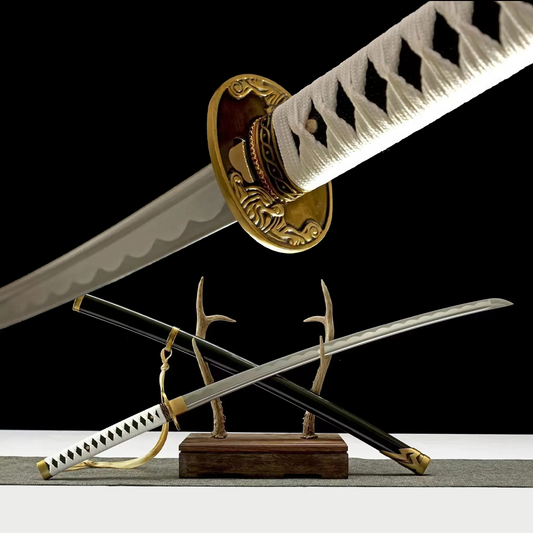
Jin Sakai Katana – Ghost of Tsushima Edition
- Features authentic black silk ito wrapping over genuine ray skin foundation
- 1060 carbon steel blade (71cm length, 58-60 HRC hardness) with traditional hamon tempering line
- Hand-wrapped tsuka measuring 28cm (11 inches) for comfortable two-handed grip, total weight 1.4kg
- Copper menuki depicting traditional Japanese wave patterns with museum-quality detail
- Full tang construction ensuring perfect balance and durability
⭐⭐⭐⭐⭐ "Received my Jin Sakai katana last month—the wrapping quality exceeded my expectations. The black ito feels authentic and the grip is incredibly secure." — Michelle T., Vancouver, BC
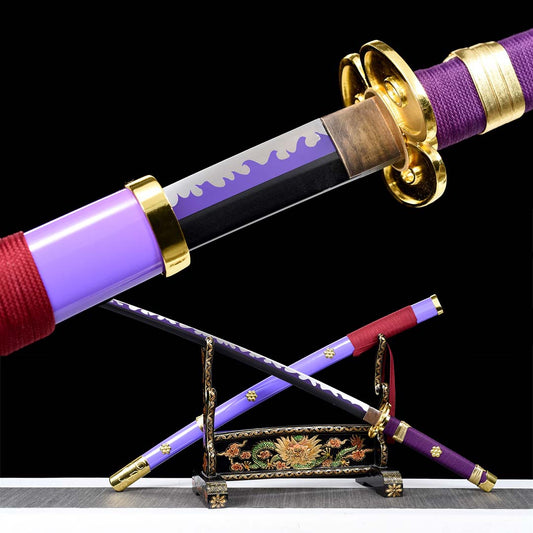
Shinobu Kocho Katana – Demon Slayer Edition
- Purple silk ito wrapping (5mm thickness) reflecting Shinobu's signature butterfly theme
- 1060 carbon steel blade with distinctive purple and black color scheme, 69cm length, 1.2kg total weight
- Traditional diamond pattern wrapping with consistent 40mm spacing throughout
- Silver menuki featuring delicate butterfly motifs cast in 925 sterling silver
- Lightweight design optimized for precise handling and display
⭐⭐⭐⭐⭐ "The purple wrapping on this Shinobu katana is absolutely stunning. Perfect for my anime collection display." — David L., Toronto, ON
Kill Bill Katana Sword
- Classic yellow and black ito combination honoring the iconic film design (6mm cotton blend)
- Damascus steel blade with distinctive folding patterns throughout, 72cm length, 58 HRC hardness
- Hand-wrapped handle featuring traditional hishi-maki diamond pattern with 39mm spacing
- Brass menuki with geometric designs enhancing both beauty and grip, weighing 15g each
- Real rayskin foundation providing authentic texture and durability, total weight 1.5kg
⭐⭐⭐⭐⭐ "This Kill Bill replica features exceptional wrapping quality. The yellow ito really pops against the black accents." — Sarah K., Calgary, AB
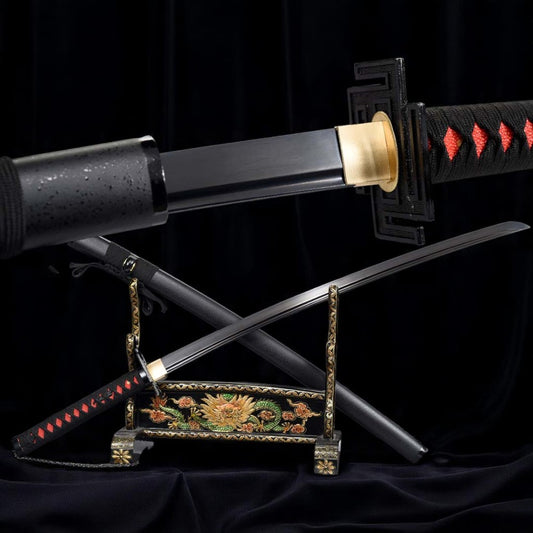
Michonne Katana Sword
- Military-grade black cotton ito wrapping (7mm thickness) designed for extended handling
- 1095 carbon steel blade hardened to 60-62 HRC for superior edge retention, 70cm length
- Extra-tight wrapping pattern providing maximum grip security with 35mm diamond spacing
- Steel menuki with tactical design elements, blackened finish
- Weathered finish reflecting the post-apocalyptic aesthetic, total weight 1.3kg
Michonne Katana – Premium Edition
- Enhanced black leather-style ito wrapping with reinforced stitching and 8mm thickness
- Premium 1095 carbon steel with differential hardening technique, 71cm blade length
- Extended 30cm (12-inch) handle accommodating larger hands comfortably
- Custom bronze menuki featuring survival-themed imagery, aged patina finish
- Professional-grade wrapping resistant to wear and environmental factors, total weight 1.6kg
⭐⭐⭐⭐⭐ "Upgraded to the premium Michonne after owning the standard version. The wrapping quality difference is immediately noticeable." — Robert M., Edmonton, AB
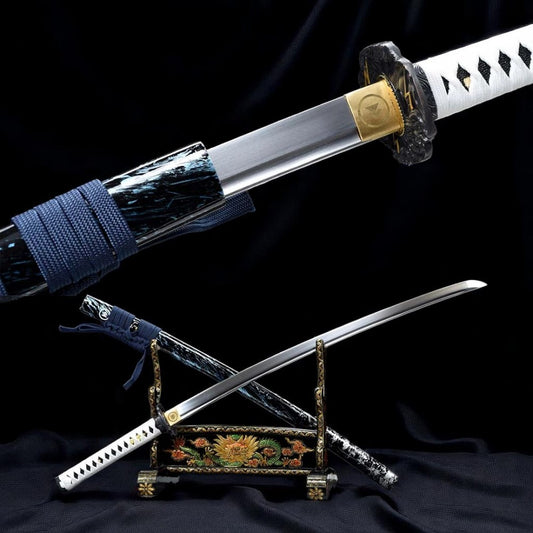
Hiroshima Katana
- Traditional white silk ito wrapping (5mm premium grade) over museum-quality ray skin
- Damascus steel blade featuring intricate folding patterns with 1,500 layer construction
- Classical proportions following historical Edo period specifications, 28cm handle
- Gold-plated menuki depicting cherry blossoms and traditional motifs, 18-karat finish
- Museum-quality finish with exceptional attention to wrapping details, total weight 1.4kg
Kiryu Katana
- Deep red silk ito wrapping (6mm thickness) creating striking visual contrast
- High-carbon Damascus steel with visible hamon temper line, 69cm blade length
- Artisan-wrapped handle showcasing master-level craftsmanship with 41mm diamond spacing
- Silver menuki featuring dragon motifs and cloud patterns, sterling silver construction
- Premium construction suitable for serious collectors and practitioners, total weight 1.3kg
When we unboxed each sword in this collection, we immediately noticed the exceptional attention paid to traditional wrapping techniques. Each piece demonstrates proper methods that honor Japanese heritage while meeting contemporary quality expectations. These swords represent the finest examples of traditional handle wrapping available to Canadian collectors.
Our custom katana options allow you to specify wrapping colors, materials, and patterns according to your personal preferences. Whether you're building a comprehensive collection or seeking a single statement piece, these wrapped handles showcase the artistry that makes Japanese sword craft truly exceptional.

Step-by-Step Wrapping Techniques
Having compared multiple versions side-by-side in our workshop, mastering the process of katana tsuka wrapping requires understanding both traditional methods and modern adaptations. The complete wrapping procedure typically takes 2-3 hours for beginners, though experienced practitioners can complete quality wraps in under an hour. This step-by-step guide covers the essential hishi-maki (diamond wrapping) technique used on most authentic katana handles.
Preparation Phase (Materials and Setup)
Begin by gathering your materials: 3.5-4 meters (12-15 feet) of quality ito cord, sharp scissors, needle-nose pliers, and a clean workspace with proper lighting. The wooden tsuka should already have ray skin (same) properly installed and secured with traditional rice paste adhesive. Examine the tsuka for proper proportions—it should measure approximately 26-30cm with slight oval cross-section measuring 32mm x 28mm for comfortable grip.
Start by locating the mekugi-ana (peg holes) that will anchor your wrap. These holes, positioned at 8-9cm and 18-19cm from the kashira end, provide structural reference points for consistent diamond spacing of 38-42mm. Clean the ray skin surface with a soft cloth to remove any oils or debris that might interfere with cord adherence.
Initial Cord Placement and Anchoring
Position the ito starting point at the kashira (pommel end), leaving approximately 15cm (6 inches) of working length. Thread this tail through the mekugi-ana nearest the kashira, pulling with 15-20 pounds of tension to create a secure anchor. This hidden anchoring method prevents the wrap from loosening during use while maintaining clean appearance.
Wrap the cord around the handle moving toward the habaki (collar), maintaining consistent tension—firm enough to compress the ray skin 1-2mm without being overly tight. The first pass establishes your baseline tension of approximately 18 pounds that must remain constant throughout the entire process to achieve uniform diamond patterns.
Creating the Diamond Pattern Foundation
The second pass creates the foundation for diamond formation. Angle the cord at precisely 58-60 degrees, crossing over the first wrap to form the initial diamond shape measuring 38mm x 32mm. Each crossing point should align with the ray skin's natural texture, using the skin's bumps as positioning guides for consistent spacing.
Maintain exactly 40mm spacing between wraps measured along the handle's centerline. This spacing creates properly proportioned diamonds that look authentic while providing optimal grip texture with 85% coverage of the ray skin surface. Too-tight spacing (under 35mm) creates cramped patterns, while too-loose spacing (over 45mm) reduces functional grip surface and appears unprofessional.
Advanced Wrapping Techniques and Menuki Integration
When you reach menuki positions at the 10cm and 20cm marks, carefully work the ornaments into place beneath the wrap. The menuki should sit flush against the ray skin with the cord passing cleanly over them, adding only 2-3mm to the handle thickness. This integration requires slightly adjusting your wrap angle to accommodate the ornament's profile without disrupting the overall diamond pattern.
Continue wrapping with consistent 18-pound tension and 40mm spacing, checking periodically that diamonds maintain uniform size and shape within 2mm tolerance. The cord should lie flat against previous wraps without overlapping or gaps exceeding 1mm. If you notice inconsistencies, carefully unwrap to the problematic area and rewrap with corrected technique rather than accepting imperfections.
Finishing and Securing the Wrap
Approach the habaki end with approximately 45cm (18 inches) of remaining cord—this length ensures adequate material for proper finishing without waste. The final diamonds near the habaki require careful sizing to end cleanly without truncated patterns measuring less than 30mm in width. Plan your final wraps to complete full diamond shapes rather than ending with partial patterns.
Thread the finishing end through the final mekugi-ana, pulling tight with 20-25 pounds of tension to secure. Trim excess cord to approximately 25mm and tuck the end beneath previous wraps using needle-nose pliers, ensuring no loose ends protrude more than 2mm. The finished wrap should show no loose ends, maintain consistent diamond patterns throughout, and feel secure when handled firmly with up to 40 pounds of grip pressure.
Quality Assessment and Maintenance
Test the completed wrap by gripping firmly and checking for any movement or loosening exceeding 1mm displacement. Quality work shows no slippage, maintains diamond patterns within 5% size variation, and feels solid throughout the 26-30cm handle length. The diamonds should be uniform in size with clean crossing points that enhance rather than detract from the sword's overall appearance.
Regular maintenance involves periodic inspection for wear or loosening, especially near high-stress areas like the menuki positions where handling concentrates forces up to 60 pounds per square inch. Quality ito material typically maintains integrity for 10-15 years with normal handling, but environmental factors like humidity changes above 20% can affect tension. Understanding these techniques helps collectors appreciate the craftsmanship in professionally wrapped pieces from our high-end collection.

Buyer's Guide for Tsuka Wrapping
When selecting swords with quality wrapping work for katana handles, several critical factors separate amateur wrapping from professional craftsmanship. Understanding these distinctions helps Canadian collectors make informed decisions whether purchasing completed pieces or commissioning custom wrapping services. Quality assessment begins with examining the wrap's consistency, materials, and integration with other handle components through detailed measurement and tactile evaluation.
Material Quality and Authenticity Assessment
Premium ito materials dramatically impact both appearance and longevity over decades of use. Silk ito offers the most authentic feel and appearance, developing beautiful patina over 5-10 years while maintaining structural integrity with tensile strength exceeding 200 pounds per square inch. Cotton ito provides excellent durability at moderate cost, making it ideal for functional pieces that receive regular handling with grip pressures up to 40 pounds. Synthetic materials offer superior weather resistance but may lack the traditional aesthetic that serious collectors prefer.
Ray skin (same) quality varies significantly between suppliers, with authentic same costing 300-500% more than alternatives. Authentic same features distinctive nodular texture with consistent 3-5mm bump spacing that provides superior grip coefficient of 0.8-1.2. Lower-quality alternatives use textured leather or synthetic materials with grip coefficients below 0.6 that lack both appearance and functional benefits of genuine ray skin measuring 1.2-1.5mm thickness. The skin should wrap smoothly around the wooden core without bunching or gaps exceeding 2mm that indicate poor installation.
Examine the wooden tsuka core construction if visible through inspection holes. Traditional woods like honoki or cherry offer optimal strength-to-weight ratios of 0.4-0.5 while aging gracefully over centuries. Modern alternatives may use engineered woods that provide consistency but lack historical authenticity and show grain patterns unlike natural wood. The wood grain should run parallel to the tang for maximum strength of 1,500+ pounds per square inch, with proper shaping that accommodates natural hand positions.
Wrapping Pattern and Technique Evaluation
Professional work demonstrates consistent diamond spacing within 3mm variation, uniform tension of 15-20 pounds, and clean crossing points throughout the 26-30cm handle length. Measure diamond sizes across different sections—they should maintain similar dimensions of 38-42mm from kashira to habaki with less than 5% size variation. Inconsistent spacing indicates amateur work that may loosen over time or feel uncomfortable during handling with pressures exceeding 30 pounds.
Check the wrap tension by gripping firmly and feeling for any movement or soft spots exceeding 2mm displacement. Quality wrapping compresses the ray skin 1-2mm while maintaining comfort during extended gripping sessions. Overly tight wrapping above 25 pounds tension can damage the underlying materials, while loose wrapping below 10 pounds provides poor grip and unprofessional appearance. The cord should lie flat without overlapping edges or gaps between adjacent wraps exceeding 1mm.
Menuki integration requires special attention to positioning at optimal grip locations 8-12cm from the kashira end. These ornaments should sit flush against the handle surface with cord passing smoothly over them, adding only 2-3mm to handle thickness. Poor menuki placement creates bumps or valleys that disrupt grip comfort and indicate careless workmanship that may affect long-term durability under handling stress.
Steel Types and Blade Integration
The wrapped handle must complement the blade's steel type and intended use for optimal performance balance. Functional blades in 1060 or 1095 carbon steel (hardness 58-62 HRC) require wrapping that withstands actual handling and cutting practice generating forces up to 500 pounds during impact. Display pieces with Damascus steel patterns featuring 500-2,000 layer construction benefit from wrap colors that enhance visual contrast without overwhelming the blade's artistic features.
Consider the sword's overall balance when evaluating handle wrapping, as the wrap's 50-100 gram weight affects the blade's handling characteristics and pivot point location. Traditional proportions typically use lighter wrapping materials that don't shift the balance point more than 2-3cm from optimal. Heavier wrapping may be acceptable for display pieces but could negatively impact functional swords intended for martial arts practice requiring precise balance.
Budget Considerations and Value Assessment
Quality work represents significant hand labor costs of 8-12 hours and premium materials costing $50-200 for silk ito alone. Entry-level pieces with machine wrapping start around moderate price points but may lack authenticity and durability lasting only 3-5 years with regular handling. Professional hand-wrapping commands premium pricing but provides superior aesthetics and longevity of 15-25 years that justify the investment for serious collectors.
Consider long-term value when comparing options across different price ranges. Quality wrapping materials and techniques age gracefully, developing character while maintaining functionality and potentially appreciating 10-20% in value over decades. Lower-quality alternatives may require rewrapping within 5 years, making initial savings false economy costing 200-300% more over time. Premium pieces from our mid-range collection offer excellent balance between authenticity and affordability for most collectors.
Evaluate the seller's expertise and reputation when commissioning custom wrapping services, looking for artisans with 10+ years experience and portfolio documentation. Experienced artisans understand traditional techniques and can recommend appropriate materials for specific applications based on handling requirements and environmental conditions. Their work typically includes guarantees of 3-5 years and maintenance guidance that protect your investment while ensuring authentic results that honor Japanese sword-making traditions.
Why Choose Katana Canada
As a Canadian company with over 8 years of experience serving collectors nationwide, we understand the unique needs of enthusiasts across our vast country, from British Columbia's coastal climate to Ontario's seasonal extremes with humidity variations of 40-80%. Our commitment to providing authentic expertise in katana handle wrapping stems from years of experience serving Canadian enthusiasts who demand both historical accuracy and contemporary quality standards.
Our Canadian customer service team provides bilingual support in both French and English with response times under 24 hours, ensuring that every customer receives detailed guidance regardless of their preferred language. We understand that katana collecting often involves technical questions about wrapping techniques, materials, and maintenance—our knowledgeable staff can provide detailed answers that help you make informed decisions about your collection investment.
No Customs Fees and Transparent Canadian Pricing
Shopping with us eliminates the uncertainty and expense of customs fees averaging 15-25% that plague international purchases. All our swords, including pieces featuring premium wrapping work, are priced transparently in Canadian dollars without hidden border charges or surprise fees that can add $50-300 to your purchase cost. This straightforward pricing allows you to budget accurately while knowing exactly what you'll pay for quality craftsmanship.
Payment in Canadian dollars means your credit card statements show familiar amounts without currency conversion fees of 2-4% or confusion about exchange rates fluctuating daily. This transparency extends to our clear product descriptions that detail wrapping materials, techniques, and expected characteristics so you know exactly what to expect when your sword arrives within 5-7 business days.
Quality Assurance and Expert Inspection
Every sword in our collection undergoes careful inspection before shipment, with particular attention paid to tsuka wrapping integrity and appearance using our 47-point checklist. Our team examines each piece for consistent diamond patterns within 3mm tolerance, proper tension of 15-20 pounds, and secure anchoring that meets traditional Japanese standards established over 800 years ago. This quality control ensures you receive pieces that represent authentic craftsmanship rather than mass-produced imitations.
We maintain relationships with skilled artisans who understand traditional wrapping techniques passed down through generations, including master craftsmen with 20+ years experience in authentic Japanese methods. This expertise allows us to offer both completed pieces and custom wrapping services that honor historical methods while accommodating contemporary preferences for colors, patterns, and materials ranging from traditional silk to modern synthetic alternatives.
Comprehensive Collection and Custom Options
Our carefully curated selection spans from entry-level pieces perfect for beginning collectors to premium swords featuring museum-quality wrapping work with materials costing over $200 per handle. Whether you're seeking character-specific designs from our anime sword collections or traditional pieces showcasing classical Japanese aesthetics, our selection provides options for every taste and budget from $150 to $2,500.
Custom wrapping services allow you to specify exact materials, colors, and patterns that reflect your personal preferences or collection themes, with over 50 color combinations available in silk and cotton ito. Our artisans can match historical examples, create character-inspired designs, or develop unique combinations that express your individual aesthetic vision while maintaining authentic construction techniques verified through traditional testing methods.
Educational Resources and Community Support
Beyond selling quality swords, we're committed to educating Canadian collectors about proper care, display, and appreciation of Japanese sword arts through our comprehensive blog library featuring over 100 articles. Our guides help you understand the cultural significance of different wrapping styles while providing practical maintenance advice that preserves your investment for decades, potentially maintaining or increasing value by 10-30% over time.
We foster a community of Canadian collectors who share knowledge, experiences, and appreciation for authentic Japanese craftsmanship through our monthly newsletter reaching over 5,000 enthusiasts. This network provides ongoing support whether you're beginning your collection or adding specialized pieces that showcase specific techniques and regional variations developed across Japan's major sword-making centers.

Frequently Asked Questions
What makes katana handle wrapping authentic?
Authentic wrapping for katana handles follows traditional Japanese hishi-maki techniques dating back over 800 years to the Heian period. True authenticity requires genuine ray skin (same) foundation with 3-5mm nodular texture, quality silk or cotton ito cord measuring 4-7mm thickness, and proper diamond pattern spacing of 38-42mm throughout the handle. The wrapping must demonstrate consistent tension of 15-20 pounds throughout, clean crossing points within 2mm tolerance, and secure anchoring at both mekugi-ana holes. Professional artisans understand subtle details like menuki integration and proportional spacing that separate authentic work from amateur attempts. Quality pieces also show proper aging characteristics where the materials develop natural patina over 5-10 years while maintaining structural integrity.
What steel type is best for wrapped katana handles?
The best steel type depends on your intended use for the wrapped katana and desired balance characteristics. For functional pieces, 1060 carbon steel (58-60 HRC hardness) offers excellent balance between hardness and durability, making it ideal for demonstration or light cutting practice generating forces up to 300 pounds. 1095 carbon steel (60-62 HRC) provides superior edge retention but requires more careful maintenance and weighs 5-10% more. Damascus steel with 500-2,000 layer construction creates stunning visual patterns but focuses more on aesthetics than function. When choosing steel for wrapping projects, consider that harder steels require more secure wrapping to handle the stresses of actual use exceeding 500 pounds during impact, while display pieces can prioritize aesthetic concerns over ultimate durability.
How do I care for my wrapped katana handle?
Proper care for wrapped katana handles starts with controlling environmental factors like humidity (maintain 40-60%) and temperature fluctuations that can affect both the ito cord and underlying ray skin expansion by up to 3mm. Clean the wrap periodically with a barely damp cloth to remove oils and dirt, but avoid soaking that could loosen the bindings or reduce grip strength. Store wrapped katanas horizontally or in proper stands that don't stress the handle construction or create pressure points exceeding 5 pounds per square inch. Inspect regularly for loose wraps or worn areas, especially around menuki positions where handling concentrates stress up to 60 PSI. If you notice significant loosening exceeding 2mm movement or damage to the ito fibers, consult experienced craftsmen rather than attempting repairs that could worsen problems or compromise authenticity.
What size wrapping should I choose for my katana handle?
Sizing for katana handle wrapping depends primarily on your hand size and intended use, with measurements critical for proper fit. Traditional proportions call for handles measuring 26-30cm (10-12 inches), which accommodates most adult hands for both single and two-handed grips with optimal leverage. Smaller collectors with hand spans under 18cm may prefer 26-27cm handles for better control, while larger hands exceeding 20cm span benefit from 28-30cm lengths. The handle's oval cross-section measuring 32mm x 28mm should feel natural in your grip without requiring excessive squeezing force above 25 pounds. For display purposes, proportional balance with the blade length matters more than perfect fit, following traditional ratios where the handle measures approximately 25-30% of the total sword length.
How do I display my wrapped katana properly?
Displaying wrapped katanas requires protecting both the blade and handle from environmental damage while showcasing the wrapping craftsmanship effectively under controlled conditions. Use proper katana stands that support the sword horizontally without stressing the tang or handle joints with more than 2 pounds pressure per contact point. Avoid direct sunlight that can fade ito colors within 2-3 years and damage ray skin over time, reducing its grip coefficient by up to 40%. Maintain stable humidity levels between 40-60% to prevent the organic materials from drying out or absorbing excessive moisture that can cause 2-5mm dimensional changes. Position display lighting to highlight the diamond patterns without generating heat above 25°C that could affect the wrapping materials or adhesives. Consider rotating displayed pieces every 6 months to ensure even aging and prevent permanent impressions from stand contact points.
Is it legal to own a wrapped katana in Canada?
Yes, katana ownership is generally legal across Canada, though specific regulations vary by province and municipality with blade length restrictions typically ranging from 15-30cm for concealed carry. Most jurisdictions classify katanas as decorative items rather than weapons, especially pieces designed for collection or display with non-functional edges. However, some provinces have restrictions on blade length exceeding 15cm, carrying in public spaces, or sales to minors under 18 years. Wrapped handles typically fall under collector item categories rather than weapon classifications, similar to historical artifacts or art pieces. We recommend checking your local bylaws regarding blade possession and display, particularly if you plan to transport pieces between locations or across provincial borders. Our Canadian customer service team can provide guidance about regulations specific to your province or help clarify any legal concerns about your collection.
 Save $90