
The Art and Mastery of Sword and Katana: A Journey Through Steel and Tradition
Share
The steel gleams under the dojo's soft lighting, its edge catching whispers of light as it moves through the air with deadly precision. In this moment, centuries of tradition flow through the wielder's hands—from the ancient forge fires of medieval Japan to the modern collector's display case. The katana is not merely a weapon; it is a testament to human artistry, a bridge between the spiritual and the physical, and a symbol of honor that transcends time itself.
Table of Contents
- The Genesis of Steel: Origins and Cultural Significance
- Anatomy of Honor: Understanding Sword and Katana Design
- The Forger's Art: Traditional Craftsmanship and Modern Excellence
- Our Distinguished Collection: Featured Masterpieces
- The Collector's Path: Choosing Your Perfect Blade
- Steel Classifications: Understanding Quality and Performance
- Why Choose Katana Canada for Your Journey
The Genesis of Steel: Origins and Cultural Significance
The story of the katana begins in the mists of medieval Japan, where master swordsmiths elevated metallurgy to an art form that would influence blade-making for millennia. Born during the Heian period (794-1185), the katana emerged as the soul of the samurai class, embodying their code of Bushido—the way of the warrior—in every fold of steel. The Complete Guide to Katana Carbon Steel Distribution The Ultimate Guide to
Unlike the straight-bladed tachi that preceded it, the katana's distinctive curved form was born from practical necessity and spiritual symbolism. The curve, known as sori, was not merely aesthetic; it represented the perfect balance between cutting efficiency and defensive capability. This curvature allowed for lightning-fast draws from the scabbard, transforming the act of unsheathing into the first strike of combat.
The cultural significance of these Japanese blades extends far beyond their martial applications. In Japanese philosophy, the katana represents the soul of the samurai, a concept so profound that it gave rise to the saying "the sword is the soul of the samurai." This belief transformed sword-making into a sacred craft, where smiths would purify themselves through ritual and prayer before beginning their work.
The forging process itself became a meditation on perfection, with master craftsmen dedicating months to a single blade. They understood that they were not merely shaping steel, but crafting a warrior's honor, a family's legacy, and a nation's strength. Each katana carried within its steel the hopes of its wielder and the skill of its creator, making every blade a unique work of functional art.
This reverence for the Japanese sword transcended Japan's borders, inspiring countless cultures to develop their own traditions of blade-making. Today, this legacy continues through modern collectors and practitioners who understand that owning a quality katana connects them to this unbroken chain of craftsmanship and honor.
Anatomy of Honor: Understanding Sword and Katana Design
The sword and katana design represents centuries of evolutionary refinement, where every element serves both functional and aesthetic purposes. At first glance, its elegant simplicity belies the complex engineering that makes it one of history's most effective cutting weapons.
The blade itself follows specific proportional rules that have remained unchanged for centuries. The curvature, typically measuring between 15-20mm at its deepest point, creates optimal cutting geometry while maintaining structural integrity. This curve naturally guides the blade through targets, concentrating force along the edge while distributing stress throughout the spine.
Traditional katana construction employs sophisticated metallurgical techniques that modern science has only recently begun to fully understand. The most renowned method, known as kobuse construction, involves wrapping harder steel around a softer iron core. This creates a blade that maintains a razor-sharp edge while absorbing impact through its flexible spine—a perfect marriage of hardness and resilience.
The hamon, or temper line, represents more than decorative artistry. This visible boundary between hardened and unhardened steel reveals the smith's skill in differential heat treatment. Master craftsmen could control this line with such precision that it became their signature, creating patterns like straight hamon (suguha) or wildly undulating waves (midare) that collectors prize today.
The katana's geometry extends beyond the blade to encompass the entire weapon system. The tsuka (handle) length follows strict proportions relative to the blade, typically measuring one and a quarter times the width of the wielder's hand. This ensures proper leverage and control during use, while the gentle oval cross-section provides secure grip without fatigue.
Even the mounting elements carry deep symbolism. The tsuba (hand guard) protects while representing the barrier between life and death. The menuki (grip ornaments) often depicted protective deities or meaningful symbols, serving as both functional grip aids and spiritual talismans. Every component worked in harmony to create not just a weapon, but a complete expression of samurai identity and values.
The Forger's Art: Traditional Craftsmanship and Modern Excellence
The creation of an authentic katana remains one of humanity's most demanding crafts, requiring years of apprenticeship and a lifetime of refinement. Traditional Japanese sword-making begins with tamahagane steel, produced in clay furnaces called tatara through a 72-hour smelting process that transforms iron sand and charcoal into the raw material of legends.
Modern interpretations of these ancient techniques have evolved to incorporate contemporary metallurgy while honoring traditional methods. Today's master smiths understand that quality begins with steel selection, whether using time-tested carbon steel varieties like 1060 and 1095, or exploring advanced alloys that push the boundaries of performance.
The folding process, perhaps the most iconic aspect of katana creation, serves multiple purposes beyond the romantic image of endless hammering. Each fold doubles the number of steel layers, eventually creating thousands of microscopic laminations that eliminate impurities while homogenizing the carbon content. This patient work can take weeks, with master craftsmen monitoring temperature, timing, and technique with obsessive precision.
Heat treatment represents the forge's most critical moment, where years of preparation culminate in a few crucial seconds. The blade must reach exact temperatures—judged by color in dim forge light—before being quenched in water, oil, or specialized solutions. This rapid cooling locks the steel's crystalline structure, determining the blade's final hardness, flexibility, and cutting performance.
The polishing stage transforms rough steel into mirror-bright perfection through an elaborate process involving progressively finer stones. True Japanese polishing can take weeks, with each grade of stone revealing new aspects of the steel's character. The final polish not only creates the blade's stunning appearance but also removes microscopic stress points that could lead to failure.
Contemporary craftsmen working with traditional methods often spend months on a single blade, understanding that rushing any stage compromises the entire work. This dedication to excellence ensures that modern Japanese swords can match their historical predecessors in both beauty and performance, carrying forward an unbroken tradition of steel mastery.
Our Distinguished Collection: Featured Masterpieces
At Katana Canada, we curate exceptional blades that honor both traditional craftsmanship and contemporary innovation. Our collection spans legendary reproductions, functional artwork, and display pieces that capture the essence of authentic Japanese sword-making.
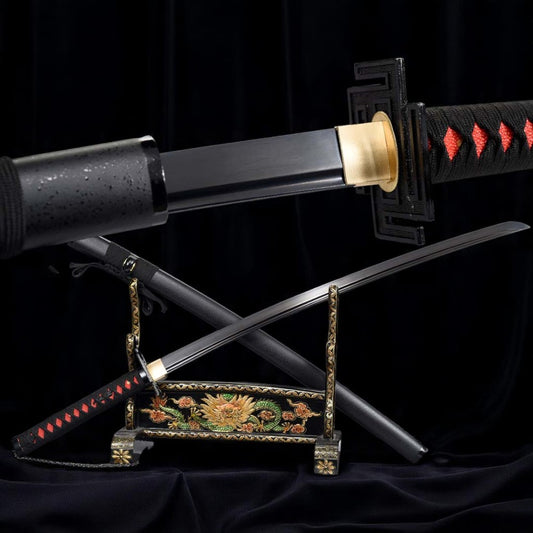
Kill Bill Katana Sword
This iconic reproduction captures the deadly elegance made famous by Tarantino's cinematic masterpiece. Crafted from high-quality carbon steel with Damascus patterns, it represents the perfect fusion of traditional techniques with modern pop culture appeal.
• Full-tang construction ensuring exceptional durability and balance
• Authentic rayskin handle wrapping for superior grip and comfort
• Hand-forged Damascus steel creating unique grain patterns
• Functional blade geometry suitable for cutting practice
• Complete with traditional wooden scabbard and mounting accessories
⭐⭐⭐⭐⭐ "Absolutely stunning blade! The Damascus patterns are gorgeous and the balance is perfect. Arrived quickly to Calgary and exceeded all my expectations." - Sarah M., Calgary, AB
Michonne Katana Sword
Inspired by the iconic warrior from The Walking Dead, this functional katana embodies the spirit of survival and determination. Built with 1095 carbon steel, it delivers authentic performance for serious practitioners and collectors alike.
• Premium 1095 carbon steel construction for superior edge retention • Battle-ready design suitable for cutting demonstrations • Authentic Japanese-style mounting with quality fittings • Full-tang blade extending through the entire handle • Includes custom scabbard designed for quick draw techniques
⭐⭐⭐⭐⭐ "This katana has incredible balance and cuts beautifully. The steel quality is exceptional for the price point. Highly recommend for anyone serious about collecting." - David L., Toronto, ON
Jin Sakai Katana – Ghost of Tsushima Edition
Step into the world of feudal Japan with this meticulously crafted reproduction inspired by the beloved video game protagonist. The blade captures the essence of samurai honor while embracing innovative combat techniques.
• 1060 carbon steel construction balancing hardness with flexibility • Game-accurate design details faithful to the source material • Traditional hamon (temper line) created through differential hardening • Ergonomic handle design for extended use and practice • Museum-quality finish suitable for display or demonstration
⭐⭐⭐⭐⭐ "As a huge Ghost of Tsushima fan, this katana exceeded my expectations. The attention to detail is incredible and it looks exactly like the game. Perfect addition to my collection." - Michael K., Vancouver, BC
Shinobu Kocho Katana – Demon Slayer Edition
This elegant butterfly-themed katana captures the grace and deadly precision of the Insect Hashira. The unique design elements make it a standout piece for anime enthusiasts and collectors of distinctive blades.
• 1060 carbon steel core providing reliable cutting performance • Butterfly-inspired guard and handle decorations • Lightweight design reflecting the character's speed-based fighting style • Authentic anime-accurate color scheme and proportions • High-quality cosplay applications with functional blade geometry
If you're interested in exploring more anime-inspired pieces, you might want to check out our Mini Katana: The Perfect Gateway to Japanese Sword Culture and Demon Slayer Fandom for additional Demon Slayer content.
Michonne Katana – Premium Edition
Representing the pinnacle of our craftsmanship, this premium edition elevates the beloved design with superior materials and enhanced finishing techniques. Every detail reflects our commitment to excellence and authenticity.
• Premium 1095 carbon steel with enhanced heat treatment • Hand-polished finish revealing exquisite grain patterns • Upgraded mounting hardware with brass and copper accents • Custom-fitted scabbard with reinforced throat and tip • Certificate of authenticity documenting construction details
⭐⭐⭐⭐⭐ "The premium edition is absolutely worth the investment. The fit and finish are flawless, and the steel quality is outstanding. This will be passed down through my family for generations." - James R., Montreal, QC
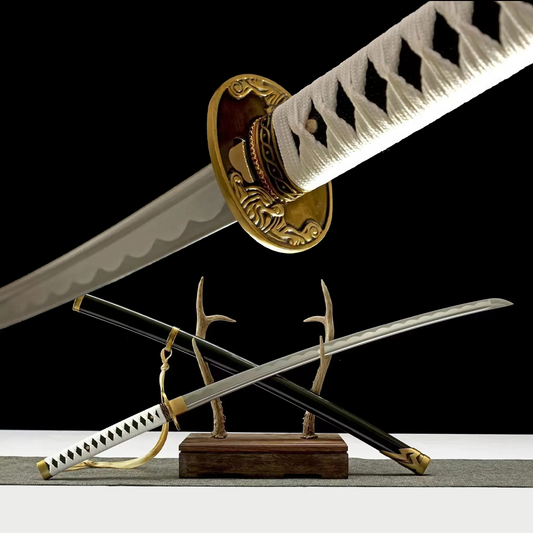
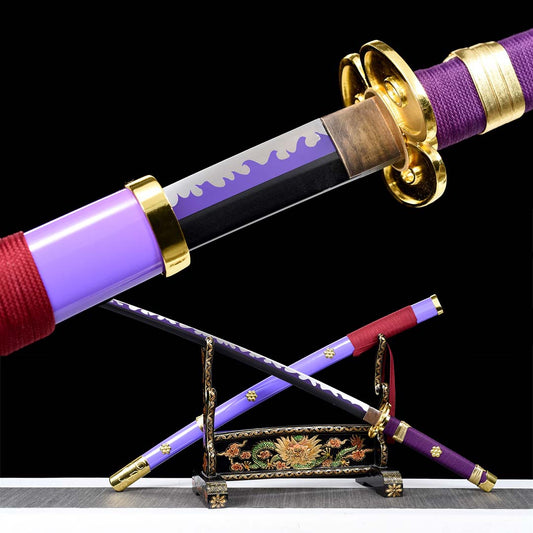
Sandai Kitetsu Katana Sword
This legendary blade reproduction brings the cursed sword of One Piece to life with authentic craftsmanship and attention to detail. The distinctive styling makes it a prized addition to any manga-inspired collection.
• 1060 steel construction providing excellent durability • Manga-accurate design faithful to the source material • Traditional Japanese mounting techniques • Functional geometry suitable for practice and display • Complete with wooden scabbard and maintenance kit
Tanjiro Kamado Katana Sword V2
The updated version of our popular Tanjiro katana incorporates refined details and improved construction based on collector feedback. This piece represents the hero's journey from humble beginnings to demon-slaying mastery.
• Enhanced 1060 carbon steel with improved heat treatment • Updated guard design reflecting the character's growth • Refined handle wrapping for improved comfort and authenticity • Upgraded scabbard with better fit and finish • Includes detailed care instructions for long-term preservation
⭐⭐⭐⭐⭐ "The V2 improvements really show in the quality. The balance feels perfect and the details are spot-on. Couldn't be happier with this purchase." - Emma T., Ottawa, ON
The Collector's Path: Choosing Your Perfect Blade
Selecting your first katana—or adding to an established collection—requires understanding both your goals and the characteristics that define quality craftsmanship. Whether seeking a functional piece for practice, a display sword for aesthetic appreciation, or an investment-grade blade for long-term value, certain principles guide informed decisions.
First, consider your intended use. Display pieces prioritize visual impact and historical accuracy, while functional blades emphasize cutting performance and durability. Many collectors find that starting with a mid-range functional piece provides the best introduction to katana ownership, offering hands-on experience with authentic construction techniques while remaining accessible.
Steel quality represents the foundation of any worthwhile katana. Carbon steel varieties like 1060 and 1095 offer excellent performance characteristics, with 1060 providing a good balance of hardness and flexibility for beginners, while 1095 delivers superior edge retention for experienced users. Damascus steel adds visual appeal through distinctive patterns while maintaining functional excellence.
Examine the construction method carefully, as this determines both performance and longevity. Full-tang construction, where the blade steel extends completely through the handle, provides superior strength and balance compared to partial-tang alternatives. Traditional Japanese mounting methods, while requiring more maintenance, offer authentic handling characteristics and historical accuracy.
The hamon, or temper line, serves as both a quality indicator and artistic element. A genuine hamon results from differential hardening techniques that create varying steel hardness along the blade. Machine-etched lines may provide visual appeal but lack the functional benefits of authentic differential tempering.
Consider the mounting components as they significantly impact both appearance and usability. Quality fittings include properly fitted tsuba (hand guards), comfortable tsuka (handles) wrapped in genuine materials, and scabbards that protect the blade while allowing smooth drawing. These elements should complement the blade's style while providing practical functionality.
For those interested in the deeper aspects of Japanese sword history and construction, our Complete Guide to Katana Swords: History, Craftsmanship, and Authentic Japanese Blades provides comprehensive insights into traditional techniques and their modern applications.
Steel Classifications: Understanding Quality and Performance
The steel composition fundamentally determines a katana's cutting performance, durability, and maintenance requirements. Modern blade-making employs several carbon steel varieties, each offering distinct characteristics suited to different applications and user preferences.
1060 carbon steel represents an excellent entry point for new collectors and practitioners. Containing approximately 0.60% carbon, this steel achieves good hardness while maintaining flexibility and shock resistance. Blades crafted from 1060 steel hold serviceable edges, resist chipping during cutting practice, and forgive minor maintenance oversights. This forgiving nature makes 1060 ideal for learning proper care techniques.
1095 carbon steel elevates performance through higher carbon content (0.95%), producing blades capable of exceptional sharpness and superior edge retention. However, this enhanced performance requires more careful maintenance, as the higher carbon content increases susceptibility to corrosion and makes the steel less forgiving of impacts. Experienced users appreciate 1095's ability to achieve and maintain razor-sharp edges through extended use.
Damascus steel combines multiple steel types through folding and forge-welding techniques, creating distinctive grain patterns while homogenizing the metal's properties. Modern Damascus often layers different carbon steel grades, producing blades that balance performance with visual appeal. The folding process eliminates impurities while creating thousands of microscopic layers that enhance toughness and cutting ability.
Heat treatment techniques significantly influence any steel's final characteristics regardless of its base composition. Proper differential hardening creates the hamon line while producing varying hardness zones throughout the blade—hard edges for cutting performance and softer spines for shock absorption. Master craftsmen control these processes with precision that can take decades to perfect.
Understanding these steel classifications helps collectors make informed decisions based on their experience level, intended use, and aesthetic preferences. Each type offers unique advantages, and the best choice depends on individual priorities rather than universal rankings.
Why Choose Katana Canada for Your Journey
As a Canadian company, we understand the unique needs of collectors and practitioners across our vast nation. Our commitment extends beyond simply providing exceptional blades to encompass comprehensive customer service, educational resources, and ongoing support for your collecting journey.
Our Canadian customer service team brings deep knowledge of both traditional sword-making and modern collecting trends. Whether you're selecting your first katana or adding to an established collection, our experts provide personalized guidance based on your specific requirements and interests. We speak both French and English, ensuring clear communication regardless of your preferred language.
Payment in Canadian dollars eliminates currency conversion concerns and hidden fees that often surprise international buyers. This transparency extends throughout our pricing structure, with no customs fees or unexpected border charges affecting your purchase. What you see is what you pay, allowing for confident budgeting and planning.
Our carefully curated selection emphasizes quality over quantity, with each piece meeting strict standards for construction, materials, and finishing. We work directly with skilled craftsmen who understand traditional techniques while embracing modern quality control methods. This approach ensures consistent excellence across our entire collection.
Educational resources form a cornerstone of our service philosophy. Beyond selling exceptional blades, we provide comprehensive guides covering care, maintenance, display, and historical context. Our goal involves fostering deeper appreciation for the artistry and tradition behind every katana while supporting responsible collecting practices.
The relationships we build with customers extend far beyond individual transactions. Many collectors return repeatedly as their interests evolve, trusting our expertise to guide their journey through different styles, periods, and price ranges. This ongoing partnership approach creates a community of enthusiasts who share knowledge and experiences.
Frequently Asked Questions
Q: How can I verify the authenticity and quality of a katana before purchasing?
Authentic katana exhibit several key characteristics that distinguish them from decorative replicas. Examine the construction method first—genuine functional pieces feature full-tang construction where the blade steel extends completely through the handle. Look for proper hamon (temper line) created through differential hardening rather than surface etching. Quality pieces display consistent grain patterns in Damascus steel or uniform surface finish in mono-steel blades. Check the mounting components for proper fit and traditional materials like genuine rayskin, silk wrapping, and quality metal fittings. Reputable sellers provide detailed specifications including steel type, construction method, and origin information. Be cautious of extremely low prices that often indicate machine-made replicas rather than hand-crafted pieces.
Q: What are the differences between various carbon steel types used in modern katana construction?
Carbon steel varieties differ primarily in carbon content, which directly affects hardness, edge retention, and maintenance requirements. 1060 carbon steel (0.60% carbon) offers good balance between hardness and flexibility, making it forgiving for beginners while providing adequate cutting performance. 1095 carbon steel (0.95% carbon) achieves superior hardness and edge retention but requires more careful maintenance and proper technique to avoid damage. Damascus steel combines multiple grades through folding techniques, creating distinctive patterns while balancing performance characteristics. Spring steel varieties like 5160 emphasize flexibility and shock resistance. Higher carbon content generally means better edge retention but increased maintenance needs and potential for brittleness if improperly heat-treated.
Q: How do I determine the proper size and proportions for a katana that suits my build and intended use?
Traditional katana sizing follows specific proportional rules based on the user's physical dimensions. The blade length typically measures between 24-28 inches, with longer blades suited to taller users and specific cutting applications. Handle length should equal approximately 1.25 times the width of your hand measured across the knuckles. Total weight ranges from 2-3 pounds for most authentic pieces, with proper balance point located 4-6 inches from the guard. For display purposes, aesthetic preferences may override functional considerations. Practice and cutting applications require careful attention to balance and handling characteristics. Consider starting with medium proportions (26-inch blade, standard handle) as these accommodate most users effectively while providing authentic handling experience.
Q: What maintenance routine ensures long-term preservation of my katana's appearance and functionality?
Proper katana maintenance begins with regular cleaning to prevent corrosion and damage. After any handling, wipe the blade with a clean, lint-free cloth to remove fingerprints and moisture. For deeper cleaning, use a soft cloth dampened with appropriate sword oil, working from the spine toward the edge in controlled strokes. Apply a thin coat of protective oil after cleaning, ensuring complete coverage while avoiding excess that attracts dust. Store the blade in a dry environment with consistent temperature, preferably in a traditional wooden scabbard or protective case. Inspect regularly for signs of corrosion, damage, or loose fittings. Handle by the tang or mounting points rather than the blade surface. For detailed maintenance guidance, consult our How to Care for a Katana – Cleaning, Oiling & Storage Tips guide.
Q: What are the best practices for displaying katana while protecting them from damage and maintaining their beauty?
Effective katana display balances aesthetic impact with preservation requirements. Position blades away from direct sunlight, heat sources, and high-humidity areas that accelerate corrosion and fading. Horizontal displays using quality stands distribute weight evenly while showcasing the blade's curve and proportions. Vertical displays work well for space-constrained areas but require secure mounting to prevent falls. Use stands made from stable materials like hardwood or quality metal rather than cheap plastic that may break under load. Keep display areas clean and dust-free through regular gentle cleaning. Consider rotating displayed pieces periodically to prevent prolonged exposure to environmental factors. For valuable pieces, climate-controlled cases provide maximum protection while allowing viewing.
Q: Are there any legal considerations for owning and collecting katana in Canada?
Katana ownership in Canada is generally legal for collectors and practitioners, but certain restrictions apply depending on provincial regulations and intended use. Most provinces permit ownership of functional katana for legitimate collecting, martial arts practice, or display purposes. However, carrying katana in public typically requires specific permits or justification such as transport to training facilities. Some provinces have blade length restrictions or requirements for secure storage. Check with local authorities regarding specific regulations in your area, as municipal bylaws may impose additional restrictions. Import regulations require proper documentation and may involve inspection by border services. Always purchase from reputable dealers who understand applicable laws and provide appropriate documentation for your collection.
Conclusion
The journey through the world of sword and katana reveals far more than mere craftsmanship—it unveils a profound connection between artistry, tradition, and human aspiration. From the forge fires of medieval Japan to the modern collector's sanctuary, these blades carry within their steel the dreams of warriors, the vision of master craftsmen, and the timeless pursuit of perfection.
Whether you seek to honor samurai tradition, celebrate beloved characters from popular culture, or simply appreciate exceptional metalwork, the path begins with understanding and respect for the craft. Each katana in our collection represents not just a purchase, but an entry point into a community that spans centuries and continents, united by appreciation for excellence in steel.
As you consider adding to your collection or beginning this remarkable journey, remember that the true value lies not merely in possession, but in the deeper connection to artistry and tradition that authentic pieces provide. For comprehensive guidance on making informed decisions, explore our Buy Swords Online Canada: Your Complete Guide to Authentic Katana and Japanese Blades to ensure your next acquisition perfectly matches your vision and goals.
The steel awaits, patient and eternal, ready to become part of your story.
 Save $90